The cattle guard is where Donna told me I had two days to leave the ranch. It’s also where she found out the deed wasn’t in my name anymore.
Two days before the trucks came back, my sister stepped out of a pickup with Martin Henderson, a lawyer, and two moving trucks behind them. She pointed toward the house.
“The property is mine now. Get your things out,” she declared.
I nearly laughed. Not because it was funny, exactly. Because the ranch had been left to me in our parents’ will, and the court had already settled the estate.
Still, I didn’t laugh. I said, “You can’t make me leave.”
Henderson held up a folder. “We have a claim on the property.”
“You have a piece of paper,” I said. “That’s not the same thing.”
Donna’s mouth tightened. “Dad promised me half.”
I didn’t argue there at the cattle guard. I’d learned the hard way that when Donna decided something was true, shouting only gave her more to push against. I told her to leave, and the trucks backed out without unloading.
Five days earlier, I’d gotten a notice from the title office.
Eighteen months had passed since our parents died. I’d stayed on the ranch through the last years of their illnesses, kept the animals fed, paid the bills, and made sure the roof didn’t turn into a leak over my mother’s bed. Donna had left years before. We weren’t close, but I’d still thought she’d come home when things got bad.
She didn’t.
The ranch was worth about $1.2 million. Our parents’ final will left the whole property to me. It had been properly signed and probated. The reason was plain enough: I’d been there, doing the work, and they wanted the ranch kept together. I know that sounds like I’m trying to make myself look good. I wasn’t perfect. I got sharp with them when I was tired, and I stopped calling Donna before she stopped calling me.
But I was the one who stayed.
The title office notice said someone had filed an affidavit of heirship and a lien that could cloud the title. Donna’s name was on it. The filing cited a 2012 codicil, which sounded official until I looked at the copy.
It wasn’t signed. It wasn’t notarized. It wasn’t even the final version.
Three weeks earlier, Donna had found that draft while searching through family records.
She was facing collections and needed money quickly. Henderson was working on contingency, which meant he’d get paid if the claim produced a settlement or a sale. I reckon the plan was to scare me into paying her before anyone looked too closely at the title.
I wish I could say I felt nothing when I read the filing. I didn’t. I was mad, and under that I was hurt in a way I didn’t want to admit. Donna had been gone for decades, and now she was reaching for the one thing I’d spent years keeping in shape.
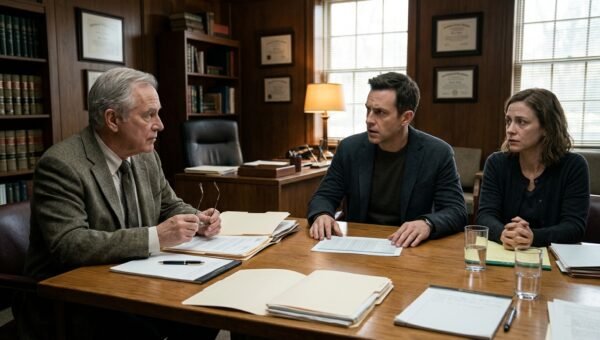
I called the lawyer who handled our parents’ estate. He met me the next morning. I brought the will, the title notice, and the draft Donna had filed.
He read the draft twice. Then he said, “This isn’t a valid codicil.”
“So the will still stands?”
“Yes. But the filing can make a sale or a loan messy until it’s cleared.”
That was enough to get my attention. The ranch wasn’t just a number on a page to me. It was where I lived. Where my parents had been. Where I could still tell which gate needed a lift because the ground had settled underneath it.
My lawyer said there was a way to protect the title while we dealt with Donna’s filing. I already had a land-holding LLC, Stonewell Creek Holdings, that I’d set up years ago for ranch business. He said we could legally convey the ranch to it, with me as its only manager. That would put the deed in the name of an independent business entity instead of leaving it exposed to Donna’s personal probate challenge.
“Is that hiding it?” I asked.
“No,” he said. “It’s a recorded transfer. We’re not hiding anything.”
He was careful about the rest. The LLC wasn’t a magic shield, and it wouldn’t make Donna’s claim disappear on its own. But the deed would be held by the LLC, not me personally, and her claim against me as an heir wouldn’t give her a right to enter the property or take it over.
I signed the deed. The registry stamped it. Then my lawyer filed for an emergency injunction against interference and trespass.
I thought that would be the hard part. I was wrong about that.
I did think about calling Donna before I signed. I picked up my phone and looked at her name. Then I remembered the filing and put the phone down. Maybe I wanted her to be stopped more than I wanted to hear her explain herself. That’s not my best side. I know.
The papers came through five days before her first visit with the trucks. The first time she arrived, she had Henderson beside her and two moving crews behind her, and I was still trying to decide whether she believed what she was saying or just needed me to believe it. She’d brought no signed codicil, no court order giving her the ranch, nothing that could make that demand real.
But she had a folder, a lawyer, and the nerve to say our father promised her half.
After she left, I asked my lawyer what would happen if she came back and tried to force her way in.
“Don’t meet her alone,” he said. “Don’t put hands on anybody. We’ll have the orders served at the gate.”
So I hired a local process server and arranged for Deputy Miller to be there. I didn’t want a fight in the driveway. I wanted the papers delivered properly, with someone there to keep the moving crew from getting pulled into it.
Two days later, Donna came back.
I heard the trucks before I saw them. They were rattling along the county road, one behind the other. I was standing near the cattle guard when Henderson’s pickup appeared in front. Donna sat beside him. Her fingers were tapping the passenger door.
Then she saw Deputy Miller and the process server by the gate.
She leaned across Henderson and shouted through the open window, “What is this?”
Deputy Miller stepped up. He didn’t raise his voice. “I have an injunction and a trespass notice for you.”
The process server held out the papers. Henderson took them first.
Donna twisted toward him. “You said the ranch was mine.”
Henderson looked down at the pages. For a second, he didn’t say anything. Then he leaned closer to the window and passed the documents to Donna.
She read the first page. Her face changed, not all at once, but enough.
“What did you do?” she yelled at me.
“I put the deed where the court can see it,” I said.
“You transferred Dad’s ranch behind my back.”
“It’s not behind anybody’s back. It’s recorded.”
Henderson was still reading. Deputy Miller explained that the injunction barred Donna from interfering with the property or entering it without permission. The certified deed showed Stonewell Creek Holdings as the owner. The probate claim she’d filed could not reach the LLC’s deed just because she said our father had promised her half.
The county had also referred the affidavit and lien filing for review as possible fraud. The court papers warned that ignoring the injunction could mean contempt charges.
Donna gripped the pages. “You’re doing this to your own sister.”
I wanted to say something ugly. I wanted to remind her how long I’d been here while she was gone, and how quickly she came back once she needed money. Instead, I said, “You filed against me first.”
The crew leader had climbed down from the first truck. He read the injunction while Deputy Miller explained the warning. Then he looked at Henderson.
“We’re not unloading here,” he said.
Donna snapped, “You’re paid to move my things.”
“I’m paid to move them where I’m allowed,” he said. “I’m not taking a trespass charge.”
The first truck turned around. The second followed it, slow and careful on the narrow road. Donna had to pay the wasted moving fees herself.
Henderson folded the papers and looked at her. “I can’t take this further as filed.”
“What does that mean?”
“It means I’m withdrawing.”
He wasn’t gentle about it, but I didn’t blame him for backing away once the records were in front of him. He’d tried to press an invalid claim. He wasn’t going to risk sanctions for it. Later, the bar inquiry followed the filing, and the court removed the cloud on the ranch title.
Donna stayed in the pickup. She didn’t apologize. I didn’t ask her to.
“I hope you’re happy,” she said.
I had no answer that would fix anything. The ranch was protected. The will was honored. The legal mess was handled. I’d wanted that, and I got it.
But I had also chosen paperwork over one last conversation, and she had chosen a false claim over the chance to talk to me. I can’t say those choices felt equal. I can say they were both ours.
After Henderson drove away, I opened the gate. Deputy Miller and the process server left a little later. I was alone by then, listening to the trucks get smaller on the county road.
The iron gate swung shut. I pulled the heavy chain through the latch and clicked the padlock closed. Dust settled behind the moving vans, and I stood there with the deed safe inside Stonewell Creek Holdings and Donna gone from the ranch.