PART 1
For sixteen years, every single Thanksgiving, graduation, and summer barbecue in my family followed the exact same routine. I would pack up the potato salad or the wrapped gifts, walk out to the driveway, and listen to my husband, Mark, apologize from the front porch.
His hands would usually be shoved deep into his work jacket pockets. He would look down at his boots, shake his head, and say the noise was just too much for him.
Crowds made his chest tight, he told me. Big groups made him feel like the walls were closing in, and my family was nothing if not loud. We had forty-odd cousins, aunts who talked over each other, and uncles who turned every conversation into a shouting match over football. I felt guilty leaving him behind, but after the first five years, I stopped begging.
My sisters never let me forget it. To them, Mark was just plain disrespectful. My older sister, Brenda, called him a ghost to my face. She said a man who loved his wife showed up for her people, even if he had a headache. Every holiday, I spent half my time making excuses for an empty seat and the other half swallowing my own embarrassment. When people asked where he was, I would paste on a smile, say his social anxiety was acting up again, and change the subject.
The lie held together until the second week of October, when my cousin Clara came up from Dallas to stay with us.
Clara was my mother’s brother’s daughter. She had lived in Texas for over twenty years, working in commercial real estate, and she had never once met Mark. Every time she had visited our town in the past, Mark had conveniently taken an extra shift at the county transit garage or headed up to his buddy’s hunting cabin.
She arrived on a rainy Thursday evening while Mark was still finishing an overtime shift. I set her suitcase in the guest bedroom, put the kettle on the stove, and poured us both a cup of chamomile tea. We sat at the kitchen island catching up on years of family news.
Clara wandered over to the built-in desk near the pantry where I kept our mail and family photos. Right in the center sat a framed picture from our trip to the Grand Canyon five years earlier.
Mark was wearing his dark blue baseball cap, squinting into the sun with his arm around my shoulders.
Clara stopped mid-sentence. She leaned in, her knuckles resting on the edge of the granite counter. The color drained completely from her face.
“How do you know him?” she asked.
Her voice had dropped to a thin whisper. She did not point or laugh. She just stood there staring at the glass frame.
“What do you mean?” I said, setting my mug down. “That’s Mark. He’s my husband.”
Clara backed up until her knees hit the barstool behind her. She collapsed into the wooden seat, her hand flying to her mouth.
“No,” she said. Her eyes were wide, fixed on the photograph like she was looking at a ghost. “His name isn’t Mark. That’s David. We dated for two years in Houston. He proposed to me, I refused him, and he completely vanished.”
PART 2
I stood frozen beside the counter, holding the kitchen towel in both hands.
“You have the wrong man, Clara,” I said, trying to keep my voice steady. “Mark grew up in Missouri. He moved here twenty years ago. He works for the county transit department. He has never lived in Houston.”
Clara did not argue. She reached into her purse, pulled out her phone, and tapped on the screen. Her fingers were trembling. She opened a digitized photo album and turned the screen toward me.
There was Clara, in her late twenties, wearing a sundress on a wooden boardwalk. Beside her, with a beer in one hand and the exact same crooked smile he gave me every morning, was my husband. He looked younger, his hair was dark brown without the gray at his temples, but there was no mistaking the scar through his left eyebrow from when he fell off a tractor as a boy.
“His name was David Miller back then,” Clara said softly, looking down at the screen. “We met in 1998. We were together for two years. He bought a ring, took me out to Galveston, and asked me to marry him. I was twenty-four. I told him I wasn’t ready. Two days later, his apartment was empty. His phone was disconnected. He didn’t show up for work. I spent six months terrified that he was dead in a ditch somewhere.”
The kitchen grew very quiet. The rain tapped against the window behind the sink.
Then Clara looked up at me, and her expression changed from shock to genuine confusion. “Did he never mention Dallas? Did he never say anything about Texas?”
“Never,” I said. My mouth felt completely dry.
In sixteen years of marriage, I had represented him at every baptism, every wedding, every funeral. I had taken the insults from my sisters, defended his quiet nature, and eaten Thanksgiving dinner alone at tables surrounded by my cousins. He hadn’t been avoiding crowds. He had been avoiding the chance that someone in my family might hold up a camera, mention a name from Texas, or invite Clara to dinner.
He walked through the front door at twenty past six.
I heard his boots scuffing on the rubber mat in the hallway. I heard the familiar jingle of his transit keys being tossed into the wooden bowl by the coat rack.
“Beth?” he called out, unzipping his jacket. “You won’t believe the mess on Route 4 today. A delivery truck took out a light pole near the depot.”
He walked into the kitchen, wiping rain off his forehead with the back of his hand, and stopped.
Clara was sitting at the island, looking straight at him.
Mark did not speak. His mouth parted slightly, and his shoulders dropped about two inches. The keys he had tossed in the entryway seemed to echo in the room. He looked at Clara, then slowly turned his eyes toward me.
“Hello, David,” Clara said quietly.
PART 3
Mark backed up until his shoulder pressed against the doorframe of the kitchen. For a long, suffocating minute, nobody said a word.
“Clara,” he finally whispered. His voice was hoarse, stripped of any confidence.
“David,” she repeated. “Sixteen years Beth has been coming to family dinners alone. She told everyone you had panic attacks around people. You were hiding from me.”
“I wasn’t hiding from you,” Mark said, his eyes darting to the floor. “Not just you.”
“Get in here and sit down,” I told him. My voice was low, but it had an edge I had never used with him in our entire marriage.
He pulled out the chair across from Clara and sat. He placed his hands flat on the wooden table, staring at his wedding band. He looked smaller than he ever had.
“My real name is David Mark Miller,” he said, speaking directly to the tabletop. “Mark is my middle name. When I left Houston, I used my middle name. I didn’t change it legally until four years later when I got the job with the county.”
“Why did you run, David?” Clara asked, leaning forward. “Because I said no to a ring? People break up every day. You don’t fake your identity and disappear off the face of the earth over a broken engagement.”
Mark swallowed hard. He kept his eyes fixed on the wood grain. “It wasn’t the engagement, Clara. It was what happened right after.”
Clara frowned. “What are you talking about?”
“Two weeks before I proposed, a girl I had dated before you came back into town,” Mark said. His knuckles turned white against the table. “She was pregnant. She told me the baby was mine. She didn’t want anything from me, but she wanted me to know she was placing the baby for adoption through an agency in Fort Worth. She had already picked the couple.”
Clara stared at him, bewildered. “And you didn’t tell me?”
“I was terrified,” he said, his voice cracking. “I thought if I married you right away, we could build a normal life and I could pretend it never happened. When you turned me down, I panicked. The agency called me for medical records. The guilt ate me alive. I felt like a failure at twenty-six years old. So I packed my car and drove north until I ran out of gas money.”
“That was twenty-five years ago,” I said, feeling a knot tighten in my throat. “What does that have to do with you skipping my family’s holidays for sixteen years? You met me ten years after that.”
Mark finally looked up at me. His eyes were red-rimmed and miserable.
“Because the child found me, Beth,” he said.
The room seemed to drop several degrees.
“What?” Clara said.
“Three years after Beth and I got married,” Mark continued, his voice barely audible. “The adoption records were unsealed when the kid turned eighteen. It was a girl. Her adoptive parents named her Chloe. She sent a letter through the state registry. We met once at a diner forty miles outside town.”
He paused, drawing a shaky breath.
“She didn’t want money. She had good parents. But she had moved to this area for college. She got a degree in accounting. Six years ago, she took a job at the regional hospital network.”
I felt my heart drop into my stomach. My older sister, Brenda, had been the billing director at that exact hospital network for twelve years.
“Chloe works in billing,” Mark whispered, looking directly at me now. “She sits three desks away from your sister Brenda. They have lunch together. Brenda talks about Chloe all the time. She’s mentioned her at Sunday dinners.”
The room spun for a second. Brenda had talked about her new assistant. She had praised a young woman named Chloe who helped her with insurance audits. Brenda had brought Chloe’s homemade banana bread to Easter two years ago.
“You knew,” I whispered.
“I found out the week before Thanksgiving eight years ago,” Mark said, burying his face in his hands. “Chloe posted a picture on her private page of her office team for Brenda’s birthday. I saw your sister standing next to my daughter. If I had gone to Thanksgiving, Brenda would have talked about her. If Chloe had ever come to a retirement party or a family picnic with Brenda, she would have seen me. She promised her adoptive parents she would keep our meeting private, but Brenda would have figured it out in five seconds. She looks just like my mother.”
ENDING
Clara left the next morning on an early flight back to Dallas. She hugged me at the door, promised she wouldn’t say a word to the rest of the family until I was ready, and told me she was sorry she had brought an old storm into my living room.
Mark slept on the sofa in the den that night, and the three nights after that.
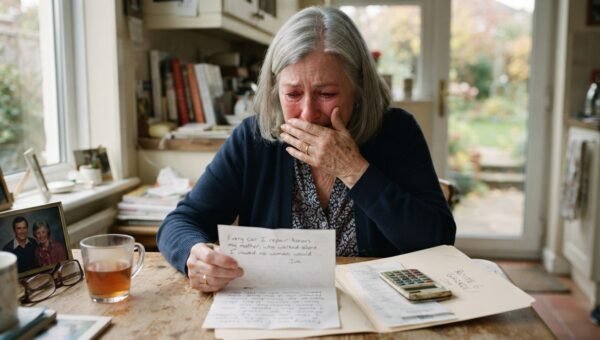
The anger I felt wasn’t about a child born twenty-five years ago in Texas. It wasn’t even about Clara, or the fact that he had once loved my cousin. It was the sixteen years of isolation he had forced on me. He had let my sisters call him arrogant. He had let my mother die believing her son-in-law disliked her cooking. He had let me sit alone on folding chairs at every wedding, making up excuses for his delicate nerves, all to protect his own cowardice.
On Tuesday afternoon, I drove to the county transit office, waited until his shift ended, and handed him a manila folder. Inside was the phone number for a family mediator and the business card of a real estate agent.
“I am not living another year carrying your secrets,” I told him in the empty parking lot.
He didn’t make an excuse. He just nodded, his eyes tired and defeated, and agreed to pay for the mediation out of his pension savings.
We did not divorce right away, but we separated the following month. He moved into a small one-bedroom apartment near the bus depot. With the help of the counselor, he finally reached out to Chloe and asked to meet properly, without looking over his shoulder.
Three weeks ago was my nephew’s wedding.
For the first time in sixteen years, I walked into the church alone, not because my husband was hiding at home with fake anxiety, but because I had chosen my own seat. My sister Brenda sat in the row ahead of me. She turned around, squeezed my hand, and didn’t ask a single question about why Mark wasn’t there.
I still have the Grand Canyon photo, but it sits in a cardboard box at the top of the guest room closet. Sometimes the hardest part of finding out the truth isn’t the lie itself. It is realizing how much of your own life you spent apologizing for a man who was simply afraid of being seen.