PART 1
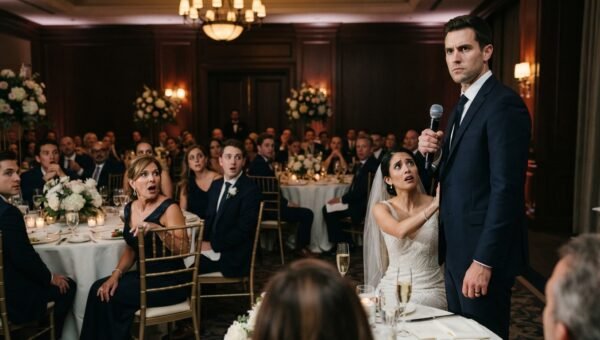
When my daughter Laura stood up with her champagne glass at the bridal shower, I expected a thank-you. Instead, she laughed into the microphone and said I was “good for writing checks, not giving advice.”
The room chuckled politely. The country club terrace was full of women in pastel linen and wide hats, women who had known Laura since she was a girl. I smiled and took a sip of iced tea because making a scene in public has never been my way. But my chest burned.
When Laura had a baby at nineteen and tried to finish nursing school, I was the one who moved into her spare room. For three years, I woke up with my granddaughter, Maya, gave her oatmeal, walked her to daycare, and washed Laura’s scrubs so she could study for her boards. Laura had forgotten that, or she had chosen to turn it into a punchline for the people she wanted to impress.
An hour later, I slipped down the hallway toward the ladies’ room to wash my hands. The heavy oak door to the coatroom was cracked open. Two of the bridesmaids were leaning over the vanity counter, refreshing their lip gloss.
“Is her grandmother really sitting at table fourteen?” one of them asked.
“Table fourteen is by the kitchen doors,” the other whispered. “Richard’s mother insisted on it. She told Laura that having an old woman in Sears slacks at the family table would look awful in the pictures.
She said Carol is just a little too country for the crowd Richard’s father runs with.”
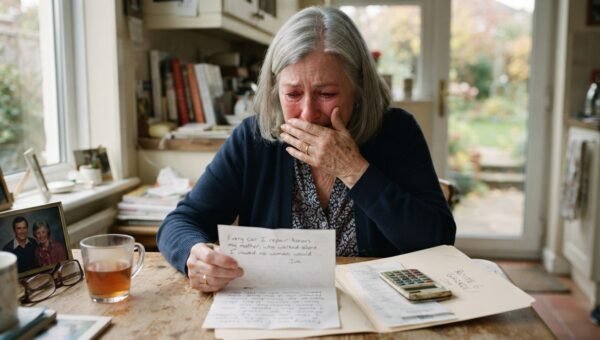
I stepped back into the corridor and walked out the side door into the parking lot. I drove twenty miles back to my house with the windows rolled down, letting the warm air hit my face. I told myself I wouldn’t cause trouble. Maya was twenty-four, she was marrying a nice young lawyer named Richard, and I had already paid the $5,000 non-refundable deposit on the reception hall at the Riverview Manor four months ago as my wedding gift to her. If they wanted to tuck me near the kitchen swinging doors where Richard’s high-society family wouldn’t have to see my rough hands, I would eat my prime rib quietly, kiss Maya on the cheek, and drive home early.
Two days after the shower, my house phone rang while I was pulling weeds by the hydrangeas.
“Mrs. Carol Miller?” a woman asked.
“Speaking.”
“This is Diane from the Riverview Manor event office. I’m calling to verify the final billing run for the wedding reception this Saturday.
We charged the remaining balance of $7,800 to your Visa on file this morning, along with the secondary addendum for $6,400 in custom upgrades that came through yesterday.”
I stopped with my garden trowel half-buried in the dirt.
“Wait,” I said, wiping my forehead. “What upgrades?”
“The champagne tower, the imported calla lilies for the head table, the late-night dessert bar, and the private lounge setup,” Diane read off her screen. “It totaled $6,400. It was authorized against the primary card on the contract. Yours.”
“I never approved an extra $6,400,” I said, my voice hardening. “I agreed to the deposit and the standard package balance. Who authorized those additions?”
Diane paused. The sound of keyboard keys clicked on the line.
“The change order was signed yesterday afternoon by Eleanor Hayes,” Diane said. “Mr. Richard Hayes’s mother. She stated she had full proxy from the bride and the cardholder. And she added one specific layout request on the floor plan that we needed you to confirm before the setup crew arrives tomorrow.”
“What request?” I asked.
“Mrs. Hayes requested that table fourteen be removed from the main hall entirely,” Diane said. “She asked us to set a single place setting for you in the vendor breakroom behind the kitchen so you wouldn’t feel overwhelmed by the music.”
PART 2
The phone stayed pressed against my ear for a long five seconds before I could find my voice.
“Diane,” I said, keeping my words quiet and steady. “Do you have that change order in front of you?”
“Yes, ma’am,” she replied. “It’s right here in the digital portal. Mrs. Hayes emailed it yesterday at 3:15 with an attached authorization form.”
“And did that form have my signature on it?”
There was a rustle of papers, followed by a slight hesitation on the other end. “It has your name printed on the billing line, and Mrs. Hayes signed as the coordinating host. She wrote ‘verbal authorization by cardholder’ right beside it.”
“I never spoke to Eleanor Hayes in my life,” I said. “I have met that woman exactly twice, once at the engagement party and once at the shower. I never gave her permission to touch my account, and I certainly never agreed to eat my dinner in a staff breakroom like an unwanted stray.”
Diane took a sharp breath. “Mrs. Miller, our contract states that all additions must be approved by the primary cardholder or the designated wedding planner. When Mrs. Hayes called, she told us she was handling all family expenses on your behalf.”
“My bank will have that $6,400 charge reversed as fraud by noon if you don’t fix this,” I told her. “Who actually owns this contract right now?”
“You do,” Diane said. “Your name is on the primary agreement because you paid the initial five-thousand-dollar deposit and signed the vendor agreement back in February. Without your signed release, no other party has legal authority to modify the setup or bill against your file.”
“Then I am driving over to your office right now,” I said. “Do not process another nickel, and do not touch those tables until I look at that paperwork.”
I hung up, walked into the kitchen, and washed the garden soil from my fingers. My hands were shaking, but not from fear. It was the cold, clean anger that comes when you finally realize how foolish you have been for staying quiet.
I picked up my purse, grabbed the original carbon copy of the venue contract I kept in my desk drawer, and called my daughter Laura.
Her phone rang four times before she picked up. The background noise sounded like a bustling nail salon.
“Mom? What is it? I’m in the middle of getting my gel set done for rehearsal.”
“Laura,” I said. “Did you know Richard’s mother charged $6,400 to my Visa card yesterday?”
The line went dead silent for a moment. Then Laura let out a long, irritated sigh. “Oh, Mom, don’t start with the money right now. Eleanor said you offered to help with the extras. Richard’s family has very important guests coming from the state bar association. They couldn’t just have basic house wine and regular carnations. It would look cheap.”
“I never offered her a dime, Laura. And she told the venue to put me in the vendor breakroom so I wouldn’t embarrass her friends.”
Laura’s voice got defensive, the sharp edge coming out just like it did whenever she felt cornered. “Eleanor said you have bad hearing and that the bass from the band would give you a migraine. She was trying to do you a favor so you wouldn’t feel out of place! Why do you always have to make everything about your feelings? You already paid for the hall. Just let Richard’s family have their day without turning it into a dramatic production.”
“I’m good for writing checks, right?” I asked her.
“Mom, that was just a joke at the shower,” she snapped. “Everyone knew it was a joke. Don’t be so petty.”
“It wasn’t a joke to Eleanor,” I said, and I disconnected the call before she could answer.
I got in my car and drove the twelve miles across town to the Riverview Manor. The afternoon sun was glaring off the glass facade of the administrative wing. When I walked into the event office, Diane looked up from her desk, recognizing me immediately from my winter visit. She stood up, her face tight with professional worry.
“Mrs. Miller,” she said, shutting the office door behind me. “I pulled the file.”
She laid a manila folder on the desk between us. On top was the change order Eleanor Hayes had submitted. Attached to the back was a photocopy of the seating chart for the Grand Ballroom.
Every round table was numbered from one to twelve, circled in red ink with names written beside them. Table one was the bride and groom. Table two was Richard’s parents and their country club friends. Table three was Laura and her new husband.
Table fourteen had an arrow drawn through it with a black marker, leading out of the ballroom, through the kitchen pantry, and pointing directly to a small gray box labeled “Staff Locker & Break Area.”
Beside the arrow, in neat, sloping cursive, Eleanor Hayes had written: *Please keep groom’s elderly maternal side out of main line of sight during photography. Breakroom seating preferred for dinner service.*
I looked at Diane. “Who signed the master contract that gives the venue permission to open the doors tomorrow evening?”
“You did,” Diane said quietly. “Under section four, the primary signer reserves the right to cancel, modify, or restrict access to the premises up until twenty-four hours before the event.”
“Print out the cancellation policy,” I said. “And call Eleanor Hayes on speakerphone right now.”
PART 3
Diane dialed the number listed on the change order. It rang twice before a woman answered in a clipped, polished voice.
“Eleanor Hayes.”
“Mrs. Hayes, this is Diane from Riverview Manor. I have Mrs. Carol Miller here in the office with me regarding the billing adjustments and floor plan you submitted yesterday.”
There was a brief pause on the line. Eleanor cleared her throat, her voice adopting that smooth, patronizing tone people use when they think they are dealing with someone simple.
“Oh, Carol,” Eleanor said. “I didn’t think Diane would bother you with the details. Laura assured me you were happy to handle the remaining costs. We simply wanted the event to match the social standing of Richard’s father’s firm. Surely you understand that a standard package wasn’t appropriate for our family.”
“I understand that you used my card number without my permission,” I said directly into the speaker. “In this state, running $6,400 on an unauthorized card is grand larceny. And writing a note to banish me to a kitchen pantry while I pay for your champagne is something I am not going to tolerate.”
“Now, let’s not be dramatic,” Eleanor said, a slight nervous rattle entering her voice. “It was an oversight regarding the signature. Richard’s father can reimburse you for the upgrade fee after the honeymoon if it’s that tight for you. As for the seating, we genuinely thought the quiet room would be more comfortable for an older woman from the county. We didn’t want you to feel overwhelmed by people you don’t know.”
“My money doesn’t seem to make you feel overwhelmed,” I said.
“Carol, please,” Eleanor said, her voice turning sharp. “The wedding is in forty-eight hours. The flowers are already ordered. You cannot make a scene over a minor misunderstanding.”
“It isn’t a misunderstanding, Eleanor. It is a cancellation.”
Diane looked up from her desk, her eyes wide.
“What did you just say?” Eleanor demanded.
“I am the sole person on this facility contract,” I said into the phone. “I just instructed Diane to void the $6,400 unauthorized charge immediately. And I am exercising my right under section four to cancel the ballroom reservation for Saturday evening.”
“You can’t do that!” Eleanor shrieked, the polished veneer completely breaking. “We have two hundred guests arriving from three different states! Richard’s senior partners have already checked into the downtown hotel! You will ruin my son’s wedding!”
“Then you have exactly two hours to bring a cashier’s check to this office for the full fourteen thousand two hundred dollars to put the room in your own name,” I said. “Because if you don’t, the doors will be locked when your guests arrive on Saturday.”
I reached over and pressed the red button on Diane’s desk phone, cutting Eleanor off mid-sentence.
Diane stared at me in absolute silence for three seconds. Then she looked down at the contract in her hands.
“Mrs. Miller,” she said slowly. “If she pays the full amount by cashier’s check, the booking will transfer entirely to the Hayes family. Your deposit of five thousand will be credited back to your Visa according to our contract terms.”
“Do it,” I told her.
I sat in the leather armchair in the corner of Diane’s office. For the next hour and a half, my cell phone buzzed continuously in my lap.
Laura called four times. Richard called twice. I didn’t answer either of them.
At four-fifteen in the afternoon, the front door of the management building opened with a loud chime. Eleanor Hayes marched in, followed by her husband, a tall man in a gray business suit whose face was flushed dark red. Behind them came Laura, her makeup smudged and her eyes swollen from crying.
Eleanor didn’t look at me. She threw a certified bank check onto Diane’s desk with enough force to scatter a stack of business cards.
“There is your money,” Eleanor snapped, her jaw rigid. “Every single penny, including your cancellation transfer fee. Take Carol Miller’s name off that board, take her credit card off the system, and issue her a receipt so she has no reason to ever step foot on this property.”
Diane inspected the cashier’s check, stamped the file, and printed out the cancellation release for me to sign. I walked to the desk, took the pen, and signed my name on the line that released me from all financial responsibility for the wedding of Maya Miller and Richard Hayes.
Laura stepped toward me, her voice breaking. “Mom, how could you do this to Maya? She is sitting in her apartment crying her eyes out! You almost ruined her wedding day!”
I turned and looked my daughter straight in the eyes.
“I didn’t do this to Maya, Laura. Eleanor did when she decided I was good enough to pay her bills but not good enough to sit in the same room with her friends. And you did when you laughed at that shower and let her treat your own mother like hired help.”
Laura opened her mouth to argue, but no words came out. She looked at Eleanor, then at Richard’s father, who was staring fixedly at the carpet, refusing to defend his wife.
I took my receipt, folded it neatly, and placed it inside my purse.
“I won’t be at the wedding on Saturday,” I told Laura quietly. “You won’t have to worry about anyone finding me a little too country.”
ENDING
I drove home through the late afternoon traffic, stopped at the grocery store, and bought a carton of strawberries and a loaf of sourdough bread. When I walked into my house, the quiet felt different. It wasn’t lonely. It just felt clean.
On Friday morning, twenty-four hours before the ceremony, my front doorbell rang.
I opened the door to find Maya standing on the porch. She was wearing an oversized college sweatshirt and running shoes, holding a small cardboard box in her arms. Her eyes were red, and she looked exhausted.
“Can I come in, Grandma?” she asked.
I stepped back and held the screen door open. She walked into the kitchen, set the box on the wooden table, and sat down in the same chair where she used to eat pancakes before school when she was seven years old.
“Richard told me everything yesterday,” Maya said, her voice barely above a whisper. “He heard his mother screaming at his dad after they left the venue office. Mom tried to cover it up, but Richard showed me the seating chart Eleanor made.”
She looked up at me, tears spilling over her lashes. “Grandma, I didn’t know. I swear on my life I didn’t know Eleanor moved your table. Mom told me you asked to sit near the back because you didn’t want to be around the noise. I should have called you. I was so caught up in the dresses and the flowers that I didn’t even check.”
I pulled a chair out beside her and took her hands. They were cold, just like they used to be on winter mornings when I bundled her into her yellow coat for daycare.
“I know you didn’t plan it, Maya,” I said gently. “Eleanor wanted a certain kind of wedding, and your mother wanted to give it to her.”
“I told Richard this morning that if his mother ever treats you like that again, we aren’t spending holidays with them,” Maya said, wiping her face with the sleeve of her sweatshirt. “I told him I wouldn’t marry him if he didn’t stand up to her.”
“Did he?” I asked.
Maya nodded slowly. “He made Eleanor call off the rehearsal dinner toasts last night, and he told his dad that the money they spent on the venue was their problem now. But Grandma… please come tomorrow. I don’t care about table two or table fourteen. You can sit right next to me at the head table.”
I looked at my granddaughter, seeing the little girl I had raised through nursing school textbooks and late-night fevers, and the grown woman she was trying to become.
“No, sweetheart,” I said softly. “Tomorrow is your wedding day. If I sit at that head table, Eleanor will spend the entire night stewing, your mother will look miserable, and people will be whispering instead of looking at you in your white dress. You don’t need a battle in the middle of your ceremony.”
“It’s not fair,” Maya whispered.
“Life rarely is when people care more about appearances than blood,” I said. “You go marry Richard tomorrow. Be a good wife, but don’t let anyone make you feel small. And next Tuesday, when all the out-of-town guests are on planes, you come back to this kitchen and we’ll eat leftover peach cobbler together.”
She stayed for another hour, drinking sweet tea and helping me hull the strawberries I had bought. When she finally hugged me on the porch before driving away, she seemed lighter, like a heavy stone had been taken out of her pockets.
Saturday came and went with bright blue skies. I spent the afternoon out in my garden, staking the tomato plants and listening to the birds in the maple trees.
My Visa statement arrived in the mail three weeks later. The $5,000 deposit credit had posted cleanly, bringing my balance to zero.
Laura hasn’t called me since that afternoon in Diane’s office. She posted dozens of photos from the reception on Facebook, pictures of towering calla lilies, crystal champagne flutes, and Eleanor Hayes smiling in a silver gown. I looked at each photo once, closed the app, and didn’t leave a single comment.
On Tuesday afternoon, a blue sedan pulled into my driveway. Maya walked up the steps carrying two slices of wedding cake wrapped in foil, kicked off her shoes by the door, and sat down at my kitchen table without saying a word. I pulled two forks from the drawer, set them on the table, and we ate together in the quiet house.