PART 1
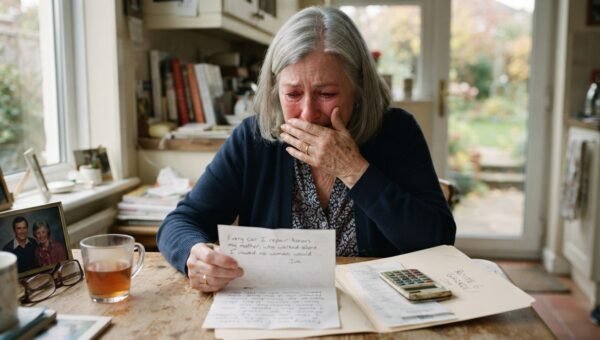
The notification came through while I was wiping down the kitchen counter after lunch. It lit up our shared iPad by the toaster with a short chime: Fidelity Investments. Withdrawal processed: $42,000.
I stopped with the wet dishrag still in my hand. We had built that account over 29 years of marriage, starting with fifty dollars a paycheck back when we lived in a drafty two-bedroom rental on Maple Street.
As of last winter, our total balance was sitting right around $380,000. It was supposed to be our safety net, the money that would let us breathe once Greg retired from the municipal water district.
I tapped the screen with a damp knuckle. The app opened right to the activity log, and that was when my stomach dropped.
The $42,000 wasn’t the first withdrawal. It was the third one in six months.
On March 14th, $28,000 had gone out. On June 2nd, another $35,000. And then today, October 18th, $42,000.
A total of $105,000 gone.
All three transfers went into a personal checking account at a bank in town where we didn’t have an account, or at least where I didn’t have one. My name wasn’t on the receiving account number shown on the screen.
My hands shook so hard I nearly dropped the tablet on the linoleum. I pressed the call button for Fidelity customer service right there from the screen.
A polite young man with a flat Midwestern accent answered after three rings.
“Ma’am, I can see the account,” he told me after I gave him the account number and verified my address and birthdate. “You are listed as the primary beneficiary. But your husband, Gregory, is the primary account holder. Only the account holder has transaction authority to transfer funds or change distribution schedules.”
“Can you put a temporary stop on that $42,000?” I asked. “I’m his wife. We filed jointly for twenty-eight tax years. That’s our retirement.”
“I understand, Mrs. Miller,” the young man said, lowering his voice just a little. “I truly do. But by law and by our firm’s account agreement, I cannot freeze or alter transactions requested by the primary owner without a court order or a signed revocation of electronic consent.”
I hung up and sat on the kitchen stool until four in the afternoon. The clock on the microwave kept humming.
Greg came home at five-thirty, smelling like diesel and coffee like he always did. He hung his jacket on the peg in the entryway, kicked off his boots, and sat down at the table. I had made meatloaf, his mother’s recipe with the brown sugar and ketchup glaze he loved. I set the plate down in front of him.
He picked up his fork and cut into the meat.
“Where is $105,000, Greg?” I asked.
He stopped moving. The fork stayed halfway between his plate and his mouth. For three seconds, the only sound was the refrigerator compressor running in the corner.
He slowly lowered his fork and put it down against the edge of the plate. He didn’t look up at me.
“Invested it,” he said.
“Invested it in what?”
“A house,” he said.
“We have a house,” I said. “We’ve lived in this house for twenty-four years. It’s paid off.”
Greg said nothing. He stared straight down at his green beans, picked up his glass of ice water, took one sip, and set it back down. Then he wiped his mouth with a paper napkin and walked upstairs to the guest bedroom, closing the door behind him without another word.
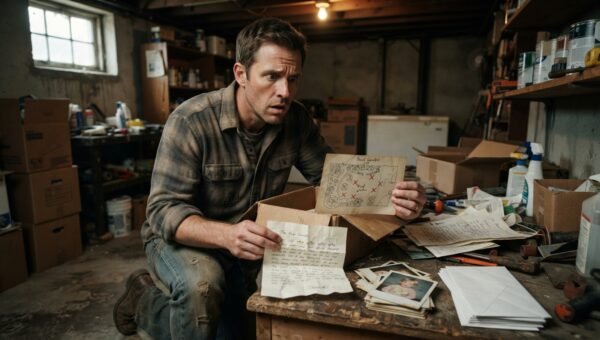
I waited until midnight, when his heavy snoring started drifting through the ceiling. Then I took his work laptop from the kitchen table. He had left his browser open, and the history tab was right there.
There were dozens of visits to a real estate listing in Clearwater, Florida. Three bedrooms, two baths, screened pool, stucco exterior, palm trees by the driveway. Listing price: $310,000.
I scrolled through the saved PDF folder on his desktop until I found the closing documents and the preliminary deed.
The deed listed two buyers as joint tenants with rights of survivorship. The first name was Gregory Miller.
The second name was a woman I had never heard of: Deanna Vance.
PART 2
I didn’t sleep that night. I sat at the kitchen table with a notebook and wrote down every date, every amount, and every account number from that laptop screen.
By eight in the morning, I was sitting in the office of Arthur Vance, an estate and family attorney two towns over whose name I got from my sister. He wasn’t related to the Deanna on the deed, which was the first thing he confirmed when he saw my hands shaking as I handed him the paperwork.
Arthur spread the documents across his oak desk. He read the deed, then the Fidelity withdrawal receipts, and then he pulled up our county land records and the Pinellas County, Florida public clerk records on his computer.
“Here’s what you’re looking at, Evelyn,” Arthur said, taking off his reading glasses. “The Florida purchase closed thirty days ago. The down payment and initial private mortgage reserves match that $105,000 almost to the penny. But that’s only the start of your trouble.”
He turned his computer monitor toward me. He had pulled up the automated distribution schedule for Greg’s Fidelity account, which was visible on the transaction history copies I’d printed.
“Under the distribution agreement he executed six weeks ago,” Arthur explained, pointing his pen at the screen, “the remaining balance of approximately $275,000 is scheduled for a full rollover transfer to a third-party custodial title account in fourteen days. November 1st.”
“Why would he move all of it?” I asked.
“Because a rollover to a non-qualified private property trust removes it from standard ERISA spousal protections once the funds clear,” Arthur said. “If that transfer goes through, you won’t be able to touch that money without years of litigation in two different states. But there is an emergency window. Because you are listed on the underlying institutional master plan as the surviving spouse, we can file a formal spousal consent revocation with Fidelity’s legal department today. That freezes all outgoing distributions until a court rules on the marital property division.”
I leaned back in the leather chair, feeling the room tilt. “Who is Deanna Vance, Arthur? Do you know?”
Arthur looked at me for a long moment. He slid another paper across the desk. It was a search he had run through an insurance registry database using Greg’s Social Security number.
“Two years ago, your husband took out a supplementary $250,000 term life insurance policy through an independent carrier,” Arthur said quietly. “Not through his union. He paid for it out of that separate checking account. The primary beneficiary isn’t you, and it isn’t your children. It’s Deanna Vance.”
“Is she a girlfriend?” I asked, my voice cracking on the word. “Is he leaving me for another woman?”
“I don’t think so,” Arthur said. “Look at her birthdate on the Florida deed.”
I looked at the line where Deanna Vance had signed. Her date of birth was listed right under her notarized signature: June 12, 1994.
She was thirty-two years old.
Greg was fifty-eight.
“Thirty-two years ago,” I whispered. “That was 1994. The year we were trying to have our first baby. The year he took that six-month assignment rebuilding the water pumping stations down in Escambia County.”
“You need to ask him directly, Evelyn,” Arthur said. “I am filing the spousal consent revocation right now by certified courier and electronic portal to Fidelity’s compliance office in Boston. That stops the $275,000. But you need to know who is on that deed before we file for an emergency financial restraining order tomorrow morning.”
I drove home with the Florida deed resting on the passenger seat. When I pulled into the driveway, Greg’s truck was there. He hadn’t gone to work. He was sitting on the front porch steps in his work shirt, holding a cold cup of coffee between his boots.
PART 3
I got out of the car, walked up the walkway, and dropped the copy of the Florida deed directly into his lap.
Greg didn’t flinch. He looked down at the paper, then set his coffee mug on the wooden step beside him.
“Fidelity is frozen, Greg,” I told him. My voice wasn’t shaking anymore. It was cold and flat. “Arthur Vance filed the spousal revocation an hour ago. That remaining $275,000 isn’t going to Florida in fourteen days. Not a single cent moves.”
He closed his eyes. His shoulders slumped forward, and for the first time in thirty years, he looked like an old man.
“Who is she?” I asked. “Tell me right now, or I swear to God I will have the sheriff serve you with an injunction at your maintenance shop before lunch.”
He rubbed both hands over his face. “She’s my daughter, Evelyn.”
The front porch fell completely silent. A blue jay called from the maple tree in the front yard. A car drove past on the road, its tires humming on the asphalt.
“Your daughter,” I repeated.
“Summer of ’94,” he said, staring at the floorboards between his feet. “Down in Pensacola. I was lonely, I was stupid, and I made a mistake with a woman who worked at the diner near the job site. It lasted three weeks. When the job ended, I came home to you. Five months later, the mother called me and said she was pregnant.”
“You never told me,” I said. “We spent three years doing fertility treatments after that. We cried in the car outside the clinic every month for three years before our twins finally came.”
“I panicked,” Greg said, his voice breaking. “I thought if I told you, you’d pack your bags and leave me, and I couldn’t live without you. The mother didn’t want child support through the courts. She wanted a lump sum under the table, and then she vanished to Georgia. I sent money orders whenever she asked, out of my side-job cash. I thought it was done.”
“Then why did you buy a house with a pool in Clearwater last month?”
“Because Deanna found me last Christmas,” he said, looking up with wet eyes. “She found my name on an ancestry registry. She called me. Her mother died of cancer three years ago, leaving her with two little boys, a mound of medical bills, and an eviction notice from an apartment in Tampa. She wasn’t asking for my life, Evelyn. She asked if I could help her keep a roof over her kids’ heads. She didn’t have anyone else.”
“So you stole our retirement?” I shouted, the anger finally bursting out of my chest. “You took $105,000 that we saved by clipping coupons, driving twenty-year-old sedans, and skipping vacations! That was our future, Greg! That was my life too!”
“I put her on the deed so she’d have equity,” he choked out. “The plan was for her to refinance it in five years and pay the money back to the account before I turned sixty-five. I was going to replace every dime.”
“You put her on the deed with rights of survivorship,” I said, pointing at the paper in his lap. “If you died tomorrow, that entire house would belong to her, and I would be left with a drained 401(k) and a $250,000 life insurance policy made out to a stranger.”
Greg stared at the deed as if he had never actually read the fine print his Florida lawyer had drawn up. He shook his head slowly. “I didn’t… the broker told me that was the cleanest way to hold title without a commercial mortgage.”
“You lied to me for thirty years,” I said. “And then you robbed me to fix your guilt.”
ENDING
We didn’t sleep in the same room that week, and we didn’t pretend everything was fine when our adult children came over for Sunday dinner. I didn’t tell the twins yet, but I didn’t smile either.
Arthur Vance moved quickly. With the spousal consent revocation lodged with Fidelity, the remaining $275,000 stayed locked inside the primary retirement account under joint protective oversight. Greg signed every document Arthur put in front of him without arguing.
He didn’t fight me on the Florida property, either.
Three weeks later, Arthur coordinated with an attorney in Clearwater to restructure the deed. Greg’s name was removed, and Deanna Vance signed a formal, recorded promissory note secured by a second mortgage on the Clearwater home in favor of our family trust. She will make monthly payments of $650 directly back into our joint account, at three percent interest over twenty years. If she sells or refinances, the principal must be repaid immediately.
I spoke to Deanna on the phone once, on a Tuesday afternoon while Greg was at the shop. Her voice was thin and frightened. She told me she had never asked him to take retirement money, that Greg had told her he had a private investment fund set aside for family emergencies. She apologized three times before she started crying.
“I don’t hate you, Deanna,” I told her, listening to the muffled sound of a toddler playing in the background through the receiver. “You didn’t make the choices thirty years ago. But your father doesn’t get to buy your forgiveness with my life’s work.”
Greg still lives in the house, in the guest bedroom down the hall. We eat dinner at the same table, but the quiet between us is permanent now. He works his shifts, he comes home, and every month he signs over his side-work paychecks to rebuild the cash reserves.
Yesterday, the official letter from the insurance company arrived in the mailbox. Greg had signed the change-of-beneficiary paperwork Arthur drafted, stripping the policy back down and naming our family trust as the sole recipient.
I took the letter out to the back patio and sat on the wicker chair, watching the afternoon sun cut through the branches of the old oak tree we planted when the twins were toddlers. The $275,000 is safe in the account. The monthly $650 check from Florida cleared yesterday morning.
My retirement is protected, and the roof over my head is mine. But when I look across the hallway at the shut door of the guest room at night, I know that the man I spent twenty-nine years building a life with was a stranger who kept his real debts hidden in the dark.