I watched my pregnant sister get cornered in a kitchen, and I still hate that I wasn’t there sooner.
I’m Nathan. Emily is my younger sister. At 5:03 in the morning, I was watching the kitchen camera on my phone from my truck, parked less than ten minutes away. I’d gone there because the system sent me an alert. I thought it was a wiring problem again. I was wrong.
I’d helped install that system at Briar House after Daniel got rough with Emily once before. I told myself it was a sensible thing to do, not a big family intervention. The camera only covered the service kitchen and side door. I could hear sound through it, too, but the picture was bad at night. I remember that because I’d complained about it to Emily. I wish I’d cared more about what the picture could show.
The first thing I saw was Daniel’s hand on her arm. Then he shoved her against the counter.
Patricia, his mother, stood in the kitchen doorway. She didn’t move to help. She didn’t even look surprised. I had seen her stand in doorways like that before, though not for the same reason. She liked to be the person who decided when a conversation was over.
I hit the call button on my phone. It didn’t connect. So I called 911 and told the dispatcher what I could see.
I gave the address, said my sister was six months pregnant, and tried not to talk too fast. My hands were shaking enough that I had to set the phone against the steering wheel.
I knew what came next because I’d heard the small things before.
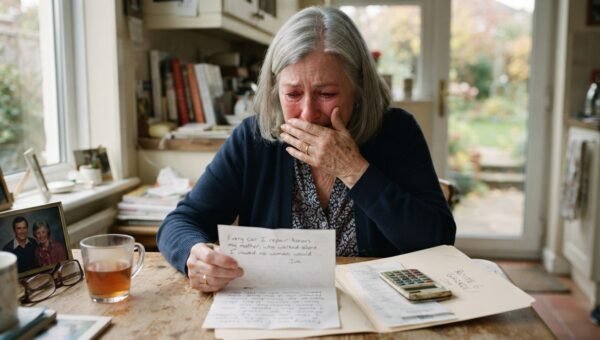
Three days earlier, Emily had called me about the deed to the storefronts our father left her. She found it among old papers and saw that Daniel had written the name of his family’s company on a sticky note attached to it. She asked me if it looked like the transfer form he’d mentioned.
I told her I wasn’t a lawyer. I should have said, “Don’t sign anything until you talk to one.” Instead, I asked her to send me a picture. I was trying to be careful, but sometimes careful is just a slower way to be useless.
The stores were not some huge fortune. They were two narrow storefronts on a street in an old textile town, one rented to a barber and one to a woman who repaired clothes.
Our father bought them years ago and paid them off before he died. Emily had handled the rent and the taxes since then. She knew every loose tile and every late payment.
Daniel called the properties “family assets.” At first, I thought he was just using a word he’d picked up at work. Then Emily told me the word kept coming back whenever he wanted her to sign something.
“They’re mine,” she’d told him.
“They’ll be ours,” he said.
That was the first clue. I just didn’t understand how far he planned to take it.
The second clue was Patricia asking me about the storefronts when I visited. She didn’t usually ask about Emily’s business. She asked whether the properties had loans against them and whether a company could borrow money without the owner knowing. I told her no, not legally. I remember she rubbed one thumb along the handle of her mug while I answered.
Then she said she was only asking because Daniel had brought it up.
I believed her. Or I wanted to.
Patricia was not a warm person, but she had looked after Emily when our father was sick. She drove her to appointments and sat in the waiting room without complaining. I kept those memories in my pocket, even after the way she spoke to Emily started to change.
A few months before the kitchen, Patricia told me that Emily was “too proud to let Daniel help.” When I asked what that meant, she said Emily needed to learn to trust her husband. It sounded like the kind of thing people say when they want a woman to give up control of something that belongs to her.
I should have asked more. I didn’t. I was tired of being the brother who made every family disagreement worse by asking questions. That’s my excuse, anyway.
When I got back to Emily’s call about the deed, she said Daniel’s answers kept changing. First, the transfer would make taxes easier. Then he said his company needed the properties as collateral. After that, he said it was only for a business meeting and could be reversed later.
Emily was a forensic accountant. She spent her workdays finding the little numbers people hoped no one would check. She knew a story that changed every time you asked about it was not a story to trust.
She told me she wouldn’t sign.
For a while, I thought that was enough. I figured Daniel might sulk, Patricia might call her selfish, and everyone would calm down. I was wrong about that, too.
That night, Daniel slapped Emily. She told me the next morning, but she said it in the same plain voice she used when she told me the washing machine had stopped draining. She said he was angry because she made him look foolish.
I got in my truck and drove to Briar House. I sat in the lot for a long time, debating whether to knock. I told myself Emily hadn’t asked me to come inside. When I finally did knock, Daniel answered and said she was sleeping. I could hear her moving upstairs.
I didn’t push past him.
I know. I knew what had happened. I saw the mark on her cheek. But Daniel said he was sorry, and Patricia stood behind him saying marriage had hard days. I let those words make it seem smaller than it was.
Before I left, I told Daniel I’d be back if he touched her again. He nodded, like I’d given him a warning about a parking ticket. Patricia watched me go.
After that, I checked in more often, but mostly by text. Emily said things were calm. She’d send me a picture of the baby’s blanket or ask if I wanted to come by for lunch. I took those ordinary messages as proof that nothing else had happened.
Now I hate that I counted a blanket as proof.
At 5:03 that morning, I saw Daniel pull Emily into the service kitchen. She had one hand over her stomach and the other braced on the counter. Patricia stood in the doorway, blocking the hall.
The microphone picked up Daniel saying, “Sign the papers, Emily.”
Emily shook her head. I couldn’t hear what she said at first. Then Daniel pushed her harder, and she sucked in a breath. She folded around her belly.
I felt like I was sitting in the wrong truck, on the wrong street, with no way to move fast enough.
Patricia said something I could hear clearly. “She’ll sign when she understands there’s no one here to help her.”
I called the dispatcher again. She told me officers were on the way. I started the truck, backed out too fast, and scraped the curb. I didn’t stop to check it.
Daniel saw Emily’s watch. I knew that watch. I’d helped her pick it out because she needed something that could send an alert without taking her phone out. I’d set up the emergency button under the band and shown her how to press it three times.
Daniel looked at her wrist and laughed. He told her to try it.
She lowered her eyes. She leaned on the counter. Her thumb moved under her sleeve.
Once.
Twice.
Three times.
The alert reached my phone. I’d already called the police, but I sent the signal anyway. I kept driving.
Patricia reached for her coffee. Daniel let go of Emily’s arm for a second, and I thought maybe he’d step back. Then the kitchen went dark on the camera. The sound cut out. A short chirp came through the phone, then nothing.
I was still on the road. The dispatcher was still talking to me. I couldn’t see what was happening inside, and I could not get there through the phone.
Then the intercom came on. Daniel had forgotten the system could use its backup speaker, even if the kitchen lights were out.
A calm voice said his name and told him the police had been notified. The dispatcher had said officers were close. I was close, too, but not close enough.
Then I spoke through the system.
“Emily, I’m here.”
The camera showed a dark blur. I couldn’t tell whether she had heard me. I couldn’t tell where Daniel was standing. Patricia didn’t say anything.
By the time I pulled up, the first police car was at the side entrance. I ran past one officer who told me to wait. I didn’t wait. I reached the kitchen as Daniel stepped toward the hall, and I grabbed his arm to pull him away from Emily.
He jerked back. An officer took his other arm and pushed him against the wall. Patricia backed into the doorway. Emily had both hands on the counter, trying to stay upright.
I wanted to hold her. I didn’t know where it was safe to touch her, so I just stood close and asked if the baby was moving.
She nodded. Then she started crying, quietly, like she was mad at herself for doing it.
The officer took Daniel outside. A second officer kept Patricia in the kitchen while they asked what happened. She said she had been trying to help them talk. Nobody believed that after hearing the recording.
I went with Emily to the hospital. The baby was okay. Emily had bruising on her arm and a sore side, but the doctor said there were no signs of injury to the baby. We sat in the room until after sunrise. I kept apologizing. Emily told me to stop.
“I should’ve come sooner,” I said.
“I know,” she replied.
That was all. I deserved it.
Daniel was charged after the police reviewed the camera and heard the audio. Emily’s lawyer filed to block any transfer of the storefronts. The deed stayed in Emily’s name. I went with her to the bank and watched her put the original papers in a safe deposit box. She asked me not to make the whole thing about my guilt. I promised I wouldn’t. I have not been very good at keeping that promise.
Patricia called me twice after the arrest. I didn’t answer. A week later, she came to the storefronts while I was helping Emily change the locks. She had an envelope in her hand and looked like she’d been carrying it around all day.
She said Daniel had told her the transfer would save his company. She said she thought it would be temporary. She also said she knew he was frightening Emily and chose not to stop him because she was scared of what would happen if the company failed.
I wanted to tell her fear did not make it okay. I wanted to ask why Emily had to be the one paying for it. I didn’t say either thing. I took the envelope.
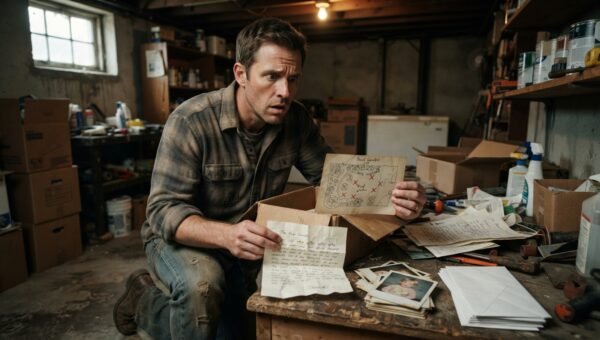
The first pages were loan records. Daniel’s company had borrowed $286,417. The storefronts were listed as assets he expected to transfer into the company. That much I understood.
I almost put the papers away. Then I saw Patricia’s name on a document from the lender. I read the line once, then again. She had signed as a guarantor months earlier. A notice in the envelope said the company had missed payments, and the lender had started the process to take the property named as collateral.
Patricia had not only been trying to save Daniel’s company. She had put her own house behind the debt, and she had tried to use Emily’s inheritance to keep that house out of the lender’s hands.
I still don’t know how much of her story was fear and how much was a choice she made because she thought Emily could be pushed into fixing it. The police had the recording. Emily kept the stores. Daniel could not touch her or the properties while the case moved through court.
The loan papers were filed with the rest of the evidence. I turned to the final page, where the lender listed what it could take.
Under COLLATERAL, the first address was Patricia’s house.