PART 1
The heat in July stayed near ninety-five degrees for two straight weeks, but Toby refused to take off his gray zip-up hoodie. He was ten years old, skinny in the wrists, and usually lived in tank tops and soccer shorts the second school let out for summer.
When I asked him about the jacket at the kitchen table, he kept his chin down and tugged the cuffs clear over his knuckles.
He told me the house felt freezing with the central air running. I reached out to touch his forehead to see if he had a summer bug, but he leaned back so fast his chair legs screeched against the linoleum.
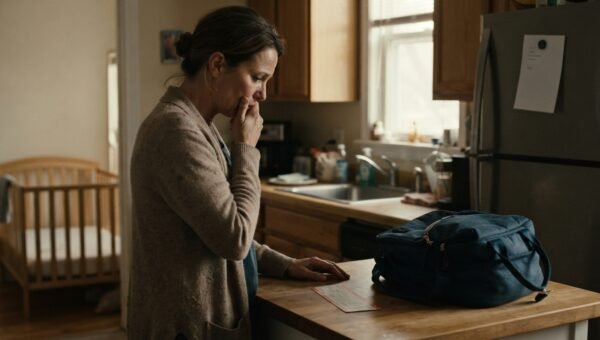
Owen walked in from the garage right then, wiping grease off his knuckles with an old blue shop towel. Owen had been living with us for three years, ever since Toby was seven. He handled the bigger expenses without complaining, including the eleven hundred dollar monthly mortgage payment on the three-bedroom ranch house my late sister had left behind. In my mind, Owen was the steady anchor that kept our roof intact after my sister passed away and Toby was placed in my care.
“Leave the boy alone, Sarah,” Owen said with a soft chuckle. He set a jug of iced tea on the counter and tousled Toby’s hair. “Toby wiped out on his gravel bike behind the shed on Tuesday.
Skinned both his elbows pretty rough. Boys bruise easily, and he does not want his aunt fussing over scabbed arms. Right, buddy?”
Toby nodded once, eyes glued to his bowl of cereal.
“See?” Owen told me. “He is fine. Stop hovering.”
I believed him. It was easier to believe him. Owen was dependable, worked long hours at the county road department, and never raised his voice at dinner. When you are a fifty-four-year-old woman raising an energetic nephew whose mother died too young, you take comfort where you can find it. You tell yourself that men understand boys better than aunts do.
Two weeks later, on a Thursday afternoon, my cell phone rang while I was sorting laundry in the back bedroom. The caller ID showed the county pediatric clinic where Toby had gone for his annual checkups since kindergarten.
“Sarah?” Dr. Henderson’s voice sounded tight and careful. She had known my family for twelve years. “Are you home alone right now?”
The sound of the washing machine suddenly felt terribly loud. “Yes. Toby is at the library summer reading group until four, and Owen is at the yard. What happened?”
“One of our receptionists found an old appointment reminder card pushed under a chair in our side exam waiting room,” Dr. Henderson said slowly. “It was tucked way back by the baseboard. The handwriting is Toby’s. He used a pencil from the activity table.”
I gripped the edge of the laundry basket. “What did it say?”
“He wrote four sentences,” Dr. Henderson replied, her breath audible over the line. “He wrote: ‘Owen gets mad when the doors squeak. He hits my sides where clothes go. Please do not send me home yet.’ Sarah, beneath that, he drew an arrow pointing toward his lower ribs. You need to come to my office right now without your partner.”
I could not swallow the water in my mouth. My throat went bone-dry, like someone had stuffed it with cotton.
“Sarah? Did you hear me?”
“I am getting in the car,” I whispered.
The drive across town took fourteen minutes, and I ran two yellow lights. My hands shook so hard against the steering wheel that the car drifted slightly toward the shoulder before I jerked it back. My mind was racing through every single evening over the past six months.
I remembered hearing a thump in Toby’s room two weeks back, and Owen coming out into the hallway saying Toby had dropped his heavy wooden dictionary while looking up words for a school puzzle. I remembered Toby sitting stiffly on the living room sofa with a pillow clutched against his stomach, saying he had eaten too many sour gummies. I had brought him ginger ale and turned on cartoons, never once lifting his shirt to look.
The automatic doors of the pediatric center slid open with a hiss of cold air. Dr. Henderson was already waiting by the nurse’s station. She did not say hello in the waiting room. She just took me by the elbow and led me down the quiet hallway into Exam Room 3, closing the solid door firmly behind us.
On the small laminate counter sat a gray manila folder. Lying on top was a creased, light-blue appointment card. Toby’s blocky, uneven third-grade letters were pressed so hard into the cardstock that the pencil graphite had torn through the paper at the tail of the letter y.
‘Owen gets mad when the doors squeak. He hits my sides where clothes go. Please do not send me home yet.’
Next to the card lay a standard medical intake form dated three months prior, from April. My name was printed as the guardian, but my signature was missing. In the blank line for parental signature was Owen’s sharp, slanted handwriting.
“Owen brought him in for a minor sprain back in April,” Dr. Henderson said, keeping her voice low and steady. “I was out on medical leave that week, so the locum doctor saw him. Owen signed this intake waiver stating the boy was prone to exaggerated stories due to his mother’s death, and that he had fallen against the basement stairs. The visiting physician noted deep tissue bruising along the lower left rib cage, but accepted Owen’s written statement because Owen presented himself as the legal stepparent and primary household provider.”
She pulled out a black-and-white photocopy of the clinic’s internal intake notes. Across the bottom margin, the temporary doctor had scribbled: *Guardian reports child has behavioral trauma and fabricated injury details after grief counseling.*
The room began to spin. Owen had forged my consent. He had taken Toby to the doctor behind my back, explained away the bruises, and warned the staff that the child was an unreliable liar.
PART 2
I stared down at the file, the paper trembling in my grip.
“Why was this appointment card under a chair, Dr. Henderson?” My voice sounded completely hollow. “If this happened in April, why am I only seeing this today?”
“Toby did not leave this card in April,” Dr. Henderson answered, pulling a second sheet from beneath the folder. “Our cleaning crew cleans the main waiting room every single night. The side exam room waiting area is only opened on Thursday afternoons for the overflow walk-in clinic. That card was dropped there today, Sarah. Toby was here this morning.”
A cold weight dropped straight through my stomach. “He could not have been. Toby was at the community center day camp from nine to noon. Owen dropped him off on his way to the county equipment barn.”
“Owen did not drop him off at camp,” Dr. Henderson said quietly. “Owen brought Toby here at nine-fifteen this morning for what he called a sports clearance physical. He told the front desk you were at work and had asked him to handle it. The nurse who checked them in noted that Toby had a light bruise near his jawline. But before the nurse could call them back to an exam room, Owen took a phone call in the corridor, came back in, said he had an emergency work call, and abruptly pulled Toby out of the building. Toby must have shoved that card under the waiting room chair right before Owen dragged him out.”
She walked over to her desk and picked up a desk phone. “Sarah, as a licensed physician, I have already placed the mandatory report to Child Protective Services. A caseworker and an officer are on their way here right now. But you need to tell me where Toby is at this very moment.”
My heart pounded so hard I could hear it roaring in my ears. “He is at the public library on Oak Street. The library summer program runs until four o’clock. It is three-fifteen right now.”
“Do not call Owen,” Dr. Henderson ordered, her eyes sharp and direct. “Officer Miller from the town precinct is in the parking lot right now. He will follow you to the library. We need to secure Toby before Owen realizes the clinic called you.”
I did not wait another second. I ran through the glass doors into the blinding afternoon sun. A dark blue patrol cruiser was parked near the curb, its engine idling. The officer inside nodded to me through the windshield.
I got into my sedan and backed out so fast the tires chirped against the asphalt. The seven-minute drive to the town library felt like an eternity. Every thought I had trusted for three years began to splinter and collapse.
Owen had never once raised his hand in front of me. He was the quiet man who took out the garbage on Tuesday nights, who paid the eleven hundred dollar mortgage by direct bank transfer every first of the month, who bought Toby a miniature dirt bike for his ninth birthday. But now I remembered how Toby would flinch whenever Owen reached behind the sofa to grab the television remote. I remembered how Toby would leave the room the second he heard Owen’s truck tires crunching the gravel in the driveway.
I had told myself the boy was just naturally shy, still mourning the mother who had died when he was only six years old. I had told myself Owen was doing his best with a child that was not his own blood. I had chosen the comfort of a peaceful house over the quiet warnings right in front of my face.
I pulled into the library lot and parked crookedly across two empty spaces. The patrol car pulled in right behind me. Officer Miller stepped out, a middle-aged man with graying hair, keeping one hand casually near his duty belt.
“Mrs. Albright,” Miller said, walking up beside my door. “We go in calm. No shouting, no panic. We just walk your nephew out.”
We walked through the heavy wooden doors of the library. The quiet smell of old paper and air-conditioning hit me instantly. In the far corner, near the junior fiction section, six children sat around a low table with coloring pages.
Toby was not at the table.
The librarian at the desk, an older woman named Mrs. Gable who went to my church, looked up with a warm smile that instantly turned confused when she saw the police officer beside me.
“Sarah? Is everything alright?”
“Mrs. Gable, where is Toby?” My voice cracked in the middle of the name.
“Why, Owen picked him up about twenty minutes ago,” she said, blinking behind her wire-rimmed glasses. “He came in through the side entrance. Said Toby had a dentist appointment across town and needed to leave early.”
PART 3
The floor seemed to drop completely out from beneath my shoes. “Did Toby say anything to you?”
“No,” Mrs. Gable said, her face suddenly pale as she read the panic on my face. “Toby seemed very quiet. He was carrying his backpack by the strap. Owen had a hand firmly on the back of his neck, just guiding him out. I assumed… Sarah, what is going on?”
Officer Miller immediately touched his shoulder radio and began speaking in rapid, coded numbers, calling for backup units to head toward my home address.
“Mrs. Albright,” Miller said, turning to me with a firm grip on my arm. “Do you have any reason to believe Owen would leave the county?”
“The old hunting cabin,” I blurted out, the memory hitting me like an electric shock. “His grandfather left him an uninsulated cabin off Route 9, past the old quarry road. He keeps his spare tools and his fishing boat out there. There is no cell service after mile marker twelve.”
“Get in your vehicle and follow me,” Miller ordered. “Do not try to approach that cabin alone. Stay behind my bumper.”
The ride down Route 9 was a blur of red and blue flashing lights. Miller did not run his siren, but his emergency lights reflected wildly against the tall pines lining the highway. My speedometer hovered at seventy miles an hour on the narrow two-lane road. My knuckles were bone-white on the steering wheel, my teeth clenched so tight my jaw throbbed.
I had failed Toby. My sister had trusted me on her deathbed at Saint Mary’s Hospital, holding my hand with fingers that were thin as twigs, making me promise that Toby would always have a safe home. And for three years, I had let a stranger pay eleven hundred dollars a month for the privilege of breaking that promise in secret.
We turned off Route 9 onto the gravel quarry road. Dust billowed behind Miller’s cruiser like a gray curtain. Two miles deep into the woods, the trees opened up into a small, weed-choked clearing. Owen’s silver pickup truck was parked near the rusted metal porch of the cabin, the engine hood still ticking with heat.
Miller pulled his car sideways across the dirt drive, effectively blocking the truck from leaving. He drew his sidearm, holding it low against his thigh, and motioned for me to stay firmly inside my car.
I could not do it. I opened my car door and stood by the front fender, my chest heaving.
The cabin door creaked open before Miller reached the bottom step. Owen walked out onto the wooden porch. He was wearing his work boots and a flannel shirt, his hands loose at his sides. He looked at Miller’s drawn gun, then looked past him directly into my eyes. His expression was not angry or panicked. It was cold, completely empty, like looking into a dry well.
“What is this, Sarah?” Owen’s voice was flat, carrying clearly through the quiet woods. “You bringing the sheriff out to my family camp because I took the boy out for ice cream?”
“Where is Toby, Owen?” Miller demanded, stepping forward with his weapon raised. “Hands where I can see them. Now.”
Owen slowly raised his hands to shoulder height, a slight, mocking smirk touching the corner of his mouth. “He is inside on the cot. Resting. The boy fell off his bike again this morning. He is clumsy. Ask his doctor. It is all documented.”
“I saw the appointment card, Owen,” I yelled, my voice breaking into a harsh sob. “I saw what he wrote! I saw what you signed in April!”
The smirk disappeared from Owen’s face instantly. His jaw tightened, and for the first time in three years, I saw the venom behind his quiet eyes.
“I kept a roof over your heads,” Owen snarled, taking a single step down the porch stairs before Miller shouted at him to freeze. “I paid that bank every single month while you worked part-time at the florist. That boy is soft, Sarah. He cries when the wind blows. He needed discipline, and you were too weak to give it to him.”
“Step down on your knees! Right now!” Miller barked.
A second squad car roared into the clearing, siren wailing as it skidded to a halt in the gravel. Two more officers leaped out with their weapons drawn. Within thirty seconds, Owen was pushed facedown against the wooden steps, his arms pulled behind his back, the steel handcuffs clicking shut with a finality that made my knees buckle.
I did not wait for the officers to clear the house. I pushed past Miller and ran straight through the open cabin door.
The cabin smelled of damp wood, motor oil, and stale dust. In the far corner, curled into a tight ball on an old bare mattress, was Toby. He still had his gray hoodie on, zipped all the way to his chin despite the stifling heat inside the cabin. He had his knees pulled up to his chest, his hands clamped over his ears, his small frame shaking violently.
“Toby,” I cried, dropping to my knees on the dirty wooden floor. “Toby, baby, it is Aunt Sarah. He cannot hurt you. Look at me.”
He slowly opened his eyes. When he saw me, the terror did not vanish immediately. He looked at my hands first, as if checking to see what I was holding.
“Aunt Sarah?” he whispered, his voice tiny and cracked. “Did you find the paper?”
“I found it,” I said, tears streaming down my face as I gently gathered him into my arms. “I found it, sweetheart. I am so sorry. I am so terribly sorry I did not see it sooner.”
ENDING
The county emergency room examination took nearly three hours.
Under the bright hospital lights, Dr. Henderson and the trauma nurse gently helped Toby peel off that gray zip-up hoodie. When the fabric lifted away from his skin, the room went completely silent.
Along both sides of his rib cage, extending from just beneath his armpits down to his waistline, were layers of bruising in every stage of healing. There were deep purple marks from that morning, faded yellowish-green patches from the previous week, and thin, pale scars where skin had repeatedly torn and healed under blunt force. He had kept his arms pressed tight against his sides for months, hiding the pain beneath thick fabric, terrified that if he complained, Owen would do what he had always threatened to do: tell the state that Toby was crazy and have him sent to an orphanage.
The medical report filed that night documented three cracked ribs, soft-tissue damage across his abdomen, and multiple contusions along his upper thighs. The injuries were concentrated entirely where normal clothing would conceal them.
Owen never returned to our house. The judge set his bail at two hundred and fifty thousand dollars, which his estranged brother in Ohio refused to post. The forged medical documents from April became the cornerstone of the state’s case, proving premeditation and a calculated effort to conceal ongoing child abuse. When the district attorney presented the appointment card with Toby’s handwriting alongside the forged intake sheet, Owen’s court-appointed lawyer advised him to take a plea deal.
In October of that year, Owen pleaded guilty to two counts of felony child abuse and one count of forgery. He was sentenced to eight to twelve years in the state penitentiary, with no eligibility for parole for the first six years.
Losing Owen’s eleven hundred dollar monthly contribution nearly cost us the house. I had to sell my late husband’s old fishing boat, cash in a small life insurance annuity my sister had left behind, and pick up thirty extra hours a week managing the inventory ledger at the local hardware store. My days began at five in the morning and ended long after dark, but for the first time in three years, the air inside our home was clean.
I had the squeaky hinges on every single interior door replaced with heavy brass fittings that moved without a whisper.
It took Toby nearly nine months of weekly play therapy before he would walk around the house in a short-sleeved t-shirt. Even now, whenever someone raises their voice on television or a sudden noise sounds in the driveway, he will pause and look to me for reassurance.
Last Saturday, Toby turned eleven. We had a small party in the backyard with two boys from his middle school class. The temperature hit eighty-eight degrees by noon.
I stood by the kitchen window, washing the cake plates, watching him run across the lawn with a garden hose, laughing as he sprayed water over the grass. He was wearing a bright blue sleeveless jersey. His ribs were clear, pale, and whole in the afternoon sun.
He caught me watching him through the window, waved his wet hand, and shouted that he was winning the water fight. I waved back and smiled, keeping my promise this time, knowing that as long as I have breath in my lungs, no one will ever silence that boy again.