My assistant said the crimson wax on my invitation made it look fit for a royal wedding. I laughed, then turned it over and read the dress code. Open-back evening attire required. No wraps, jackets, shawls, or other coverings allowed inside the ballroom. All outerwear would be checked at the door.
The Founders’ Gala was the biggest night of the year at Ashford Capital. Investors, board members, and half the people who mattered in Manhattan would be there.
I read the rule twice, sitting at my desk with the invitation in my hand. I already knew whose handwriting was on the envelope. Cassidy Vaughn, Preston’s communications director. And, by then, I knew she was more than that.
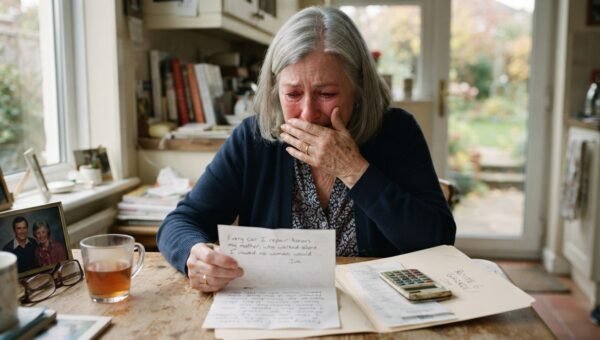
I had thick scars from my shoulders to my waist. Five years earlier, I’d pulled my husband, Preston, out of a burning building. I had thirteen skin-graft surgeries, months in the hospital, and a long stretch of learning how to get dressed without asking someone else for help. Preston came out with smoke in his lungs and no lasting injury. At first, I thought we were lucky.
After a while, whenever he saw my back, his face tightened. He told me to put on a robe. He told me I was repulsive. I made excuses for him because I knew what the fire had been like. I told myself the scars brought it all back for him.
It took me years to admit I’d been doing the work of explaining his cruelty for him.
The invitation had a second effect. If I stayed home, Cassidy could say I was too ashamed to attend. If I went, people who had only seen me in business clothes would get a look at the scars. I stood up and headed toward the executive offices, pretending I needed the revised seating chart. Preston’s office door was open a few inches.
Cassidy’s voice came through first. “With this year’s backless rule, that disfigured monster will never dare pose next to me.” My hand squeezed the invitation hard enough to crease it. Then Cassidy said she was carrying Preston’s baby and that the child deserved a legitimate last name.
I didn’t move. I heard a kiss, then Preston laughed. He said that without him I was nothing but a cripple clinging to his status.
I’d heard worse from him in private, but not quite like that. Not while he was calmly planning what to do with me.
Then he said he was waiting for his equity stake to be secure before he threw divorce papers in my face and left me in poverty. That was the part I couldn’t file away. I knew he had been pushing for a partnership grant. I didn’t know he’d made my future part of the deal.
I went back to my office without letting them see me. My hands were steady. I called my lawyer and said I needed to file for divorce that afternoon. I hadn’t told anyone I was considering it. I’d made the decision in that hallway, while holding an invitation with cracked wax.
Before I could call again, my phone buzzed. Gideon Ashford, the founder and CEO, had sent one line: “Vivian. Penthouse boardroom.
Now.” I looked down the corridor at Preston’s door, then took the elevator upstairs.
Gideon was waiting beside a long table. A folder marked CONFIDENTIAL sat in front of him. He didn’t ask about the gala or offer coffee. He pointed to a chair and said, “I know you’re planning to divorce him.”
I stopped. I had barely let the thought settle in my own head. “How?”
“I saw you come out of Preston’s corridor,” Gideon said. “And the audit was finalized this morning. I put the two together.” He looked at me carefully. “I’m not here to tell you what to do.”
That mattered more than I wanted it to. At work, Gideon was known for making hard calls without a lot of fuss. I’d spent years reporting to him, and he had never treated me as someone who needed rescuing. I sat down and asked what Preston’s equity had to do with my marriage.
Gideon opened the folder. The first pages showed a trail of transfers, approvals, and accounts connected to an offshore shell company. “Four million, two hundred thousand dollars,” he said. “The records show it moved through accounts tied to Preston.”
I looked at the dates. “He took that from the firm?”
“The audit supports that conclusion. We’re verifying the full chain, but these weren’t clerical mistakes.” Gideon turned to a partnership agreement. “He’s also trying to get his equity grant ratified tonight. The deadline is midnight.”
Five years earlier, after the fire, Ashford Capital had offered Preston a conditional path to partnership. He didn’t have enough assets to meet the guarantee. My family trust did. I remembered signing documents in the hospital while Preston was still bruised and coughing. A lawyer had said the guarantee would help stabilize his position while he recovered. I thought I was helping my husband get back on his feet.
I found my name under a paragraph called spousal character-and-indemnity guarantee. Gideon showed me the clause. The guarantee stayed in place only while I remained married to Preston and had not withdrawn my support. If I ended the marriage or revoked the guarantee before the grant vested, the grant became void. Under the trust terms, the voting interest went to me.
I read it again. The words were plain enough. I’d just never understood how much sat on them.
“He knew this was backed by my trust,” I said.
“Yes.”
“And he was waiting until midnight to leave me.”
“That’s what the records and his grant timing suggest.”
I turned another page. The audit showed funds moving in pieces, with electronic approvals tied to Preston’s credentials. If he was trying to build money of his own before walking away, the stolen $4.2 million would explain why. The story he’d told himself about my being useless had hidden a simpler truth. He needed what I had, and he wanted me too ashamed to look closely.
At the back of the folder was a spousal waiver. It would release my guarantee and let the grant move forward without my consent. My signature sat at the bottom. I knew it wasn’t mine.
“That’s a forgery,” I said.
“Our team found the upload three days ago,” Gideon replied. “The access logs point to Cassidy’s credentials. Arthur Sterling is checking the signature and the record trail.”
I looked back at the invitation. The ban on coverings wasn’t about fashion. Cassidy had designed a reason for me to stay home. If I was absent, the forged waiver could pass through the gala paperwork without anyone asking me to confirm it.
Gideon said the board could suspend the grant while the evidence was reviewed. He made it clear the choice about my marriage and guarantee was mine. I sat with the folder open between us, thinking about the years I’d spent making myself smaller around Preston. I’d called it patience. Some days I’d called it love.
“I’m going to the gala,” I said.
That afternoon, I went to a boutique near the harbor. The woman helping me brought out a gown with a high back and another with a sheer panel. I asked for something with an open back. She looked at the scars once, then looked at my face.
“Are you sure?” she asked.
“I am.”
I chose an emerald silk gown with a low back. The fabric felt cool when I tried it on. I turned toward the mirror and saw the graft lines all the way down my back. I didn’t love what the fire had done to me. I also didn’t owe anyone a cover-up.
My attorney met me before the clerk’s office closed. I signed and filed the divorce petition. Then I signed the formal revocation of the guarantee, with the date and time recorded. My lawyer checked every page before she let me leave. That was the kind of careful I wanted. No speech. No mistake.
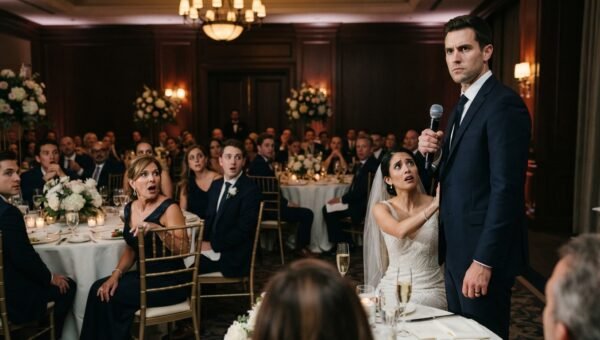
At the maritime exchange, the ballroom was already full. The chandeliers caught on the glasses and silverware. My back was bare. People noticed. A few tried not to, which was almost worse. I kept walking.
Preston saw me from across the room. His smile disappeared. Cassidy was standing beside him in a pale dress, one hand resting on her stomach. She looked at my back, then at the room. I could see her counting who had noticed.
Preston came toward me before I reached the board tables. “You shouldn’t be here,” he said.
“I’m on the invitation list.”
He glanced at the folder in Gideon’s hand. “This isn’t the time.”
“It’s exactly the time,” I said. “I know about the money. I know about the waiver.”
His jaw tightened. “You don’t know what you’re talking about.”
Cassidy stepped closer to him, then stopped when she saw Arthur Sterling coming across the room. Arthur was the board chair and legal counsel for the equity trust. He had the signature report and the filed revocation with him. Preston looked past Arthur toward the stage, where the grant ratification was about to begin.
Gideon stepped to the microphone before the board could start the vote. He said the ratification was being paused due to new evidence tied to the grant and its supporting documents. The room went quiet enough that I could hear a fork touch a plate near the front.
Arthur asked me to join them onstage. I didn’t hurry. I could feel the gown shift against my skin as I walked. My knees felt ordinary. That was a small thing, but I noticed it.
On the screen behind the board, Arthur displayed the transaction records. The total showed $4.2 million. Next came the shell-company trail and the approval log tied to Preston’s credentials. Then Arthur put up the waiver and the signature analysis beside it.
The signature wasn’t mine. Arthur said the verification found it had been forged. The access log showed Cassidy’s account had uploaded the document. Cassidy shook her head and said the file had been sent to her. Nobody asked her another question. The board had the records.
Preston tried to speak over Arthur. “This is a private matter.”
“It became a firm matter when firm money went missing,” Gideon said.
I had thought the hardest part would be standing there with my scars visible. It wasn’t. The hard part was hearing Preston try to make the facts sound like a misunderstanding, as if the account trail, the forged signature, and my marriage were all just paperwork that had gotten out of hand.
Arthur confirmed the deadline and the clause in my guarantee. I took the microphone. My voice came out steady.
“I revoke my guarantee, effective now. I did not sign that waiver, and I do not consent to Preston’s grant.”
Arthur acknowledged the revocation. The board declared Preston’s conditional grant void before midnight. The voting interest reverted under the trust agreement and was assigned to me. It was not a prize. It was the result of a document I’d signed five years earlier, when I still believed Preston and I were building something together.
I took the divorce petition from my attorney and held it out to Preston. He stared at the papers, then at me. I didn’t give him a speech. He reached for them, and I let go.
Security came to escort him and Cassidy out. Cassidy turned on him in the middle of the ballroom. “You said this was handled.” Preston told her to be quiet. She said she’d submitted the waiver because he told her it was safe.
I didn’t stay to listen to the rest. Ashford preserved the records and referred the audit and forgery evidence to the Manhattan District Attorney. Cassidy’s employment was terminated, and Preston was removed from the building. The divorce process had started. There was no partnership grant left for him to claim, and my trust assets weren’t his.
Later, I went out to the terrace with a glass of champagne. The harbor below was dark and bright at the same time, the lights broken across the water. The evening wind touched my bare back. I let it. I didn’t reach for a wrap.