PART 1
I had two ten-dollar bills in my purse, folded neatly inside an envelope marked Building Fund, when Pastor Donald took the pulpit. It was the second Sunday in October. The autumn light came down through the amber-tinted windows behind the choir loft, warming the oak pews and making everything look soft and peaceful. I had sat in the fourth pew on the right side for thirty-two years, twenty-six of those years beside my husband, David.
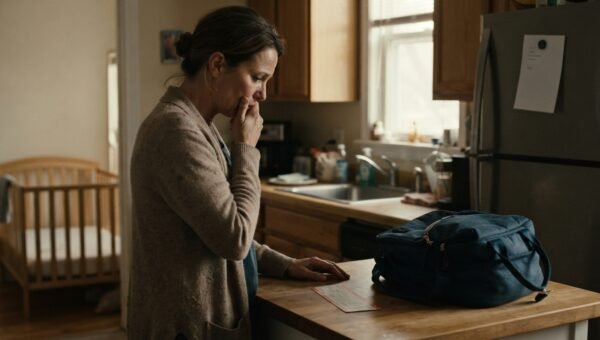
David died nine months ago, and since then, Sunday morning was the one place where I felt like the floor beneath my feet was solid.
Our congregation was small, maybe a hundred and twenty people on a good week. The roof over the fellowship hall had been leaking into plastic trash cans since the spring rains, and every service for two months had ended with an earnest plea to help fix it before winter set in. I wanted to help. David had been a mechanic, and I was living on his modest pension alongside my monthly social security check. Money was tight, tight enough that I counted pennies at the grocery store and turned the heat down to sixty-four at night. But I believed in our church, so I had set aside my twenty dollars, which felt like a sacrifice I could honestly afford.
Pastor Donald adjusted his wire-rimmed glasses and tapped the microphone. He smiled out at the room, a warm, grandfatherly smile that had comforted half the families in this town through funerals and baptisms.
“Before we move to the final hymn,” he said, his voice carrying clearly over the speakers, “I have to share a blessing that nearly brought me to my knees this morning. We all know the urgent need for our roof. We know the cost seemed impossible for our small family. But the Lord works through faithful hands.”
He looked straight at me. Several people in the pews ahead turned their heads to follow his gaze.
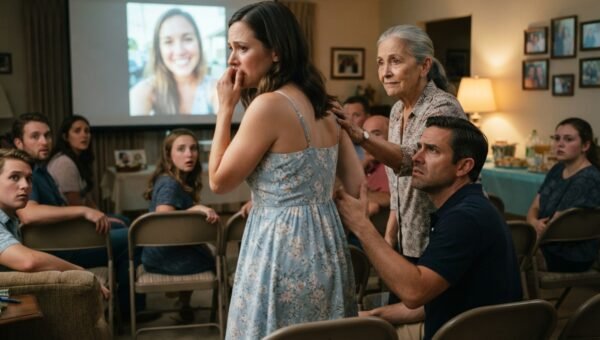
“Sister Eleanor,” he said, speaking my name with deep reverence, “has stepped forward to cover the entire balance of the contract. This morning, she placed twelve thousand dollars into our hands. She asked for no fanfare, but grace like this cannot be hidden under a bushel.”
The entire sanctuary burst into applause. Mrs. Gable in front of me reached back to squeeze my fingers with tears in her eyes. Across the aisle, Deacon Miller stood up to clap.
My breath caught in my throat so hard I could not speak. Twelve thousand dollars was almost every cent I had left in the world. It was my emergency reserve, the quiet sum sitting in my local credit union account that kept me from panic when the water heater made noise or when property taxes came due. I had put twenty dollars in the wooden offering box in the foyer, not twelve thousand.
I sat there frozen, my face burning, unable to stand, unable to nod. Everyone thought I was overwhelmed by humility. They assumed I was weeping from generosity. In reality, my stomach had turned entirely to ice.
When the service ended, I did not wait to shake hands in the aisle. I pushed past well-wishers who patted my shoulder and headed straight down the carpeted hallway toward Pastor Donald’s private study at the back of the building. The door was cracked open, and he was hanging his robe in the small wardrobe behind his desk.
“Pastor Donald,” I said, my voice trembling as I stepped inside and pulled the door shut behind me. “You made a terrible mistake out there. A very serious mistake. I did not give that money. I gave twenty dollars. That is all I had.”
He turned around with an easy, knowing chuckle. He reached into the inner pocket of his suit jacket and drew out a white paper slip, laying it flat on the mahogany desk between us.
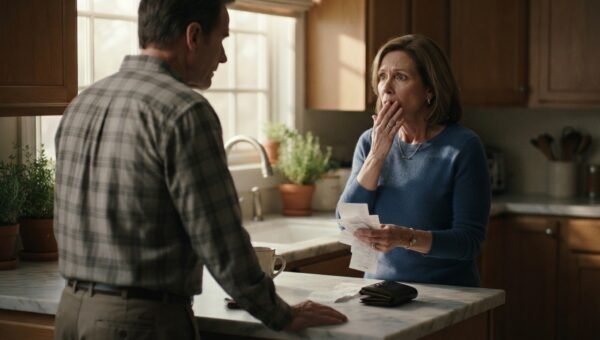
It was an official cashier’s check drawn on First State Credit Union, made out to Grace Fellowship Church for exactly twelve thousand dollars. In the remitter line, printed in clear black ink, was my name: Eleanor Vance.
“There is no need to be modest in private, Eleanor,” he said gently, tapping the check with the pad of his thumb. “Your husband told me you wanted it handled quietly, without causing any fuss among the others.”
I stared at him. The room seemed to tilt.
“David?” I whispered. My voice cracked so violently it felt like tearing paper. “Pastor, David passed away nine months ago. You buried him in January. You stood over his grave.”
Pastor Donald blinked, his easy smile faltering for just a fraction of a second before settling back into place. “Of course, Eleanor. I meant he had made arrangements before he passed. He spoke to me about this last winter. You must have forgotten the plan you two put in place.”
“David was in hospice last winter,” I said, my hands shaking so hard I had to grip the edge of his desk to stay upright. “He could barely sign his name on a napkin. We never had twelve thousand dollars to throw away on a roof, not then and not now. That check is from my personal savings. I never authorized this.”
He pulled the check back toward himself, his expression shifting from warm pastor to a patient, patronizing parent. “Sit down, Eleanor. You are grieving, and grief does strange things to the memory. Let us hold onto this, pray on it, and talk tomorrow when you are feeling rested.”
He slipped the check into his locked drawer, clicked it shut, and guided me by the elbow toward the side exit before I could scream.
PART 2
I did not drive home. I drove directly to the main branch of First State Credit Union on Oak Street. It was Sunday afternoon, so the lobby was locked tight, but I parked in the lot and sat there with both hands on the steering wheel until the sun went down, staring at the double glass doors. My mind kept spinning back to the check. A cashier’s check cannot be printed out of thin air. It requires money to be withdrawn directly from the backing account at the teller counter.
At eight-thirty on Monday morning, I was the first person waiting at the door when the security guard unlocked it. I walked straight to the desk of Martha Simmons, a woman who had handled David’s and my accounts for over fifteen years.
“Eleanor, good morning,” Martha said, smiling up from her computer. “What can I do for you today?”
“I need a complete statement of my savings account,” I said. My voice was raspy from not sleeping a single minute the night before. “Right now, Martha. Please.”
Martha saw the look in my eyes and stopped smiling. She typed into her keyboard, clicking through two screens. Then her fingers paused. Her eyes widened slightly, and she looked up at me over her reading glasses.
“Eleanor, did you come in yesterday?” she asked quietly.
“Yesterday was Sunday.”
“I know,” Martha murmured. “Our downtown drive-through branch is closed on Sundays, but our automated teller center at the north shopping center processed an in-person window transaction Saturday morning, and then there was an emergency teller withdrawal processed here yesterday at nine-o-eight.”
“Yesterday morning?” I pressed both hands against her desk. “At nine-o-eight yesterday morning, I was sitting in Sunday school teaching third graders. How could someone withdraw money from my account on a Sunday?”
“Pastor Donald has a weekend merchant clearance window with our commercial branch,” Martha said, her tone growing very careful, very guarded. “Our bank allows authorized church officers to process member-signed deposits and cashier’s checks on Sunday mornings for charitable foundations. It was processed under an emergency authorization. Twelve thousand dollars was debited from your savings account at nine-o-eight yesterday. The funds were converted into a cashier’s check made out to the church.”
“I was not here,” I told her, tears finally spilling down my cheeks. “I did not sign anything. I did not authorize anyone to touch my savings. David is dead, Martha. Who signed for it?”
Martha looked around the lobby, then stood up. “Come with me to the manager’s office.”
Inside the small back room, the branch manager, Mr. Henderson, pulled up the internal security recordings from the commercial teller window. The timestamp on the monitor read Sunday, October 11, 9:07:42 AM.
The angle was high, looking down over the teller’s shoulder. A woman stood on the other side of the glass. She was wearing an emerald green church choir robe, the exact satin robe with the gold embroidered collar that our sanctuary choir wore every single Sunday. A matching wide-brimmed church hat covered the top of her hair, and large dark sunglasses hid her eyes. She slid a driver’s license and a signed withdrawal slip under the partition.
The teller on the screen typed, stamped the paper, and handed over the blue cashier’s check.
Mr. Henderson zoomed in on the counter. The driver’s license on the tray was mine. It had my address and my photograph. But the woman holding it, even partially concealed by the hat and glasses, was not me. She had a distinctive, crooked silver ring on her right thumb, a ring shaped like two intertwined olive branches.
My heart felt like it stopped beating altogether.
That ring belonged to Clara Higgins. Clara had been my closest friend since we were thirty. When David died, Clara was the one who came over every Tuesday with a pot of vegetable soup. She helped me sort through David’s clothes for Goodwill. She sat beside me in the kitchen while I cried until my eyes were swollen shut. She was also the head of the church choir and held the key to the music closet where the robes were kept during the week.
“Do you know this person, Mrs. Vance?” Mr. Henderson asked, leaning over my shoulder.
“I need a copy of that video,” I said, my voice barely above a whisper. “And a copy of the withdrawal slip.”
“We cannot release the raw footage without an official police report,” Mr. Henderson said firmly, “but I can freeze the transaction, flag the account for fraud, and give you an official affidavit confirming that an unauthorized withdrawal occurred.”
“Print it,” I said. “Print every single piece of paper you have.”
Ten minutes later, with the fraud paperwork sealed in a manila folder on the passenger seat, I drove back to the church.
PART 3
The church parking lot was nearly empty on a Monday morning, except for two cars: Pastor Donald’s blue sedan and Clara’s silver station wagon. The sight of her car parked near the kitchen entrance made my hands tremble against the steering wheel. She had sat at my kitchen table only five days ago, drinking coffee from my chipped mugs, asking me how my savings were holding up through the winter. She had asked where I kept my important papers in case of an emergency, and I had foolishly shown her the metal lockbox in my closet.
I walked into the building through the side door. The hallway smelled of old floor wax and stale coffee. Music was playing faintly from the choir room, a soft piano hymn. I followed the sound, my boots clicking softly on the linoleum, until I reached the open doorway.
Clara was standing at the wooden filing cabinet in the corner, sorting through sheet music. She still had on her everyday cardigan and jeans, but on her right thumb was the silver ring with the olive branches.
“Clara,” I said.
She jumped, dropping a green hymnal onto the floor with a loud thump. She pressed a hand to her chest and laughed, though the sound was high and nervous.
“Goodness, Eleanor! You scared ten years off my life. What are you doing up here on a Monday?”
I stepped into the room and closed the door behind me. I did not sit down. I held the manila folder against my ribs.
“Yesterday morning, at eight minutes past nine, somebody took twelve thousand dollars out of my credit union account,” I said plainly. “They wore an emerald choir robe. They wore a hat and dark glasses. And they wore a silver ring shaped like two olive branches.”
Clara’s face went completely white. Every trace of color drained from her cheeks, leaving her looking frail and sick. She looked down at her right hand, then instinctively tucked it behind her back.
“Eleanor, please,” she whispered, her voice shaking violently. “You do not understand what is happening here.”
“I understand that you stole my driver’s license from my house,” I said, stepping toward her. “I understand that you took the money David left me to survive on. You stole from me, Clara. My own friend.”
“I did not keep a penny of it!” Clara gasped, tears instantly springing into her eyes. She gripped the edge of the filing cabinet to steady herself. “Not one cent, Eleanor! I swear on my mother’s soul, I did not take that money for myself! I had to do it. He told me it was the only way.”
“Who told you?”
Instead of answering, Clara rushed past me to the door, cracked it open to peer into the empty hall, then shut it again and locked the deadbolt. She turned back to me, her breathing ragged and shallow.
“Come with me,” she whispered. “Right now. Before he comes back from the post office.”
She led me out through the back of the choir room, down the narrow utility corridor that connected the sanctuary to the church business office. She pulled a brass key from her pocket, unlocked the heavy wooden door, and shoved it open.
The church office was quiet and dark. Clara did not turn on the overhead lights. She moved quickly behind the main desk, pulled a key ring from the drawer, and unlocked the lower metal cabinet beneath the church safe.
She pulled out a thick accordion folder and dumped the contents onto the desk.
Stacks of blue paper spilled across the dark wood. Cashier’s checks. Dozens of them.
“Look at them,” Clara cried softly, her hands trembling as she pushed them toward me. “Look at the names, Eleanor!”
I picked up the first check. It was for eight thousand five hundred dollars, dated three months ago, drawn on First State Credit Union. The remitter was Evelyn Miller, an eighty-year-old widow whose husband had died of lung cancer the previous summer.
I picked up another. Nine thousand dollars, remitter Beatrice Owens, who had lost her husband to a stroke last fall.
Another. Fourteen thousand dollars, remitter Miriam Scott, whose husband had been the town postmaster until he died two years ago.
Every single check in the stack, nearly thirty of them dating back four years, bore the name of a widow from our congregation. All of them were made out to the church’s general operating fund or building reserve.
“He finds out where they bank,” Clara sobbed, covering her face with her hands. “When a husband passes, Donald goes to their homes to help them organize the estate. He sees the statements. He knows who has money sitting in local credit unions. Then he tells me the church will go under, that the Lord will hold us responsible if the ministry fails, that these women have no one left to leave it to anyway. He told me David told him to do this before he passed! He threatened to tell the whole town about my son’s debt if I did not help him with the IDs.”
She reached out, grabbing my sleeve in desperation. “He said the widows never notice right away, and by the time they do, they are too embarrassed to accuse the church in public! He said no one ever fights the pulpit!”
A sharp, distinct click sounded behind us.
The office door had swung closed. Standing on the inside of the room, his hand resting calmly on the deadbolt he had just turned, was Pastor Donald.
ENDING
The small office felt entirely airless. Pastor Donald did not look frantic or flustered. He looked tired, the way a teacher looks when children refuse to follow directions. He was holding a stack of mail in his left hand, and his right hand dropped casually from the lock to his side.
“I saw your car, Eleanor,” he said, his voice even and low. “I had a feeling you would come looking for Clara.”
Clara shrank back against the desk, knocking over a cup of pens that clattered across the floor. “Donald, she knows. She went to the bank. The bank has the footage.”
Pastor Donald sighed, stepping slowly toward the desk. He set the mail down beside the stack of cashier’s checks. He looked directly into my eyes, completely unbothered by the papers spread between us.
“Eleanor,” he said softly, “you have been a pillar of this community for three decades. Think very carefully about what you are doing. If you make a scene out of this, what happens to this church? What happens to the soup kitchen? What happens to the sixty elderly folks who rely on our bus to take them to the pharmacy every Tuesday? If you drag this into the street, you destroy everything David loved.”
“David loved honesty,” I said, my voice steady despite the hammer pounding in my chest. “David worked forty years with grease under his fingernails. He did not break his back so you could steal his pension from his widow to pay your bills.”
“It is for the Lord’s house,” he said, his eyes narrowing slightly, the warm preacher persona finally slipping away to reveal the cold, calculating man underneath. “The money stays in the ministry. None of those women missed it. Their bills are paid. They sit in those pews every week feeling blessed because their husbands provided for the church. Who are you to take that peace away from them?”
“You stole twelve thousand dollars from me, Donald,” I said. “And you have been robbing grieving women in this town for years.”
He shook his head slowly. “No one will believe you, Eleanor. Look at the paper. It is a cashier’s check with your name on it. Clara signed the slip, not me. If the police get involved, Clara goes to prison for bank fraud and identity theft. I simply accepted a charitable donation brought to me by my choir director. That is my defense. Clara takes the fall. The church suffers. And you will be the bitter woman who tore our congregation to pieces over money you will never see again.”
Clara let out a choked cry, dropping to her knees beside the chair. “Donald, please! You promised!”
Pastor Donald ignored her. He looked at me with cold, flat eyes. “Take your twenty-dollar envelope, Eleanor. Go home. Be grateful you have a seat in the fourth pew.”
I did not flinch. I did not yell. I reached down into the pocket of my wool coat, my fingers wrapping around my cell phone.
I pulled it out and turned the screen toward him.
The screen was lit up. A red recording timer was ticking silently at the top of the display: twelve minutes and forty-three seconds.
“I started the voice memo the moment I walked into the building to find Clara,” I told him, keeping my voice cold and clear. “Every single word you just said is recorded. The part where you admitted knowing Clara took the IDs. The part where you admitted using the widows’ money. And the part where you threatened to frame Clara if she didn’t take the fall.”
Pastor Donald’s face froze. The color drained from his skin just as fast as it had from Clara’s. For the first time in all the years I had known him, he looked truly terrified. He lunged forward across the desk, reaching his arm out to grab the phone from my hand.
“Give me that,” he snapped, his voice turning harsh and vicious.
“Touch me,” I said, stepping back and holding the phone high, “and I will add assault to the list before I walk across the street to the sheriff’s station. Unlock that door.”
He stood breathing heavily, his chest heaving under his clean button-down shirt. His fingers twitched against the wood of the desk. Clara was weeping openly on the floor, her face buried in her apron.
“Eleanor,” he whispered, his voice cracking. “Please. Think about the church.”
“I am thinking about the church,” I said. “Unlock the door.”
He stood there for five long seconds, realizing that his words, his authority, and his pulpit could not protect him from what he had said on that recording. Slowly, with trembling fingers, he turned back to the door, twisted the deadbolt, and pulled it open.
I walked out of that office without looking back.
I drove straight to the county sheriff’s department on Main Street. I handed Sheriff Miller the manila folder from the bank, the photos I had snapped of the checks in the office safe before Donald walked in, and the audio recording from my phone.
By three o’clock that afternoon, two state police cruisers and the sheriff were parked in front of Grace Fellowship Church. They carried out four filing boxes of financial records and the accordion folder from the safe. Pastor Donald was escorted out the front double doors in handcuffs, his head held down, while the local news van pulled up to the curb.
It took seven months for the state forensic accountants to untangle the mess. Pastor Donald had not just been fixing roofs; he had been covering massive personal investment losses and shortfalls in church accounts that he had embezzled from for over six years. The total stolen from eight different widows in our congregation exceeded one hundred and forty thousand dollars.
Because the credit union had processed the emergency transaction without properly verifying identity or holding the funds, their insurance bond covered the loss. My twelve thousand dollars was returned to my savings account in full by the end of November.
Clara avoided prison time by cooperating completely with the state attorney’s office, though she pled guilty to second-degree accessory charges and was given five years of strict probation and community service. She sold her house and moved two towns over to live with her sister; she never returned to Grace Fellowship, and she never looked me in the eye again.
Pastor Donald was convicted on multiple counts of grand theft, wire fraud, and exploitation of the elderly. He was sentenced to eight years at the state correctional facility.
Our congregation did not die, though it shrank. A lot of people left, too hurt and disillusioned to step back inside the sanctuary. But thirty of us stayed. We elected a council of five women to oversee every single dime that entered the building.
The leak in the fellowship hall roof was finally repaired the following spring. We did not use stolen money, and we did not wait for a miraculous single check. We held bake sales, we sold handmade quilts, and every family put in five or ten dollars a week until the bill was paid in full.
I still sit in the fourth pew on the right side. David’s presence still feels close there, not because of the building, but because of the truth we lived by. And every Sunday morning, when the offering plate passes down my row, I drop in my envelope with two clean ten-dollar bills, knowing exactly where it came from, and exactly where it goes.