PART 1
The concrete on my daughter’s front porch had always had a slick patch near the bottom riser where the gutter overflowed. At seventy-four, I knew better than to hurry, but the porch light was out, my arms were full of warm pumpkin bread wrapped in foil, and my left heel caught the edge.
The crack was loud enough to hear over the crickets.
I went down hard on my right side. The bread flew into the mulch, and pain shot through my right wrist like a hot wire running straight up into my neck.
My daughter, Karen, ran out the storm door screaming my name, but my forty-six-year-old son, Todd, was the one who reached me first. He had been visiting from Harrisburg for the weekend. He grabbed me under my left arm, hoisted me up onto my feet before I could even catch my breath, and hauled me toward his sedan.
“Do not call an ambulance,” Todd told Karen, his voice tight and breathless. “That is an eight-hundred-dollar ride for two miles. I will take her to the urgent care clinic by the shopping plaza.”
He did not let Karen come along. He told her she needed to stay home and look after her kids. In the front seat of his car, I sat cradling my right arm against my chest, sweat stinging my eyes. Todd kept both hands locked at ten and two on the wheel, but he was not looking at the road with a son’s concern.
He kept checking his rearview mirror, drumming his thumbs on the steering wheel, and glancing at my purse sitting on the floorboard between my feet.
The urgent care waiting room had four other people sitting under the cold fluorescent lights. Todd paid the fifty-dollar copay on his credit card, but he took my Medicare card and driver’s license from my wallet to do it.
The doctor took three X-rays, came back with a grim look, and told me the radius was fractured clean through. He said I would need a fiberglass splint tonight and an orthopedic surgeon on Tuesday morning to set pins.
A nurse named Megan came in with a bucket of warm water and rolls of white plaster wrap. The moment she laid my bruised arm flat on the foam wedge, Todd stood up from the vinyl chair in the corner. He walked right up to the examination table, ignoring the nurse entirely.
“Mom,” Todd said, leaning down so his face was six inches from mine. “Can you still sign your name with your right hand?”
I blinked through the haze of the pain medication they had just given me. “What?”
“Can you hold a pen?” he asked. His eyes were wide, darting from my swollen fingers to my purse across the room. “Can you still sign the checks for Mom’s care?”
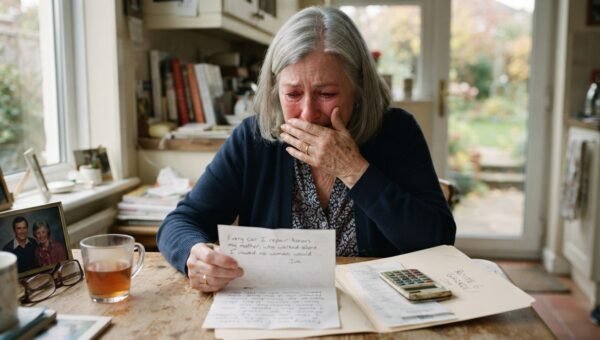
By “Mom,” he meant my ninety-six-year-old mother, Evelyn. She had developed severe dementia four years ago. For three years, I had been paying twenty-four hundred dollars a month out of my late husband’s pension to maintain the rent and utilities on her two-bedroom apartment on Pine Street. Todd had insisted we keep the apartment fully furnished and paid up so my mother would have a familiar place to go on weekends, even though her cognitive decline had become so severe fourteen months ago that her doctors required her to move permanently into an assisted living memory wing across town.
I was paying five thousand a month for the memory wing on top of the apartment rent. It was draining the last of my life savings, but Todd had sworn to me that keeping the apartment was what our family lawyer recommended to protect her estate from state recovery liens.
“Todd,” I said, my voice hoarse from the pain. “Why are you asking about checks right now? My bone is broken.”
“Because the first of the month is in three days,” he said. He did not lower his voice. He glanced down at my purse again. “You know what we agreed. We cannot let that payment lapse. You promised you would keep the account current.”
“I never agreed to anything about signing checks with a broken hand,” I said, leaning back against the pillow as the nurse wrapped the wet plaster around my wrist. “What are you talking about?”
Todd stiffened. “You know what we agreed,” he repeated, lower this time, almost like a threat.
Before I could answer, the clinic receptionist walked into the exam room holding a blue clipboard.
“Mrs. Miller?” the receptionist asked, looking at me with a puzzled frown. “Before the doctor puts the discharge orders in the portal, we need you to clear up a discrepancy on your intake file. Your son checked the box saying you have a commercial power of attorney on file, but when our billing clerk ran your address, this paper popped up from our regional records archive.”
She handed the clipboard past Todd, placing it directly into my left hand.
Stapled to the front was a photocopied bank signature card from the credit union where I kept my mother’s estate checking account. At the bottom of the form was my name, written in my own blue ink, giving Todd full signatory authority over the account as an authorized co-owner.
The date on the line was October 12th of last year.
My stomach dropped into a cold, bottomless pit. On October 12th of last year, I had been in the hospital recovering from gallbladder surgery, completely under general anesthesia for four hours. I had never seen that paper in my life, yet the letters at the bottom were an exact replica of my own signature.
PART 2
I looked from the clipboard up to my son’s face.
Todd did not flinch, but the muscles along his jaw tightened so hard a small vein pulsed at his temple. He reached out with his right hand to snatch the clipboard away from me, but the nurse, Megan, stepped between us to finish smoothing the plaster splint.
“I will take that, Mom,” Todd said, his voice dropping into that smooth, condescending tone he used whenever he wanted to treat me like a child. “You are confused from the pain meds. Let me handle the paperwork with the front desk.”
“Do not touch this board, Todd,” I said. My voice was trembling, but it was loud enough that the receptionist backed up half a step toward the hallway.
I looked down at the paper again. The signature card had an addendum attached to the back: an automatic monthly wire transfer authorization for twenty-four hundred dollars, moving funds on the first business day of every month from my mother’s estate checking account to an entity called Pine Street Properties LLC.
The registered address for Pine Street Properties LLC was not the landlord who owned my mother’s apartment building. It was a post office box in Mechanicsburg, five miles from Todd’s suburban house.
“The apartment lease ended fourteen months ago, didn’t it?” I asked him.
The question hung in the small, white room like a dead weight.
For fourteen months, I had been writing out twenty-four hundred dollars every month, handing the signed checks to Todd because he claimed the elderly landlord did not accept digital payments and preferred a family member to drop the bank draft off in person. I had spent nearly thirty-four thousand dollars since my mother moved into memory care, believing I was preserving her familiar furniture and keeping a roof over her old memories.
Todd stared at me. He looked at the nurse, who was pretending to wrap the elastic bandage while her eyes darted between us, and then he let out a dry, irritated laugh.
“This is not the place for this, Mom,” he muttered. “You are making a scene over routine estate management. I created the LLC to shield your personal checking account from commercial liability. If you do not understand how trust administration works, that is fine, but do not accuse me of something in an urgent care room.”
“I did not sign this signature card, Todd,” I said, holding the paper up with my left hand. “I was in pre-op at Holy Spirit Hospital on October 12th. I had an IV in my arm and two nurses prepping me for the operating room. Who signed my name?”
Todd did not answer. He turned on his heel, pushed open the exam room door, and walked out into the corridor.
The receptionist cleared her throat, looking down at her shoes. “Mrs. Miller, do you want us to call someone else to drive you home?”
“Yes,” I told her. “Call my daughter, Karen.”
Karen arrived twenty minutes later, out of breath, her eyes red from crying because Todd had texted her from the parking lot claiming that I had suffered a mental episode from the painkillers and was accusing him of theft.
When Karen walked into the exam room, I did not cry. I handed her the blue clipboard.
Karen read the paper once, read it a second time, and her face went from worried to pure white.
“Todd has been driving a new pickup truck since November,” Karen whispered, looking at me with horror in her eyes. “He told everyone at Thanksgiving that his logistics consulting firm landed a regional distribution contract. He told us he was making six figures.”
She did not wait for the doctor to sign the printed discharge sheet. She helped me into her coat, supported my splinted arm, and led me out the side exit.
Todd’s sedan was already gone from the parking lot.
We did not go back to Karen’s house. We drove directly to the main branch of the credit union on Market Street, sitting in the drive-through lane until the eight o’clock morning teller window opened.
When the branch manager, Mr. Henderson, unlocked the heavy glass doors, Karen and I were the first people through the lobby. Mr. Henderson had handled my late husband’s commercial accounts for twenty years; he took one look at my splinted arm and the look on Karen’s face and ushered us into his private corner office.
“Mr. Henderson,” I said, laying the photocopy on his mahogany desk with my good hand. “I need you to pull up the master file for the Evelyn Miller Care Account. I need to know who authorized this electronic wire transfer, and I need to see where every dollar has gone since last October.”
PART 3
Mr. Henderson put on his reading glasses, pulled up the account ledger on his dual-screen computer, and began scrolling through the transactions.
As the lines of data rolled past, the color slowly drained from his cheeks.
“Mrs. Miller,” Mr. Henderson said quietly, turning one of the monitors toward us. “This signature card was submitted electronically through our mobile portal on October 12th. It used your online banking credentials, your password, and a photograph of your driver’s license. The IP address that uploaded the document originated from a residential internet connection in Mechanicsburg.”
“Todd,” Karen said, her fingernails digging into the armrest of her chair.
“Look at the transfer history,” I told him.
The wire had cleared like clockwork on the second of every month. Twenty-four hundred dollars. But it did not stop there.
Once Todd had gained full signatory access to the estate account, he had applied for an linked commercial equity credit card under the name of Pine Street Properties LLC. Over the last eleven months, that card had been used to pay eighteen thousand dollars in personal expenses: monthly payments on a 2024 Ford F-150, dinners at high-end steakhouses in Philadelphia, golf club memberships, and three separate weekend rentals in Stone Harbor, New Jersey.
He had not just stolen the apartment rent. He had systematically looted my mother’s medical reserve fund until the balance, which had stood at eighty-six thousand dollars when she entered assisted living, was down to less than four thousand dollars.
My mother’s memory care facility cost five thousand dollars every single month. In less than thirty days, the check for her care would bounce.
“How did he get my online banking password?” I asked, my voice barely audible above the hum of the air conditioner.
Karen covered her mouth with both hands. “Mom… last October, while you were in surgery for your gallbladder, Todd stayed at your house. He told me he was going to water your plants and feed your cat. He spent three days alone in your den with your filing cabinet and your desktop computer.”
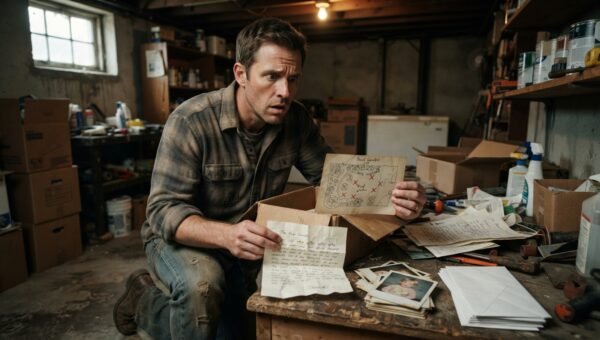
He had planned it down to the hour. He knew I was incapacitated on an operating table. He took my tax returns, my driver’s license from my dresser drawer, my password notebook from behind the telephone book, and he gave himself legal access to every dime my parents had saved over fifty years of running a small dry-cleaning business.
“Can you freeze this account right now, Mr. Henderson?” I asked.
“I can place an immediate administrative lock on all outflows, Mrs. Miller,” Mr. Henderson said, typing rapidly on his keyboard. “No wires, no debit charges, no counter withdrawals. But to recover these funds and address the fraudulent signature, you must file a formal affidavit of forgery with the county district attorney’s office.”
“Do it,” I said. “Lock every penny.”
While Mr. Henderson was printing the revocation affidavits, my cell phone rang inside my purse.
It was Todd.
Karen reached into my bag, pulled out the phone, and set it on the desk in front of me. She hit the speaker button.
“Mom,” Todd’s voice filled the office, loud, frantic, and breathless. “Where are you? I went back to the urgent care and the front desk said you left with Karen. Listen to me. Do not do anything stupid. You do not understand the tax implications of what you are looking at.”
“I am sitting in Mr. Henderson’s office at the credit union, Todd,” I said.
The line went dead silent. For five seconds, the only sound was the heavy rushing of his breath over the receiver.
“Mom, wait,” he pleaded, his voice cracking. “Do not let Henderson touch that account. If he freezes that LLC, my truck gets repossessed on Friday. I have commercial loans tied to that credit line. If the bank flags this as fraud, they will pull my business license. I will lose everything I have built.”
“You did not build anything, Todd,” I said, cold clarity washing through my veins, pushing away the last of the physical pain from my wrist. “You stole from your sister, you stole from your mother who gave you life, and you stole from a ninety-six-year-old woman who does not even remember her own name anymore so you could drive a shiny truck to a golf course.”
“She is dying anyway, Mom!” he screamed through the phone, all pretense of respect completely shattered. “She does not know where she is! She does not know what room she is sitting in! That money was just sitting there waiting for probate! It was going to come to me eventually anyway! Why should it sit in an account while I struggle to keep my business afloat?”
Karen lunged forward over the desk, tears streaming down her face. “She is your grandmother, Todd! You are a monster!”
“Todd,” I said, keeping my voice as steady as granite. “Never call this number again. The next person you speak to will be an investigator from the Cumberland County courthouse.”
I pressed the red circle on the screen and ended the call.
ENDING
The paperwork took three hours.
With my left hand, I signed three separate affidavits of forgery, my signature clumsy and crooked, but legally binding under Mr. Henderson’s notary seal. We attached the medical records from Holy Spirit Hospital confirming that I was under general anesthesia at the exact moment the mobile application was filed, along with the IP tracking logs provided by the credit union’s security division.
By two o’clock that afternoon, Karen and I were sitting in the office of Detective Mark Vance at the Cumberland County District Attorney’s elder abuse task force.
Detective Vance did not treat this as a family disagreement. Under Pennsylvania law, unauthorized access to an elder’s funds exceeding twenty-five thousand dollars carries an automatic enhancement for aggravated financial exploitation of an older adult.
“We see this all the time, Mrs. Miller,” Detective Vance told me as he reviewed the printouts. “A family member convinces themselves that an early inheritance is not theft. But this is not an inheritance dispute. This is grand larceny, identity theft, and criminal forgery.”
The arrest warrant was issued forty-eight hours later.
State troopers arrested Todd at his home in Mechanicsburg on Thursday morning as he was backing his new pickup out of the driveway. He did not go quietly; the neighbors reported that he screamed at the officers that his mother was senile and that the family was framing him over an estate misunderstanding.
The judge set bail at seventy-five thousand dollars, which his wife refused to pay after discovering that he had also taken out a second mortgage on their home without her knowledge to fund his failed consulting firm.
Todd spent three weeks in the county prison before his public defender negotiated a preliminary waiver.
Faced with the hospital admission records, the electronic IP timestamps, and the security footage of him using the commercial credit card at retail counters across three counties, Todd had no defense. In exchange for the dismissal of the identity theft charges, he entered a guilty plea to two counts of felony theft by unlawful taking and one count of financial exploitation of a care-dependent person.
The sentencing took place in May.
I sat in the second row of the courtroom with Karen, my right wrist completely healed, the small surgical scar from the pins pale against my skin. Todd stood in front of the bench wearing an orange prison jumpsuit, his hands cuffed to a chain around his waist. He had lost twenty pounds, his hair was unwashed, and he refused to turn around and look at his sister or me.
The judge showed no mercy.
She sentenced Todd to three to seven years in a state correctional facility, followed by five years of supervised probation. The court issued an immediate restitution order for fifty-two thousand dollars, placing a permanent judicial lien on his personal vehicles, his share of his home’s equity, and ordering sixty percent of any future wages garnished until the care account is repaid in full.
My mother passed away peacefully in her sleep three months later, on a warm morning in August.
She never knew that her account had been emptied. She never knew that her grandson had used her illness to buy leather seats and country club dinners. She spent her final weeks sitting in the sunny courtyard of the memory care garden, holding my hand while I read to her from her old hymn books, surrounded by nurses who cared for her with dignity and grace.
Karen and I used the remainder of my late husband’s life insurance policy to cover the final funeral expenses and bury my mother beside my father in the churchyard in Carlisle.
Yesterday morning was the first Sunday of autumn.
Karen brought her two children over to my house for Sunday dinner. The kitchen was warm, smelling of roasted chicken and fresh yeast rolls. My granddaughter, who is nine, sat at the kitchen table helping me snap green beans into a glass bowl, her little fingers moving fast while her brother did his homework in the den.
As I set the bowl on the counter, my right wrist gave a faint