“You have no say in this house, Arthur.”
Vivian said it with a smile, one hand resting on the dining table. My grandfather still had the sealed envelope in his hand. I was standing beside him, listening to her tell him he’d come to the wrong place to make demands.
I can still picture that envelope. It had my mother’s name written across the front in Arthur’s handwriting. Vivian looked at it and smiled like it was an old bill he’d forgotten to pay.
She thought I had nowhere to go. She thought my father, Richard, would back her up. She also thought Arthur couldn’t change a thing.
I didn’t know yet what was in the envelope. I only knew that, for once, I wasn’t standing between her and the front door by myself.
That morning, Arthur had come next door to drop off rolled renovation plans. I was in the glassed-in breakfast room, pulling my sweater cuff over my wrist. He set the plans down without taking his eyes off me.
“Emily, what happened to your hand?”
“Nothing.”
He pulled out a chair. “You’re hiding it from me.”
I didn’t answer. I tugged my sleeve down again, which was probably answer enough. Arthur waited. He was good at that. He never filled a quiet spot just because it made someone uncomfortable.
So I pushed the cuff back.
A bruise circled my wrist. It was dark enough that I’d been wearing long sleeves even though the house was warm. I’d been telling myself it would fade before anybody noticed.
“Who did that?” he asked.
“Vivian.”
“Your stepmother?”
I nodded. I was twenty-four years old, and I still felt stupid saying it aloud. “She grabbed me. Then she hit me.”
Arthur’s face barely changed, but his eyes did. He took the chair across from me and put both hands on the table.
“How long has this been happening?”
“Almost two years.”
The words came out flat. Then I tried to explain, and my breath snagged. I pressed my knuckles to my mouth because I didn’t want Vivian to hear me from the main house. That was how used to it I’d gotten. I was in my grandfather’s office, safe for the moment, and still trying not to make noise.
“Does your father know?” Arthur asked.
“Richard saw the bruise last night. Vivian said I did it to myself.”
“And he believed her?”
“He said I’m careless. He said I make things up when I don’t get my way.”
Arthur’s hand closed around the table’s edge. He didn’t raise his voice. Somehow that made me more nervous.
My mother died three years earlier. Afterward, I came back to the coastal house where I’d grown up because I wanted to finish my degree nearby. Richard had married Vivian about a year after Mom died. At first, she called me “kiddo” and brought me coffee when I studied late. I wanted that to mean something. I let it mean more than it did.
Then she started deciding what I needed. She asked why I spent money on textbooks, why I needed the car, why I couldn’t take fewer classes. She kept saying she was trying to help me get organized. I even thanked her once for making a grocery list. I’m not proud of that, but I did.
The rules got tighter one at a time. Vivian started keeping track of my spending and saying my tuition money should go toward household expenses.
If I asked questions, she called me ungrateful. Sometimes she slapped me. Sometimes she held my arm so hard I had marks the next day.
The day before Arthur saw my wrist, I asked about the payment due to my university.
“You don’t need that tuition payment,” she said. “You’re not even serious about your future.”
I said I was enrolled. I said the bill was due.
She grabbed my wrist. I pulled away, and she hit me. Richard came into the room after, saw me crying, and told me to stop provoking her. That was the part I kept replaying. Not the bruise. Him seeing it and deciding not to see it.
Arthur stood up. “You’re coming to my office.”
“What if she gets angry?”
“She already is.”
He walked me across the short lawn to his architectural office, carrying the plans and the envelope. I followed, rubbing my thumb over the red mark on my wrist. I mean, I was scared. I was also ashamed that I felt relieved to leave my own house.
Arthur set me up at his desk with a glass of water. His office smelled like paper and the lemon cleaner he used on the sample shelves. The old radiator clicked twice, then settled. I remember that because I kept staring at it instead of looking at him.
He called Mr. Albright, the attorney who handled my mother’s trust.
“I need the full transaction record,” Arthur said. “And I need you here.”
He listened, then added, “Today.”
I watched him hang up. “Why are you looking at the trust?”
“Because I asked for the records.”
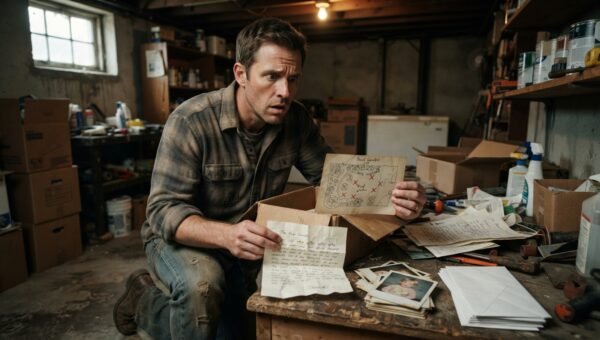
He opened the drawer of a small safe and took out the envelope I’d seen him carry in. He hadn’t brought it to deliver renovation plans after all. Or maybe that was only part of why he’d come. I don’t know. He’d noticed my sleeve before he’d even set the plans down.
“There’s something your mother made sure you’d know when the time was right,” he said.
He broke the seal and laid out a memorandum. I recognized Mom’s signature before I understood the page. I read it once, then again. It named me as the sole beneficiary of the trust. Arthur was the trustee.
“Why didn’t anyone tell me?”
“Your father knew the basics,” Arthur said. “Vivian didn’t want you asking questions.”
He placed the memorandum beside the transaction pages. The first thing I noticed was a list of dates. Then the amounts. I recognized one of them because it was the tuition payment I’d been waiting for.
Arthur turned the page toward me.
“These withdrawals appear to come from funds belonging to you.”
I read the line twice. “What funds?”
“Your education and living expenses,” he said. “The trust was meant to pay them.”
My mother had left more than a house. She’d set up an irrevocable trust. The main money, my tuition reserves, and the title to the coastal property were all meant for me. Richard had a limited right to live there, but only as long as he looked after my welfare. Arthur was the controlling trustee.
The envelope held the memorandum and the part that made those terms plain. My father was not the owner. Vivian was not the person in charge. I was.
Arthur had stepped back after Mom died. He was grieving too, and he’d trusted Richard to handle the household. Richard gave Vivian access to some accounts so she could pay bills. It had been a shortcut. She used it.
Mr. Albright arrived with a folder under his arm. He didn’t talk like someone who wanted to scare me. He sat down, checked the account records, and explained what we were looking at one item at a time.
Vivian had directed my scheduled living and tuition disbursements into an auxiliary account. She used Richard’s signature authority on that account, but the transfers and checks carried her signature. She’d also signed educational release papers with my name.
“I didn’t sign these,” I said.
“I believe you,” Mr. Albright said. “We’ll document that.”
He showed us the canceled checks and the wire transfers. Some went to personal accounts. Others paid for things Vivian had called household upkeep. The dates lined up with the months she’d been telling me the trust was short on money.
At first, I tried to find a kinder explanation. Maybe she’d borrowed it. Maybe she’d planned to put it back. It was a reflex. I’d had two years to practice making her choices sound less bad.
Then Mr. Albright showed me the reconciliation. Over $80,000 from my funds had gone to Vivian’s personal spending and renovation costs. The tuition amount she’d refused to pay was on the same sheet.
I had to set the page down.
“She spent my tuition,” I said.
Arthur didn’t soften it. “Yes.”
“She called me lazy because I asked for it.”
“Yes.”
I kept staring at the numbers. I’d spent months thinking I wasn’t serious about my future because Vivian said so. Meanwhile, she was using the money meant to get me there.
Arthur asked if I wanted to stay at his office while he and Mr. Albright went back to the house.
I looked at the bruise. “No. I’m going with you.”
He didn’t try to talk me out of it. “All right.”
They explained what we could do. Arthur could revoke Richard’s authority to manage those accounts. Mr. Albright could prepare a formal notice about the diverted money and the forged releases. Because the house was held for me under the trust, Arthur could serve Vivian with notice to leave. If she refused, they could bring in the proper authorities and file the complaints.
I didn’t understand every legal word. I understood that she couldn’t keep using the house and my money as if they belonged to her.
The walk back across the lawn took less than a minute. My legs felt strange, but I kept going. Arthur held the file under his arm. I held my hands together so I wouldn’t pull my sleeve down again.
Inside the house, Vivian was in the dining room. Richard had just come in from the back hall. When Vivian saw the folder, her smile came back.
“What is this?” she asked.
“Records from the trust,” Arthur said.
She gave a little laugh. “You’re not part of this family’s business.”
“That’s not correct,” Mr. Albright said. “I represent the trust.”
Vivian glanced at me. “Emily, go upstairs.”
I didn’t move.
Arthur put the audit and the transfer slips on the table. “These withdrawals were made from Emily’s funds.”
Richard reached for the top page. “There must be some mistake.”
“Read the signatures,” Arthur said.
I watched my father look at the dates. He looked at one transfer, then at the next. His mouth opened, but he didn’t say anything.
Vivian folded her arms. “I was paying for the house.”
“Not with those funds,” Mr. Albright said.
“It was all for the family.”
I heard myself speak before I had time to change my mind. “You told me my tuition wasn’t worth paying.”
Vivian’s eyes snapped to mine. “Don’t start.”
I pulled my sleeve back and showed them the bruise.
Richard looked at my wrist. He looked at the page showing my unpaid tuition. I was waiting for him to say something, anything. I don’t know what I expected. An apology, maybe. An explanation that didn’t make me feel worse.
He said, “Emily, I didn’t know about the transfers.”
“You saw my wrist.”
His eyes dropped to the table. “I thought you’d hurt yourself.”
“You thought whatever she told you.”
He started to answer, then stopped. I had never said it to him that plainly. I used to protect him from what I knew about him. That day I didn’t.
Arthur told Vivian she had two hours to pack and leave the property. The notice and the audit were in front of her. Mr. Albright explained that the trust would pursue the money and report the forged documents and the assault. No one was pretending a conversation at the table could settle all of it.
Vivian called Arthur an interfering old man. Then she turned on me.
“You’ll be sorry when he’s gone,” she said.
I didn’t answer. I was sorry already. Sorry my mother wasn’t there. Sorry my father had spent years making it easier to believe Vivian than me. But I wasn’t going back upstairs.
Vivian packed in a rush. She took clothes and a few bags, snapping at Richard when he tried to ask what she wanted him to do. He stood in the hall while she carried things out. She didn’t ask him to come with her, and he didn’t ask her to stay.
Richard was still on the porch when I came back to the door. His eyes were wet, but he didn’t reach for me.
“Can we talk later?” he asked.
“Not today.”
“I made a mistake.”
“You made choices.”
He nodded like he had no answer. I went inside.
The immediate part was handled that afternoon. Arthur revoked Richard’s account authority and arranged for Emily’s tuition money to go straight to the university registrar. Mr. Albright kept the records for the formal complaints and the trust’s claim to recover the money. Vivian had left the property. The rest would take time.
I stayed in the coastal house. Arthur stayed in the small quarters beside his office while I got used to being there without Vivian making every room feel borrowed. I became a co-trustee with him, and I started dealing with my own bills and school again.
Richard didn’t lose his right to be my father. That was never something a document could take away. But he lost the right to manage my money, and I stopped asking him to decide whether my account of my own life was true.
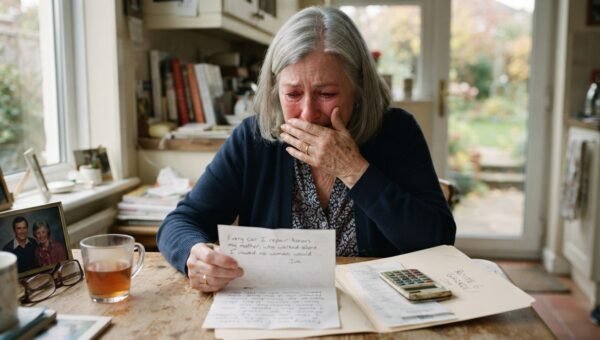
A few days later, Arthur gave me the heavy brass keys to the front door. I carried them into the glassed-in breakfast room and set them on the table. The bruise was gone from my wrist. The fog was lifting off the water, and my mother’s sealed envelope was open beside the keys.