PART 1
My son Leo came into this world on a rainy Tuesday night in November, ten weeks before anyone expected him. He weighed two pounds, four ounces. When the nurses held him up for a split second before rushing him out of the room, he looked less like a baby and more like a tiny, translucent sparrow. His skin was so thin I could see the faint blue pulse of his veins, and his chest hitched with small, frantic gasps that sounded like kitten cries.
They wheeled me down to the neonatal intensive care unit six hours later. The room was cold, dim, and smelled of antiseptic foam and ozone from the humming machinery. There were rows of plastic isolettes, each surrounded by a tangle of clear IV tubing, monitor leads, and beeping towers. In the middle of it all sat Leo, trapped inside an incubator under harsh fluorescent warming lights. He had a feeding tube taped to his cheek, a tiny CPAP mask covering half his face, and sensor leads smaller than nickels stuck to his chest.
I couldn’t hold him. The charge nurse told me his skin was too fragile for regular handling, and even the vibration of my voice could send his heart rate dropping. All I was allowed to do was slide two sanitized fingers through the rubber porthole of the incubator and let him curl his entire hand around my thumbnail.
The first forty-eight hours were an absolute blur of terror. Every time an alarm sounded, my stomach dropped into my shoes. Leo had three separate bradycardia events where his heart rate plummeted into the forties, turning him an ashen gray before the alarms screamed and staff swarmed his bed.
Then, on our third night, Angela walked into his pod.
She was about forty, with silver-streaked dark hair tied back in a neat scrub cap and calm, steady hazel eyes that didn’t look tired, even at two in the morning. Her name badge read Angela Rossi, BSN, RN. While the other nurses moved fast, checking screens and rushing off to juggle three other critical infants, Angela moved like she had all the time in the world.
She walked straight to Leo’s bedside, rested her gloved palm over his head without jarring him, and whispered, “Hello, little man. I have you tonight.”
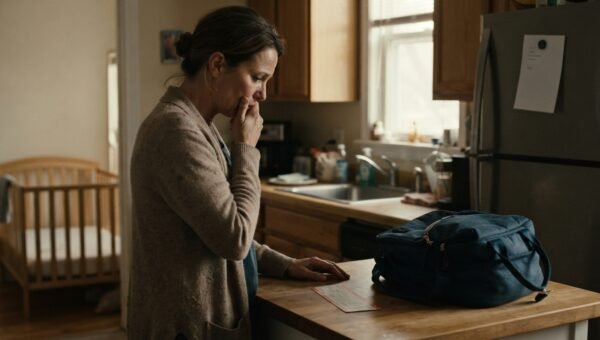
For forty-seven days, Leo stayed in that NICU. Our insurance bills piled up into a mountain of itemized statements that eventually totaled over $218,000. My husband and I took shifts sleeping in the vinyl recliner beside the incubator, rationing our family leave hours and running on cold coffee from the basement vending machine.
Through nearly every single night shift, Angela was there. It felt like a miracle. Whenever the night rotation started at 7:00 PM, she would walk in, take Leo’s chart, and take over his primary care. When Leo suffered severe desaturations, Angela was the one whose steady hands adjusted his oxygen, bagged him gently when his lungs froze, and stroked his back until his numbers climbed out of the red.
When he reached four weeks old and was finally stable enough for modified kangaroo care, my hands shook so hard I almost dropped him. Angela stood over me, guiding my arms, tucking Leo against my bare chest, and wrapping a warm flannel blanket around us both.
“Breathe deep, mama,” she told me softly, pressing two warm fingers against my wrist. “He matches your heartbeat. If you panic, he panics. Trust yourself.”
I never forgot those words. On day forty-seven, when Leo finally hit four pounds and eight ounces and passed his car-seat test, Angela was the one who wheeled us out to the hospital curb. I hugged her until she laughed, promising her that if Leo grew up strong, it was because she had carried him through the darkest nights of his life.
Twelve years went by. Leo grew into a bright, lanky seventh grader with a mop of unruly brown hair, an obsession with middle-school track, and a laugh that filled every corner of our house. The memory of the NICU faded into a quiet scar on our family history.
Until the spring fundraiser at Leo’s middle school.
I had volunteered to help sort raffle baskets in the gymnasium on a Saturday morning. The gym was noisy, echoing with the clatter of folding tables and parents chattering about silent auction items. I was leaning over a box of donated books when a voice cut through the gymnasium chatter from two tables behind me.
“No, put the gift certificates under the cash box so they don’t catch the draft from the double doors.”
The cadence stopped me dead. It was quiet, firm, and carried an exact, familiar rhythm I hadn’t heard in over a decade.
I spun around.
Standing behind the registration desk was a woman with silver hair pulled back into a clip, wearing a blue volunteer fleece. She had a clip board tucked under one arm and reading glasses perched on the bridge of her nose. Her face was lined with twelve more years of life, but the calm, focused hazel eyes were unmistakable.
It was Angela.
My chest tightened with sudden, overwhelming warmth. I dropped the marker I was holding, walked right over to her table, and said, “Angela?”
She looked up from her clipboard. The moment her eyes locked onto mine, every ounce of color drained from her face.
She didn’t smile. She didn’t open her arms. She completely froze, her fingers gripping the edge of the wooden clipboard so hard her knuckles turned white.
“Brenda,” she whispered. Her voice trembled. She looked around the busy gymnasium as if searching for an exit. Then she looked back at me, swallowed hard, and said something that completely knocked the breath out of me:
“I was hoping you wouldn’t remember me.”
I stared at her, utterly stunned. “What are you talking about? You saved my son’s life. Why on earth would I ever want to forget you?”
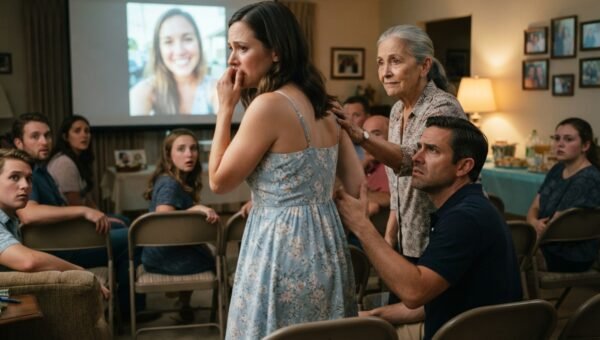
Angela looked at me, her eyes brimming with sudden, heavy tears. Her chin quivered, and she looked down at the gym floor. She reached out, caught my sleeve with trembling fingers, and pulled me toward the quiet hallway near the athletic storage lockers, away from the other parents.
“I wasn’t an accident, Brenda,” she whispered, her voice cracking as a tear spilled down her cheek. “The hospital didn’t assign me to Leo because of a lucky schedule. They assigned me because of an incident report I filed the night he was born. The doctor who delivered him had shown up impaired, and the hospital spent forty-seven days trying to make sure you never found out.”
PART 2
The hallway smelled of floor wax and stale athletic tape, but in that moment, all the air left my lungs.
“Impaired?” I repeated. The word sounded foreign, heavy, and completely impossible. “Dr. Marcus was tired. They told me he had been in back-to-back surgeries all afternoon.”
“Dr. Marcus smelled of scotch at nine o’clock at night,” Angela said, her voice dropping to a harsh, urgent whisper. She kept her back to the gymnasium doors, her eyes darting toward the corridor every few seconds. “I was doing rounds in triage when he arrived to handle your emergency delivery. He was unsteady on his feet. His speech was slurred, and when he dropped a sterile suture tray onto the floor, he kicked it under a counter and tried to reach for an unsterilized pack without scrubbing back in.”
My mind raced backward twelve years, desperately trying to reconstruct that terrifying night. I had been twenty-nine weeks pregnant, doubled over in agony from sudden placental abruption. I remembered the blinding overhead lights of the labor and delivery suite, the sharp metallic sting of surgical tools, and how hurried and chaotic everything had felt. I remembered Dr. Marcus barking at the surgical tech, but I had assumed it was standard trauma adrenaline.
“I tried to stop him from doing the crash section alone,” Angela said, wiping a tear from her cheek with the cuff of her fleece. “I went straight to the nursing supervisor on call, Evelyn Cross. I told her Marcus was in no condition to cut into an emergency patient. I told her we needed to bring in the backup OB immediately.”
“What did she do?” I asked, my heart hammering violently against my ribs.
“She told me to keep my mouth shut and stay in my lane,” Angela whispered. “She said calling in backup would cause an unneeded forty-minute delay and open the hospital to massive liability if the baby died waiting. She told me Marcus had performed hundreds of sections and could do one in his sleep. But he didn’t do it smoothly, Brenda. He nicked your uterine artery because his hands were shaking, and during the extraction, he dragged Leo out with excessive traction. That was why Leo went into immediate respiratory collapse. It wasn’t just his prematurity. He suffered trauma during the delivery.”
The floor beneath my sneakers felt like it was tilting. For twelve years, I had blamed my own body. I had spent countless nights wondering if my stress, my work hours, or my morning coffee had caused Leo’s early arrival and his fragile lungs. I had carried a quiet, stubborn guilt that I had failed to keep him safe inside me for forty weeks.
“I wrote an official incident report that night,” Angela continued, her chest heaving as the words poured out of her. “I documented the smell of alcohol on his breath. I documented the dropped instruments, the slurred orders, and the excessive traction. I timestamped it and submitted it directly into the risk-management database at 1:15 AM.”
“And what happened to the report?”
“At 6:00 AM, I was called into the administrative office,” Angela said. “Evelyn Cross was there, along with the hospital’s legal risk coordinator. They had already scrubbed my report from the main system. They told me that if that report became part of your permanent chart, the hospital would face a multi-million-dollar malpractice lawsuit that could shut down the regional maternity wing. They threatened to pull my nursing license for gross insubordination and slander. They told me Marcus was the hospital’s top revenue-generating obstetrician.”
“So they covered it up,” I said, a wave of cold fury washing through my veins. “And where did you go from there? Why were you with Leo every single night?”
“Because they made me an offer,” Angela said, tears streaming freely down her face now. “The risk coordinator told me that if I kept quiet, they wouldn’t terminate my license. But I told them I wouldn’t stay silent unless they guaranteed Leo survived his hospital stay. I demanded that Marcus never be allowed near that NICU, and I demanded to be assigned as Leo’s primary night nurse for his entire admission. The administration agreed because it served their interests, too. They wanted someone in that room who knew the stakes, someone who would keep you calm, make sure the baby didn’t crash, and ensure you never started asking questions or looking at the surgical records.”
She looked straight into my eyes, her face twisted with a decade of remorse. “Every single time I held your hand, Brenda, every time I cheered when Leo gained an ounce, I felt like a monster. I was keeping him alive, but I was also acting as the hospital’s living buffer to protect the man who almost killed him.”
PART 3
I stood frozen in the hallway, staring at the woman I had spent twelve years revering as an angel in scrubs. The truth sat between us like shattered glass.
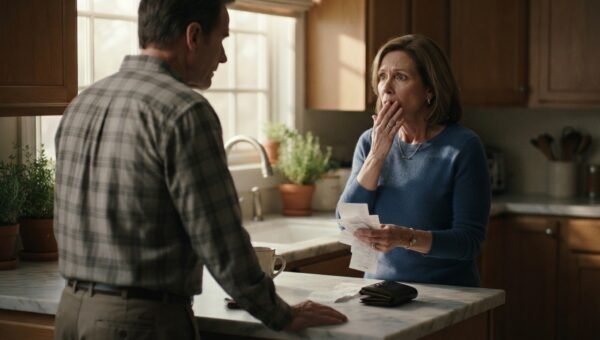
“You let me pay them,” I said, my voice barely above a breath, trembling with anger. “We paid $218,000 to the very hospital that covered up his injury. We took out a second mortgage on our house to clear the deductible and out-of-network surgical fees. We paid Dr. Marcus’s personal billing group three thousand dollars out of pocket.”
“I know,” Angela choked out, burying her face in her hands. “God help me, Brenda, I know. I quit that hospital fourteen months later. I couldn’t walk through those sliding doors anymore without feeling physically sick. I left hospital nursing completely and went into school district health.”
“Did you keep the report?” I asked firmly.
Angela lifted her head. Her hazel eyes were red, but the sudden panic in them shifted into something hard and resolute. “What?”
“The incident report,” I said, stepping closer. “You’re a meticulous nurse. You knew they were covering up a crime. Did you keep a copy before they wiped the server?”
Angela hesitated. She looked down the empty hall toward the gym, where the distant sound of parents laughing and kids running shoes squeaking on hardwood echoed through the silence.
“I kept the carbon-copy routing slip,” she whispered. “And before I submitted the digital file, I printed two hard copies with the server timestamp on hospital letterhead. One went into a locked strongbox in my home office. The other has been sitting in my personal safe-deposit box at First National Bank for twelve years.”
“Why did you keep it if you were terrified of losing your license?”
“Because of the statute of limitations,” Angela said, her voice dropping lower. “In our state, the statute of limitations for medical malpractice on a child doesn’t expire until two years after the child turns eighteen. The hospital’s lawyers thought they had silenced me, but I kept the paper trail in case Leo developed permanent neurological deficits as he grew up. If he needed lifelong medical care, I was going to give you those papers, no matter what it did to my career.”
I looked at her, my pulse pounding in my ears. Leo was healthy now, running track and earning straight A’s, but the sheer cruelty of what had been done to us was intolerable. The doctor who almost killed my baby had walked away with a fat paycheck, while my family had spent years scrimping and skipping vacations to pay down medical debt that never should have existed.
“I want those documents, Angela,” I said evenly.
She looked at me for a long, silent moment. She didn’t flinch. She took a slow, deep breath, reached into her fleece pocket, and pulled out her car keys.
“My shift here ends at noon,” she said softly. “I’ll go to the bank on Monday morning when the vault opens at nine. Meet me at the diner across from the public library at ten o’clock. I’ll give you everything I have. But you need to know what you’re walking into, Brenda. Marcus retired three years ago as chief of surgery. The hospital network has an army of corporate attorneys. If you open this door, they will fight you with everything they have.”
“They had my baby boy in a plastic box for forty-seven days while they covered their tracks,” I said, looking her dead in the eye. “Let them fight.”
ENDING
On Monday morning at ten o’clock sharp, Angela walked into the corner booth of the Oak Street Diner carrying a manila envelope.
She slid it across the laminate table without a word. Inside were forty pages: the original timestamped incident report documenting Dr. Marcus’s intoxication, internal nursing supervisor logs showing the exact time the digital record was flagged for deletion, and Angela’s handwritten clinical notes from that night shift tracking the abnormal traction markers during Leo’s emergency delivery.
I didn’t hire an aggressive television lawyer. I went to a quiet, formidable medical malpractice attorney named Thomas Vance, whose firm specialized in pediatric hospital negligence.
When Thomas reviewed the documents, he sat back in his leather chair and removed his glasses. “This isn’t just medical malpractice, Brenda,” he said plainly. “This is intentional spoliation of medical evidence, institutional fraud, and criminal concealment. The statute of limitations hasn’t even begun to run out on Leo’s claims, and the fraud blows the hospital’s standard protections completely out of the water.”
We filed our complaint in state circuit court six months later. We named the hospital network, the retired Dr. Marcus, and former nursing supervisor Evelyn Cross as co-defendants.
The hospital’s legal team initially attempted to dismiss the suit, claiming the documents were unauthenticated internal drafts. But Angela Rossi didn’t run. She walked into a four-hour deposition and testified under oath with absolute precision. She named every administrator who had been in the room, produced her original hospital badge log-in records, and identified her original handwriting on the preserved carbon slips. Two other former surgical techs, who had since left the hospital, were subpoenaed and corroborated that Marcus had frequently arrived at late-night calls smelling of alcohol.
Faced with the catastrophic public exposure of a jury trial, the hospital network folded.
Fourteen months after our conversation in the middle-school gymnasium, the hospital agreed to an eight-figure confidential settlement. Every single dollar of Leo’s $218,000 NICU bill was fully refunded with twelve years of statutory interest. The hospital was forced to pay off the remaining balance of our home mortgage, and a substantial structured trust was established in Leo’s name to ensure his future, college tuition, and medical security were protected for life. Furthermore, our legal action triggered a formal state medical board inquiry that stripped Dr. Marcus of his emeritus surgical status and placed a permanent public sanction on his record.
Last night, Leo celebrated his fourteenth birthday.
He blew out the candles on his chocolate cake surrounded by his track teammates, shouting and laughing as they fought over the last slice of pizza. I stood by the kitchen counter, watching his strong shoulders, his bright, clear eyes, and the effortless way his lungs drew air.
Sitting next to me at the kitchen island, holding a cup of tea, was Angela.
She is no longer carrying the crushing guilt of a secret she was forced to keep. And when I look at her now, I don’t see a tool of a corrupt hospital administration. I see the woman who stood guard over my two-pound baby in the middle of the night, defying an entire institution just to make sure my boy got the chance to live.