PART 1
The yellow notification slips had piled up in the bottom of my work tote until they were creased and soft as tissue. Fourteen missed parent-teacher conferences, truancy reviews, and behavioral interventions over five months. Every single one had been scheduled between two and four in the afternoon, right when I was changing out of my green dietary apron at Oak Ridge Nursing Center and sprinting six blocks to catch the crosstown bus for my four-to-midnight janitorial shift at the civic center.
I am thirty-four years old. I have three children: eight-year-old Maya, six-year-old Leo, and four-year-old Caleb. Their father left for Texas three years ago, leaving behind two outstanding payday loans in my name and zero forwarding address.
To keep a roof over our heads in south Columbus, I worked sixty-seven hours a week across three low-wage jobs. In the early mornings from five to nine, I prepped breakfast trays at the care facility for thirteen dollars an hour. From ten to three, I scrubbed laundry in the basement of a budget hotel off the interstate. From four until midnight, five nights a week, I cleaned office restrooms and emptied trash cans at the downtown municipal annex. Every single dollar went to our six-hundred-and-fifty-dollar basement apartment rent, bus passes, and off-brand boxed macaroni.
When Mrs. Gable, the elementary school vice principal, called my cracked cell phone two weeks ago demanding a mandatory home visit regarding Maya’s falling grades and daytime exhaustion, panic seized my throat.
“I cannot do a home visit, Mrs. Gable,” I pleaded through the wind at the bus stop, my hands chapped raw from industrial bleach. “I am working double shifts every day this week.
If I miss four hours, I lose my laundry job, and we lose our apartment. Maya is just quiet. She is fine.”
“School policy requires home assessments when attendance and classroom functioning drop this severely, Ms. Turner,” she replied, her voice clipped and bureaucratic. “If you refuse to cooperate, we have legal protocols we are mandated to follow.”
She hung up, and yesterday afternoon those protocols showed up on my doorstep.
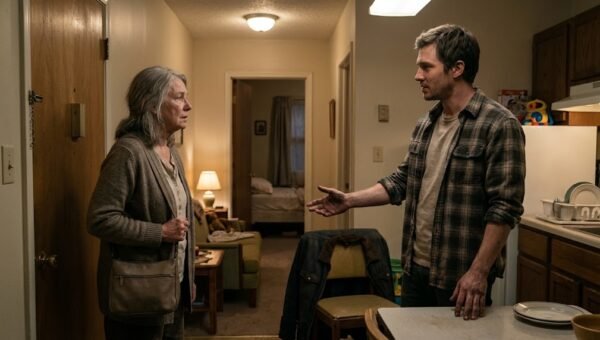
I was home for a rare forty-minute gap between my hotel shift and my night job, trying to soak a pot of pinto beans on the two-burner electric stove. When the knock came, heavy and sharp, my heart dropped straight into my stomach.
Standing on the cracked concrete landing was a woman with a county identification badge clipped to her gray blazer, holding a black leather clipboard. A uniformed city patrol officer stood two paces behind her on the sidewalk.
“Sharon Turner?” the woman asked, stepping forward before I could fully crack the door. “I am Investigator Rachel Miller from Franklin County Children Services. We received a report of chronic educational neglect and environmental concerns regarding your children.”
My voice caught. “I was just heading to work. My neighbor watches them until I get home at midnight.”
“Step aside, Ms. Turner. We are coming in.”
The next ten minutes felt like a slow-motion execution. Investigator Miller walked through our tiny, low-ceilinged basement apartment with practiced, detached efficiency. She opened the refrigerator door. Inside sat half a carton of powdered milk mixed with tap water, a jar of pickle slices, three eggs, and an open can of generic tomato paste.
She wrote something on her pad.
Then she walked into the small back room where the children slept. There was no bed frame. In the center of the linoleum floor lay a single full-sized foam mattress covered with a worn thermal blanket where Maya, Leo, and Caleb piled together for warmth because the baseboard heater had broken in November and the landlord refused to fix it.
Investigator Miller clicked her ballpoint pen against her clipboard and turned to face me. Her eyes were not angry; they were dead and clinical, which was a thousand times worse.
“Chronic lack of adequate food supplies. Substandard sleeping arrangements. Fourteen missed mandatory school welfare checks,” she recited, looking straight at me. “Under standard guidelines, this warrants an immediate emergency placement removal.”
Tears blurred my vision. “Please, ma’am. I work sixty-seven hours a week. I don’t drink. I don’t do drugs. Every cent goes to them. I buy food every Friday when my check clears. Please don’t take my babies.”
Investigator Miller paused. She looked down at her notes, flipped over two carbon-copy pages, and then looked back up at my face. Her expression had shifted into something far darker.
“The empty fridge and the mattress are only half of the report, Ms. Turner,” she said quietly. “During Maya’s private evaluation with the school psychologist yesterday morning, your daughter revealed that for the past four months, she has not been sleeping on this mattress with her brothers. She has been wedging herself into the back of that utility closet behind the water heater every single night.”
My breath seized. My legs went completely weak, and I had to grab the edge of the kitchen sink to keep from collapsing onto the floor. “What? Why would she do that? She told me she liked playing fort in there.”
Investigator Miller checked her handwritten notes, her voice dropping into a razor-sharp whisper.
“She hides in the closet because she is terrified,” Miller said. “She told the counselor that three or four nights a week, around two in the morning, a man enters the bedroom through that back egress window. The children call him their new daddy.”
PART 2
The room tilted around me. The smell of the simmering pinto beans made my stomach heave.
“A man?” I choked out, my fingers digging into the chipped porcelain edge of the counter. “There is no man. Their father walked out three years ago. Nobody has a key to this apartment except me and my older sister, Brenda, who lives across town. Nobody comes here!”
Investigator Miller didn’t flinch. She gestured toward the patrol officer, who stepped past me into the children’s bedroom. He knelt by the narrow hopper window set high in the foundation wall, the small ground-level window that looked out into the back alley behind the laundromat next door.
The officer reached up and touched the metal latch. It wasn’t latched at all. The rusted slide bolt had been carefully unscrewed, and a small strip of black electrical tape held the glass flush against the frame so it looked closed from the inside.
“The window is unlocked, Rachel,” the officer said, shining his tactical flashlight across the sill. “Fresh mud scuffs on the wood trim. Recent footprints in the alley dirt right beneath the exterior well.”
I dropped to my knees on the linoleum. The world felt like it was splitting in half.
While I was on my hands and knees scrubbing commercial toilets downtown between eight and midnight, believing my babies were tucked safely asleep behind a deadbolted front door, someone had been slipping through the foundation window into their bedroom.
“Who stays with them while you work, Sharon?” Investigator Miller asked, crouching down so she was eye level with me. Her bureaucratic tone had completely disappeared, replaced by urgent gravity. “You said your neighbor watches them.”
“Mrs. Gable across the hall,” I wept, tears streaming down my neck. “She’s seventy-one. She comes over at three-thirty, feeds them whatever boxed mac and cheese I leave on the counter, helps them with their drawing, and puts them down by eight-thirty. Then she goes back to her own apartment across the hall and leaves her door cracked so she can hear if they cry. She can’t stay up late because of her hip. I lock the front deadbolt from the outside when I run out for my night shift.”
“Maya told the counselor the visits started in October,” Miller said, reading directly from the pink intake sheet. “She said the man brings Leo and Caleb candy bars and plastic toy cars so they won’t cry. Then he sits on the mattress and talks to them. Maya said she realized early on that he wasn’t supposed to be there. She found a space behind the old winter coats in the water heater closet, pulled an extra bath towel inside, and pulled the louvered door shut until she heard the window scrape close.”
“Did he… did he hurt her?” The words barely made it past my lips. My chest burned with a terror so pure I felt like I was suffocating.
“Maya says he never opened the closet door,” Miller said. “She stayed silent in the dark until morning. But Leo and Caleb told the school liaison that their new friend promised they were going on a long car trip soon to see the ocean.”
The officer stood up from the window sill, his radio crackling on his shoulder. “We need detectives down here immediately. This is targeted grooming and attempted abduction prep.”
Investigator Miller stood up, closing her file.
“Sharon, listen to me very carefully,” she said, her voice steady and commanding. “Your children are currently in protective custody at the county family services center. They are safe. They have had lunch, and they are playing with social workers. I am not filing an abandonment petition against you today because it is clear to me you were working yourself to death and had no idea this breach was happening. But you cannot stay here tonight. And we are going to find out who has been crawling through that window.”
PART 3
Two plainclothes detectives from the Columbus Special Victims Unit arrived twenty minutes later. Detective Ruiz, a tired-looking woman with graying hair and sharp, assessing eyes, sat me down at my small drop-leaf kitchen table while forensic technicians dusted the window frame and the bedroom sill for fingerprints.
“Sharon, think about everyone who knows your schedule,” Detective Ruiz said, sliding a bottle of water toward me. “Who knows you work three jobs? Who knows you are out of this apartment every night from four until past midnight?”
My mind raced through the blur of my exhausting days. The nursing home staff. The hotel laundry supervisor. The night manager at the municipal building. The convenience store clerk where I bought my five-dollar bus pass every Monday.
Then, a cold, sickening detail surfaced.
Two months ago, my landlord, Carl Dobbs, had hired a new maintenance man to handle the heating complaints and trash disposal for our six-unit building. The man was in his late forties, soft-spoken, and introduced himself as Terry.
Terry had come into my apartment three times in November to inspect the broken baseboard heater. He had seen my work schedule pinned to the corkboard next to the stove, where I kept my three timecards neatly clipped so I wouldn’t mix up my morning and night shifts. He had commented on how hard I worked. He had given Leo and Caleb two quarters each to buy gumballs from the machine out front.
“Terry,” I whispered, my voice trembling. “The building maintenance guy. He asked me last month what time my night shift ended because he said the alley lights shut off on a timer at eleven and he wanted to make sure I wasn’t walking in the dark.”
Detective Ruiz stood up immediately and walked out into the narrow hallway to speak with the patrol officers.
Within fifteen minutes, they had Dobbs on the phone. Dobbs admitted he had never run a formal background check on Terry; the man had answered an ad on Craigslist, offered to work for cheap basement rent in the storage annex behind the laundry building, and went by the name Terrence Miller.
The forensic tech called out from the bedroom. “Detective. We got three partial prints off the metal latch screws. Latent prints match an active state database hit.”
Ruiz stepped back inside, her phone pressed to her ear. She listened for twenty seconds, her face hardening into granite.
“Terrence Alan Miller,” she said to the room. “Parole violation out of Indiana. Multiple prior convictions for stalking and child interference. There is an active felony warrant for his arrest out of Marion County.”
They didn’t wait. Four additional squad cars pulled into the alley behind our building with lights flashing silently.
Officers breached the door of the small cinderblock storage shed where Terry lived fifty yards away behind the commercial dumpsters. Inside, they found his cot, a duffel bag packed with children’s clothes, three rolls of heavy duct tape, and a spiral notebook.
On the pages of that notebook, Terry had meticulously documented my daily routine for seventy-five days. Every bus arrival, every departure time, the exact hours Mrs. Gable fell asleep across the hall, and detailed notes on my children’s clothing sizes. In the corner of the shed, resting on a folding table, were two brand-new children’s suitcases packed with toys, juice boxes, and forged birth certificates with Maya’s and Leo’s names altered.
He was planning to take my children out of the window that very weekend, knowing that with my grueling schedule and sixty-seven-hour work weeks, it might be hours before anyone realized they were gone.
They caught him three hours later at a bus depot on Broad Street, carrying a bus ticket for St. Louis.
ENDING
The district attorney charged Terrence Miller with multiple counts of felony burglary with intent to commit a felony, stalking, and attempted child kidnapping. Because of his extensive prior record and parole violations, the judge set bail at one point five million dollars. He never walked out of the county jail. Six months later, he accepted a plea agreement that sentenced him to twenty-two years in state prison without the possibility of parole.
The school did not pursue neglect charges against me.
Investigator Rachel Miller proved to be a savior rather than an adversary. When she presented her final report to the county family court, she laid out the full reality: an exhausted single mother fighting to keep her family fed on starvation wages, completely blindsided by a predatory maintenance worker.
The court immediately dismissed the emergency removal petition, but Rachel didn’t stop there.
She connected me with the county’s emergency housing diversion program. Within forty-eight hours, my children and I were moved out of that basement dungeon and placed into a secure, clean two-bedroom apartment in a monitored family development on the north side of town, far away from that alley. The housing authority subsidized our rent, capping it at thirty percent of my earnings.
Next, Rachel’s agency enrolled Leo and Caleb in a state-funded after-school care program and secured an educational grant that allowed me to quit both the hotel laundry job and the midnight janitorial shift.
For the first time in three years, I had only one job: thirty-six hours a week as a certified dietary aide at the nursing home, earning sixteen dollars an hour with health benefits and paid sick leave.
I was home every single afternoon at four-fifteen.
The trauma did not vanish overnight. For months, Maya would not sleep unless her bed was pushed against the wall directly across from mine, with the bedroom door wide open and a warm nightlight glowing in the hall. We spent nearly a year in weekly trauma therapy sessions funded through the county crime victims’ compensation board.
Slowly, the terror receded. The heavy silence in Maya’s eyes was replaced by laughter, messy finger-paintings, and proud shouts when she brought home an A in third-grade math.
Last week, I attended my first parent-teacher conference of the new school year. I didn’t arrive out of breath, clutching greasy timecards in a torn tote bag. I walked into the classroom at three in the afternoon, wearing clean clothes, sat down in the small plastic chair across from Maya’s teacher, and stayed for the full forty minutes.
When the teacher told me Maya was thriving, reading above grade level, and making close friends, tears filled my eyes.
I thought the school calling child services was the day my life would end. I thought it was the moment poverty would finally tear my babies from my arms. Instead, that terrifying knock on my door was the only reason my daughter is safe in her bed tonight, sleeping soundly in a room with locked doors, clean sheets, and a mother who is there to hold her hand until morning.