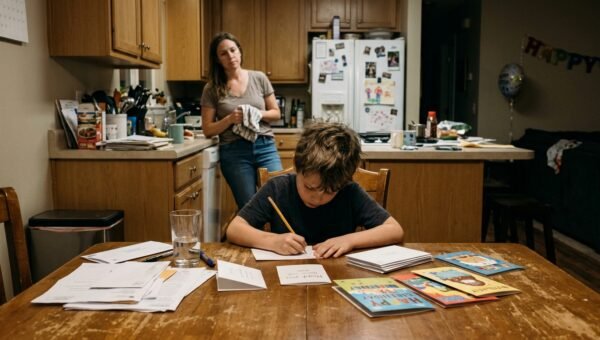
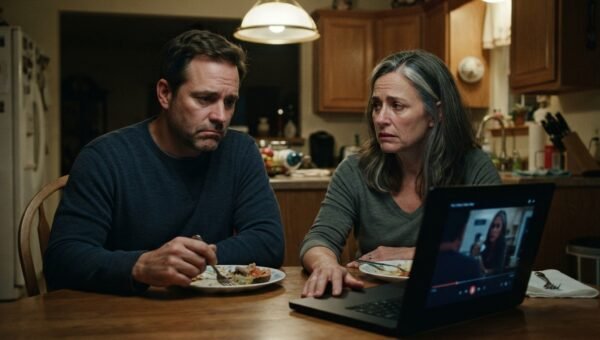
I got the wrong thing exactly backward while I was sitting at the kitchen table with Principal Miller’s email open: I thought keeping my daughter away from her father’s family was the same as protecting her. The email said, “Sarah didn’t attend the trip. Your $300 refund is enclosed.” I’d written the check two weeks earlier for her school’s Washington, DC, trip. Now Sarah had posted happy pictures outside the White House, and I was looking at an email that said she’d never gone.
I almost called her right then. Instead, I opened the pictures again and pinched the screen to zoom in. It was April. The trees behind Sarah had yellow leaves all over them. I checked the image details, though I’m not the sort of person who normally checks image details, and the photos were three years old. I kept staring at that little date. It felt like finding a gate open when I knew I’d latched it.
The hardest part was that the pictures looked like Sarah. Not a fake account, not some stranger. She was smiling in the same crooked way she does when somebody tells her to look happy for a photo. I was mad, yes. I was also scared in a way I couldn’t put into a sentence yet. If she hadn’t been in Washington, where had my 12-year-old gone?
Principal Miller’s email had an electronic refund voucher attached. I called the school office and asked if there was some mistake.
The woman there checked the attendance list and said Sarah had canceled her spot the morning after I wrote the check. The school had held the refund. I thanked her, then sat there with the phone beside my hand, trying to understand how my child had managed to make a whole trip look real.
Six years earlier, Sarah’s dad had walked out and started another family. He stopped calling. I didn’t tell Sarah every ugly thing that was said between us, and I still think some of that was right. But I also made sure his side of the family stayed over there, like a fence I could keep mending without ever asking if Sarah wanted to cross it. I thought she was doing fine. She was doing fine in school, and she laughed at my bad jokes. I used those things as proof.
Her room was down the hall. I went in and told myself I was only looking for a clue about where she’d gone.
I didn’t feel proud of going through her desk, and I knew I’d be furious if she went through mine. But I opened the drawers anyway. Under a stack of spelling papers, in a hollowed-out diary box I didn’t even know she kept, I found a used bus transfer slip to Oakmont.
Oakmont was four hours north. I didn’t know anyone there. Under the slip sat an uncashed money order for the remainder of the ticket fare. Then I found the bracelet. It was a small hospital ID band, the kind that leaves a mark when you take it off. The name printed on it was Clara Vance. The clinic name was Oakmont Regional.
I sat on Sarah’s bed with the bracelet in my palm. It was too small for any grown person. That’s what got me. Not the money order, not the bus. The size of it. I turned it over, then checked the name again.
Vance was her father’s last name before he remarried. I had spent years keeping that name out of our house. Somehow it was here, tucked in my kid’s desk.
I called the bus terminal first. I gave them the date on the transfer slip and asked what I could find out. They couldn’t tell me much, but the slip matched a route to Oakmont. Then I called the clinic number on the bracelet. I said I was trying to verify a name because I’d found a wristband. I wasn’t asking them to hand over private records, and the person on the phone was careful. She confirmed that Clara Vance had been treated there and was now listed as in remission.
I thanked her and hung up. Then I had to sit down again.
I knew my ex had another daughter. I didn’t know the child’s name, and I hadn’t known she’d been sick. I hated that I found out from a plastic bracelet in Sarah’s room. I also hated the part of me that wanted to call her father and demand why he’d let his girls find each other through social media instead of telling me himself. I didn’t call him. I could hear exactly how that conversation would go, and Sarah would end up in the middle again.
So I waited for her to get home. I laid the transfer slip and bracelet on the kitchen table. The voucher email was still open on my phone. I tried to decide what I’d say, and every version came out sounding like an accusation. I made tea. I didn’t drink it. The tea got that thin skin on top that Sarah hates.
When I heard her key, I put both hands flat on the table so I wouldn’t start waving them around. She came in humming, put her backpack down, and asked if there was anything to eat. She had been at an after-school study group. She looked tired and ordinary, which somehow made the whole thing worse.
“Did you have a good trip?” I asked.
She stopped with one hand still on her backpack strap. Then she looked at the table. She didn’t ask what the bracelet was doing there. She knew.
I slid the bus slip toward her. “Tell me where you went.”
Her face crumpled, but she didn’t cry right away. She sat down slowly and rubbed the edge of the paper with her thumb. I could see a tiny blue mark on her finger, probably from a pen. I remember that silly detail because I was trying not to look at the tears coming into her eyes.
“I went to Oakmont,” she said.
I waited. I wanted to ask a dozen questions at once. I wanted to say she could have been hurt, or lost, or stuck somewhere with no way home. I also wanted to know why she hadn’t trusted me enough to ask. All of that was true. None of it was the first thing she needed to hear from me.
“Who did you meet?”
“Clara.”
She said it like I should already know her. Maybe, in Sarah’s mind, I should have.
Sarah took out her phone. Her hands shook while she unlocked it, and she held it across the table so I could see the messages. Clara had found Sarah on social media about three months before. They’d started talking privately. Clara was ten. She told Sarah about having leukemia, about finishing treatment, and about being in remission. She said she wanted to meet her sister.
The word sister was right there on the screen. I read it twice.
Sarah told me Clara had sent the White House pictures from a family trip three years earlier. The yellow leaves that had caught my eye were from that old trip. Clara had picked them because Sarah needed something that would look like the school’s Washington trip, and Sarah had posted them during the weekend. The whole scheme had been planned around the fact that I wouldn’t let her go four hours away to meet people connected to her dad.
“I knew you’d say no,” she said. “I thought you’d be mad I wanted to know them.”
My first answer was that she had lied. It came out sharp. She flinched, and I hated that I’d made the kitchen feel like another place where she had to guard what she said.
“You lied to me,” I said again, quieter. “And you went that far without telling me.”
“I’m sorry.”
She told me Aunt Evelyn had met her at the bus stop and brought her to her house. Aunt Evelyn was Clara’s maternal aunt. She believed I’d agreed to the visit. Sarah had said I knew, because she thought it would be easier for Aunt Evelyn to let her come. Sarah stayed there for thirty-six hours, and Aunt Evelyn kept them at her home. No one had taken her somewhere strange. No one had threatened her. But she had lied to both of us, and she knew that was wrong.
I was relieved, and then angry again. Relief doesn’t erase the part where your child rode a bus alone and didn’t tell you where she was going. I asked Sarah if she understood what could have happened. She nodded. She said she’d thought about it. She said she had the return trip planned. I told her planning a ticket wasn’t the same as being safe.
Then she looked at the bracelet. She told me Clara had taken it off after her clinic visit and given it to her before they said goodbye. She wanted to keep something that proved the meeting had really happened. The bracelet had been in the diary box because she didn’t want me to find it.
I picked it up, and Sarah started crying for real. Not loud. Just the kind where she pressed her lips together and tried to stop her face from moving. I was still holding the evidence that she’d deceived me, and she was watching me hold the one thing she’d brought home from meeting her sister.
“I didn’t want to hurt you,” she said. “You already lost Dad.”
That was the part I had not prepared for. I’d told myself I didn’t talk about him because I didn’t want to make Sarah feel bad. I hadn’t understood that my silence had made her feel like wanting a connection to his other family would hurt me. She had been carrying that worry by herself. She had even tried to protect me from it, in the only way a 12-year-old could think to do.
I wanted to tell her she should never have had to make that choice. I wanted to tell her I was sorry. Both were true, but I also couldn’t pretend the lying was fine. So I told her she was grounded from unsupervised internet use for now, and there would be no solo bus trips. She’d also have to earn back some trust, because I needed to know where she was and who she was talking to. Sarah nodded. She didn’t argue.
“But I’m not going to punish you for wanting Clara,” I said. “That part isn’t wrong.”
Sarah wiped her face with the cuff of her sleeve. “You’re not going to make me stop talking to her?”
“No. I’m going to talk to the adults first.”
The next morning I called Principal Miller and told him Sarah hadn’t been on the trip. I asked the school to keep the refund, and put the $300 back into the college savings account I’d started for her. Then I called Aunt Evelyn. I was braced for a defensive answer, but she sounded embarrassed and worried. She said Sarah had told her I knew. I told her I understood how that happened, but it couldn’t happen again. We agreed that any visits had to be arranged adult to adult, with me knowing the travel plans and speaking with her directly.
I told Sarah’s dad I knew the girls had met. I didn’t ask him to fix the years he’d already missed. He didn’t say much. I’m not going to dress that up as a breakthrough. I did tell him that the girls would have a safe way to keep in touch, and that I’d be the one making sure of it.
Sarah’s grounding still stands. Her phone is in the kitchen at night, and I’m not pretending trust came back in one conversation. But she and Clara message through Aunt Evelyn for now, and we’ve started talking about another visit with the adults handling the travel. Sometimes Sarah brings up Clara without looking at me first to see if I’m upset. I want her to stop checking. I know I helped teach her to.
The school picture day envelope showed up a few weeks later, and Sarah asked if I’d print a photo she’d received from Aunt Evelyn. It was taken at an Oakmont diner, no fancy background, no old leaves to cover the truth. Sarah and Clara stood side by side, close enough that their shoulders touched, both grinning at whoever held the phone.
I printed it without cropping or fixing anything. Then I set it beside my favorite framed portrait on the living room credenza. The bracelet is back in Sarah’s diary box. The real picture is out where anyone can see it.