PART 1
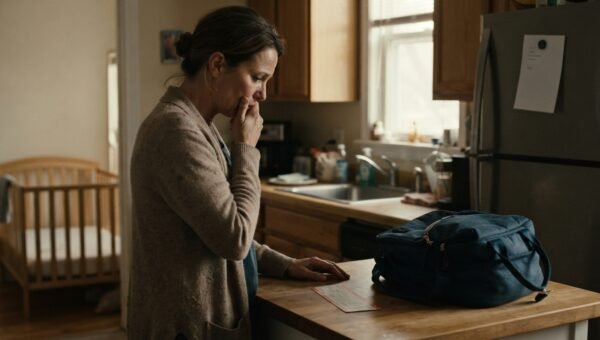
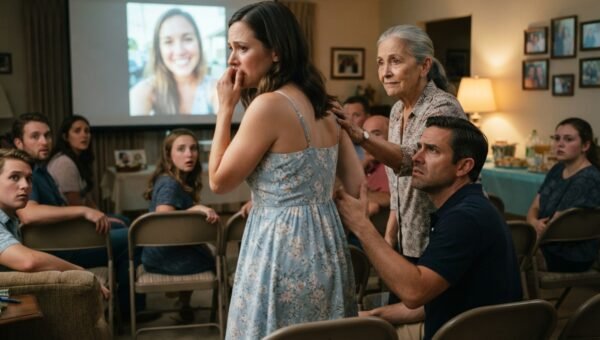
My mother passed away on a Tuesday night, quietly, after two hard years in and out of clinics. We held her service the following Monday morning. By Friday, the flower arrangements had wilted down to brown stalks, and my younger brother, Greg, was already pushing me to close out her utility accounts. He said dragging things out only made the grief sit heavier.
I took the executor folder home that afternoon to begin the paperwork.
Mom did not leave behind much money, just a modest checking account she used for groceries, her social security deposit, and the house she had lived in for forty years. When I logged into her online banking portal to print the final statement balance, a fresh transaction glared back at me from the top of the screen.
It was an in-person debit charge for $86.42 at the Food Giant on Route 9. The date was that very morning, Friday at 8:42 AM, four full days after we put Mom in the ground.
My hands started shaking. I checked the account ending numbers twice, convinced I had clicked into my own personal portal by mistake. But it was Mom’s name at the top of the screen. Her physical debit card was supposed to be resting inside her leather coin purse, tucked away in her bedroom dresser drawer.
I immediately called Greg. When he picked up, the background was loud with highway noise.
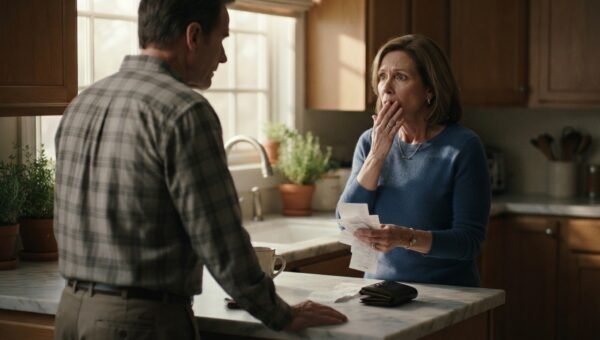
“Greg, Mom’s checking card just got swiped this morning,” I told him, trying to keep my voice even. “Eighty-six dollars at the Route Nine grocery store. Did you go into her room and take her purse?”
There was a noticeable silence on the line before he let out a dry, tired sigh. “Diane, don’t start inventing things. The bank probably had a pending batch from two weeks ago that finally posted. You know how slow small-town registers are. Mom probably bought canned soup before her last hospital trip.”
“It says POS Debit with PIN verified, Greg. Not pending. It posted today at 8:42 AM. She was already gone.”
“Well, call the fraud department on Monday,” he snapped, his patience wearing thin. “Don’t go driving yourself crazy over eighty bucks. We’ve got the estate appraisal next week. Just lock the account online and let it rest.”
He hung up before I could reply. But I couldn’t let it rest.
Mom had worked thirty-two years as a county clerk. She kept every grocery receipt filed by month in shoe boxes under her desk. She knew the value of every single nickel, and the thought of some stranger pulling her card from a stolen purse made my stomach knot up.
I got into my car and drove straight to the Route 9 Food Giant. The store manager, an older man named Carl whom Mom and I had known for years, listened quietly as I explained that my mother’s card had processed at Register 4 that morning.
“Diane, I am so sorry for your loss,” Carl said softly. He pulled up the register audit log on his computer monitor. “Let me check the itemized receipt for that register slip.”
The digital receipt came up on his screen. It was not old hospital medicine or canned soup. The purchase included two gallons of whole milk, a large box of size four diapers, paper plates, and an eight-inch bakery sheet cake with blue frosting.
It had been paid with Mom’s physical debit card and the exact four-digit PIN she had used for twenty years.
“Can you look at the register tape?” I asked, my voice cracking. “Please, Carl. Just so I can see who stole it.”
Carl hesitated, looking over his shoulder toward the hallway, then nodded. “Come in the back office. Just for a minute.”
We went into the small security booth beside the customer service desk. Carl rewound the tape to 8:40 AM and focused the camera on Register 4.
At 8:41 AM, a dark blue sedan pulled into the frame outside, and a woman walked inside alone. She was wearing my mother’s green wool coat, the heavy one with the large brown horn buttons that my father had bought Mom for their anniversary fifteen years ago. Her hair was tucked under a dark knit cap.
She lifted the box of diapers onto the conveyor belt, set the blue cake down carefully, and then reached into a small coin purse. She pulled out Mom’s blue debit card, slid it into the chip reader, and punched the four numbers on the keypad without a single moment of hesitation.
My phone rang in my pocket. It was Greg again.
“Where are you?” he demanded the second I answered. “I came by Mom’s house to drop off the lawnmower keys and your car wasn’t in the drive.”
“I’m at the Food Giant, Greg,” I whispered, staring straight at the screen. “Carl pulled the register footage for me.”
“Turn it off,” Greg said, his voice dropping into a harsh, frantic pitch. “Diane, don’t do this. Turn it off and walk out of there right now.”
PART 2
I didn’t answer him. I hung up the phone and pressed my face closer to the glass monitor.
The woman gathered the grocery bags, carried the blue bakery box against her chest, and walked out the automatic glass doors into the parking lot. Carl zoomed the exterior camera to the curb. She climbed into an older dark blue sedan with a cracked passenger tail light. I wrote down the license plate numbers on the back of Mom’s bank statement.
“Do you know her, Diane?” Carl asked gently.
“No,” I whispered. “I’ve never seen her before in my life.”
I walked out to my car with my heart hammering in my ears. Instead of driving home, I sat in the grocery store lot and called my cousin Martha, whose husband worked as a dispatcher for the county. I didn’t ask for police intervention; I just asked her if she could check where that plate was registered. Ten minutes later, Martha texted me an address. It was on Mill Creek Road, an unpaved gravel lane about six miles past the county line.
The drive took twenty minutes. Mill Creek Road wound through thick pine trees and ended in a small cul-de-sac of weathered ranch homes. I spotted the dark blue sedan parked in the gravel driveway of a pale yellow house with overgrown hedges and a cracked front stoop.
I parked across the road and sat with the engine idling. Through the large front picture window, the curtains were pulled back wide. Sitting right in the center of the dining area was my mother’s solid maple kitchen table, the one with the rounded edges where Greg and I had eaten breakfast every morning of our childhood. Sitting on the side table beside the couch was the ceramic yellow ginger-jar lamp that had lived on Mom’s nightstand for thirty years.
A cold chill washed down my spine. Those items hadn’t been in Mom’s house when Greg and I walked through it on Wednesday. The dining room had been empty, and Greg had told me he moved a few broken pieces to the storage shed to make the rooms look bigger for the real estate agent.
I stepped out of my car, walked up the gravel path, and climbed the three wooden steps to the front door. Before I could even raise my hand to knock, the latch clicked.
A little boy, maybe four or five years old, opened the door. He was wearing clean jeans and a faded striped shirt, and his face was bright with excitement. He looked up at me with round, dark eyes.
“Did you bring the candles?” he asked eagerly. “Did you come for Grandma’s party?”
The air left my lungs completely. Behind him, from the kitchen hallway, footsteps approached.
“Leo, honey, step back from the door,” a woman’s voice called out.
The woman from the store camera stepped into the foyer. She took off the knit hat, shaking loose shoulder-length brown hair threaded with gray at the temples. She had my mother’s high cheekbones, my mother’s narrow jawline, and the exact same slight dip in the bridge of her nose. Looking at her face was like looking at an old photograph of Mom taken thirty-five years ago.
She froze the moment her eyes met mine. Her hand went straight to her throat.
“You’re Diane,” she said softly. It wasn’t a question.
Before I could form a single word, the sound of gravel crunching violently made us both turn. Greg’s pickup truck skidded into the driveway, throwing up dust as he slammed on the brakes. He jumped out of the cab, his face pale and furious, and shouted my name across the yard.
PART 3
“Diane, stay back from that door!” Greg yelled as he took the porch steps two at a time. He pushed his way between us, trying to shield the woman and the little boy behind his frame. “I told you to let this go. Why couldn’t you just stay home?”
“Who is she, Greg?” My voice was trembling, but I didn’t back down an inch. “Why does she have Mom’s coat? Why are Mom’s table and lamp in this living room? And why did this boy just ask me if I came for Grandma’s party?”
The woman placed a gentle hand on Greg’s shoulder. “Greg, stop. It’s fine. She was going to find out anyway. Your mother is gone. We can’t keep living like this.”
The woman looked at me directly. Her eyes were red, rimmed with the exact same exhaustion I had felt for the last week. “My name is Claire. I’m your sister.”
The word hung in the cold air like a stone.
“That’s impossible,” I said. “Mom only had the two of us. Dad died twelve years ago. There was never anyone else.”
“Not from your dad,” Claire said quietly. “I was born six years before you were. Your mother was nineteen and unmarried. Her parents sent her away to a home in Saint Louis until I was born, and they arranged a private adoption through a church agency. She never spoke about it because her father told her it would ruin her life if anyone ever found out.”
I turned to Greg. His jaw was set tight, his eyes fixed on the floorboards of the porch. “You knew?”
“I found the adoption papers in Mom’s safe-deposit box three years ago,” Greg admitted, his voice rough and defensive. “When she got sick the first time, she asked me to pull her old documents. I found the Saint Louis birth certificate. I tracked Claire down myself. I didn’t tell you because Mom begged me not to. She was terrified you would look at her differently.”
Claire stepped past Greg and opened the door wider, gesturing for me to come inside. The boy, Leo, had wandered back to the kitchen, where the blue birthday cake sat on the counter beside paper plates.
“Your mother didn’t want to hide from me once we reconnected,” Claire said, leading me toward the maple table. “For the last two years, she came out here every other Thursday. She met her grandson. She gave him that lamp because he was afraid of the dark, and she brought the table over in Greg’s truck last month so we could have Sunday dinners together.”
“Then why was her card used this morning?” I asked, my voice cracking under the weight of it all. “Why didn’t you come to the funeral?”
Claire’s eyes welled with tears, and she pulled a worn leather envelope from her pocket. “Because Greg told me I wasn’t allowed to be there. He said the family wouldn’t understand, that it would cause a scandal at the church.”
Greg looked away, refusing to meet my eyes.
“Your mother set up an emergency fund for Leo’s daycare and medical care,” Claire continued. “She gave me her card and told me that if anything ever happened to her, I should buy Leo what he needed until things settled. Today is Leo’s fifth birthday. Your mother promised him two months ago that she would buy his cake. I didn’t use the card to steal, Diane. I used it because she made a promise to a five-year-old boy before she died, and I didn’t want his birthday to be about an empty chair.”
ENDING
The anger that had been driving me all morning drained out completely, leaving behind a hollow, aching grief. I looked at Greg, who stood in the doorway with his arms crossed, cornered by his own cowardice. He hadn’t been trying to protect Mom’s reputation; he had been trying to control the estate, terrified that an older sister might complicate the inheritance or shame him in front of our small-town church circle.
“You had no right to shut her out of the service, Greg,” I said, looking him dead in the eye. “Mom spent the last two years trying to heal a wound she carried in secret for fifty years, and you treated Claire like something dirty to sweep under the rug.”
Greg didn’t defend himself. He stared at his boots, muttered an excuse about needing to check on his truck, and walked down the steps. A minute later, his engine started, and he backed down the driveway and drove away.
Claire stood by the kitchen counter, wiping her cheeks with a paper towel. “I’m sorry about the card, Diane. I have the receipts. I will pay back every cent from the grocery store. I didn’t mean to cause trouble.”
“Don’t worry about the eighty-six dollars,” I told her, my chest tight. “The account is being audited for the estate, but that money came from Mom, and she meant for it to go to Leo.”
Leo ran into the dining room carrying a box of colorful birthday candles. He climbed up on one of the maple chairs, Mom’s chairs, and looked up at me with an innocent grin.
“Are you going to sing with us?” he asked.
I pulled out the chair next to him, the one my mother used to sit in when she helped me with my grade-school homework, and sat down. Looking across the table at Claire, I didn’t see a stranger or a threat to my family. I saw the daughter my mother had spent a lifetime mourning in private, and the family she had fought so hard to reach before her time ran out.
“Yes, Leo,” I said, reaching out to help him place the blue candles into the frosting. “I’m going to sing with you.”