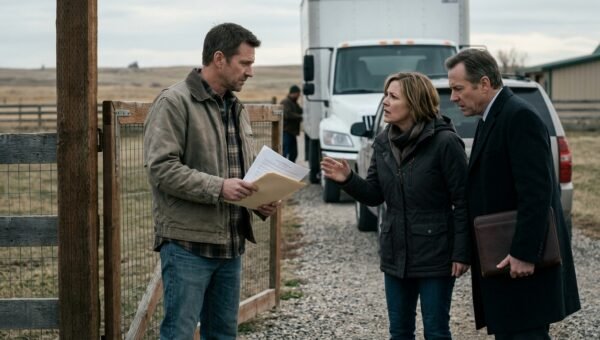
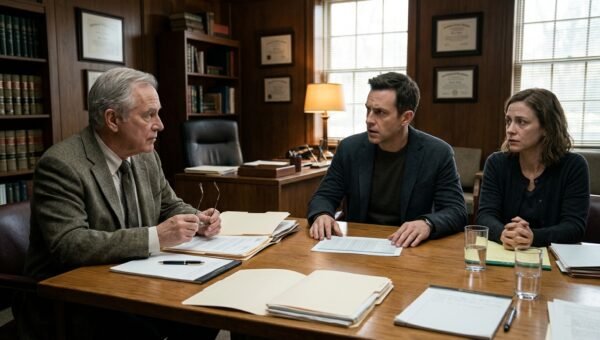
Two days after I gave Clara Jenkins my last $20, Ray called me into his office. Clara was sitting in the chair across from his desk, and Ray had his computer turned away from me.
I thought I was about to lose my job.
I was 18 and delivering pizzas after school to help my mom keep up with bills. I knew I’d broken a store rule by stopping longer than I was supposed to.
I also knew the twenty dollars wasn’t store money. It was my tip money, and I’d given it away. I figured Ray could still be mad about the delay.
He pointed at the chair. “Sit down.”
Clara looked at me, then at the floor. She didn’t look angry. Somehow that made me more nervous.
Ray turned the monitor around. I saw a video of Clara’s apartment doorway, then a notice taped to the frame beside it.
I’m getting ahead of myself, though. The storm that night had started before my shift ended.
My mom, Bev, had written the electric bill amount on the back of an envelope and left it on the kitchen table. She didn’t ask me for money. She didn’t have to. I had a few singles and one $20 bill in my pocket from tips, and that was all I’d made that day.
“Keep what you need for gas,” she’d said.
“I will.”
I was not good at letting her know when I was short.
I’d rather act like I had it covered and make her guess. At 18, I thought that counted as helping.
The rain was coming down hard enough to blur the street signs. I had to slow down twice because the wipers couldn’t quite keep up. The order was for an apartment complex on the edge of town. The place had chipped stairs and a porch light that kept blinking out.
I remember the receipt getting soft in my hand. The paper had that wet, pulpy feel at the edges. I nearly left it in the car, but I took it with me because the store kept a record of delivery times.
Clara opened the door before I knocked a second time. She had a little boy pressed against her side and a girl standing behind him. Both kids were watching the pizza box.
Clara’s eyes were red. She looked tired in the plain, everyday way people look when they haven’t had a chance to sit down, not like somebody trying to get attention.
“Sorry,” she said. “I know this is a mess.”
“It’s okay.”
She looked at the box. Then she looked at the kids.
I knew one pizza wasn’t going to feed all of them. I also knew the twenty in my pocket was supposed to help my mom with the bill. I stood there doing the math I’d already done all day.
Clara reached for the receipt. “I’ll sign it.”
I handed her the box first. Then I took the $20 out of my pocket.
“Here,” I said. “For whatever you need.”
She looked at the bill and pushed it back toward me. “No. You need that.”
“I’m okay.”
I wasn’t. She must have known. Still, she took it after I pressed it into her hand.
“Thank you,” she said. Her voice cracked on the last word.
I nodded because I didn’t know what else to do. The kids were still looking at the food.
I went back to the car before I could change my mind.
On the drive back, I kept thinking about my mom’s envelope on the table. I was mad at myself for giving the money away, then mad at myself for being mad. Both thoughts stayed there, taking turns.
I didn’t tell Mom that night. I came in wet, put my jacket over a chair, and said the roads had been bad.
“Did you get anything decent in tips?” she asked.
“Not really.”
That was true enough to pass. She warmed up leftovers, and I ate with her at the kitchen table. The envelope with the electric bill was still there. I kept looking at it and pretending I wasn’t.
The next morning, I took an extra shift. I told myself I’d make up the twenty. I was worried about rent, the bill, all the small things that weren’t small when they came due together. I also kept seeing those kids watching the pizza box.
At work, nobody said anything about the delivery. Ray was our manager. He could sound annoyed when he was just asking where the extra napkins were, so I didn’t try to read him too closely.
Two days after the storm, he called me into the back office. He’d said my name over the store phone in a voice that made my shoulders go tight.
“Come see me before you clock out.”
I thought about the long stop at Clara’s apartment. I thought about the money. I thought about the fact that I’d probably lied to Mom by making it sound like I’d had more tips than I did.
When I walked in, Clara was already there.
Ray stood by his desk. “Sit.”
“Am I in trouble?” I asked.
“That depends what you tell me.”
I didn’t like how that sounded. I sat anyway. Clara kept her hands folded in her lap. Ray had printed something and set it beside his keyboard, face down.
I decided I wasn’t going to make excuses.
“I gave her my tip money,” I said. “I know I was gone too long. It was my twenty, not the store’s. I’m sorry about the delay.”
Ray watched me for a second. “That all you’ve got to say?”
I was trying not to sound defensive. “I should’ve called in.”
“You should have.”
I nodded. I expected a warning, maybe a few shifts taken away. I still needed the job, so I was trying to hold myself together and not make things worse.
Then Ray turned his computer toward me.
The first thing I saw was a local community help page with Clara’s name on it. Below it was a still image from a doorbell camera. It showed the apartment doorway from another angle, and there I was, standing in the rain with the pizza box.
A notice was taped beside the door.
I leaned closer. The date was the same night I’d made the delivery. It was a warning from the landlord about a lockout. The time on the screen was only a few hours after I’d handed Clara the twenty.
I looked at her. “You were going to lose the apartment?”
“I was trying not to,” she said.
Ray clicked the next item. It was a police incident log about Clara’s ex, who had left days earlier. He’d drained her bank account, taken the family’s identification and rent money, and locked the pantry before he went. Clara had been left with two kids, a dead phone, and no way to prove who they were when she asked for help.
I had seen her crying. I hadn’t seen any of that.
The footage showed the notice right beside the door. I had been so busy looking at her face and the kids that I’d missed it. That was the part that got me. Not the paperwork. Not the police report. I’d stood there, handed her the money, and had no idea how close they were to having nowhere to go.
Ray’s voice was quieter now. “I thought this was a complaint when she came in.”
Clara shook her head. “I didn’t come here to get you in trouble.”
She’d used the store receipt to find us. It had the shop’s address and phone number on it, and she’d asked Ray to help her figure out which driver had made that delivery. He checked the delivery log and the security records before he called me in.
“I needed to find you,” she said. “I didn’t want you thinking I took your money and disappeared.”
I couldn’t get much out besides, “You didn’t have to come here.”
“I did.”
She told me what happened after I left. She’d used part of the twenty to buy bread, milk, and bananas. She used the rest to put enough time on her prepaid phone to make calls. The money kept the phone active long enough for her to reach emergency services and get help before the landlord carried out the lockout.
“I had no idea if the call would go through,” she said. “I just kept dialing.”
The emergency worker helped stop the illegal lockout while the police report was made. The community page Ray had open was part of the response that followed. People had donated groceries and helped Clara get in touch with family. It was not fixed in one afternoon, but she and the kids had a safe place to stay while she worked out the next steps.
I looked back at the screen. The twenty dollars hadn’t fixed her life. It had given her a little time to make the calls that mattered.
And I’d gone home worrying about the electric bill, which was still a real worry. I didn’t feel noble. I felt embarrassed that I’d made the choice quietly and then let my mom think everything was fine.
Ray tapped the desk with one finger. “Why didn’t you tell me your own family was short?”
I shrugged. “It’s not your problem.”
“It’s my store. You’re my employee.”
I didn’t have a good answer. I’d been trying to help Mom without making her feel bad, and trying to look like I could handle things. I didn’t want anybody at work to know I was counting tips against bills.
Ray leaned back. He looked worn out, not angry.
“I’m not writing you up,” he said. “I’m putting this in your file as a commendation.”
I stared at him. “For giving away money?”
“For seeing a person who needed help. You still should’ve called about the delay. Both things can be true.”
That was fair. I said I understood.
Ray had already talked with the franchise office and the community group. They were matching the help Clara had received with a staff emergency fund. He handed me a gift card and a letter about a college stipend fund run through the franchise group. Clara had asked them to include me.
I tried to refuse. “I didn’t do it for this.”
“I know,” she said. “That’s why I want you to take it.”
Then she stood and hugged me. I was stiff for a second because I didn’t know if I was supposed to hug back. Then I did.
She was crying again. So was I, a little, though I kept my face turned toward Ray’s filing cabinet.
Ray said he’d put me on guaranteed base pay and move me up to lead delivery. He could give me more daytime hours, too, which would mean I wasn’t out driving in bad weather as often. He also offered to cover Mom’s utility bill through the emergency fund.
I started to say no. It came out automatically.
Ray held up his hand. “Don’t make me ask twice.”
Clara smiled a little. “Take the help.”
That was the first time I let myself accept it without pretending I didn’t need it.
I went home with the gift card, the letter, and the news about the bill. Mom was at the table sorting mail. I put the envelope in front of her and told her what had happened, including the part where I’d given away the twenty.
She sat still for a moment.
“You gave away the last one?” she asked.
“Yeah.”
“I wish you’d told me.”
“I know.”
She didn’t yell. She reached for my hand and squeezed it once. Then she read the letter from the stipend fund and read it again more slowly.
Ray’s help covered the utility bill. Clara and her kids got stable housing through the community response and help from her family. I finished senior year with the college stipend in place, and I kept working at the store.
The twenty came back to me later. Clara had kept the bill. She’d flattened it and returned it with the gift card, saying she wanted me to have the same one I gave her. Ray framed it beside the register.
People ask about it sometimes. I never know what to say. The bill is still there, and next to it is a small photo of my mom smiling at our kitchen table.
I don’t think the $20 made me a good person. I think it showed Ray and Clara what I was trying to be, even while I was hiding how much we needed help ourselves.
The original bill is still framed beside the register, and the crease down its middle is still visible.