PART 1
For three months, my fourteen-year-old daughter, Maya, avoided family dinners. Every evening around six, when the smell of roast chicken or vegetable soup filled our kitchen, she would come down the stairs with a water glass in her hand and say the exact same words.
“I had a huge snack after track practice, Mom. I’m just not hungry.”
She would grab an apple, take two tiny bites in front of me, and head back up to her bedroom.
I let myself believe her because Maya had always been independent. Her father walked out when she was six, leaving me to run an accounting desk at a local auto parts distributor while raising her alone.
Maya never caused trouble. She kept her grades in the top ten percent, ran the two-mile relay for Oak Ridge Middle School, and never asked for expensive clothes.
When her jeans began looking loose around her hips in October, I told myself she was just hitting another teenage growth spurt. When her collarbones started sticking out against the neck of her sweaters by Thanksgiving, I asked her if track practice was running her too hard. She smiled, gave me a quick peck on the cheek, and promised she was eating plenty of peanut butter sandwiches in the cafeteria.
Then came yesterday morning.
Maya left for school at seven-thirty. Around ten, I went into her bedroom with a basket of folded laundry. Her sheets were pulled crooked, so I leaned over to tuck the corners under her mattress. My fingers hit something flat and stiff wedged between the box spring and the wooden bed rail.
It was a black spiral notebook with her initials scratched into the corner.
I did not intend to pry into her privacy. I thought it might be a biology study guide she had misplaced. But when the cover fell open, the first page was dated September twelfth.
Written in Maya’s neat, rounded handwriting was a single short paragraph:
“Day one without food. Maybe he’ll stop if I become thin enough.”
My hands shook so hard I nearly dropped the notebook on the floorboards. I turned the page.
There were dates covering twelve weeks. Tallies of saltine crackers. Check marks for glasses of tap water. And beside every tally was a notation about a man.
“September 24: He waited by the equipment locker again. He touched my shoulder and said I was filling out nicely. I threw away my lunch.”
“October 18: He told me I have the prettiest legs on the team.
He asked if I ever stay late after fifth period. Drank black coffee only.”
“November 8: He locked the side office door while I was putting the cones away. He stood between me and the exit. He said nobody would believe me anyway because he’s practically family to the school board. If I disappear into bones, maybe he’ll leave me alone.”
I did not put the notebook back. I did not finish the laundry. I grabbed my coat and car keys, walked straight out to my sedan, and drove to Oak Ridge Middle School.
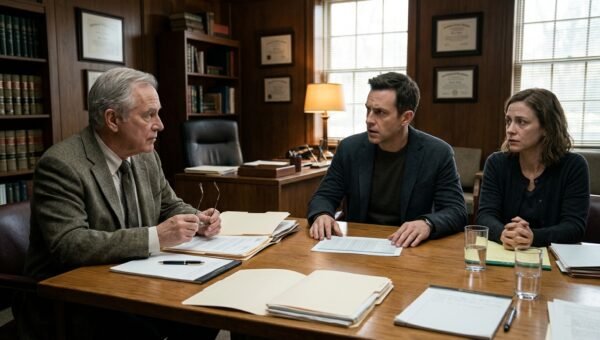
The front office smelled of floor wax and photocopier toner. I pushed past the counter before the administrative assistant could hand me a visitor badge and walked straight into Principal Miller’s office.
Mr. Miller was fifty-five, wearing a cardigan over his tie, sipping coffee behind a broad oak desk.
“Mrs. Vance,” he said, looking surprised. “Is something wrong with Maya’s schedule?”
“Someone is targeting my daughter in this building,” I said, my voice shaking with fury as I leaned over his desk. “She has been starving herself for ninety days because someone on your staff is cornering her.”
Miller leaned back in his swivel chair, letting out a heavy, patronizing sigh.
“Karen, please take a seat,” he said smoothly. “Teens at this age go through body image issues.
Track girls especially can become fixated on weight for performance. Maya is a wonderful kid, but you can’t jump to wild conclusions about bullying or harassment without speaking to a counselor first.”
“It’s not a body image issue, and it’s not another student,” I said.
I opened the black notebook, turned to the first page, and slammed it down flat against his blotter.
Miller frowned, adjusted his glasses, and began to read.
He read the first page. Then he flipped to the third. By the time he reached the entry from November eighth, all the polite dismissiveness vanished from his face. His mouth tightened into a hard, rigid line. He did not ask me another question.
He reached for the desk phone, picked up the receiver, and dialed three numbers.
“Dispatch,” Miller said into the receiver, his voice completely changed. “This is Principal Miller at Oak Ridge Middle. I need a patrol car and Detective Harris in my office immediately. It involves an adult employee on school grounds.”
PART 2
Principal Miller set the receiver down on the cradle with a heavy plastic snap.
He did not look at me. He kept his fingers resting on the open pages of Maya’s diary, staring at the handwriting.
“Who is it, Arthur?” I demanded. “Tell me who she is writing about.”
“His name is Coach Robert Geller,” Miller said quietly.
The name hit my ears like a slap. Robert Geller was fifty-two. He was the head track coach and physical education director. More than that, he had been teaching in the district for twenty-two years, and his older brother sat on the county school board. When Maya made the varsity cross-country roster as a freshman, Geller had stood by the track fence at the first parent orientation, shaking my hand and telling me Maya had college scholarship potential if she stayed disciplined.
“Did you know about this?” I asked, my voice rising in the small office. “Did other girls come to you?”
Miller shook his head quickly, but his eyes dropped to his blotter. “Not like this. In the spring, two parents mentioned Geller made uncomfortable remarks during hurdle warm-ups. We issued a personnel memo reminding him about personal space. The board review found no misconduct. They considered it informal athletic motivation.”
“Informal motivation?” I repeated, leaning across the wood until my hands were flat on his desk. “My fourteen-year-old child has lost eighteen pounds because she thought becoming a skeleton was her only defense against that man.”
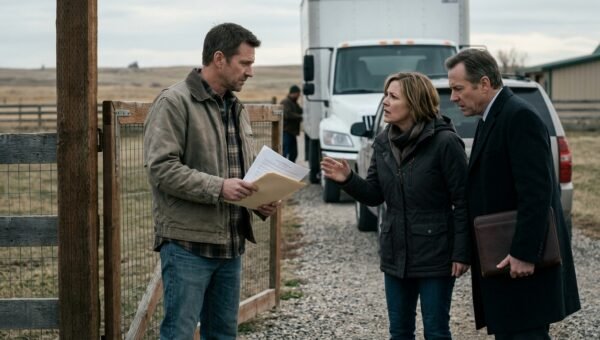
The frosted glass door opened, and Officer Henderson, the school resource officer, walked into the office. Before Henderson could ask why he had been called off the main hallway, the exterior double doors clicked open, and Detective Marcus Harris arrived from the township precinct.
Harris was a tall man in his late forties with a gray coat and tired eyes. He pulled up an armchair, sat down, and read through Maya’s diary line by line without speaking. He checked the dates against the district athletic schedule that Miller printed from the computer terminal.
“Every single date matches a Tuesday or Thursday practice,” Harris said, looking up at Miller. “Late afternoons, after the custodian clears the athletic wing. And look at this entry from two weeks ago.”
Harris pointed to the bottom of the fourth page.
“November 14: He took my phone off the bench. He put his personal cell number into my contacts and told me to text him my weekend running times from home. He said if I deleted the number, he would cut me from the relay.”
I pulled my cell phone from my coat pocket. My hands were trembling, but I navigated into Maya’s family iCloud backup that was linked to my tablet account at home. I clicked on her contact card.
There it was, saved under the label “Gym Office”: a private ten-digit mobile number.
Harris pulled a small notepad from his breast pocket, dialed the ten digits from his precinct phone, and hit speaker.
Three rings later, a deep, raspy voice answered over the line.
“Yeah, Geller here. I’m setting up hurdles on the lower field.”
Harris didn’t speak. He simply ended the call and looked at the school resource officer.
“Henderson,” Harris said calmly, “go down to the lower field right now. Escort Geller to the faculty lounge. Do not let him go near his locker, do not let him access his vehicle, and do not let him touch his phone.”
PART 3
I sat in the corner of Miller’s office while the precinct officers moved with quiet, methodical efficiency.
Harris walked down the hallway to Maya’s fourth-period English classroom. He didn’t cause a scene. He asked the teacher to send Maya to the guidance office, where a female youth counselor met her with a cup of warm water and a blanket.
When I walked through the guidance office door, Maya was sitting on a small sofa. She looked so small, wrapped in an oversized gray hoodie, her collarbones sharp against her skin. When she saw the black notebook in my hands, she tucked her chin into her chest and began to cry.
“I’m sorry, Mom,” she whispered, her voice barely audible. “I was trying to handle it. I didn’t want you to have to fight him. He said nobody would take my word over his.”
I knelt on the carpet in front of that sofa, wrapped my arms around her narrow shoulders, and held her until her shivering stopped.
“You don’t ever have to handle a grown man alone, Maya,” I told her, kissing the crown of her head. “Not ever. It is not your fault, and you are never going back into that gymnasium again.”
Outside in the faculty parking lot, things did not remain quiet.
Geller’s brother, the school board trustee, arrived in a black SUV twenty minutes later. He marched into the administrative corridor with a private attorney at his elbow, demanding to know why an honored veteran coach was being detained without formal board notification.
“This is administrative overreach, Miller!” the brother shouted through the glass office door. “My brother has served this community for two decades! You can’t detain a faculty member based on a teenager’s schoolyard grudge!”
Detective Harris stepped out of the office, holding the district-issued equipment room key ring that Officer Henderson had recovered from Geller’s coat pocket.
“Mr. Geller,” Harris said, keeping his voice dead flat in front of the front desk staff. “We aren’t holding your brother on a grudge. We just executed an emergency preservation warrant on his faculty locker and his district cloud drive.”
The hallway went dead silent. The brother stopped mid-sentence, his face turning an angry shade of red.
“What did you find?” the brother demanded, his voice dropping slightly.
“Two personal cellular devices,” Harris replied, looking directly into the brother’s eyes. “Neither of which was registered with district IT. And a collection of unauthorized photographs taken of female runners from the upper storage mezzanine during after-school stretching drills over the last eight months. Your brother is under arrest for aggravated stalking of a minor and unlawful surveillance.”
The brother looked at the private attorney. The attorney looked at the floor, closed his briefcase, and stepped two feet back toward the exit doors.
Geller was led through the side exit in handcuffs at twelve-fifteen. He kept his jacket pulled over his face, but three teachers and two dozen students watching from the cafeteria windows saw the patrol cruiser pull away with its lights flashing.
ENDING
We left the school by one o’clock.
I did not take Maya back to our house right away. I drove her three towns over to a quiet family restaurant that had booths with high wooden backs and red checkered tablecloths. We sat in the corner by a sunny window, away from the highway traffic.
I ordered a bowl of warm potato soup, a plate of grilled cheese, and a mug of hot cider with cinnamon.
Maya looked at the bowl for a long time. Her fingers hovered over the spoon, the old fear still lingering in the way she held her breath.
“Take your time, baby,” I told her softly, reaching across the table to lay my hand over hers. “There’s no coach watching you. There’s no weight to keep off. You’re safe.”
She lifted the spoon, blew on the broth, and took a small bite. Then another. She ate half the bowl before leaning back against the vinyl seat, letting out a long, shuddering breath that sounded like she had been holding it for ninety days.
The district moved fast over the weeks that followed. The school board accepted Geller’s immediate, dishonorable termination, and his brother resigned from his board seat within forty-eight hours under public pressure from three dozen neighborhood families. The county prosecutor filed four felony counts against Geller, and the judge set his bond high enough that he remained in the regional detention center through the winter.
Maya didn’t run track that spring, and I didn’t push her to.
Instead, we worked on her health. We saw an adolescent nutritionist twice a month, and every evening at six, the two of us stood side by side in our kitchen, chopping carrots, browning butter, and talking about ordinary, boring things like her geometry homework and the garden herbs we wanted to plant in May.
The black notebook stayed in the police evidence locker at the county courthouse. But on Maya’s nightstand, where the mattress met the wall, she put a small ceramic lamp with a warm yellow shade.
Last night, when I called up the stairs that dinner was ready, she didn’t come down with an empty water glass or an excuse about an afternoon snack. She ran down the steps two at a time, wearing a sweater that finally fit her properly, and pulled out her chair at the head of the table.
“Smells good, Mom,” she said, reaching for the serving spoon.
I looked at the color back in her cheeks, sat down beside her, and for the first time in five months, our home felt entirely whole.