I bought Clara Vance’s house for $187,000 and found proof that children had been taken from their families. I was standing in her kitchen with a box cutter in my hand when I understood the freezer wasn’t just full of old food. I called the police before I opened the second envelope. I still think about how close I came to putting the whole thing in a dumpster.
The county auction was on a Tuesday morning. I’d been tracking the house for months because I work with local records and had always liked its old county maps and deed books.
I’m the person who stops at a neighborhood sale because a box is marked “papers.” Not everyone finds that charming. I know.
Clara had lived three doors down from me for years. She was 82 when she died, and she died alone. I’d seen her on her porch now and then, but we weren’t friends. We did the little wave people do when they’ve shared a block for a long time and never quite had a reason to talk.
At the auction, I kept my bid card in one hand and my notes in the other. I’d put a limit on myself. I went past it by $2,000.
The house was quiet when I got the keys. There were old grocery lists on the counter and a jar of buttons in a drawer. I remember that because I nearly took the jar home. That’s the kind of thing I do. I get sidetracked by the small stuff.
I planned to clean the kitchen first, so I could get the appliances checked. The freezer had a thick rim of frost and a faint smell of old onions. I found the envelopes behind a panel at the bottom, stacked flat and tied together with a piece of faded string.
There were 47 of them.
Each one had a date written in the same careful hand. The dates ran over 23 years. Inside every envelope was $5,000 in cash and a Polaroid of a child, maybe three to six years old. Different kids. Different clothes. A few looking straight into the camera, a few turned away.
I looked at the first two, then stopped. I wanted to tell myself there was an ordinary reason. Some old family arrangement. Some kind of record keeping I didn’t understand. But $5,000 in each envelope, next to a child’s picture, did not look ordinary.
I called 911. I didn’t want to handle anything else, so I left the envelopes where they were and stood in the kitchen with my hands tucked under my arms. When the dispatcher asked if anyone was in the house with me, I said no.
“Stay there,” she told me.
“I’m not going anywhere.”
I was mostly telling myself.
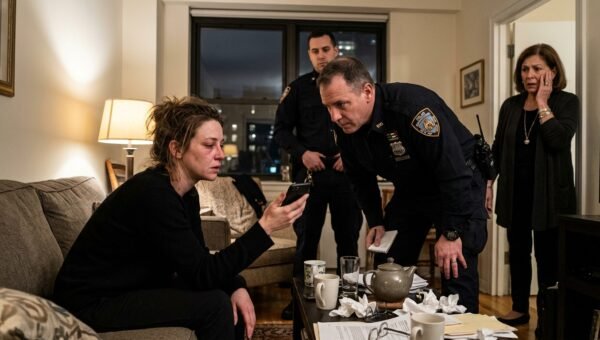
Detective Miller arrived with two officers. She was direct, not unkind. She asked me when I’d entered the house, what I’d touched, and whether I knew Clara. I answered as clearly as I could. Then she looked at the envelopes without picking them up.
“Did you open all of these?” she asked.
“Only two.”
“Don’t open any more.”
“I won’t.”
A tech photographed the freezer and took the envelopes one by one. Miller asked me to wait in the living room. I could hear quiet talk from the kitchen, and every so often a drawer slid shut.
The house still smelled like old onions. It was a stupid detail to notice, but I noticed it.
After a while Miller came in holding a clear evidence sleeve. She didn’t sit.
“Nine of those children match missing-child cases,” she said.
I looked at the Polaroid through the plastic. A little girl with a chipped front tooth, maybe four years old, held a stuffed rabbit against her shirt.
“Nine?” I said.
“Nine so far. We’re checking the rest.”
I had thought the police might find something strange. I hadn’t thought they’d say those words. Nine children. Nine families who had probably spent years looking at photographs, calling agencies, waiting for a knock at the door.
“Was Clara involved?” I asked.
“We don’t know yet.”
I hated how much I wanted a simple answer. A good person or a bad person. A reason that would let me put the house back in order and go home. Miller didn’t give me one.
“We’ll be here for a while,” she said. “I need you to tell me everything you remember about her.”
There wasn’t much. Clara kept to herself. She used to bring her trash bin in before the wind knocked it over. Once, she stopped me to ask if I knew where the city had moved its old permit books. I told her I did, and she thanked me like I’d done her a favor.
I hadn’t thought of that as important until Miller asked.
The police took the envelopes. They put a notice on the door and told me not to move anything else from the house. I went home that night and searched the county records from my laptop. I found Clara’s name on a few old property filings, but nothing about the children. I went back over my notes until nearly two in the morning.
The next day, Miller called. A clerk had found one more envelope in the freezer, separate from the others. It had my name on it.
I read that twice before I understood.
They let me open it at the station, with Miller beside me and another officer watching. It held no money. There was a letter and a folded map of Clara’s backyard. Six Xs were marked in a rough ring around one patch of ground.
The letter started with my name.
Clara wrote that she believed I would buy her house. She said she’d watched me work through old neighborhood records for years, and that she trusted me to keep going when the police got busy. I felt a little sick reading that. I’d known her as a quiet neighbor. She had known enough about me to make a plan.
Miller watched my face while I read.
“What does she want you to do?” she asked.
I unfolded the map. There, written below the six Xs, were the words: “Dig here. What you uncover is…”
The sentence stopped there.
That night, I couldn’t stop thinking about the missing words. I was also mad at Clara, which felt wrong and didn’t stop me. She’d picked me without asking. She’d handed me something that could change the rest of my life, then died before I could ask why.
The next morning, I called Miller.
“I want to go to the yard,” I said.
“You won’t go alone.”
“I wasn’t planning to.”
“Good. We’ll do it properly.”
The police secured the property as an active investigation site. I had to sign a form before I could walk through the gate. Miller brought a small team and a search specialist. I remember the damp earth sticking to my shoe, and how one of the officers kept asking me not to step near the marks.
The map was not to scale, but the six Xs made a ring around a patch of ground near the old garden bed. I watched the team measure it and mark off the search area. They worked slowly. I wanted to help, but there was nothing useful for me to do except stay out of the way.
“Was this where she planted flowers?” Miller asked.
“I don’t know. I never came into her yard.”
That was true. I’d walked past it a thousand times without really seeing it.
The search specialist started digging. A few inches at a time. Dirt went into a tray, then the ground was checked before the next layer came up. I kept looking at the map in my hand, as if the missing words might appear if I stared long enough.
After a while, the tool hit metal.
Nobody said anything for a second.
The team cleared the soil by hand. It was a waterproof metal case, sealed tight, with no label. Miller told everyone to step back while they photographed it. I stood beside the fence, holding the map so hard the fold cut into my thumb.
“It’s the place,” I said.
Miller glanced at me. “Let the team open it.”
I nodded. I didn’t trust my voice.
The case held ledgers, identification papers, and small keepsakes wrapped separately. There were lists of names, dates, payments, and notes about where each child had been placed. The notes were blunt. They weren’t written by someone who had taken a child for love or because she thought she knew best. They were business records.
Miller read one page, then closed the folder and asked for a paper evidence bag.
“Clara kept all of this,” I said.
“She kept a record,” Miller replied. “That’s what we can say right now.”
The records showed Clara had worked as a legal archivist for a clandestine adoption broker ring more than two decades earlier. The operation moved children through illegal placements and took money from people who wanted them. The $5,000 in the envelopes was part of those payments. The Polaroids were her private record of the children, kept so she could later prove they existed and show what they looked like.
That didn’t make her innocent. It didn’t make her the person who took the children, either. The first reports Miller shared with me said Clara had stayed inside the operation and quietly copied records. She had been scared to go to the authorities while the people running it still had power over her work and her life. The case files didn’t make that fear vanish. They just made it clear what she’d done with it.
I read that part several times.
“She could’ve come forward,” I said.
“She could have,” Miller replied. “She also left us this.”
I knew what Miller meant. The records could help find children and answer questions that families had carried for years. But I couldn’t stop thinking about the years Clara waited. The envelopes had dates. One after another. A small decision, repeated until time ran out.
The letter explained why she had left the map for me. She’d seen the work I did at the local archive and watched me help people sort through old family and property records. She also said she’d arranged for the house to go through a county trust and timed the sale so that the person who bought it would receive her papers. She couldn’t make me bid. She could only guess I would.
I had.
That was what unsettled me most. She hadn’t known me well. She’d made a judgment from the way I spent my time and decided I’d do the right thing. I didn’t like being trusted by a dead person whose choices I was still trying to understand.
The next few weeks were calls, lists, and long days at the archive. Miller’s team compared the names from the case to state and regional adoption records. The nine photo matches were confirmed, and more names were flagged for review. The case was bigger than our town. Other agencies asked for copies of the recovered records.
Some families got new information. Some got a name to follow up on. I can’t say every story had a happy ending. That wouldn’t be honest. But the files gave investigators something real to work with, not another dead end.
Miller and I spent hours checking dates against old records. We didn’t talk much about Clara. We didn’t need to. When she did speak about the work, Miller kept the facts plain.
“This one has a solid match,” she’d say.
“Then we send it over.”
“Right.”
I began setting aside two afternoons each week to help cross-reference the names. It was not my job, exactly. I asked Miller before I started, and she made sure I worked from copies, not evidence. Still, I kept showing up.
I used to think keeping records was mostly about preserving things people had forgotten. Now I think it can also mean giving someone a place to start looking. It’s not the same as fixing what happened. I know that.
The house is mine now, but I haven’t tried to make it feel like mine. I kept the kitchen table. The freezer is gone, removed by the police after the evidence was taken. The backyard was covered again after the search, and I planted one small garden bulb near the spot where the case had been buried. I don’t know if it will come up. I put it there anyway.
The last thing Clara left behind was an empty envelope on the kitchen table, with my name on it. I set it under the glass jar where I keep the bulb’s planting tag. Months later, a green shoot came up in the yard above the turned soil.