Why did I believe my son had stolen $600 without asking him one question I was willing to hear the answer to? I was standing in the courthouse in 2026, holding the graduation watch he’d left behind twelve years earlier. A receptionist had just called him Judge Bell, and I was trying to keep my hand from shaking around that little metal watch.
I’m not a person who makes big speeches. I worked in the school cafeteria for years, so most of my life ran on bells, lunch shifts, and getting home with enough energy to make supper.
Marcus used to tease me about it. “You can tell time by the lunch trays,” he’d say. He was a good kid, mostly quiet, and I thought I knew what that quiet meant.
The watch was a high school graduation gift. Not an expensive one. I bought it after putting a little money aside each week, and Marcus wore it for a while, even though the band pinched him. When he left in 2014, he took one duffel bag. The watch stayed in the drawer of his old desk.
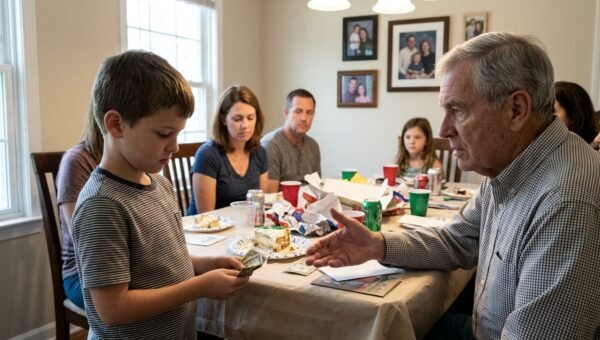
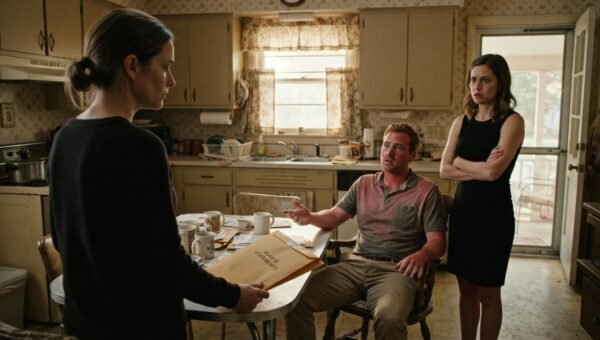
That year, I kept $600 in an envelope in the same desk. I’d been saving it for a furnace repair, because the old unit had started making a noise that sounded like a spoon rattling in a coffee can. One morning the envelope was gone. I checked the drawer twice, then the kitchen counter, then my purse. I knew I’d put it there.
Marcus was eighteen. He’d been working a few shifts at a grocery store, and he’d been touchy with me for a couple of weeks. I decided those facts added up to guilt. I didn’t ask where he’d been or what he needed. I held the empty envelope in my hand and asked if he’d taken the money.
“No,” he said.
I thought he answered too fast. That was enough for me. I asked again, louder. He looked right at me, but didn’t add anything. I was already upset about bills and the furnace, and I wanted the kind of answer that let me be right. I didn’t want to sit down and wonder if I’d misplaced the cash or if something else was going on.
“Tell me the truth,” I said.
“I did.”
I said he could either explain himself or leave. He didn’t explain. Maybe he knew I wouldn’t have listened anyway.
I hate admitting that, but I can’t make the memory nicer just because I’m older now.
“Leave, then,” I ordered.
He packed the duffel bag while I stood in the hall. I remember the zipper snagging near the end. He pulled it free, picked the bag up, and looked at me once. I wanted him to turn around and tell me I was wrong. I also wanted to win. Those were both true.
He left the watch. I saw it in the desk drawer later, and I put it in a little box with some old school papers. I told myself I was keeping it safe until Marcus came back for it. I didn’t call him. Not that week, not that year. I told myself he’d made his choice by leaving without defending himself.
For the first few months, I expected him to show up. When he didn’t, I got mad at him all over again.
Then life filled the space. The furnace got fixed, I kept working, and I learned to say “he’s doing fine” when people asked, though I had no idea if he was fine. My younger brother Wade knew Marcus was gone. He didn’t ask much about it.
I had my reasons for not calling. I was ashamed, and I didn’t want to hear him tell me he was better off without me. That’s the plain truth. It was easier to be the mother who’d been wronged than the mother who’d thrown her kid out and never checked where he landed.
The newspaper came on a Sunday morning in 2026. I’d opened it to the local section while my coffee cooled, and there was Marcus in a suit, standing outside the courthouse. The article said he’d been appointed a judge at thirty. I read the headline, then started again from the top because my eyes had jumped over the words.
It said he’d worked nights while finishing college and law school. It mentioned that he’d paid his own way and bought a $286,000 house. I read that part twice. I don’t know why the house price stuck with me. Maybe because I pictured all those nights he must have been tired, and how I’d spent twelve years imagining him as stubborn instead of trying to imagine what he’d had to do to keep going.
I cut the article out and folded it into quarters. Then I took the box from the drawer and found the watch. The band still had that pinch mark where I’d bent it once to make it fit his wrist better. I almost put the watch back. What right did I have to turn up at his work after all that time?
But I’d already waited twelve years for him to make the first move. I knew how that had gone. So I put the watch in my purse and drove to the courthouse.
The receptionist had a small nameplate on her desk. I gave her Marcus’s name and said I was his mother. She didn’t ask me to prove it. She picked up the phone and spoke quietly, then told me he could see me for a few minutes. I noticed she called him Judge Bell. I’d never called him anything but Marcus, not in my own head.
I sat with the watch in my lap. I’d brought a folded newspaper clipping too, but I didn’t take it out. A man walked past carrying a stack of files. Someone’s shoes squeaked in the hall. I kept rubbing my thumb along the watch’s edge, the same way I used to check whether the clasp had caught.
Then Marcus opened the door.
He was taller than I remembered, or maybe the suit made him look that way. His hair was shorter. He had the same small crease between his eyebrows he used to get when he was trying not to show he was upset. I stood up too quickly and knocked my purse against the chair.
He didn’t smile.
“You wanted me gone. Why have you returned?” he asked.
I had planned to say I was proud of him. I’d planned to say I was sorry. Somehow the first words that came out were, “I brought your watch.”
He looked at it, then at me. He stepped aside and let me into his chambers. I followed him to his desk, with the watch cupped in my palm. There was a heavy mahogany gavel near a stack of papers. I set the watch down beside it.
“It’s yours,” I said. “You left it.”
“I know.”
I had to stop myself from explaining the whole twelve years at once. I wanted to tell him I’d thought of him every birthday. I wanted to say I’d been scared he hated me. I didn’t say those things because they would have been about me again.
“I was wrong,” I said. “I should have listened. I should have called.”
He sat down but didn’t offer me a chair. I sat anyway. I’d spent years making decisions for both of us. I wasn’t going to act like I needed his permission to put my weight on a chair.
“You didn’t ask me once,” he said.
“No. I didn’t.”
“You told me to leave.”
“I did.”
“I had one bag.”
“I know.”
He rubbed his thumb along the watchband. It made a soft little click against the desk. I’d heard that sound when he was a boy and took the watch off to do his homework. Then he said something I hadn’t expected.
“I saw Wade take the money.”
I looked at him. “What?”
“He took it from your desk. I caught him.”
For a second, I couldn’t answer. My brother. My own younger brother. The envelope, the empty drawer, Marcus standing in the hall with his duffel bag. I was trying to make the facts line up, but they already did.
“He told you?” I asked.
“Not right then. I confronted him. He said he’d pay it back.” Marcus looked down at the watch. “He was gambling. He said he needed it to cover what he owed.”
I’d never known Wade had a gambling problem. I’d known he was always short on money. I’d made excuses for him, the way family does when the truth would mean changing how you see somebody.
“Why didn’t you tell me?” I asked.
Marcus looked up. “You’d already decided.”
“I would’ve believed you.”
He didn’t raise his voice. He didn’t need to.
“Would you?”
That stopped me. I wanted to say yes. But I’d watched my son deny taking the money and still told him to leave. I had no honest answer that could undo that.
He said he’d thought telling me would break my trust in Wade and split the family. He was eighteen. He decided it was easier to take the blame than watch me find out what my brother had become. Then I put him out anyway. He’d been sleeping wherever he could, working nights, and trying to keep his classes going. He said he didn’t want to come back to a house where I’d already called him a liar.
“I thought you didn’t care,” I said.
“I thought you didn’t want me.”
His voice stayed level. Mine didn’t. I started crying, then got embarrassed and wiped my face with the heel of my hand. I didn’t ask him to comfort me.
“I’m sorry,” I said. “I’m sorry I made you pay for what Wade did. I’m sorry I never called.”
Marcus looked toward the office door, then back at the watch. “I was angry for a long time.”
“I understand.”
“No, you don’t. Not all of it.”
“You’re right,” I said. “I don’t.”
He told me he’d finished school by taking overnight work and classes that fit around it. There were years when sleep came in short pieces. He didn’t tell it like a speech, and I didn’t ask him to. I heard enough to understand that he’d built his life without waiting for me to notice.
I was proud of him. I was proud in a way that hurt, because he’d done all of it while believing there was no place for him at home. I also knew pride didn’t make me part of the work he’d done.
After I left the courthouse, I called Wade. He admitted taking the $600. He said he’d meant to pay it back and then didn’t know how to face me. I told him there wasn’t anything left to discuss. I cut contact with him. That didn’t repair what I’d done to Marcus, but I wasn’t going to keep protecting Wade from the cost of his own choice.
Marcus didn’t forgive me that afternoon. He didn’t owe me that. He said we could start with coffee in a public place, once every few weeks, and see how it went. He wanted time. I told him I’d follow his lead. I didn’t ask him to call me Mom or promise we’d be close again.
The first coffee was short. The next one lasted longer. We still have awkward stretches, and sometimes I talk too much because silence makes me nervous. Marcus has started telling me small things about his work and his house. I listen. I’m trying to learn the difference between listening and waiting for my turn to explain myself.
That graduation watch didn’t bring back the twelve years. It only gave me a reason to walk through the courthouse doors and face the son I’d failed. The watch is on his desk now, beside the gavel. When I left that day, his office door stayed unlatched behind me.