At 4:16 Friday afternoon, my phone buzzed while I was putting away clean towels. Cliff had texted from the driveway: “The deposit didn’t hit. Where is it?” I read it twice, then set the phone on the dryer and kept folding the towels. I’d been waiting for that message all week. What I didn’t know yet was how much of the money I could get back.
Monday morning, Cliff was at the kitchen counter, stirring coffee he’d already put sugar in.
He had his work bag by the door and the same calm voice he used when he’d made up his mind before I knew there was a discussion. “My paycheck goes into my account from now on,” he said. “One account. I manage it. You get a weekly allowance for the small stuff.”
I looked at him, then at the coffee ring he’d left on the counter. I’d seen that kind of decision-making before. If I objected, he’d call me emotional. If I got angry, he’d say we needed to talk when I could be reasonable. So I smiled and said, “That’s fair.” He nodded like I’d finally come around. I took my mug to the sink and went straight to work.
Six months earlier, I’d noticed my paycheck wasn’t landing where it used to. I work in payroll support for a medical office, so I know what a deposit change should look like.
Still, I blamed myself at first. I figured I’d clicked something wrong, or that the bank had changed its routing. Cliff said it was probably just a processing delay. I believed him because it was easier than admitting I didn’t know where my own money went.
I called our bank, checked my pay stubs, and saw the deposits had gone into an account I didn’t recognize. The account wasn’t listed among the ones we used at home. I asked Cliff about it once, carefully, on a Sunday after church. He said he’d been moving things around to make bills easier. I said okay. I wish I could say I knew then that something was wrong. I just didn’t want another argument.
That changed when I saw the March 14 date on the deposit form. Cliff had been 2,000 miles away at a dental conference that week. The signature looked close to mine, but I didn’t sign it.
I held the copy in my hands at work and kept looking at the loop in the first letter. It was almost right. That was what made it feel so wrong.
On Monday, after Cliff made his new demand, I went to HR. I asked if I could see the original change form and whether anyone remembered how it got there. The receptionist, Marlene, pulled up the record and said, “Oh, your husband dropped that form off.” She said it casually, like she was telling me the copier was out of paper. I asked if she was sure. “I remember him,” she said. “He said you were tied up.”
I thanked her, went back to my desk, and sat there without opening my email. Marlene hadn’t done anything wrong. Cliff had brought in a form with my name on it while he was out of state, and my own workplace had accepted it.
I kept thinking about the way he’d asked me to initial a school form years earlier because I was holding a sleeping baby. I’d trusted him with small things. That’s how I got here.
I changed my direct deposit back to my personal account that morning. I didn’t call Cliff first. I didn’t tell my sister or post something online. I just filled out the form and checked the routing number three times. Then I asked HR to confirm the change would take effect by Friday. They said it should. I nodded, thanked them, and went back to work with my hands shaking just enough to make me spill water on the desk.
I was scared of what Cliff would do when the money didn’t arrive where he expected. Not physically. He’d never hit me. But he could make a room feel like I was the one who’d done something cruel. He’d talk for an hour until I was tired enough to agree with whatever version of events he preferred. I knew I couldn’t go into Friday with only a feeling and a form.
That night, after he went to bed, I checked the desk where he kept old tax papers and household receipts. I found a checkbook I’d never seen before, tucked inside a folder marked “car.” The checks were tied to that other account. I sat on the floor with the folder open in my lap and read the stubs one by one. There were regular payments to an apartment complex, then electric and water bills. Every month. Same name.
Dawn.
I knew the name, but not well. Cliff had gone to college with her. Once, years ago, he’d told me she’d had a hard stretch after a divorce and that they’d stayed in touch. I’d met her twice, both times at a reunion. She was polite, maybe a little quiet. I didn’t think anything of it. Seeing her name next to rent and utilities was different.
I took pictures of the stubs and put everything back where I found it. Then I called the bank during my lunch break the next day and asked what they could confirm. They couldn’t give me details about an account that wasn’t mine, but they could trace my paychecks. Twelve deposits had gone to that account, from April through September. The total was $31,680. I wrote the number on the back of an envelope because it was the first place I could find.
The pay stubs showed the same amount. I checked every one, not because I needed to, but because a part of me hoped there’d be a mistake. There wasn’t. My wages had been sent there twice a month, and I’d been home making grocery lists with Cliff while my money paid for someone else’s apartment. I kept thinking, it was my money. My money. It was such a plain thing to have to say.
I found the monthly statements in a second folder the next evening. Cliff had kept them with the car papers, perhaps because he didn’t think I’d look there. The account was in his name and Dawn’s. Some of the deposits were still there. Other money had gone to rent, utilities, and a few cash withdrawals. The balance after the September deposit was $9,614. I printed the statements at work the next morning and put them in my purse.
I didn’t sleep much Thursday night. I was raised to believe you don’t go looking for reasons to be angry. You forgive, you give people room to explain, you don’t assume the worst. I still believe in forgiveness. But I’d been using it to excuse the fact that I was afraid to ask my own husband where my paycheck went. That wasn’t the same thing.
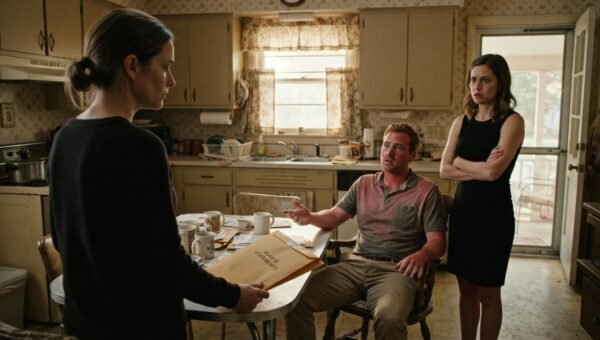
At 4:16 Friday, I read Cliff’s text again. I didn’t answer from the laundry room. I took the statements from my purse and laid them on the kitchen table. The bank had already confirmed the deposit landed in my personal account. I’d checked the balance twice. When Cliff came in, he put his keys down hard enough to make them jump.
“The deposit didn’t hit,” he said.
“I changed it.”
He stared at me. “You changed our deposit?”
“My paycheck,” I said. “I changed my paycheck.”
He moved toward the table, then stopped when he saw the papers. “What is all this?”
“It’s the account my checks went into.”
He glanced down, then back at me. “I was going to explain.”
“When?”
“Don’t do this, okay? I was trying to get us organized.”
“You forged my signature.”
He said I was making it sound worse than it was. He said he’d meant to tell me once the money situation settled down. He said Dawn was an old friend who’d been in a bad spot, and he’d helped her with rent. I asked him how long he’d been paying the bills. He rubbed his forehead and said, “It got out of hand.”
I slid the copy of the March 14 form across the table. “You brought this to my HR office while you were in Texas.”
His face changed then. Not because he felt sorry, I don’t think. He’d realized I had proof that didn’t depend on how well I remembered our conversations. He said he was trying to keep the account private because I’d “make it a thing.” I told him he’d made it a thing when he signed my name.
Then I asked, “So, Cliff, who is Dawn?”
He sat down. His mouth opened, but he didn’t answer right away. Finally he said they’d kept in touch after college and that she’d needed help. He said the apartment was mostly for her, though he stayed there sometimes when he was in town. He said it wasn’t what I thought. I asked what I was supposed to think when our paychecks had paid her rent for six months.
“I didn’t know how to tell you,” he said.
“You knew how to sign my name.”
He looked down at the papers. I wanted to yell. I also wanted him to say something that made the whole thing less ugly. Those wants sat right next to each other, and I hated that. “You can’t just take all the money,” he said. “We’re married.”
“I’m not taking anything. I’m keeping my wages out of an account you hid from me.”
He tried to say the deposits had helped both of us because he’d paid bills from our regular account. I told him we could work out the household bills with an accountant. The account statements were clear. The money wasn’t a shared savings plan. It was rent, utilities, and withdrawals I’d never agreed to. I told him I’d already spoken to a lawyer that afternoon.
That got his attention. He asked if I was really going to end our marriage over this. I said the marriage had been ending while he was doing it, even if I hadn’t known. I told him I wasn’t ready to discuss forgiveness, and I wasn’t going to let him manage my money. He started to tell me I was being unfair. I picked up the papers and walked into the bedroom.
I stayed with my sister that night. I didn’t take much, just clothes, my work laptop, and the folder of bank records. Cliff sent me six texts before midnight. The first said he was sorry. The last said I was ruining both our lives. I didn’t answer. I’d heard both versions from him before, only this time I had the statements in my bag.
The next week, I opened a new checking account and moved my paycheck and savings there. I changed my work portal password, my email password, and the phone number tied to my bank. I called a financial advisor and a family lawyer. The advisor helped me list every account we shared and every bill that needed to be split. The lawyer told me not to sign anything Cliff brought me. I hadn’t planned to, but it helped to hear it from somebody else.
We got the full account records. The twelve deposits added up to $31,680, and the bank traced how they’d been spent. The $9,614 left in the secret account was transferred back as part of our financial separation. Cliff agreed to repay the remaining $22,066 from his own savings, instead of dragging the matter through court. I made sure the agreement was written down and reviewed by my lawyer. I wasn’t going to trust a promise about money again.
The divorce took eight months. It wasn’t dramatic. There were forms, calls, a few meetings, and one long afternoon when Cliff asked if I’d reconsider. I said no. We closed the joint account after the last shared bills cleared. I kept my own car and the savings I’d brought into the marriage. The money he’d taken was accounted for and returned. I didn’t feel good about winning. I felt tired, mostly, and relieved that the numbers finally matched.
On the first Saturday after the last transfer cleared, I made coffee at home and opened my bank statement at the kitchen counter. The deposit was there, exactly where it belonged. My name was the only name on the account. I set the page beside my mug and left it there while the coffee cooled. It was just a bank statement. It was mine.