The last ordinary thing my dad said to me was, “Bring the cheap wine next time.” He said it two years ago, when I dropped off the keys to the house I’d bought for my parents. So when I drove down their quiet street at 10:15 that night with a bottle of wine on the passenger seat, I was already smiling.
Then I saw the house lights on.
I pulled into the driveway, got out, and tried the front door.
It wouldn’t open. The key I had didn’t fit the new deadbolt. I walked around to the back, thinking maybe the lock had stuck, and found my parents curled together on plastic lawn chairs under a soaked patio tarp.
My mother’s cardigan was wet through. My dad was holding one corner of the tarp over her head, but the rain was coming in sideways. The house glowed behind them.
I’d bought that place after earning my first million. I didn’t grow up with money. My parents, Arthur and Martha, worked long enough that even retirement seemed like another job they had to earn. I told them, “You’ve worked enough. This is your time to rest.”
I thought I was giving them safety. I didn’t know I was handing my sister a reason to resent me.
I went straight to my mother. She was shivering hard enough that she couldn’t get her fingers around the chair arms.
I put my coat around her, then helped her up. My dad tried to stand without help and nearly slipped on the wet patio.
“Dad, let me get you.”
“I’m fine,” he said. Then he leaned on my shoulder.
I got them into my car and cranked the heat. The bottle of wine rolled onto the floor when I pulled away. I didn’t pick it up. My mother kept looking back at the house, like she expected someone to come out and explain what had happened.
I wanted to go through the front door. I wanted to find whoever had changed the locks and make them say it to my face. But my parents were cold, soaked, and exhausted. I took them to a nearby hotel instead.
In the car, my mother kept saying she was sorry. My dad didn’t say anything. That was worse. I’ve traveled for work for years, sometimes overseas, sometimes gone for weeks at a time.
I knew I’d been busy. I had not known they’d been made to feel like calling me was an inconvenience.
At the hotel, I got my mother dry towels and asked the desk for extra blankets. Her hands were still shaking when she tried to hold the paper cup of tea.
My dad stared down at it. “They took our phones,” he said.
That was the first thing he told me about the house.
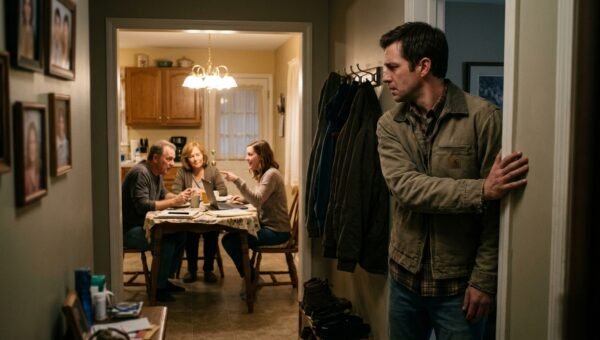
He said Claire and her husband, Marcus, had moved in six months earlier. They told my parents they’d help with repairs, groceries, and the things that were getting harder to manage. Claire was my older sister. She’d stayed close to home while I traveled for work, and she’d said more than once that I got to leave while she handled everything.
I’d heard it as a complaint. I didn’t know it had grown into something else.
“At first it was fine,” my dad said. “They helped with the yard.”
My mother looked at him, then back at her tea. “Claire said you were too busy to hear about little arguments.”
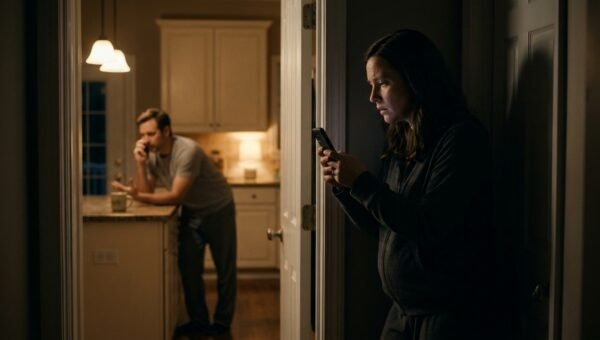
They’d started taking calls in the kitchen, telling my parents I was in meetings or on a plane. Some of that was true. They made it sound like I’d moved on to a life where hearing from my parents was one more chore.
When my parents did reach me, they kept the calls short. They didn’t want to burden me. I hate how easy it is to say that now. I was proud of the house, proud of being able to help. I took their “we’re fine” at face value because it made my life simpler.
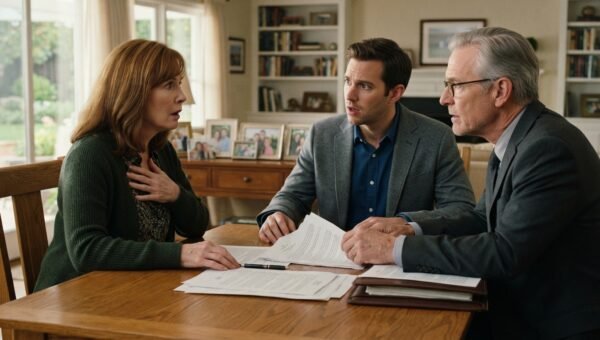
My dad finally told me why they were outside. A week earlier, Marcus had put papers in front of him: a durable power of attorney and a form to transfer the deed. Marcus said it was to protect the house and make decisions easier if my parents needed help.
“Your father said no,” my mother said.
There was no shouting at first, my dad told me. Marcus kept pushing. Claire said they were only trying to help. My dad wouldn’t sign. That night, Marcus took their house keys, changed the code on the kitchen deadbolt, and left them outside on the covered back patio. He thought they’d give in by morning.
My dad said this without raising his voice. My mother reached over and put her hand on his sleeve.
I couldn’t find anything useful to say. I’d bought the house for them, but I’d spent two years away from it. They’d been telling themselves I was too important to call, and I’d helped make that story believable by not asking enough.
Still, getting angry in that hotel room wasn’t going to help them. So I got my mother more tea, ordered soup, and asked the front desk to bring up another blanket.
Then I opened my laptop.
The deed was in my cloud files with the closing papers. I checked it twice. The house was still in my name. I’d never transferred it to Claire, to Marcus, or to my parents. Marcus had no legal claim to the property.
At 1:18 in the morning, I called a real estate attorney I’d used on a business deal. I told him what happened and sent him the deed and the papers my dad remembered. The attorney said to bring the documents and ask the sheriff for a civil standby in the morning. He also told me not to turn this into a fight in the driveway.
I wanted to. I didn’t. That mattered.
I booked my parents a secure hotel suite and stayed up at the desk with the records open. I kept looking at the same line on the deed: my name, and only my name. It was the first time all night I felt like I had something solid to hold onto.
At 7:00, I went back with a deputy. Marcus’s car was in the garage. The house was still lit, though the rain had stopped. A clean stack of papers sat on the dining table just inside the front window.
The deputy knocked. I could hear footsteps inside. Claire opened the door, saw me, and put a hand to her mouth.
Marcus came up behind her. “You can’t just come in here,” he said.
I held up the deed. “I own this house.”
He looked at the paper, then at the deputy. He started talking about power of attorney, about how they’d been taking care of my parents, about how this could be handled privately. He was still trying to make it sound like the problem was my reaction.
The deputy said he was there for a civil standby. The attorney had already prepared the notice of trespass. I told Marcus and Claire they had two hours to pack their things and leave.
Claire looked at me. “We’re family.”
I wanted to say more than I did. I wanted to bring up every call they’d intercepted, every story they’d told my parents about my work, every night my mother sat outside in the rain because she was ashamed to ask me for help.
Instead I said, “You left them outside in a storm.”
Claire started crying. Marcus kept insisting he’d never meant for it to go that far. Maybe he hadn’t planned for my car to pull up. Maybe he thought my parents would sign when they got cold enough or scared enough. It didn’t make the choice any smaller.
The deputy stayed while they packed. I saw Marcus’s luggage by the dining table and the draft notary forms beside it. Claire carried boxes out with her head down. She didn’t ask to talk to our parents.
They left before the two hours were up. I cut off financial help and made it clear they were not coming back to the house. I didn’t want another family meeting where the loudest person got to define what had happened.
That afternoon, the locks and security system were replaced. The attorney helped me put the property into an irrevocable living trust. My parents became life tenants, and I became the sole trustee. I also hired a local assistant I’d checked carefully to visit once a week and help with errands and house needs.
I know money can’t undo what I missed. I also know that saying “I’ll be there more” isn’t much of a plan. So I put the plan in writing, and I told my parents to call me even if the problem seemed small.
My mother still apologized for “making a mess” in the hotel room. My dad said he should’ve called me sooner. We both let that sit without arguing over who had failed worse.
The next morning was bright, and the street looked ordinary again. I walked my parents to the front door. My dad’s hand was dry this time. He turned the new brass key in the deadbolt while my mother hung her favorite wool sweater in the hallway closet.