Arthur knew the back stair was loose before I did. He stepped over the third board without looking down, then pointed out the window my grandfather had repaired with a strip of mismatched wood. I’d come to the house expecting to talk about selling it. I didn’t expect a stranger to know how it sounded when you walked upstairs.
Mr. Vance, the realtor, had told me the buyer was interested and wanted to see the place before making an offer.
He arrived with Arthur, who seemed around my age, carrying a folder under one arm. I figured they’d both been shown around by the property manager. Then Arthur said, “The room at the end is still locked, right?” and I stopped walking.
Nobody had told him about the room. My grandfather, Earl, had kept it locked for as long as I could remember. I asked Arthur how he knew. He looked at Mr. Vance first, then back at me, like he was waiting for someone to tell him this was a joke.
“I lived here for two years,” he said.
Two years. My mother had told me the house was empty.
I’d inherited it after Earl died, and I trusted my mother, Denise, to help with the things I didn’t understand. I’d just started a new job and lived almost an hour away. Denise handled the mail and kept a spare key.
She said the house needed work, and the property taxes were getting too high for me to keep paying. When she suggested selling, I agreed to meet with a realtor. I thought she was trying to keep me from getting in over my head.
The house didn’t look empty. There was a clean line where someone had set a chair against the wall, and a mug sat upside down by the sink. I noticed those things, but I still thought they belonged to Mr. Vance or his assistant. I mean, my own mother had told me it sat vacant. I had no reason to look for another answer.
Arthur set his folder on the porch rail. He wasn’t angry, which somehow made it worse. He said the management company had told him the owner knew about the rental. His lease had been renewed once. He’d paid on time, called when the water heater acted up, and left messages about the back step.
He even knew Earl had fixed the window himself because the old repair was still visible.
Mr. Vance looked uncomfortable. “I didn’t know any of this,” he said. He had been asked to list the house by Denise, and he’d assumed she had permission. I could tell he wanted me to know he wasn’t part of it. I also could tell he wanted to leave.
Arthur opened the folder and slid a lease toward me. My name was printed under the owner line. The signature beside it looked close enough that I understood how someone at an office might accept it if they didn’t know me. The D was wrong. I make the top of mine too wide. I’d been doing that since school.
Then I saw Denise’s signature beneath mine.
The last page had a clause about visits from the owner. If I came by without notice, Arthur was supposed to contact the property manager and wait for written approval before letting me in.
If I tried to enter without approval, the company could treat it as interference with the lease. It was written in dull, official language. That almost made it worse. The clause didn’t say to call me. It told the renter to keep me out.
I read it twice, then folded the page back.
Arthur looked embarrassed. “I was told the owner was out of state,” he said. “I didn’t know you were her daughter.”
I didn’t blame him. He’d paid rent to the company and followed the rules he’d been given. I was the one who’d been told the house was a burden and believed it without checking. That part belongs to me.
Mr. Vance canceled the showing and said he wouldn’t move forward with the listing until the ownership and lease were sorted out. I took photos of every page, asked Arthur for a copy, and got the name and phone number of the management company. My hands were shaking enough that I had to set my phone on the porch rail to take a clear picture.
I called Denise from the car. She didn’t answer. I didn’t leave a message. I wanted to hear the facts first, not give her time to prepare an answer.
The next morning, I drove to the management company’s office without telling her. It was in a strip of low buildings off the highway. A little bell on the front door made a dry, tinny sound when I went in. I gave the clerk my name and the property address. She asked if I was there on behalf of Denise.
That was the first time I realized how much the office had been told.
I showed her my driver’s license and the copy of the deed. She brought out a supervisor, a man named Cal, who asked me to sit down. He said they’d received documents showing Denise had authority to act for me. I asked to see the original file. He said he’d need a few minutes.
I sat with my coat on, even though the office was warm. A little plastic clock on the wall clicked louder than it had any right to. Cal came back with a paper file and a printed payment history.
There was no power of attorney with my signature. There was a form saying Denise was authorized to manage the home, and the signature on it was mine. It was the same wrong D. The company had accepted her word that I’d signed it and never called me.
The rental income had gone through the company for twenty-four months. After their fees, $1,184 a month went to Denise’s personal account. The statement showed each transfer. I added the numbers in the margin of the printout because I couldn’t make myself trust the total at first.
It came to $28,416.
Cal said the company would preserve the records and have its lawyer review how the paperwork had been approved. He apologized, which didn’t fix anything, but at least he didn’t tell me I must have misunderstood. I asked for copies of the file, the rent records, and every message about the house. Then I took them straight to my car and called Denise again.
She picked up this time.
I said I had the lease and the bank records. There was a pause long enough that I could hear a television in the background. Then she said, “I was helping you keep the house.”
I told her that wasn’t what I’d asked.
She said Earl’s place had been sitting there, costing money, and I hadn’t known what to do with it. She had thought she could rent it for a while, save the income, and deal with the taxes. When I asked why she’d told me it was empty, she said she didn’t want me to worry.
I asked why she’d signed my name.
“I thought you’d agree if I explained it,” she said. “I was going to tell you.”
When? After I signed a sale contract? After the tenant had moved out? She didn’t have a clear answer. She said the rent had helped cover her own bills, too. Her roof had needed repairs, and she’d been behind on a few things. I knew that was true. I also knew she’d watched me worry about taxes on a house she was secretly earning money from.
She’d told me the place was draining me. She’d made it sound like the only responsible thing was to sell. The whole time, she was getting paid to keep me away from it.
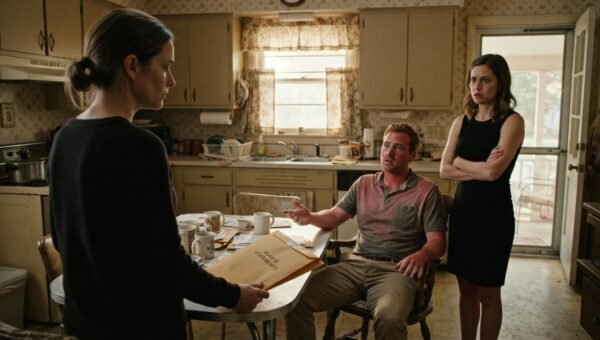
I wanted to yell. Instead, I laid the papers on the kitchen table and asked her to come over. When she did, she stood beside the table and kept her purse on her shoulder. I’d set out the lease, the transfer history, and the deed. I had also put Earl’s old brass key on the table. It was the only key I had for the locked room, but it had never worked in the lock.
Denise glanced at it, then looked at the papers.
“I was trying to keep things from getting worse,” she said.
“You forged my name,” I said.
She started to explain again. I held up one hand. I wasn’t proud of that. I can get sharp when I’m scared, and I knew she was scared too. But every time she softened the words, I felt myself being pushed back into the same old place, where I was expected to let her decide what the truth could be.
I told her the sale was canceled. I told her the company had the records and I was getting legal advice about the forged paperwork. I was ending every permission she’d been given to act for me or handle anything tied to the house. She said I was making this bigger than it needed to be.
It was already bigger than she wanted to admit.
She didn’t apologize. She said I’d made her feel like she was being punished for trying to help. I told her I wasn’t asking her to like my decision. I was asking her to stop using my name. She left with her purse still over her shoulder and didn’t take the brass key.
Mr. Vance called later that afternoon. He said he’d removed the listing and wouldn’t take part in a sale while the lease and ownership were being reviewed. The management company put the rental on hold. Arthur had already made other plans, but he told me he’d give me time to sort things out and wouldn’t make trouble. He’d been the one living under a bad agreement, and he was still the person trying to make things easier.
I thanked him, though it didn’t feel like enough.
A few days later, I went back to the house with a locksmith. The lock on the room was old enough that the locksmith had to work at it slowly. I stood by the door and watched the brass key turn in his hand while he tried the lock. When it didn’t fit, he used his tools instead. The latch gave with a small click.
The room smelled like paper and old wood. It wasn’t full of gold or some hidden fortune. It held file boxes, Earl’s old desk, a stack of tax receipts, and the papers for the house. I found records showing the taxes had been paid on time. The bills were not what Denise had told me they were.
There were also notebooks from Earl, household accounts, letters, and envelopes with dates written on them. He’d kept notes about repairs, who had borrowed what, and which forms he’d filed. That gave me the paper trail I needed to sort out the house. It also showed he’d kept copies of documents that Denise had told me were gone.
I sat on the floor and opened the lowest box. Beneath the files was a thin folder with my name on it. Inside were a few drawings I’d made as a kid, the kind I’d thought got thrown out years ago. The top one was a horse I’d drawn in second grade. It had one long leg and a tail that looked like a broom.
Earl had written the year on the back. Under that, in his uneven handwriting, he’d added, “You said it looked more like a cow. I knew it was a horse.”
I laughed once, then had to put the drawing down because my eyes were blurry. He’d kept that picture all those years. He’d kept the room locked, and he’d kept the things he knew mattered to me, even when I was too young to know I’d miss them.
I’m keeping the house. I’ve hired someone to deal with the repairs and I’m handling the paperwork myself. The legal part is still being sorted out, and Denise and I aren’t speaking. I don’t know if that will change. I do know she doesn’t have a key anymore.
That afternoon, I stood alone in the open room with Earl’s brass key in my palm. The crooked horse was beside the tax records, and the clean window let the sun fall across both of them.