PART 1
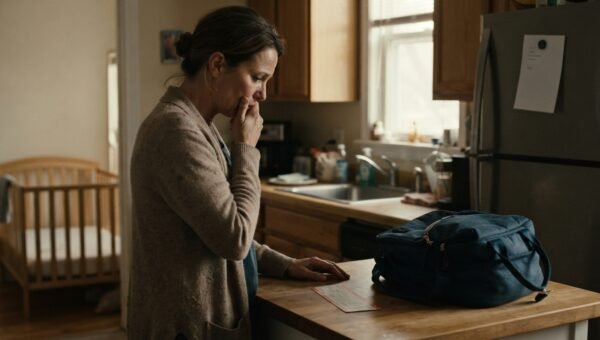
The Monday routine started right after Thanksgiving, when I slipped on some black ice by my front mailbox. I bruised my hip, nothing broken, but my daughter Brenda made a massive production out of it. She sat at my kitchen table, took my car keys out of my purse, and told me that at sixty-eight, I had no business carrying heavy gallons of milk or pushing loaded carts through supermarket parking lots.
She said she would take over all my grocery shopping. Every Monday morning at nine sharp, she would drop off brown paper sacks, unpack them into my pantry, and hand me an itemized tally sheet to reimburse her for.
At first, I felt grateful. I live alone in a small brick ranch in Canton, Ohio, and with my husband David gone four years now, having family check in weekly felt like a blessing. But after three weeks, little things started bothering me.
Brenda insisted that I give her a blank check or straight cash from my monthly pension withdrawal every visit. The totals she scribbled on yellow legal pad sheets were steep, usually two hundred and fifty to nearly three hundred dollars a week, just for me. When I asked why a carton of eggs, bread, some chicken breasts, and canned soup cost so much, she waved her hand and blamed inflation.
Then came the labels.
I was making myself a cup of tea, unwrapping a pack of blueberry muffins Brenda had brought that morning. The white store label felt thick and stiff. When I picked at the corner with my thumbnail, the top sticker peeled right off. Underneath was a bright yellow clearance tag from a salvage grocery depot thirty miles south in Dover. The original expiration date was printed clearly: November 14. Brenda had handed me these muffins on December 8.
I checked the soup cans. Every single one had a freshly printed white label slapped directly over the original bar code and best-by dates. When I peeled them back, the soup was four months past date. The peanut butter had an oily separation at the top that smelled stale.
When Brenda came by the following week, I set the peeled muffin box right on the counter between us.
“Brenda, look at this,” I said gently, trying not to sound accusatory. “These are expired.
Why is there a brand-new label stuck over an old salvage tag?”
She did not even blink. She laughed that sharp, dismissive little laugh she uses whenever she thinks I am being difficult.
“Mom, please,” she said, tossing her hair. “Discount stores repackage things all the time. Overstock liquidators buy out overruns and re-label them under their own inventory systems to comply with state warehouse codes. Don’t go looking for conspiracies. I drive clear out of my way to save you money on specialty brands.”
“Save me money?” I asked. “Brenda, you charged me two hundred and eighty-six dollars last week. I barely eat four hundred dollars of food in an entire month.”
“Fresh organic produce isn’t cheap,” she snapped, her voice turning icy. “If you want to walk on an icy hip to the discount warehouse yourself, be my guest. I am taking hours out of my workday to keep you safe and fed. A little gratitude wouldn’t kill you.”
She packed up her purse and left before I could say another word.
Later that afternoon, I dug through the three brown paper bags she had left folded neatly by the trash can. In the bottom seam of the third bag, flattened under the cardboard base flap, was an actual register slip she must have missed.
It was from a wholesale food salvage outlet. The total at the bottom was $43.18.
She had handed me a yellow sheet demanding $286.00 for those exact items.
Worse than the money was the bottom of the receipt. The credit card used was a Visa debit ending in 4109. That was not Brenda’s card. It was my card, drawn directly against the small checking account where David’s union life insurance sat. On top of taking my cash reimbursements, she was charging the junk groceries directly to my debit card. And printed directly beneath the authorization code was a delivery delivery confirmation address that was not mine at all: 412 Maplecrest Avenue.
I did not sleep that night. I sat in my living room with David’s old ledger book, going through six months of my bank records online. Money had been trickling out in two-hundred and three-hundred-dollar increments every week, not just on Mondays. Small hardware store runs. Drugstore visits. Utility payments to companies I had never used.
The next Monday morning, instead of waiting by the door for Brenda, I backed my sedan out of the garage at seven-thirty and parked down the block behind a thick row of pines.
At eight-fifteen, Brenda’s gray crossover pulled into my driveway. She did not see me. She carried two bags inside, stayed less than five minutes, and came back out with an envelope. My check was not in it because I had intentionally hidden my checkbook, but she did not call my cell to ask where I was. She just hopped back in her car and drove off toward the north side of town.
I put my car in gear and followed her.
She did not head toward the highway or the supermarket. She turned deep into an older residential neighborhood of small postwar bungalows on Maplecrest Avenue. She pulled up directly in front of number 412.
Four older women were sitting on the covered front porch, bundled in heavy winter coats and knit hats. They sat in folding chairs, waiting like children waiting for a school bus.
Brenda got out of the car. She pulled four brown paper grocery sacks out of her trunk, walked up the steps, and set one bag by each woman’s chair.
I rolled down my passenger window, sitting fifty yards away behind an old mail truck.
“Morning, Miss Clara!” one of the women called out, her voice thin and raspy. “We have the cash envelopes ready for you.”
“Thank you, ladies,” Brenda replied cheerfully. Clara. That was not her name. Clara was my mother’s name, dead since 2011.
The women stood up, handed Brenda thick white envelopes, and took their bags inside. Brenda did not leave. She unlocked the front door of the house using her own brass key and went inside.
I sat with my hands gripping the steering wheel until my knuckles went white. My heart was hammering against my ribs. I turned off the engine, got out of my car, and walked quietly down the sidewalk.
The front living room window had horizontal blinds that were tilted halfway open. I crept up to the porch railing and looked through the glass.
The living room had no furniture except for a long folding table and two metal folding chairs. Spread across the table were stacks of manila folders, bank statements, and printed social security disbursement sheets. Brenda was sitting there with a black marker, writing numbers across yellow legal pads, identical to the ones she handed me every Monday.
Suddenly, a hand caught the sleeve of my coat.
A firm yank pulled me backward off the porch steps and behind a row of overgrown boxwood hedges near the foundation.
I almost cried out, but a wrinkled hand pressed against my arm. It was one of the women from the porch, wearing a faded maroon quilted coat. She had thick glasses and silver hair pinned back with bobby pins.
She stared into my face, her eyes wide with total shock.
“My god,” she whispered, her voice trembling violently. “You’re Martha. Martha Miller.”
“I am,” I said, catching my breath. “Who are you? What is this?”
“She told us you died last winter,” the woman whispered, leaning in so close I could smell peppermint lozenges. “Clara told all of us that her mother passed from a stroke in January. She said she was keeping your estate open to help vulnerable seniors get subsidized meal plans.”
Before I could answer, the heavy front door swung open with a creak.
Brenda stepped onto the porch. In her right hand, dangling from a thick steel ring, were five separate sets of brass house keys.
PART 2
Brenda stood on the porch steps for three long seconds, scanning the quiet street. She looked down at the keys in her hand, hooked them onto her belt loop, and pulled her phone from her coat pocket.
“Ruth?” she called out, looking toward the driveway. “Ruth, are you out here? You forgot your receipt slip.”
The woman beside me stayed frozen behind the hedge, her fingers digging hard into the fabric of my sleeve. She did not answer. After a moment, Brenda muttered something under her breath, tapped her phone screen, and walked down the steps toward her car. She threw her purse in the passenger seat, backed out of the drive, and sped away down Maplecrest.
As soon as the car vanished around the corner, Ruth let out a shaky breath. Her face had gone completely gray.
“Come inside,” she said, her voice barely above a rasp. “Before the other ladies get agitated. Come in.”
She led me up the porch and through the front door. The house smelled like stale radiator heat and lemon floor wax. The two other women I had seen outside were in the small kitchen down the hall, unpacking boxes of cereal onto a laminate counter.
“Evelyn, Joyce, come here,” Ruth called out. “You need to see this.”
The two women shuffled into the front room. Evelyn was tall, walking with a wooden cane; Joyce was tiny, wearing an apron over her sweater. When they saw me standing by the table, both of them stopped dead.
“Who’s this?” Evelyn asked, squinting through thick bifocals.
“Look at the picture on that probate paper Clara keeps on the table,” Ruth said, pointing a shaking finger at a manila folder lying right beside a stack of grocery receipts. “Look at the face.”
Joyce picked up the folder. Inside was a photocopy of David’s obituary from four years ago, but beside it was a printed snapshot of me working in my garden. Brenda had typed up an affidavit claiming to be the sole executrix of the estate of Martha Miller, deceased, with an attached power of attorney document that had my name printed on the bottom line.
“She told us you were her mother who died in hospice,” Joyce whispered, looking from the paper to my face. “She said she was honoring your memory by running a private elder-care grocery collective out of this rental house.”
“This isn’t a collective,” I said, my voice shaking with fury as I pulled the Dover salvage receipt from my coat pocket and laid it on the table. “Look at this. She charged me two hundred and eighty-six dollars last week for forty-three dollars worth of expired salvage food. She was doing it on my debit card, and then taking my cash on top of it. What has she been charging you?”
Evelyn dropped into one of the metal folding chairs, her cane clattering against the floor.
“Three hundred a week,” Evelyn said quietly. “Cash only. Every Monday morning. She told us the county cut off our delivery vouchers, but said if we pooled our cash through her non-profit trust, she would source restaurant-grade staples and deliver them personally so we wouldn’t have to go out in the cold.”
“And the keys?” I asked. “I saw her holding five sets of keys.”
“She insisted on having keys to our houses,” Ruth said, her chin quivering. “She told us that state elder-welfare guidelines required her to have emergency entry access in case one of us had a fall inside while waiting for deliveries. She said if we didn’t give her key access, she couldn’t legally keep us in the program.”
I felt sick to my stomach. I walked over to the folding table and started turning over the files.
It was worse than a grocery scam. Brenda had opened utility accounts in our names using the addresses of the five bungalows on this street. She had applied for emergency winter fuel assistance grants from the county using Evelyn’s and Joyce’s Social Security numbers, routing the grant checks to a post office box in Canton. In Evelyn’s folder, there was an application for a reverse mortgage inquiry, complete with Evelyn’s property tax parcel number.
Brenda had systematically isolated these women the exact same way she had tried to isolate me. She took their keys, controlled their food supply, handled their paperwork, and warned them that if they talked to social workers or banks, the county would deem them incompetent and move them into state-run facilities.
“We have to call the police right now,” I said, pulling out my cell phone.
“No, wait,” Ruth said, grabbing my wrist. “If the police come, she has our deeds and our bank books in her car. She told us last month that she holds the master emergency conservatorship papers. If she gets tipped off, she’ll empty what little we have left in those accounts.”
“She doesn’t hold conservatorship over anyone,” I said firmly, looking directly into Ruth’s frightened eyes. “She is my daughter, and she is a thief. She doesn’t have legal power over me, and she doesn’t have it over you. But we are not going to wait for her to come back on her own terms.”
I picked up the house landline phone on the wall and dialed the non-emergency dispatch number for the Stark County Sheriff’s Office, asking directly for the elder fraud division.
PART 3
Two detectives arrived forty-five minutes later in an unmarked cruiser: Detective Miller, a tall, calm woman in her late forties, and Detective Vance. They stepped into the front room, took off their hats, and listened in total silence for twenty minutes as Ruth, Evelyn, Joyce, and I laid everything out on that long folding table.
Detective Miller flipped through the files Brenda had left behind. She picked up the fake obituary document, the forged power of attorney with my forged signature, and the stack of Dover salvage receipts.
“Mrs. Miller,” Detective Miller said, looking over at me. “Your daughter has been operating an unlicensed, fraudulent caretaking service across three different addresses in this township. We already had an open inquiry from the state auditor’s office regarding duplicate fuel assistance checks, but we couldn’t connect the PO box to a physical person. You just handed us the entire chain of custody.”
“She has our house keys,” Evelyn said, tears finally spilling down her cheeks. “She was in my home while I was at doctor appointments. She told me she was just checking the water pipes.”
“We’re going to secure your homes today, ma’am,” Detective Vance said gently. “Every lock is getting changed this afternoon. Our victim assistance unit will cover the cost.”
“What about Brenda?” I asked. My throat felt tight and dry. Even with all the anger burning through me, the reality that this was my own flesh and blood made my chest ache. “She thinks I’m still at my house waiting for my check to turn up.”
“When does she normally return here?” Detective Miller asked.
“She told us she would be back at one o’clock to collect Evelyn’s signed winter fuel paperwork,” Ruth said. “She said she had to run an errand at the bank first.”
“We wait here,” Detective Miller said simply.
The next two hours were the longest of my life. The detectives moved their car two streets over out of sight. Detective Vance stayed in the back bedroom with the door cracked, while Detective Miller sat in plain clothes at the folding table, posing as an intake caseworker. I sat in the corner kitchen chair, out of view of the front door.
At twelve-forty-five, gravel crunched in the driveway.
A car door slammed. High heels clicked up the concrete steps of the porch.
The front door swung open, and Brenda walked in holding a cardboard tray of take-out coffees and an armful of glossy brochures.
“Ladies, good news,” Brenda said in that bright, singsong voice she always used. “I stopped by the bank and got the notary stamps sorted for Evelyn’s grant, so we won’t have to worry about the gas shutoff this—”
She stopped dead.
She saw Detective Miller sitting at the table. Then she looked past her and saw me standing in the kitchen doorway.
The coffees slipped from her fingers, splattering dark brown liquid across the linoleum floor.
“Mom?” Brenda’s voice cracked, going shrill. “What are you doing here? How did you get here?”
“I followed your grocery delivery, Brenda,” I said, my voice steady, though my knees were shaking inside my slacks. “I came to meet Clara.”
Brenda’s face drained of all color. Her eyes darted toward the open door behind her, but Detective Vance stepped out from the hallway, blocking the exit.
“Brenda Miller?” Detective Vance asked, displaying his badge. “Step away from the door, please. Keep your hands where we can see them.”
“Wait, this is a mistake,” Brenda stammered, backing into the doorframe. Her voice rose into a desperate panic. “This is a private family matter. My mother has dementia, officer. She gets confused, she wanders. I manage her care. Ask her doctor, I have her medical files—”
“I don’t have dementia, Brenda,” I said, walking toward her until I was standing three feet away. “And David’s life insurance account was not yours to drain. These women’s pensions were not yours to steal. You told them I was dead so you could play savior while feeding them garbage from a clearance bin.”
Detective Vance took her arm, turned her around, and pulled her hands behind her back. The click of the steel handcuffs was shockingly loud in that quiet house.
From her coat pocket, Detective Miller pulled out the heavy brass key ring. Five brass house keys, each labeled with a strip of masking tape bearing an address: my house, Evelyn’s house, Ruth’s house, Joyce’s house, and the bungalow across the street belonging to an eighty-two-year-old woman named Martha Higgins who was currently in rehab for a broken hip.
“You’re making a mistake!” Brenda screamed as Detective Vance guided her down the porch steps. “I took care of them! Nobody else was helping them! I kept them in their houses!”
We stood on the porch in the freezing air, watching as they put her in the back of the patrol car. She didn’t look like my daughter anymore. She looked like a complete stranger who had worn my daughter’s face while picking clean the bones of five old women who had trusted her.
ENDING
The criminal proceedings took seven months to work their way through the county court system.
Brenda was indicted on four felony counts of theft from the elderly, two counts of identity fraud, and one count of forgery. Her public defender tried to negotiate for probation and restitution, claiming she suffered from compulsive spending and financial distress after losing her corporate administrative job the previous summer.
The judge, a no-nonsense woman named Gallagher, did not buy a word of it. The systematic nature of the operation, the altered food labels, the forged death records, and the stolen house keys proved premeditation, not desperation.
Brenda took a plea agreement to avoid a grand jury trial. She was sentenced to four and a half years at the Ohio Reformatory for Women in Marysville. The court ordered full restitution, though between her drained bank accounts and credit card debt, none of us expect to see much of that money returned.
David’s life insurance account had been depleted by nearly twenty-two thousand dollars. My savings were bruised, but my house was paid off and my pension still arrives on the first of every month. I was far more fortunate than Evelyn, who had come within weeks of losing her home equity to an unauthorized loan Brenda had initiated.
The county prosecutor’s office helped Evelyn and Joyce get their names cleared from the fraudulent utility bills and winter fuel accounts. Ruth’s nephew, an honest young man who works for the post office in Akron, stepped in to help manage his aunt’s affairs properly.
As for me, the hardest part was the quiet that settled over my house after the trial ended. For weeks, I couldn’t look at my pantry shelves without feeling a wave of nausea. I took every single can with a taped label, threw them into heavy contractor bags, and hauled them to the curb myself.
One Saturday morning in April, once the frost finally broke and the ground softened, I drove back over to Maplecrest Avenue.
I didn’t knock as an investigator or a victim this time. I brought four loaves of warm banana bread that I had baked that morning in my own oven, using fresh flour and real sugar bought with my own hands from the neighborhood market.
Ruth answered the door. When she saw me, her face lit up, and she pulled me into a long, quiet hug on the porch.
“We were just talking about you, Martha,” she said, holding the screen door open. “Joyce and Evelyn are inside. We’re setting up the bridge table.”
We sat together in Ruth’s living room, drinking fresh coffee and eating warm bread. We talked about David, about Ruth’s late husband who had worked forty years on the railroad, and about our gardens. We didn’t talk about Brenda, and we didn’t talk about courtrooms.
Now, every Monday morning at nine sharp, my car is the one that pulls up to the curb on Maplecrest Avenue.
I don’t bring grocery sacks, and I don’t carry yellow legal pads. The four of us pile into my sedan, drive down to the local supermarket on Market Street, and walk the aisles together. We pick our own bread, check our own dates, and push our own carts. And when we leave, every single one of us carries our own keys in our own purses.