PART 1
My cousin Rick and I had been volunteering with the county search-and-rescue team since we were twenty. He went into the woods. I stayed at the base with the radios, the maps, and the list of people who might not come home.
Last October, a teenager named Owen broke his ankle on the ridge above Mill Creek. Rain was coming in, and the rescue team needed the county helicopter before dark.
Rick told the review panel that the first call never reached him. He said the radio had cut out.
I was sitting beside him when he said it. I had heard the call.
The panel met in the rescue station’s cramped training room. It had asked us both to explain the delay. The helicopter arrived almost an hour after Owen’s first transmission. By then, one of our volunteers had slipped on the wet trail and needed help too.
Rick was the team captain. He had spent years teaching new volunteers how to move carefully, how to keep calm, and how to never leave someone behind. If the county decided our equipment or response time was inadequate, the team could lose its operating grant. That grant paid for radio batteries, ropes, and the fuel that let us answer calls across three towns.
After the meeting, Rick caught me in the parking lot.
“You know what happens if they shut us down,” he said. “There’s nobody else close enough.”
“I know what happens when we tell them the truth,” I said.
He shook his head. “The radio dropped the call. I didn’t hear it.”
For twenty-seven years, I had trusted his voice. When our mother died, he sat beside me in the hospital hallway and held my hand until morning. That was why his denial hurt more than the panel’s questions.
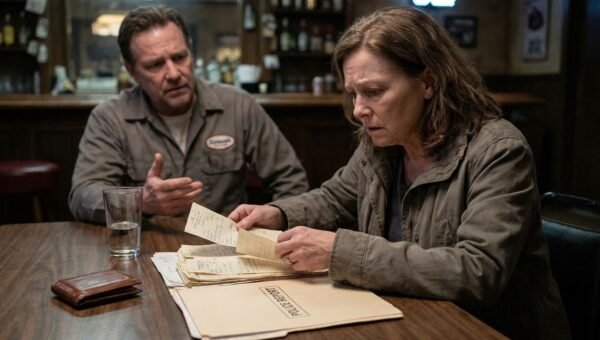
At the station, the base radio printed a timestamp whenever someone keyed the county channel. We used the narrow paper roll to check equipment and record training exercises. I had saved the one from the night Owen was hurt, tucked inside the station logbook because the printer had jammed and Rick had asked me to keep the record.
I found it in the back office, folded under a stack of maps. The times were faint but readable. Owen’s first call came through at 4:18. The log showed the base radio had been transmitting at 4:19. Then, at 4:23, the channel was keyed again for eleven seconds.
I remembered the sound. Rick had pressed the talk button and said, “Stand by.” He had not sent a reply to Owen.
At first I thought he had been trying to keep the channel clear while he checked the map. That was something we had all done. But the follow-up messages were on the same roll, and they showed no response until 4:51. By then the clouds had dropped low enough that the helicopter crew had to circle twice.
I took the paper to the county communications office and asked whether it could confirm the times. They compared it with the dispatch record. The records matched. The dispatcher had received Owen’s call and relayed it to our base. Someone at the station had heard him.
The county investigator asked me to bring the original log to the next panel meeting. I called Rick before I left the office.
“I can’t change what the printer recorded,” I said.
“I know,” he replied. His voice was quiet. “I thought you’d understand why I had to hold the channel.”
“Why did you?”
He didn’t answer right away. Then he said, “There was another call.”
That night, I checked the station log. There was no entry for another call, and the county dispatch record showed none on our channel. I went through the radio procedure binder and the map notes from the rescue. Nothing mentioned a second incident.
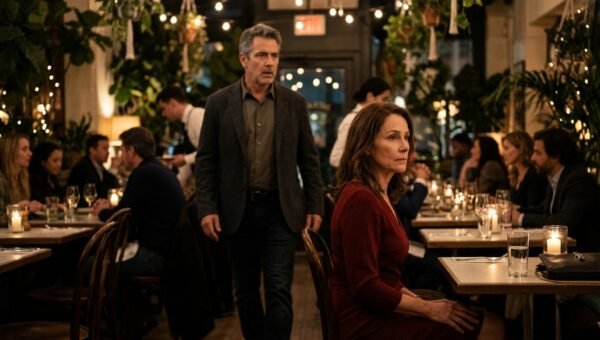
At the panel, the investigator placed the printout beside the dispatch record. Rick sat across from me, hands folded, his wedding ring pressed against the table. He looked exhausted, not angry.
“You can tell them what you heard,” he said. “Just understand, Jo, if they play the recording, you won’t only hear my voice.”
PART 2
The room stayed quiet while the investigator, a former state trooper named Miller, looked from Rick to me.
“What recording are we talking about, Rick?” Miller asked.
Rick didn’t look at Miller. He kept his eyes on my face. “The repeater recorder on Bear Mountain. It captures raw audio whenever the station base keys in, even if dispatch drops the line.”
I knew about that recorder. We put it on the ridge five years ago to cover dead spots in the gorge. Nobody ever pulled the hard drive unless there was a fatality.
“Are you asking us to pull that audio, Captain?” Miller asked.
“No,” Rick said. “I am telling Jo what is on it. If she wants the board to hear it, that is her choice.”
The panel adjourned for twenty minutes so Miller could make copies of the printer roll I had brought in. That left Rick and me standing by the coffee maker in the hallway. The linoleum smelled like old floor wax and pine cleaner.
“What did you mean by that?” I asked him. “Whose voice is on that tape?”
“Think back to 4:15, Jo. Where were you?”
“I was in the supply room getting extra dry bags for the evening shift.”
“And who had the station phone?”
“Mark did,” I said. Mark was my twenty-four-year-old son. He had joined our volunteer unit eighteen months earlier, mostly doing trail clearing and vehicle maintenance. He wanted to be a deputy someday, and having search-and-rescue on his county record was the only thing giving his application weight.
Rick looked down at his boots. “Mark answered the back-office landline at 4:16. It wasn’t county dispatch. It was Mark’s friend Cody, calling from the quarry road.”
The quarry was three miles south of the trail where Owen had fallen. It was county property, strictly off-limits, with steep limestone cliffs that teenagers used for drinking and riding dirt bikes.
“What does Cody have to do with Owen?” I asked.
“Cody didn’t call for an ambulance,” Rick said, keeping his voice below a whisper. “He called Mark because Cody was driving Mark’s truck. The one with our spare tow straps and county volunteer stickers on the bumper. Cody took the sharp curve near the gravel pit too fast, rolled the truck into the wash, and hit a power pole. He wasn’t wearing a belt. His arm was broken, and power lines were down across the cab.”
My stomach tightened. “Mark never told me that.”
“Because Mark panicked,” Rick said. “Mark took the portable radio from the desk, walked outside, and keyed the emergency talk-around channel at 4:21. He didn’t use call signs. He begged me to divert our truck down the quarry road before the sheriff’s road patrol found Cody in a county volunteer vehicle with open beer cans on the floorboard.”
“You held the channel for that?” The words came out harsh. “A boy had a compound fracture on Mill Creek Ridge, and you delayed the helicopter because my son made a mess at the gravel pit?”
“I didn’t delay the helicopter for the truck,” Rick said. “I delayed the helicopter because when Mark keyed the radio, he was screaming. He said Cody was unconscious and the grass under the truck was smoking from the live wire. The county air unit only had one bird fueled at the airstrip. If I called in a downed high-voltage line with a trapped driver, protocol required the bird to divert to the fire hazard first. Owen would have sat on that ridge until dark anyway, and Mark would have been booked as an accessory to reckless endangerment before the sun went down.”
“So you lied to the panel.”
“I told Mark to shut up, cut the power at the access gate manually, and stay off the air,” Rick said. “Then I had to verify whether the line was actually hot before I committed county assets. That took twenty-five minutes. By the time I knew Cody was out of the truck and walking, I cleared the channel and told dispatch to send the bird straight to Owen.”
He stepped closer to me. “I didn’t cover up an equipment failure to save my grant, Jo. I covered it up because if county dispatch listens to the Bear Mountain repeater audio, they’ll hear Mark breaking three federal communication laws, begging me to hide his truck, and leaving a boy on the ridge to bleed.”
PART 3
The door to the training room clicked open. Miller stood in the doorway, holding a yellow manila folder.
“We have county IT linking into the Bear Mountain repeater server right now,” Miller said. “They can pull the raw WAV file from that hour in about ten minutes. Jo, do you want to submit your paper roll as formal evidence of gross negligence, or do you have something else to add?”
I looked at Miller. Then I looked at Rick.
All my life, Rick had been the steady one. When my husband walked out on us twelve years ago, leaving me with a mortgage and a twelve-year-old boy who threw fists at every wall in the house, Rick showed up every Saturday morning. He taught Mark how to change oil, how to use a compass, and how to look a man in the eye.
Now Rick was standing in front of a county inquiry board, facing a total suspension of his credentials and the loss of the team’s thirty-thousand-dollar annual equipment funding, because he had tried to keep my son from throwing his future away in an afternoon.
“Give me five minutes,” I told Miller.
I walked out to my car and called Mark. He answered on the second ring. His voice sounded thin.
“Mom?”
“Did you let Cody take your truck to the quarry last October?”
Silence sat on the line. It lasted long enough that I could hear the wind brushing through the spruce trees beside the station fence.
“Mom, please,” Mark whispered. “Uncle Rick said he had it handled.”
“Rick is about to lose the entire rescue unit, Mark. The board thinks he froze or the gear failed. If they pull the tape, they’re going to hear you.”
“I was terrified,” Mark said, and his voice broke the way it used to when he was ten. “Cody said there were sparks. I thought the truck was going to blow up. I didn’t know what to do.”
“You knew the rule,” I said. “Life over property. Always. You let Owen sit on a wet rock with a broken bone while Rick tried to keep you out of jail.”
“If that comes out, the department won’t hire me,” he said. “I’ll never get into the academy.”
“Then you don’t get into the academy,” I said.
I hung up the phone. My hands were steady, but my throat felt like dry gravel.
I walked back into the training room. The three members of the review board were seated behind the folding table. Miller had a laptop open, plugged into the room’s small desktop speakers.
“We have the audio file downloaded,” Miller said. “Jo, you’re the one who raised the question about the timestamp discrepancy. Before we press play on the official record, do you want to state your position for the minutes?”
Rick didn’t move. He sat with his shoulders slightly rounded, ready to take the hit. He had made his choice back in October, and he was prepared to let the board strip his badge rather than push the blame onto my boy.
I laid the paper roll on the center of the table.
“The radio didn’t fail,” I said clearly.
Miller looked up. “Go on.”
“There was an unauthorized transmission on the tactical talk-around channel at 4:21,” I said. “A civilian used our frequency to report a secondary accident at the old quarry access road. Captain Rick held base transmission to determine if the secondary incident required county power shutoffs before the helicopter took off. He didn’t log it because the report turned out to be an abandoned vehicle with no serious injury.”
Miller frowned, his hand hovering over the mouse. “Who was on the radio?”
“My son, Mark,” I said.
The room went completely still. Rick closed his eyes.
“Mark was on duty as station support,” I continued, looking straight at Miller. “He misused the emergency frequency to report an incident involving his personal vehicle. He violated dispatch protocol, he interfered with rescue operations, and he caused a twenty-eight-minute delay in sending medical aid to Owen.”
“Jo,” Rick said under his breath.
“Captain Rick’s failure was failing to report a subordinate’s misconduct,” I said. “He tried to handle the disciplinary action internally to protect the unit’s operating reputation. That was an error in judgment. But the equipment works. The team did not abandon Owen. My son did.”
Miller stared at me for five seconds. Then he moved his mouse and closed the audio application without pressing play.
“Mark is an auxiliary member?” Miller asked.
“He was,” I said. “I have his station keys in my purse. I am turning them in right now.”
ENDING
The county board suspended Rick as captain for sixty days for failure to document an active incident. They put the station on administrative probation for six months, but they did not pull the thirty-thousand-dollar operating grant. The trucks stayed in the bay, the ropes were inspected, and when a hunter went missing near Blackwood three weeks later, the team was allowed to roll.
Mark did not speak to me for two months.
He had to pay four hundred dollars to tow his truck out of the limestone ditch, and the county sheriff