PART 1
My sister Brenda never liked waiting for anyone, least of all me. When our father passed away quietly in his sleep on a rainy Tuesday morning, she took over every single arrangement before I could even make the three-hour drive from Spokane. She called the funeral home, signed the paperwork, and chose direct cremation. Dad had always said he wanted his ashes taken to Blackwood Lake, out by the old wooden docks where he taught both of us how to cast a line when we were girls.
I told Brenda to wait for the weekend so we could go out on the water together and say a proper goodbye.
She did not wait. On Friday afternoon, my phone chimed with a text message. It was a photo of a plain brass urn sitting open on the passenger seat of her car, completely empty. Underneath the photo, she wrote a single sentence: “Went out to Blackwood Lake this morning and let him go by the water. It was peaceful. The matter is finished, so do not drag this out.”
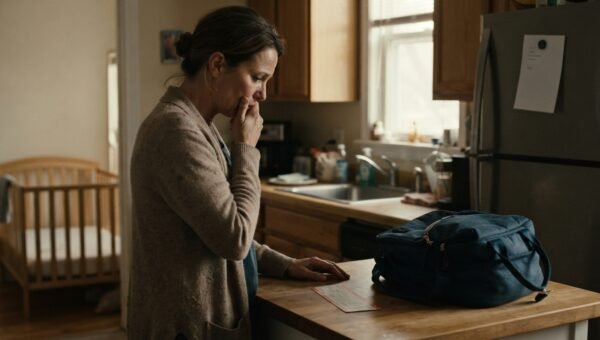
I sat at my kitchen table and cried until my eyes burned. It felt cruel and cold. Dad had lived with Brenda for the last two years of his life because of her larger home, but I had paid his supplemental insurance, brought him his groceries every other Saturday, and sat with him on the back porch while he talked about the old days.
Brenda treated his passing like an inconvenient errand she needed to cross off her list before running to the grocery store. Whenever I called her that evening to ask why she could not have given me just twenty-four hours, she snapped that she was exhausted from caregiving and did not owe me a stage-managed performance. She hung up and stopped answering my calls.
A week later, my home phone rang early on a Saturday morning. The caller identified himself as Joe Miller, the resident caretaker at Blackwood Lake Marina. Joe had known my father for over twenty years. Dad kept an old aluminum skiff out there until his hips got too stiff to climb over the gunwales.
“Ruth, I am sorry to bother you at home,” Joe said, his gravelly voice low and cautious. “I heard about Arthur passing last week, and I am truly sorry for your loss. But something strange turned up this morning.
I was clearing brush beneath the wooden benches near the south boat ramp, and I found a brass urn shoved deep into the weeds.”
I froze with the cordless phone pressed against my ear. “Joe, that cannot be right. Brenda went out there last Friday. She sent me a picture of the empty container.”
“Well, that is why I am calling you directly,” Joe said. “This urn has a metal seal around the threaded top, and the green inspection sticker from Clearwater Valley Mortuary is completely untouched. The brass plate on the base has your dad’s full legal name and the mortuary serial number stamped right into the rim. No one opened it, Ruth. It is heavy, perfectly intact, and sitting right here on my workbench.”
The drive out to Blackwood Lake felt like moving through a bad dream. The autumn trees along Route 9 were turning brown, and the grey sky sat low over the water.
When I stepped into Joe’s cluttered maintenance shed, the smell of two-stroke engine oil and damp cedar hit me. There on the grease-stained workbench sat the identical brass urn from Brenda’s photograph.
I looked closely at the rim. The seal had never been breached. The serial number matched the paperwork Clearwater Valley had mailed to me on Monday.
I did not call Brenda. I drove straight to her house on the west ridge, the urn resting upright on my front seat. When she opened her front door in her work clothes, holding a mug of tea, her face lost every bit of color.
“Where did you get that?” she whispered, staring at the brass cylinder in my arms.
“Joe found it hidden under a bench by the ramp,” I said, walking past her into the living room without waiting for an invitation. “You lied to me. You took a picture of an empty decorative vase, told me our father was in the water, and dumped his actual remains in the dirt behind a public dock. Why would you do that?”
Brenda’s hands began to shake, but her jaw set hard. “Joe is a senile busybody who is mistaken. I did not leave anything behind. Somebody must have stolen it from my trunk before I went out on the dock. Why are you attacking me over this?”
“Look at the seal, Brenda. It was never opened. He is still in here.”
“Fine,” she said, her voice rising to a shrill defensive pitch. “You think you know everything? You think I am some terrible daughter? Twist the cap off right now. Go ahead. Break the seal and see for yourself.”
She grabbed a flathead screwdriver from the drawer near the telephone and handed it to me with jerky, furious movements. My hands trembled as I worked the tool under the glued mortuary tape. I turned the brass threaded lid. It screeched against the metal, tight and dry, before loosening completely.
I looked inside, expecting to see the grey, powdery remains of our seventy-eight-year-old father.
There were no ashes.
The urn was packed to the brim with heavy, damp grey beach sand, the kind you find along the Puget Sound coastline, hundreds of miles west of our inland lake.
Brenda stepped back, her mouth falling open. Her surprise was not an act; she looked completely stunned.
I reached inside the cold, gritty sand and dug my fingers down toward the center. My knuckles hit something solid and wrapped in plastic. I pulled it out and wiped the wet sand onto Brenda’s coffee table. It was a heavy-duty freezer bag. Inside was Dad’s laminated Washington State fishing license, still valid for another three months, and a flat brass locker key stamped with the number forty-five.
Taped to the plastic bag was a folded slip of paper with our father’s distinctive, shaky cursive handwriting: *Locker 45, North Marina Pier. Look inside before you cry.*
Brenda stood motionless, staring at our father’s handwriting as if she had seen a ghost. “That is his writing,” she whispered. “Ruth, what is going on? The funeral director handed me that sealed urn on Thursday afternoon. He swore it was him.”
“We are going to Blackwood Lake right now,” I told her.
Neither of us spoke during the twenty-minute drive back to the marina. Brenda kept looking out the passenger window, her fingers digging into the strap of her purse. The cold wind was kicking up whitecaps across the lake when we pulled into the gravel lot by the docks. Joe was out on a patrol boat, so the wooden piers were quiet and deserted.
We walked out to the metal storage lockers lining the side of the harbormaster’s office. Locker 45 had an old brass padlock that took the key with a loud, mechanical click.
I pulled the locker open.
Hanging from a hook was Dad’s favorite heavy red wool hunting jacket, smelling faintly of pipe tobacco and cedar chips. On the shelf beneath it sat a small black prepaid flip phone, connected to a portable battery bank that was blinking green, and a ferry schedule for the Anacortes-to-Friday-Harbor route. A red pen had drawn a thick, deliberate circle around today’s 5:40 PM departure.
Before either of us could say a word, the little black phone on the shelf began to buzz. It vibrated violently against the cold metal, lighting up the dim interior of the locker.
Across the small rectangular screen, the caller ID flashed two words: *Dad Mobile.*
PART 2
The phone rattled against the metal shelf, buzzing every three seconds. Brenda reached out with a trembling hand, but I shoved her shoulder back and grabbed the device myself. My thumb found the green button. I pressed it and lifted the plastic receiver to my ear.
“Ruthie?”
The voice was thin, raspy from years of working in timber mills, but entirely unmistakably our father.
“Dad?” The word tore out of my throat like glass. “Dad, where are you? What is this?”
“Do not yell at Brenda yet, Ruthie,” he said, coughing softly into the microphone. “And do not call the sheriff. I know you both think you buried me, but I am sitting in an apartment sixty miles away, waiting on a ferry. I need you to listen to me for two minutes without interrupting, because this battery does not have much left in it.”
Brenda grabbed my forearm, her fingernails digging through my coat sleeve. “Is it him? Ruth, put it on speaker! Put it on speaker right now!”
I hit the speaker button and held the phone between us. The sound of our father’s breathing filled the quiet air between the dock lockers.
“Brenda, are you there?” Dad asked.
Brenda let out a ragged, choking gasp. “Dad? How are you talking to us? The doctor at Saint Jude’s signed the certificate! I sat in the room when they wheeled you down to the basement mortuary!”
“You sat in the waiting room for ten minutes, Brenda, just like you always did,” Dad replied, his voice hardening slightly. “You were too busy looking at your calendar to check if the nurse was checking a pulse or checking an IV line. Arthur Campbell did not die in that bed. His brother did.”
I felt the ground tilt beneath my boots. “Uncle Thomas?”
“Thomas came up from Portland three weeks ago,” Dad said quietly. “His lungs were shot from the shipyards. He did not have insurance, he did not have a dime, and he did not have family left except for me. When he collapsed in my spare bedroom at Brenda’s house while she was out at her corporate retreat, I called an old friend who runs the private transport ambulance out of Cheney. We took Thomas to Saint Jude’s under my name. We used my Medicare card, my social security number, and my veteran’s benefits to get him into hospice care so he would not die in agony on a floor.”
“Dad, that is fraud,” Brenda shrieked, her voice echoing off the corrugated metal walls. “That is massive federal fraud! Do you know what you have done? I signed the paperwork! My name is on the probate filing!”
“I know whose name is on the filing, Brenda,” Dad said, and there was no warmth left in his tone. “And that is the second reason I did it. You thought I was sleeping in that back bedroom every afternoon, but I heard you talking to your lawyer on the patio. You were preparing to file for conservatorship over my estate. You had already drawn up the papers to sell the house our grandfather built on Blackwood Lake to a condo developer for seven hundred thousand dollars.”
Brenda let go of my arm as if she had been burned. She stepped back toward the edge of the dock, her eyes darting between me and the phone.
“You were going to put me in the assisted living wing at Pine Crest and liquidate everything before my seventy-ninth birthday,” Dad continued over the speaker. “The only reason you wanted me dead or declared incompetent was that parcel of land. You did not care about the lake. You did not care about the cabin. You cared about your second mortgage.”
“That is not true,” Brenda stammered, though she would not look me in the eye. “Ruth, he is confused. His mind has been slipping for months.”
“My mind is as sharp as a crosscut saw,” Dad said plainly. “Clearwater Valley Mortuary did not do this blind. Donald Evans runs that home. He and I served together in the National Guard forty years ago. When Thomas passed away under my name, Donald knew the truth. He agreed to cremate Thomas under his real name on a private charity voucher, but he gave Brenda the urn she asked for, packed with sand, to see what she would do with it.”
“Why did you leave the urn under the bench?” I asked, wiping cold moisture from my cheeks. “Why leave the locker key?”
“Because Donald told me Brenda did not even wait for the sun to come up before she dumped the urn in the bushes. She never intended to scatter anything. She just wanted the death certificate filed with the county clerk so the property deed would transfer to her name under the old joint tenancy agreement.”
A boat horn sounded in the distance through the phone’s receiver, deep and low.
“That is the whistle for the 5:40 ferry to San Juan Island,” Dad said. “I am leaving the country on a private crossing into Victoria tomorrow morning. But I am not leaving until you two make a choice.”
PART 3
“What choice, Dad?” Brenda demanded, stepping back toward the phone, her voice frantic. “If the state finds out Thomas is the one who died, they will charge you. They will charge Donald. They will audit every single account I have touch on!”
“The choice is yours, Brenda,” Dad said. “Donald has the real paperwork ready to file. If you go to the county clerk’s office on Monday morning and sign the quitclaim deed transferring the Blackwood Lake property entirely into Ruth’s name, Donald will submit the death correction for Thomas Campbell as an administrative hospital identity error. The state will audit Thomas’s charity care, and I have left twenty-two thousand dollars in an escrow account at Inland Bank to pay back every cent of medical care Thomas used under my name.”
“You do not have twenty-two thousand dollars,” Brenda hissed. “I monitor your accounts!”
“You monitored the checking account you forced me to open with you,” Dad said. “You never checked the old safe-deposit box at First Federal. That was my emergency timber fund from thirty years ago.”
I looked at Brenda. Her face had turned a mottled, furious red. “You are blackmailing your own daughter?”
“I am protecting the only thing my father left me, and I am making sure Ruthie gets what she earned,” Dad answered. “Ruth took off work every Friday for eight months when I had my hip replaced. She sat with me while I threw up from the antibiotics. You dropped off frozen dinners and complained about the smell of my liniment. If you do not sign that quitclaim deed by noon on Monday, Donald will walk into the county prosecutor’s office with the security footage from the funeral home parking lot.”
Brenda’s breath hitched. “What footage?”
“The footage of you handing him an envelope containing five thousand dollars in cash, asking him to backdate the cremation release so you could file the probate papers before the weekend,” Dad said.
A heavy silence fell over the dock. The only sound was the cold lake water slapping against the wooden pilings beneath our boots.
I looked at my sister. The righteous indignation that she had carried like armor for ten years had completely collapsed. Her shoulders slumped forward, and she stared down at the wet cedar planks.
“You bribed Donald?” I asked her, my voice barely a whisper. “You bribed the mortician to rush the death certificate?”
Brenda did not answer. She kept her eyes glued to her leather shoes, her chest heaving in short, shallow breaths.
“Ruthie,” Dad said through the speaker. “The key to the lockbox at Inland Bank is inside the lining of my red jacket. The coat hanging right in front of you. Take the key. The escrow paperwork is already signed by me. All it needs is your signature as executor.”
“Where will you go, Dad?” I asked, tears finally spilling over my eyelashes. “You cannot just disappear to Canada. You are seventy-eight years old. You need your prescriptions. You need your family.”
“I have an old friend in Sidney who has an empty cottage by the water,” he said, his voice softening for the first time. “I have enough cash to live out whatever time I have left without people hovering over me waiting for me to turn cold so they can cash a check. I am tired, Ruthie. I was tired of watching my daughters turn into enemies over a piece of dirt.”
The ferry horn sounded again, two short blasts that echoed clearly through the phone line.
“They are loading the lower deck,” Dad said. “Brenda, you have until noon on Monday. If Ruth calls me and says the deed is recorded, Donald files the identity correction for Thomas, the escrow pays the hospital bill, and this family stays out of the newspaper. If not, Donald goes to the sheriff, and you can explain the five thousand dollars to a judge.”
“Dad, please,” Brenda whispered, but the line went dead.
The click of the disconnected call sounded like a small gunshot in the quiet marina.
ENDING
We stood in front of the open storage locker for five minutes without saying a single word. The wind picked up, biting through my wool sweater, carrying the smell of rain and pine needles across the water.
I reached inside the locker, took down Dad’s red wool jacket, and ran my fingers along the inside hem near the left pocket. Sure enough, there was a stiff seam held shut with coarse black thread. I pulled the seam apart. A small safety-deposit key and a folded legal paper slipped into my palm.
Brenda looked at the paper, then looked at me. The arrogant, controlling sister who had run our family since our mother died fifteen years ago was completely gone. In her place was a terrified fifty-two-year-old woman facing prison time, professional ruin, and the loss of everything she had schemed to secure.
“You are going to make me do it, aren’t you?” she asked, her voice cracking against the cold wind.
“Monday morning at eight,” I told her. “I will meet you on the front steps of the county clerk’s office. You will sign the quitclaim deed, and we will walk it up to the recorder’s window together. If you are thirty seconds late, I will call Donald myself.”
Brenda turned and walked away down the wooden pier, her head down, her steps hurried and unsteady. She climbed into her car, slammed the door, and drove away without looking back.
On Monday morning, Brenda was waiting on the courthouse steps fifteen minutes before the doors unlocked. Her eyes were rimmed with red, and she had dark circles under her makeup. She did not say hello. She sat in front of the county notary, pressed her thumb to the ink pad, and signed every single document required to transfer the Blackwood Lake cabin and its forty acres entirely into my name.
After the documents were stamped and recorded, I walked over to Inland Bank and used the brass key to open Dad’s safe-deposit box. The escrow agreement was exactly where he said it would be. I signed the release, authorizing the twenty-two thousand dollars to be sent directly to Saint Jude’s Hospital to settle the outstanding account for Thomas Campbell’s final palliative care.
By Tuesday afternoon, Donald Evans had filed the amended vital statistics report with the state health department, noting an administrative mix-up regarding the identity of the deceased veteran admitted to hospice care. Because the hospital bill was satisfied in full and the estate had not claimed fraudulent life insurance benefits, the state accepted the administrative correction without an investigation. Thomas Campbell was properly listed in the municipal records, his remains resting in a peaceful veterans’ columbarium outside of Spokane.
I drove out to Blackwood Lake that weekend. The cabin was quiet, smelling of dry wood and woodsmoke from the cast-iron stove. I hung Dad’s red hunting jacket on the peg beside the front door, right where it had hung for thirty years.
Brenda has not spoken to me since that morning on the courthouse steps. She put her house on the west ridge up for sale three weeks later and moved across the state line to Idaho.
On the first Sunday of every month, precisely at four in the afternoon, the black prepaid phone on the cabin mantle buzzes three times, pauses, and stops. It never rings long enough to connect a billable call, and no one ever leaves a voicemail. But every time those three short vibrations shake the wooden shelf, I walk over to the window, look out across the grey, open water of the lake, and know that somewhere up north, an old man is sitting on a dock, watching the tide go out in peace.