I was pouring coffee into my travel mug when my son came into the kitchen holding Grandpa’s green thermos. He had his school backpack on and was asking if he could take it for water. I’d kept that thing on the shelf for a year, where I could see it without having to touch it. I said yes before I thought about it.
The cap had rust around the edge. When I unscrewed it to rinse the inside, something rattled.
Not loudly. Just enough to make me stop with the thermos over the sink. My son asked what was in there, and I told him I didn’t know. That was true. I didn’t know what Grandpa had hidden inside it, or why Ray had been so quick to give it to me.
I told my son to grab another bottle for school. Then I set the thermos on the counter and tipped it over. The glass liner was gone. In its place was a small roll wrapped in a bread bag and a brass key, the kind that looked like it belonged to a bank box. The paper felt dry and thin when I opened the bag, and I could smell the faint dusty odor of old plastic.
On top was a note in Grandpa’s shaky handwriting. Under it sat a typed document with a notary stamp, a date, and two witness signatures.
I read the date twice. It was five years before Grandpa died. I didn’t read the whole will yet. I called the lawyer first, because I was afraid of getting excited over something that might not be real.
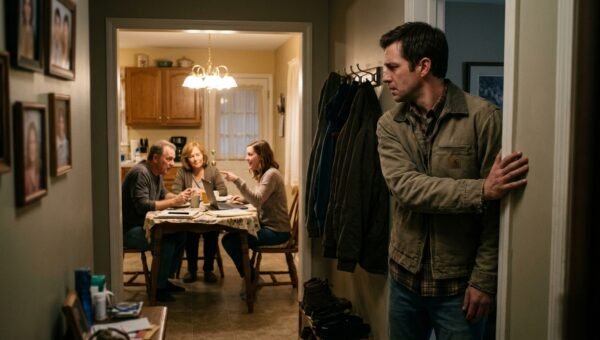
A year earlier, Ray had stood in Grandpa’s kitchen and told me there was no will. He said it while he was sorting a stack of mail and looking past me, like he had a list to get through. The estate lawyer had said the same thing at the time: with no will on file, Ray was handling the cabin and the estate. Ray was Grandpa’s only living child. I was a grandchild, and I didn’t have money for a drawn-out legal fight.
That didn’t mean I thought it was fair. Grandpa had taken me to the lake cabin most summers when I was growing up. I remembered him making toast over the old stove and telling me not to leave my wet shoes by the door.
Later, when I was old enough to drive, I’d bring him coffee before he went out fishing. He carried that green thermos every morning for thirty-one years.
Ray had gone to the cabin less often, but he was the one who’d been there when Grandpa got sick. I know that. I don’t want to make him sound like a stranger who swooped in from nowhere. He’d helped with appointments, paid some bills, and spent long afternoons sitting with Grandpa. He was also the one who had the keys, the paperwork, and the chance to tell the rest of us what Grandpa had supposedly wanted.
When Ray handed me the thermos after the funeral, he gave it a little shake and smiled without much warmth. “You always liked that old thing,” he said. I took it because I did like it. I also knew he was keeping the cabin. I let him call the thermos a family keepsake instead of asking why he got the property and I got a dented cup that didn’t even have its glass liner.
Two months later, Ray sold the cabin for $285,000. He said the place needed work and the sale was the cleanest way to settle things. I asked whether any of the money would be divided among Grandpa’s grandchildren. Ray told me the lawyer had explained that it was his call. I hated how small I sounded asking, so I stopped asking.
The estate lawyer’s office had a bowl of wrapped mints on the table and a fax machine that made the same rattly noise every time it ran. I sat across from him with the thermos in a grocery bag and the document in a folder. I didn’t want to hand over the original before I knew what it was. I also didn’t want the paper to sit another day on my counter while I tried to talk myself out of it.
The lawyer, Mr. Bell, looked at the stamp and signatures. Then he checked the date and the notary’s name. I watched his mouth go still while he read the first page. He asked where I’d found it. I told him. He asked if Ray knew. I said no.
“This looks like a will,” he said. “I need to verify it before I tell you more.”
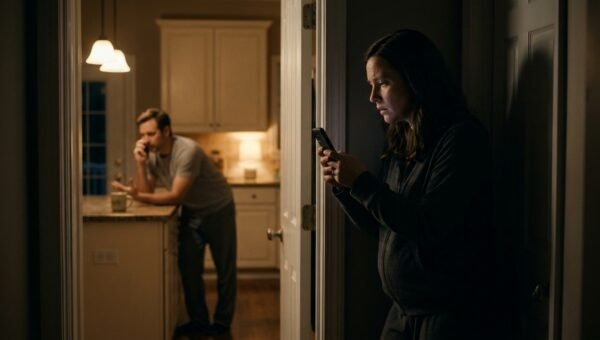
That was enough to make my hands feel clumsy. I kept folding and unfolding the grocery bag while he made calls. The notary was retired, but still lived in town. Mr. Bell spoke with her office, then called one of the two witnesses listed on the will. He said the signatures matched their records. He also said the document named an independent executor, a woman named Judith who had handled Grandpa’s taxes for years.
I knew Judith by sight. She’d come to the cabin once to bring Grandpa a box of old receipts. I hadn’t known she was involved in anything legal. That was the first sign that Grandpa had been doing more than just writing a note to himself. Mr. Bell said he’d call her and ask her to come in.
Before I left, I showed him the key. There was a small paper tag tied through its top, with the name of a local bank printed on it and a box number. The bank was still open. Mr. Bell told me not to go alone if Ray might hear about it, so I called Judith instead. She met me there the next morning.
The bank manager checked Grandpa’s name and the box number. I had to show identification and the death certificate. The brass key fit. I still remember the sound it made when the lock turned, a dry little click, like an old kitchen drawer. Inside were bank statements, a ledger, and an envelope marked with my name.
The account held $41,612. It wasn’t a fortune, but it was more money than I’d ever had sitting in one place. The ledger showed regular deposits and withdrawals over several years. Grandpa had kept track of everything in careful, square handwriting, down to a $7.84 charge for fishing line. I found myself looking at that small number longer than I looked at the balance.
The will said the lake cabin and Grandpa’s liquid assets were to be split equally between Ray and me. It named Judith as independent executor. It also said any sale of the cabin should be handled through the estate and the proceeds divided according to the will. Ray had sold it after claiming no will existed. The sale money was still in an estate account, Mr. Bell confirmed, because the final distribution hadn’t been completed.
Then I read Grandpa’s note.
“Ray thinks he’s clever, but truth outlasts rust. This belongs to you, keep the faith.”
I read it once. Then I read the will again, slower. Grandpa had written that Ray had tried to pressure him into signing a transfer that would make Ray the sole owner of the cabin. Grandpa said he refused. He’d had the will prepared after that and stored it where Ray wouldn’t think to look.
I got mad at Ray. Then I got mad at Grandpa for not telling me, which wasn’t fair, and I knew it wasn’t fair. I’d been expecting Grandpa to protect me by saying the right things while he was alive, and he’d protected me in the one way he knew would hold up later. I mean, I can understand why he didn’t trust a family conversation to stay a family conversation.
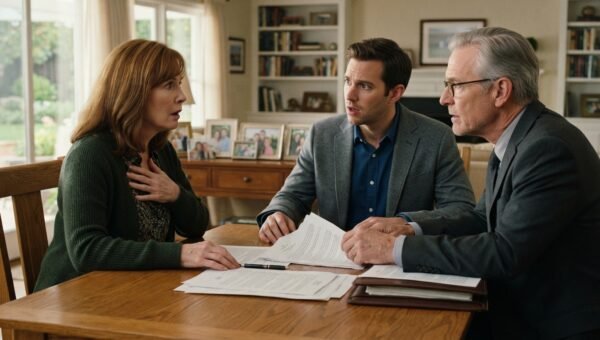
Mr. Bell arranged a meeting with Ray, Judith, and me at his office. Ray expected to finalize the distribution. I could tell he was annoyed when he saw me. He’d brought a folder and had already set it on the table. I had the will, the bank records, and the note in my own folder.
Ray looked at the paper and shook his head. “That can’t be Grandpa’s.” He reached for it, but Mr. Bell put one hand over the corner.
“I’ve checked the seal and the signatures,” Mr. Bell said. “This is valid.”
Ray started talking about how he’d handled everything, how nobody else had stepped up when Grandpa got sick, how the cabin had been his responsibility. Some of that was true. He’d done work. He’d also claimed there was no will and sold a property Grandpa had clearly left to both of us. I didn’t make a speech. I just pushed the bank records across the table beside the will.
Ray looked at the account total. His face changed, but he didn’t say anything for a few seconds. Then he said, “I thought that was gone.”
That was the first honest thing I’d heard from him about the money. He tried to explain that he’d been overwhelmed and thought Grandpa had wanted him to settle the estate. Mr. Bell asked him to explain why he’d said no will existed. Ray said he didn’t remember saying it that way. I could hear the old habit in his voice, the way he’d always made a clear thing sound like a misunderstanding.
Mr. Bell told him the estate would be corrected. The $285,000 from the cabin sale was still held in the estate account. The bank money would be added, and the will’s equal split would be followed. If Ray refused to return anything or tried to hide assets, Mr. Bell said, he’d refer the matter for investigation. Ray sat back and rubbed his thumb along the edge of his folder.
He didn’t apologize. He signed the papers that afternoon, and the estate was divided under the will. I received my half of the cabin proceeds and half of the money in the bank box. Judith handled the final records. Ray kept his share, but he lost control of the process and the story he’d been telling about Grandpa’s wishes.
We haven’t spoken since. I don’t know if he thought I’d thank him for the thermos or if he’d forgotten it was still in my house. I’m not proud that part of me wanted to watch him squirm. I also know I would have let the whole thing go if Grandpa’s name hadn’t been on the paper. I wasn’t brave. I was just tired of being told that asking for a fair share made me difficult.
I cleaned the thermos after all the papers were safe. The rust came off with a scrub pad and more effort than I expected. I didn’t replace the glass liner. I put a soft cloth inside instead, then laid Grandpa’s brass key on top of it. The thermos is back on my kitchen shelf, clean now, with the key where the old liner used to be.