I thought my dad cut me off because I failed his new wife. That was the reason he gave me, anyway. It took a wedding invitation, a phone call from my stepmother, and one very uncomfortable diner lunch for me to understand what he was really asking me to forgive.
My sister Nora and I were 9 and 7 when our mom died. I remember the hospital waiting room better than the funeral.
I remember Nora letting me hold the paper cup of water, even though my hands were too little to keep it from bending. That’s probably not the sort of thing a kid should have to remember about her sister. But I do.
Dad remarried when Nora was 12 and I was 10. His wife, Denise, was 52 when Dad contacted me about the wedding. Back then, she was new to our family and Dad kept saying we needed “a mother in the house.” Our grandmothers were too old, he said, as if being old meant they couldn’t love us.
I didn’t want another mother. I didn’t hate Denise. I just didn’t want to call her when I got my first period or ask her how to fix my hair for school pictures. I wanted my mom. I wanted the person whose old recipe cards still smelled faintly like the cinnamon gum she chewed.
Denise tried for about a year. Then she stopped pushing. I remember she left a little basket of hair ties and face wash on the bathroom shelf and never asked whether I’d used them. She wasn’t cruel. She seemed to understand that we needed room. Dad didn’t see it that way.
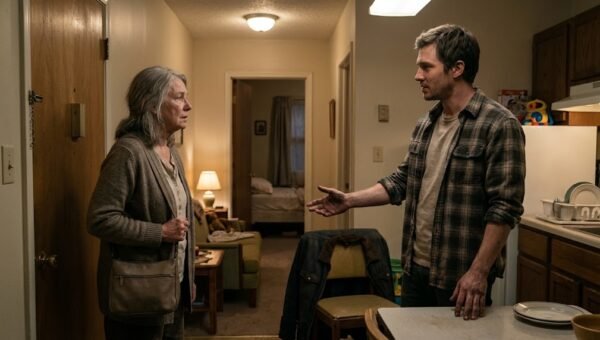
Nora turned 18 first. Dad called her into the living room on her birthday. I was there, sitting on the stairs with a gift bag on my lap. He told her she’d broken Denise’s heart and spoiled her motherhood journey. He said he didn’t want to speak to her anymore.
I thought he’d calm down. He didn’t. Nora left that night with a duffel bag and her birthday cake still in the fridge. I remember the frosting had a crack down the middle from where Dad had cut a slice too early. I was 16. I didn’t know how to stop it, and I didn’t ask Nora to stay. I’m still ashamed of that.
Two years later, on my 18th birthday, Dad said the same thing to me. Same words. Same living room. Denise was upstairs, and Dad said she was heartbroken because I wouldn’t let her be a mother to me. He told me I’d spoiled her chance at motherhood and he didn’t want to speak to me anymore.
I remember the cheap plastic tablecloth. It stuck to my wrist when I stood up. I remember thinking I should apologize, though I didn’t know what for. I had spent years making myself smaller around Denise so Dad wouldn’t get mad. It still wasn’t enough.
I left that night. Dad didn’t call the next morning, or the next week, or the next year. Neither did I. I told myself I was protecting my pride, but honestly, I was scared he’d say the same thing again.
Eight years passed. I finished school, got a job, met Evan, and started planning a wedding.
My life filled up with regular things. Rent. Work lunches. A leaky kitchen faucet. I thought about Dad more than I admitted, especially whenever someone mentioned father-daughter dances. I just didn’t expect him to come back because I picked a date and sent out invitations.
His first message asked when the wedding was. The next asked whether I wanted him to walk me down the aisle. There wasn’t a single line about the eight years he’d been gone. No apology. No mention of my birthday. He wrote as if he’d missed a few weekends, not most of my adult life.
I showed Evan the message. He read it twice and set my phone down by the stamps.
“You don’t have to decide tonight,” he said.
I called Nora instead. She listened while I read the messages out loud. Then she reminded me that Dad had done the same thing to her, down to the birthday speech. I’d been there, but hearing her say it made it harder to pretend this had all been about one bad day.
“I don’t want to be the reason you say no,” I told her.
“You’re not,” she said. “He already gave you a reason.”
Three weeks later, my aunt called about the guest list. She’d heard Dad telling people he’d be at the wedding. He’d called it “a little family rough patch” and said I’d been rebellious as a teenager. My aunt wasn’t sure what to say, so she asked whether I’d invited him.
I hadn’t. I hadn’t even decided whether I wanted to speak to him. The part that bothered me most was how easy he made the story sound. He had turned eight years of silence into something he could shrug off at a barbecue.
I spoke to Denise the next week. I’d been putting it off because I didn’t want to make her choose sides. I asked whether she’d really wanted Dad to cut Nora and me off. She went quiet long enough that I checked the phone screen to make sure the call hadn’t dropped.
Then Denise said, “I never asked him to do that.”
She told me she’d realized we weren’t going to come to her for mother-daughter things. She said it hurt, but she understood. She’d thought Dad was sad and angry, not that he was blaming us in her name. She didn’t know he’d repeated the same speech to Nora and me until years later.
I asked why she hadn’t called.
“I thought you needed space,” she said. “Then I thought I’d made it worse.”
I can’t say I felt better after that. I felt sad for her, and mad at Dad, and embarrassed that I’d spent years believing I’d hurt a woman who had mostly been trying to give me room. Denise had her own regrets. She also hadn’t been the one who walked out of my life.
I still wanted to hear Dad say it himself. So I agreed to meet him at a diner near my old high school. I told Evan where I’d be and brought Nora along in the car, though she stayed outside. I didn’t want a scene. I wanted to see if Dad could talk about what he’d done without turning it into a complaint about the wedding.
He showed up in a button-down shirt and checked his phone before sitting down. We ordered coffee. I had to ask whether he wanted anything to eat. He said he’d already had lunch.
For a few minutes, we talked about work and traffic. It was strange how easily he filled the space with ordinary things. I kept waiting for him to bring up the reason we were there.
He didn’t. He asked what time he needed to arrive for the rehearsal.
I set my coffee down. The spoon tapped the cup, and the sound came out sharper than I expected.
“That’s what you want to talk about?” I asked.
He frowned like I was making this difficult on purpose. He said people had been asking about the wedding. He said he didn’t want there to be an awkward scene. I asked if he’d told them I’d been rebellious.
He looked toward the window. “I was trying to explain why we hadn’t been close.”
I reminded him he’d stopped speaking to me on my 18th birthday. I reminded him he’d said I broke Denise’s heart and spoiled her motherhood journey. I told him he’d said the same thing to Nora two years earlier.
He rubbed a thumb over the edge of his napkin. He said it had been a long time. He said we were all hurt back then. Then he called it water under the bridge.
I’d practiced keeping my voice even. I didn’t manage it perfectly.
“Did Denise ask you to stop speaking to us?”
He said Denise had been hurt. I said she told me she never asked him to cut us off. He didn’t answer that. He said he’d been trying to start a new family, and Nora and I had never given it a chance.
That was the first time I understood what I’d been missing. He hadn’t been defending Denise. He’d been angry that we still missed Mom. He wanted a fresh start so badly that our memories of her felt like a refusal to join him. Instead of living with that hurt, he gave it our names and called us ungrateful.
I asked him if he’d missed us. He stared down at the table. He said things had been complicated. Then he asked again what time the rehearsal started.
That was the answer. Not a full one, but the answer I had come for. He cared about how his absence looked to other people. He wanted a place in the wedding pictures, and he wanted me to make that place look earned.
I took a folded note from my purse and slid it across the table. I’d written the words down because I knew I might lose my nerve if I tried to say everything out loud. On the note was the sentence he’d used on my 18th birthday.
“I don’t want to speak to you anymore,” I said. “Those were your words. I’m using them now.”
He looked at the paper, then at me. I told him there would be no invitation, no walk down the aisle, and no place saved for him at the ceremony. I said the decision wasn’t about punishing him. I was done letting him return only when other people might notice he was gone.
He said I was making this permanent over an old argument. I said it had been eight years, not an argument. He didn’t apologize. I stood up, left enough money for my coffee, and walked out.
Evan was waiting nearby. Nora was still in the car. She didn’t ask what Dad had said. She just moved her purse so I could sit beside her, and I leaned against her shoulder for a minute before we drove home.
The wedding was smaller than Dad would have liked. We didn’t have a father-daughter dance. I walked down the aisle with Nora beside me. At the door to the ceremony, she squeezed my hand once, and I squeezed back.
We put a framed photo of Mom beside the guestbook. It was an old picture, from before either of us understood that a family could change without giving up the people who were gone. I didn’t feel like the day was fixed or that I’d stopped missing her. I just knew who I wanted standing beside me.
Nora linked her arm through mine in the bridal suite, and together we walked toward the photo of Mom by the guestbook.