On April 16, 1945, I arrived at an American holding camp in Belgium with twenty-two other German women. I was twenty-two years old, and I believed the Americans would be cruel to us. That belief had been fed to me for years, so it came along in the truck with me.
I remember the canvas flap lifting. I saw chain-link fences, watchtowers, and American guards watching us get down. One of the women beside me whispered, “This is where they keep us.” I thought she meant until we were punished.
I didn’t know what would happen next, and I was too scared to ask.
I’m much older now. I’ve tried to tell this story in a plain way, but the memory always brings me back to the tray first. Not the fences. Not even the letter that came later. A gray tin tray, warm against my fingers, and something pale and soft sitting on it.
Before I explain the letter, I have to explain how little it took for that first meal to matter.
I grew up in a small German town where food was something you worked for and didn’t waste. My mother saved bacon fat in a jar near the stove. My younger brother, Emil, used to steal the heel of bread before supper, then deny it with crumbs on his shirt. I had two older brothers as well, but the war had already taken them from us. By the time I was captured, Emil was the only family I still hoped to see again.
I wasn’t a soldier in the way people picture one. I had been doing auxiliary work, and I was caught up in the retreat through Belgium when the German lines fell apart. There were orders, then no clear orders, then people moving every which way. I don’t want to make it sound more planned than it was. I was frightened, tired, and trying to keep going.
In the truck, I kept telling myself the stories I’d heard about the Americans. I thought they would make us pay for being German. I thought every guard would look at me and see only the uniform and the country behind it. I had no reason to believe otherwise, or so I told myself.
The camp mess hall was loud enough that I couldn’t make out most of what anyone said. I smelled coffee and something cooked in a big pot. My hands were shaking a little.
I kept them close to my sides because I didn’t want the guards to see.
A Black American sergeant was serving food. His name, I later learned, was Thomas. At the time I just noticed his face and the way he looked at each woman before putting food on her tray. Not soft exactly. Not smiling for show. He looked as if he had decided that this was his job, and he meant to do it properly.
He set the bowl down in front of me. I looked at it, then at him. I had never seen grits before.
“Grits. Corn grits. It’s good. You’ll like it.”
I didn’t answer. I didn’t know whether he expected me to. He pointed once at the bowl, then moved on to the next woman.
I remember the smell, faint and warm, and the little bit of steam that rose from it. I remember thinking it looked too plain to be a trick.
That was a foolish thought, maybe. But fear makes you suspicious of everything, even food.
I picked up the spoon. My first bite was bland, soft, and hot. It tasted like corn, though not like anything my mother had made. I swallowed it. Then I took another bite.
That sounds small because it was small. I had spent the day expecting pain. Instead, a man who was supposed to be my enemy had given me a bowl of food and spoken to me as if I could understand him. I wasn’t ready to change my mind about a whole country. I was only ready to eat.
For the first few days, I watched the guards closely. I tried to notice what they did when they thought nobody was paying attention. They counted us, moved us, and told us where we could go. We were prisoners. I never forgot that. But no one struck me. No one called me names. When a woman in our group stumbled, another guard helped her up.
I didn’t know what to do with that. I had been taught that kindness from an enemy was either a lie or a weakness. The men I saw in the camp didn’t fit the story I’d been given. They were tired, too. They had jobs to do. Sometimes one of them would answer a question with a short nod, and sometimes they would just point us toward the right place.
Thomas served food on many of the days I was there. I began to recognize him by the way he held the serving spoon, and by his habit of looking up when someone came to the counter. I don’t want to make him sound like he singled me out. He didn’t. He treated all of us much the same.
Once, when I had finished my portion, he put another small spoonful of grits on my tray. I looked up, surprised.
“Take it,” he said. “There’s enough.”
I didn’t know whether to say thank you in English or German. What came out was, “Danke.” He gave me a brief nod.
That was all. No speech about peace. No promise. The kind thing was that he didn’t ask me to be grateful in some grand way. He served the food and went on with his work.
I noticed other things over the weeks. The Black soldiers were doing the same jobs as the other American soldiers, but I could see there were rules and separations among them that I didn’t understand. I knew enough to see that they, too, were treated differently because of who they were. It made the picture in my head harder to keep neat. I had thought of people as belonging to one side or another. Here were men in one uniform, and even they did not all have the same place in the world.
I didn’t turn that into some grand lesson at the time. I was hungry, and I wanted to know whether Emil was alive. Most days, that was enough to fill my mind.
We heard bits of news. The war was ending, or close to ending, depending on who was talking. People said Germany had surrendered. Other people said there was still fighting. I stopped trying to sort out which words were official and which were guesses. The camp gave us food and a place to sleep, and that was what I could count on.
Then the Red Cross letter came.
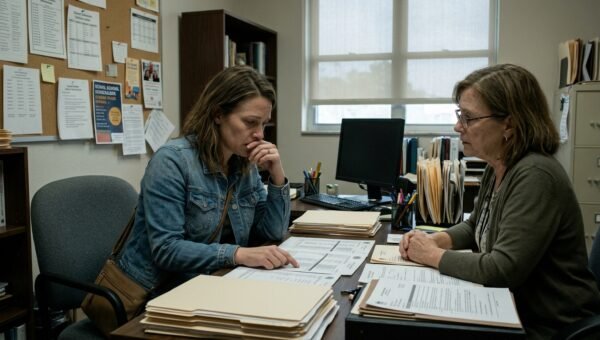
I remember the mail call because I had stopped expecting mail. A worker came by with a stack of envelopes and checked names. When she reached mine, she said, “Hanna?” I stood up too fast and nearly knocked my knee against the bunk.
The envelope had my name written on it. I knew enough to see it was official. I held it for a while before opening it, turning it over once, then back again. The paper was thin. My hands were dirty. I rubbed one thumb over the edge like that could make the news inside it less final.
A woman near me said, “You should read it.”
“I know,” I said.
But I didn’t open it yet. I had been afraid of bad news for so long that the fear had become a kind of shelter. As long as I didn’t know, I could still picture Emil somewhere safe. I could still imagine the house standing, and my mother waiting at the door, and the old kitchen table with its nick in the edge.
Finally, I opened the letter.
The Red Cross had confirmed that our hometown had been heavily bombed in the final weeks of the war. The house was gone. Emil had died in the wreckage. The letter didn’t give me a picture of what happened, and I’m grateful for that now. It gave me the fact, the formal words that left nowhere to hide.
I read the lines once. Then I read them again because I thought I must have misunderstood. I didn’t.
Emil was dead.
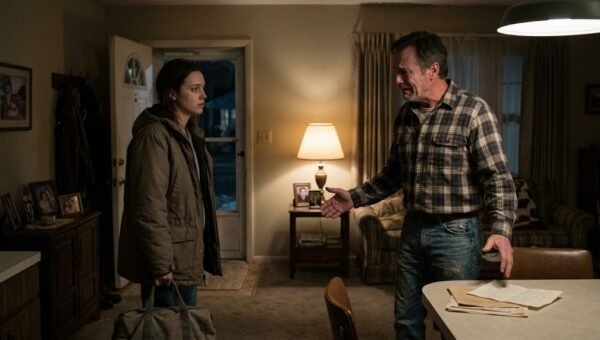
The last person I had been waiting for was gone. The place I had meant to return to was gone, too. I sat down on the bunk, still holding the letter, and the room kept going around me. Someone came close and asked if I needed water. I shook my head.
I didn’t want to eat that day. I didn’t want to speak. I remember folding the letter along its old crease and putting it under my blanket, as if someone might take it from me. I had spent weeks trying to believe the world could be decent. Then a few lines told me that nothing I wanted was left at home.
That is the part people sometimes misunderstand. Thomas’s kindness didn’t make the letter hurt less. It didn’t bring Emil back, or restore the house, or give me a place to go. A bowl of grits could not do any of that.
But after I read the letter, I kept thinking about the way Thomas had set down the tray. He hadn’t known my name then. He hadn’t known what I’d lost, or what I was afraid of. He couldn’t have known that his ordinary kindness would be one of the few things I could still picture clearly when everything else felt ruined.
I did not become cheerful. I did not suddenly trust everybody. I was still a displaced person under Allied control, with no home to return to and no clear idea what would happen to me. I was grieving, and for a while I had nothing useful to say about it.
But I ate again. Not right away, and not because I felt brave. One morning I took the tray when it came and found a little grits left in the bowl. I thought of Thomas saying, “There’s enough.” I ate the portion while it was still warm.
The weeks that followed were mostly waiting. Names were checked. Forms were filled out. People talked about repatriation and places to go. I didn’t know where I would end up. I only knew that I could not go back to the home I had pictured.
When I think of that spring now, the grief is still there. It doesn’t get smaller just because many years have passed. Emil was my little brother. I can still see him with the bread crumbs on his shirt, trying not to laugh while I pretended to scold him.
And I can still see Thomas at the serving counter. I don’t know what happened to him after the camp. I never learned whether he went home, or whether he remembered the German women he served. I’ve wished I could tell him that his words stayed with me, but I have no way to know if he would remember saying them.
For a long time, I believed people were good or bad by the country they came from. That was the kind of belief war feeds you. It is easier than looking at each person, and it is easier than admitting what people can do to each other.
Thomas did not repair my life. He gave me food when I was hungry and treated me like a person when I expected to be treated like an enemy. I have carried that with me longer than I can explain. Not as a lesson that everything turns out all right. It didn’t.
I have an old tin tray now, though not the one from the camp. Sometimes when I wash it, I think of the bowls they set out for us and the way the metal warmed under my hands. I think of the letter, too. Both things happened in the same stretch of spring, and neither cancels the other.
In my memory, the tray is empty. The sun comes through a barracks window and lands across it. I can still hear Thomas saying, “It’s good. You’ll like it.”