The Florida house was where our family went every Thanksgiving and pretended nothing was wrong.
On my son’s eighteenth birthday, I was standing in the kitchen with a paper plate in one hand when I called the executor of my grandfather’s trust. I expected paperwork. Maybe a signature, maybe a check later. The executor, Mr. Bell, asked me to hold on, then came back and said, “The trust is empty.”
I set the plate down. A little frosting stuck to my thumb. My son, Evan, was in the next room opening cards, still wearing the sweatshirt he’d had on all day. He’d been counting on that money for community college and a used car. Every grandchild was supposed to get $10,000 at eighteen. That was the deal my grandfather made in 1985.
There were twelve grandchildren. With the investments, the trust should have held more than $400,000. I asked Mr. Bell if he meant there was a delay. He said he meant there was no money left.
Evan heard me say it. He came into the kitchen and asked what was wrong. I said I needed to call someone back. I hated that I did that. I made him wait while I tried to keep my voice even, as if there was a way to make news like that sound normal.
My grandfather had been gone for years, but the trust had always felt like one of the things he’d left in the room with us. He wasn’t a big talker. He fixed things, kept his tools in old coffee cans, and wrote each grandchild’s name on a card when a birthday came around. When he set up the trust, he said he wanted all of us to start adulthood with the same little bit of help.
It wasn’t supposed to make anyone rich. It was meant to be enough to get a kid through a hard first step. I’d heard the story so many times I never thought to question it.
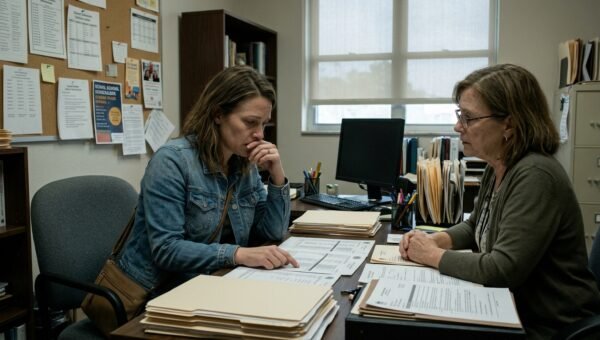
I called Mr. Bell back the next morning. He told me the account had been handled by a family firm for years, then transferred to another manager. He could see old transactions, but he couldn’t give me everything without a court order.
I asked if there was a chance the money had been moved to another account. He said he couldn’t rule it out, but he didn’t think so.
That was the first small thing I kept turning over. He didn’t think so.
I filed for a court order. It wasn’t a decision I made with a clear head. I was mad, and I was embarrassed, and some part of me still wanted the records to show a mistake. I didn’t want to be the person who made trouble for my family over something that might be explained with one phone call.
But I kept thinking about Evan’s face when he asked if his birthday money was coming. So I got a lawyer and asked the court to make the bank release the records.
While I waited, relatives called. My aunt said not to rush. A cousin said the trust had probably been “managed differently” than we’d understood.
Robert called me himself. He was my mother’s brother, the one who hosted Thanksgiving at his Florida house. He said he’d heard I was upset.
“Let’s not turn this into a family fight,” he said.
I asked if he knew why the trust was empty. He paused for just a beat, then said he didn’t know anything about the account. I believed him for maybe ten minutes. Then I remembered how often Robert used to say he knew everybody who handled the family money.
The court order came through, and the bank sent a thick packet of records. I opened it at my kitchen table after Evan had gone to bed. The pages had that dry copier smell, and a staple kept catching the cuff of my sweater. I don’t know why I remember that. I guess my mind needed something small to focus on.
The first withdrawals went back to 2002. One every month. Some were a few hundred dollars. Some were more. The dates stayed steady through changes in account managers and years when I barely thought about the trust at all. Each month, money moved out.
I started marking the entries with a yellow highlighter. My hand cramped. I’d do ten pages, get up to make tea, then sit back down and keep going. On the first night, I thought I was looking at a bookkeeping mess. By the third, I could see the pattern.
The transfer account numbers matched accounts tied to Robert. The payments went toward the mortgage and upkeep on his Florida place. I asked the lawyer to check the routing numbers independently. She did. There was no mistake.
For twenty-two years, Robert had taken from a fund meant for twelve kids. He’d used his position and his access to the people handling my grandfather’s estate to make the withdrawals look ordinary. He’d kept the house going with money that belonged to all of us.
And every Thanksgiving, we’d gone there.
I remembered the sunburned shoulders after long afternoons outside. The old plastic cups stacked by the sink. Robert carrying in a tray of food and saying he was glad the family could be together. I remembered thanking him for the weekend, because he made a show of paying for everything. We all thought the house was something he’d built through hard work.
He’d made himself the generous one.
That was the part I couldn’t get past. Not only that he took it, but that he let us sit in the house, year after year, and think it was a gift from him. I looked back through the statements and saw payments for repairs, insurance, taxes, and the mortgage. The same house we had treated as a family place had been kept afloat by the children’s money.
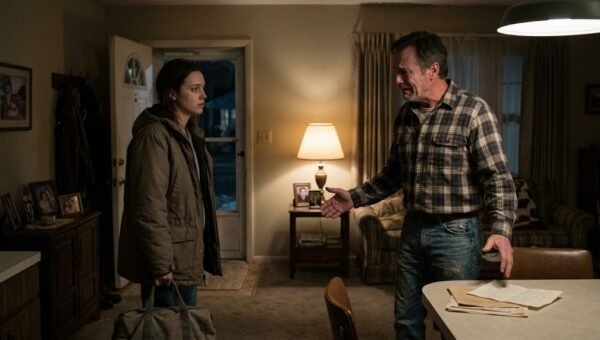
I wanted to call Robert right then. My lawyer told me not to. She said the records were strong, but I needed to let the court process work. So I waited, which was not my strong point. I kept the packet in a drawer and took it out more times than I can explain.
Christmas was coming. Robert was hosting again, though the gathering would be at my parents’ house this year because Grandma wasn’t up to traveling. Thirty-five of us were expected. I had no plan to confront him in front of everybody at first. I told myself I’d hand over the records privately.
Then my cousin called and told me Robert was saying I’d misunderstood the trust. He was telling people the money had been used for family expenses. That was when I stopped thinking a quiet conversation would help.
I printed the bank records and put them in folders. My lawyer made copies of the court order and the account tracing. I brought the original pages too. I was careful with them. Too careful, probably. I’d been taught to keep family matters inside the family, and I still felt like I was breaking some rule even though Robert had broken the one that mattered.
When I arrived on Christmas, the house smelled like ham and cinnamon. People were talking over each other in the kitchen. Robert had brought his usual easy smile, and I could feel myself slipping into the old role of acting grateful that he’d shown up.
Grandma sat in her wheelchair near the dining room. She was ninety-two. For months, she’d barely spoken. Some days she looked right at me and didn’t answer when I said her name. I hadn’t expected her to take part in anything that night.
I waited until the food was on the table. My hands were sweating, so I wiped them on my skirt before I stood. I said I needed to explain why Evan’s trust money was gone. The room got quiet, but not all at once. A fork touched a plate. Someone kept chewing, then stopped.
I put the court order down first. Then I opened the folders and laid out the monthly transfers. I showed them the dates, the account numbers, and the payments traced to Robert’s Florida house. I said it had started in 2002 and continued for twenty-two years. I told them all twelve grandchildren were supposed to receive $10,000 at eighteen.
Robert leaned back and shook his head. My aunt started to say my name, like she wanted me to stop before I embarrassed myself. I kept going. I showed the records matching the money to his accounts and to the house expenses.
Nobody could say it was a family expense after that. Not honestly.
My cousin put a hand over her mouth. One of my uncles asked how much had been taken. I said the trust had lost more than $400,000, including what it should have earned. Evan sat beside me without saying a word. I could see him staring at the papers, not at Robert.
Robert looked at the stack and then at me. “Your grandfather would have wanted me to enjoy life.”
I had expected anger. I had expected a denial. I hadn’t expected him to say it like he was explaining a harmless choice.
My grandmother moved.
At first I thought she was reaching for the table. Then she put both hands on the arms of her wheelchair and pushed herself up. My mother made a small sound. I reached for Grandma, but she waved me off.
She stood there, holding the table edge. It took effort. I could see her fingers shake against the wood. Nobody moved to help her. Not because we didn’t care, but because she was looking right at Robert and nobody wanted to get between them.
She spoke clearly.
“You stole from every child in this family,” she said. “You’re no longer my son.”
Robert started to answer, but she raised one hand. It was a small movement, and it stopped him.
Grandma had asked her lawyer to come to the house that afternoon. I hadn’t known. The lawyer stood near the doorway with a folder and explained that Grandma had signed the papers while she was able to understand what she was doing. The Florida house had been kept in her name after my grandfather died, though Robert had treated it as his and managed it for years. That was why she could transfer the deed.
I stared at the paper on the table. Grandma had signed it over to the grandchildren’s trust. She’d also signed a statement supporting the court case and disowning Robert in her will.
I don’t remember who started crying. I remember a chair scraping back. I remember Robert saying this was being handled too fast, and the lawyer calmly telling him the transfer had already been filed. The family didn’t turn into one united group that night. Some people stayed close to Robert. Some kept asking if there could be another explanation. There wasn’t.
The next few months were ugly and slow. Robert challenged the transfer. The records held up. The court ordered the Florida property sold, with the proceeds returned to the trust. The sale covered the stolen principal and the losses tied to it. The family firm was removed, and a new trustee was appointed with separate reporting to all twelve grandchildren.
Evan’s $10,000 was secured. So were the amounts for the other grandchildren, including the ones who had already turned eighteen. It took paperwork, lawyers, and more family arguments than I want to count. But the money was restored, and the Florida house was no longer Robert’s to use.
He stopped coming to family gatherings. I can’t say I missed his speeches about being the one who brought everyone together. I do miss the version of him I believed in. That’s an embarrassing thing to admit, but it’s true.
At the first Christmas after the sale, Grandma was back in her wheelchair. She spoke more, though not much. Evan sat beside her and told her about his classes. She listened, then squeezed his hand.
I kept thinking about my grandfather’s old promise, the one I’d repeated for years without checking what stood behind it. The trust wasn’t magic. It was just money that someone had to protect.
The Florida deed rested on the dining table, signed over to the grandchildren’s trust. This time, nobody called it Robert’s house.