The washing machine made a thump every time the hospital blanket bunched up. I remember that because I kept going back to push it flat, even though it was already clean. My mother-in-law, Mavis, had been dead since the day before, and I thought I could at least get her last blanket washed before I went back to her house.
I was still wearing the same gray sweater when I got there.
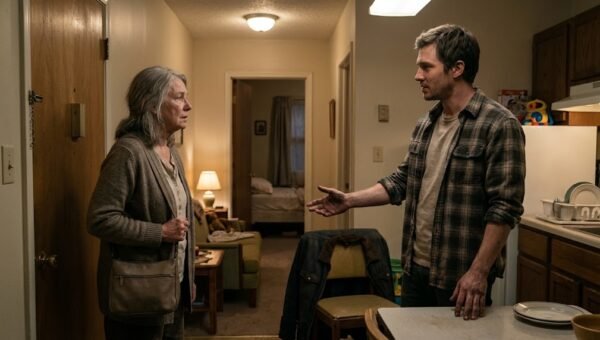
Dean, my husband, had called and said his brothers were sorting out a few things. By the time I arrived, Ron had taken the old oak side table, and Dale was pulling open drawers in the dining room. I stood by the kitchen doorway with my hands empty.
Nobody asked if I wanted help. I mean, I wasn’t expecting a parade. I’d spent enough years making myself useful without asking for one. But I thought I’d be allowed to be there while they went through Mavis’s things.
I asked about the small jewelry box on the dresser. Mavis had worn the same gold pin to church every Easter, and I’d helped her fasten it more than once when her fingers were stiff. Ron shut the box before I could pick it up.
“Blood family only,” he said.
Dean was in the hall. He heard him. He looked down at the stack of mail in his hands and didn’t say anything.
That’s the part I carried home. Not the pin, exactly. The fact that I’d helped pay for Mavis’s medicine for twelve years, and my husband couldn’t manage one sentence when his brother told me I didn’t count.
I went home without making a scene. I’m not proud that I stayed quiet, but I’d just come from the hospital, I was tired, and I didn’t want to turn Mavis’s death into a fight over a dresser and a jewelry box. I told myself grief made people act badly. That was the first excuse I gave them.
For twelve years, I’d paid the pharmacy bills. Dean said Ron and Dale were struggling and couldn’t afford their share. His words were usually, “They can’t afoch it,” which was how he said it when he was talking fast and trying to move on.
The amount changed from month to month. Some were around $80. Some were over $300, depending on what Mavis needed.
I kept the receipts in a folder because I did payroll for a trucking company and I like things to add up. By the time Mavis died, I’d paid $14,286.73.
I didn’t make Dean pay me back. I didn’t even ask him to split it with his brothers. I thought I was helping his mother, and I loved her. She used to call before her appointments and ask if I could pick up her prescription on the way home. Then she’d tell me to keep the change, even when it was a couple of dollars.
That wasn’t the only reason I paid. Mavis was kind to me in little ways. She remembered that I didn’t like onions in potato salad. She’d leave a mug of tea on the counter when I came over, with the bag already taken out because she knew I didn’t like it too strong. I counted those things. Maybe too much.
Dean always said his brothers would pay me back later. Later never came. When I asked once, he rubbed the back of his neck and said, “They’re having a rough year.”
There were a lot of rough years.
Three days after Mavis died, I was at the kitchen table sorting the laundry when my phone rang. The caller was the pharmacist from the place where I’d filled Mavis’s prescriptions for years. He said they’d found an envelope tucked into the base of her last medication bag.
“I think it belongs to you,” he said.
I almost told him to throw it out. I had spent three days trying to be practical. The funeral home had called twice, Ron had sent a text about the dining room chairs, and Dean hadn’t asked how I was doing. Another errand felt like one more thing I was expected to handle.
But I asked what was on the envelope. My name was there, in Mavis’s handwriting.
So I drove over.
The envelope had a pharmacy sticker on one corner and a crease across the middle. I don’t know why I remember the faint smell of the paper bag it came in, like dust and mint gum. I took it home and sat down at the kitchen table before I opened it.
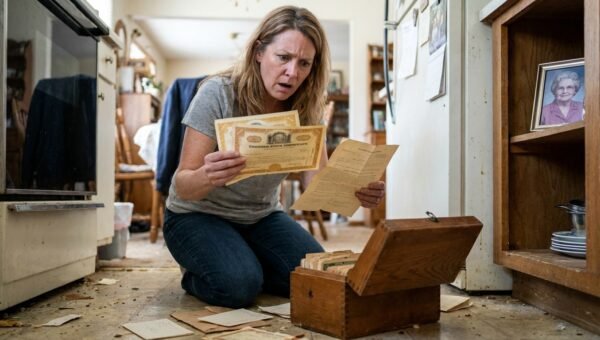
Inside were receipts. A lot of them. They were bundled by year, each group held with a rubber band that had gone brittle. The amounts matched the payments I’d made. The dates matched, too. Mavis had written short notes beside some of them.
“Paid by Ellen.”
“Dean said brothers can’t pay.”
“Insurance reimbursement received.”
I read that last one twice.
The receipts were folded around one notarized page. It was crisp compared with the rest, with Mavis’s signature at the bottom and the notary stamp in the corner. The page said she had kept a record because she knew her sons were telling me they couldn’t pay while taking money from her separate pension account and a medical insurance rider.
She’d written that Ron and Dale received regular payments and reimbursements meant to help cover her care. She’d also listed smaller cash gifts and a few things they’d sold from the house without telling me. I had no idea about any of it.
Mavis’s words were plain. She said her sons had learned I was dependable, and they used that against me. She said she’d let them keep asking because she was ashamed she hadn’t stopped it sooner.
I read that part again, too.
At the bottom, she said she wanted the truth made known, and that I was to handle what remained of her estate and keep the family heirlooms she had left behind for me. The notarized page backed up a will she’d prepared with her attorney. The furniture and jewelry weren’t Ron’s or Dale’s to divide among themselves.
I called the attorney listed on the page. I thought I was going to leave a message, but she answered. She told me Mavis had updated her estate papers several months earlier and that the document I had was part of the file. She asked me to bring the original in.
I did. She checked the signature and the notary stamp, then told me the brothers couldn’t just take the furniture because they’d arrived first. She also said the records were useful proof of where the money had gone. I went back to my car and sat there with both hands on the steering wheel.
I had thought I was paying for a family that needed help. It turned out the family had been letting me pay while they took money from the person I thought I was helping. I kept trying to find a softer version of that. I couldn’t.
At home, I laid the receipts out in date order. I checked the old texts from Dean, the ones I hadn’t deleted because I used to search them for appointment times. One message from eight years earlier said, “Dale’s short again. Can you cover Mom’s meds this month?”
Another, from the same week, said, “Don’t bring it up with Mom. She feels bad.”
I had transferred the money that afternoon. I could see the bank record on my phone. I was so sure I was doing the decent thing that I never asked why Dean was asking me not to tell his mother.
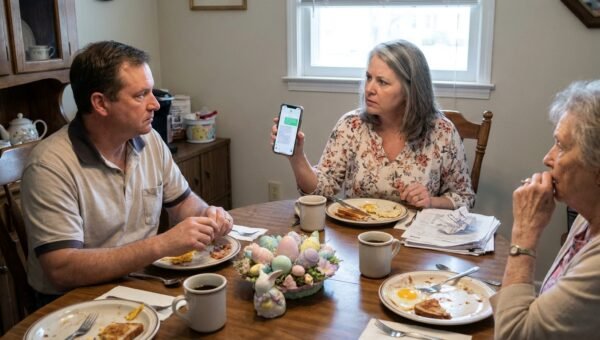
I called him and told him to come home. He asked what was wrong. I said I had the pharmacy receipts and Mavis’s notarized page. He got quiet, then asked if I could wait until after work.
“No,” I said. “Come home now.”
He arrived about forty minutes later. He set his keys down in the bowl and started to take off his coat. I slid the receipts toward him before he could sit.
He didn’t touch them at first. His eyes went from my name on the envelope to the notarized page. Then he picked it up and read the first few lines.
“You’re taking this the wrong way,” he said.
I pointed to the notes about the pension and insurance money. Then I showed him the old text messages and the bank transfers. I asked why he’d told me his brothers couldn’t pay when they were getting money from Mavis.
He said he hadn’t known about all of it. Then he said he knew they got some help, but thought it was for other expenses. Then he said they’d been under pressure and Mavis wanted to help them.
Each answer took something away from the one before it.
I asked him if he knew they were keeping the money while I paid the pharmacy. He didn’t answer. His hands were still on the paper, but he wasn’t reading anymore.
“Dean, I need you to answer me.”
“I knew they got checks,” he said. “I didn’t know it was that much.”
I told him I had twelve years of receipts. He looked at the total, $14,286.73, and pressed his lips together. Then he said he’d only wanted to keep the peace between his brothers and his mother.
I knew that was part of it. Dean hated a hard conversation. He’d rather let me cover the bill than tell Ron and Dale they were wrong. He probably thought I’d keep doing it because I always had.
That didn’t make it smaller.
I told him the brothers weren’t coming into our house again. I told him he could speak to them, but he couldn’t ask me to pretend this was a misunderstanding. I said our marriage was on the line because I couldn’t build a life with someone who kept handing me a lie and calling it family.
He started to say, “They’re my brothers,” and I cut him off.
“I was your wife while I paid those bills.”
He sat down then. He didn’t say much after that. For the first time in years, I didn’t fill the quiet for him.
The attorney contacted Ron and Dale about returning the furniture and other items they’d taken. She sent them the estate paperwork and the record of Mavis’s wishes. Ron called me that evening and said they’d misunderstood what Mavis wanted. Dale sent a text saying I was making things ugly.
I didn’t reply. Their misunderstanding had started when they shut the jewelry box in my face, and I was done paying for it.
They brought the furniture back over the next week. Ron carried in the oak side table without meeting my eyes. Dale left the chairs by the front door and said the attorney was making too much of a family matter. I didn’t argue with him. I had the paperwork, and he knew it.
The estate was handled through Mavis’s attorney, not by whoever got to her drawers first. I kept the heirlooms Mavis had named, including the gold pin. I didn’t take anything else. I didn’t need to prove I could take more.
Dean and I stayed in the same house for a little while, but the old way of doing things was gone. He apologized. He said he should have spoken up at the house and should have told me about the money. I believed he was sorry. I also knew sorry didn’t give me back twelve years of trust.
A few days later, I told him I wanted him to stay somewhere else while I figured out what I was willing to do next. I packed one overnight bag for him and set it by the kitchen table. I didn’t throw anything. I didn’t shout. I was just done making it easy for him to avoid the truth.
The pharmacy receipts sat in one neat stack beside Mavis’s notarized page. Dean’s packed bag was on the floor beside them.