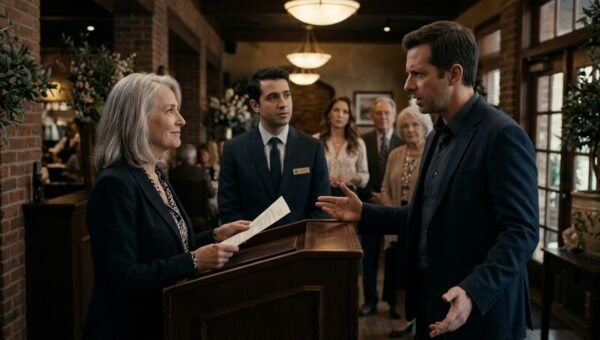
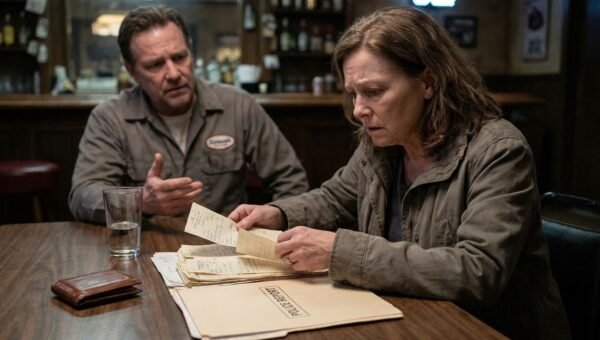
PART 1
The text came through at two o’clock on a Tuesday afternoon while I was potting geraniums on my back porch.
“We’ll be using your beach house for spring break, my kids and my mother are coming too. Fill the refrigerator before Thursday.”
I wiped damp potting soil off my thumb onto my apron and read the message twice. It was not written like a request. There was no “Would that be okay?” or “Do you already have plans?” Only an announcement, followed by an order about what I was supposed to buy.
My daughter-in-law, Alyssa, had been married to my son, Mark, for seven years. In all that time, she had never asked for permission to use anything of mine. If Mark wanted to borrow my lawnmower, he drove over and picked it up. If Alyssa wanted something, she simply informed me that it was happening.
The seaside cottage in Wells, Maine, had belonged to my late husband, Arthur, and me for over twenty-eight years. When Arthur died three years ago, keeping up with the property taxes, the winter roof maintenance, and the coastal insurance had fallen entirely on my shoulders. I lived an hour inland in a modest single-story house. The cottage was my quiet place. I worked four days a week at an independent hardware store in town to make sure I never had to sell it.
Alyssa, on the other hand, treated the cottage like a private resort she owned by extension.
Last summer, she hosted three of her sorority friends there for a long weekend and left two trash bags full of clamshells on the back deck in July heat. A raccoon had torn through them, and the salt air baked the smell into the cedar siding. I spent four hours scrubbing the boards myself because Alyssa claimed she had to get back to the city for an appointment.
I looked at the screen of my phone. Then I typed back one single word:
“No.”
Three minutes later, my phone vibrated in my palm. Alyssa had sent a laughing emoji, followed immediately by another line:
“We’re coming anyway. What are you going to do about it?”
That was Alyssa. She believed that because Mark was my only child, and because I loved my two grandchildren, her decisions carried no real consequences. She thought my boundary was just a polite protest I would fold on by morning.
I did not answer her text. Instead, I set my phone on the porch railing and finished potting the red geraniums. Then I went inside, washed the dirt from under my nails with warm water, and called my longtime neighbor in Wells, a retired master carpenter named Frank Caldwell. Frank had lived next door to our cottage since Arthur and I bought it in 1998, and he held a spare key for emergencies.
“Frank,” I said when he picked up on the third ring. “I need to ask you for a favor, and I need it done before Thursday morning.”
“Name it, Ruth,” Frank said.
“I need the locks changed on both exterior doors. Deadbolts and handles. Keypad deadbolts with a digital code.”
Frank paused, his voice dropping into that calm Maine cadence. “Did something happen over there?”
“Not yet,” I told him. “And I would like to keep it that way.”
Frank did not ask another question. He told me he had two commercial grade Schlage keypad sets in his workshop that he could install by Wednesday afternoon, and he gave me the total for the parts and labor, which was $420.
I transferred the money from my checking account before I went to bed that night.
On Wednesday afternoon, Frank texted me a clear picture of the front door with the new brushed nickel keypad securely in place, along with the master code he had programmed for me.
Thursday afternoon brought an overcast coastal sky and temperatures hovering right around fifty degrees. Around four o’clock, I was sitting at my kitchen table an hour away, sorting through bills, when my phone rang.
The screen lit up with Alyssa’s name.
I let it ring through to voicemail. Thirty seconds later, the screen lit up with Mark’s name.
I swiped the green bar and brought the phone to my ear. “Hello, Mark.”
“Mom?” Mark’s voice sounded strained, competing with the sound of coastal wind and a car idling in the background. “Where are the keys? Alyssa tried the brass key under the fake rock, but there is a brand-new keypad on the door, and the old front door key does not fit into the slot.”
“The old key does not fit because I had the locks replaced yesterday,” I said evenly.
In the background, I heard Alyssa’s voice clearly through the receiver. She was talking to someone in the driveway, sharp and irritable: “Just tell her to give you the code so we can unload the trunk. It’s freezing out here.”
“Mom,” Mark sighed, lowering his voice into that exhausted, pleading tone he used whenever he was caught between his wife’s demands and basic decency. “Why would you change the locks right before our trip? We have five suitcases out here on the gravel. Alyssa’s mother drove two hours from Portsmouth to meet us here. The kids need to use the bathroom. Just give me the code.”
“Mark,” I said quietly, “did Alyssa show you what I texted her on Tuesday afternoon?”
PART 2
There was a long silence on the line. The idling car rumbled in the background.
“She told me you were being difficult about buying groceries,” Mark finally muttered. “She didn’t show me any text.”
“She told me they were taking the cottage,” I said. “I texted her ‘No.’ She sent me a laughing face and asked me what I was going to do about it. So I changed the locks.”
“Mom, please,” Mark said, his voice rising in frustration. “You can’t do this right now. We’re standing on the porch. Her mother is sixty-eight years old, and her hip is bothering her. We’re already here.”
“Then you should turn the car around and take her mother out to dinner,” I replied. “Because you are not staying in the house.”
Before Mark could answer, the phone was torn from his hand.
“Ruth, stop acting ridiculous,” Alyssa’s voice snapped through the speaker, cold and sharp. “This is your family. Mark is your son. These are your grandchildren. You are sitting an hour away in an empty house while we are standing out here on the gravel. Give Mark the code right now.”
“Alyssa,” I said, keeping my breathing completely level, “you told me you were coming whether I liked it or not. You asked what I was going to do about it. Now you know.”
“We will call a locksmith,” she said, her voice shaking with anger. “We will have them drill the lock, and we will send you the bill.”
“If a locksmith touches that door, Frank is watching you from his front window, and he will call the local police department,” I said. “The deed to that house is in my name alone. You are not on the title, Mark is not on the title, and you do not have permission to be on the premises. If you try to force that door, you will be answering to the Wells police.”
I hung up the phone.
My hands were trembling slightly as I set the phone face down on the table, but I felt a strange, steady calm settle in my chest. For years, I had smoothed things over. When Alyssa had made snide remarks about my modest living room furniture at Thanksgiving, I had smiled and poured more coffee. When she had conveniently forgotten her purse at family dinners, I had quietly paid the bill. When she treated my home and my late husband’s sanctuary like her personal convenience, I had kept quiet because I did not want Mark to pull the children away from me.
I sat there at the kitchen table for twenty minutes. The silence in my house felt thick and heavy.
Then my phone buzzed again. It was a text from Mark.
“You really embarrassed me, Mom. Alyssa and her mom are furious. We had to book two rooms at the Anchorage Inn down the road. It cost $380 for the night. I don’t know what’s gotten into you.”
I did not reply.
An hour later, my phone pinged with a notification from the neighborhood group in Wells. Frank sent me a text:
“Car backed out and left at 4:35. Front porch is clear. I walked over and checked the latch. Everything is secure.”
“Thank you, Frank,” I wrote back. “I’ll be up tomorrow morning.”
I drove up to Wells early Friday morning. The coastal highway was mostly empty, the marsh grasses still pale brown from the long winter. When I turned down our gravel lane and saw the cottage sitting against the backdrop of the grey ocean, I felt an ache in my throat. Arthur had built the wrap-around porch with his own hands in the summer of 2004. He had sanded every plank of pine himself. The thought of Alyssa bringing strangers in to treat it like a cheap hotel had made my stomach turn.
I entered my code on the new keypad, heard the smooth click of the deadbolt, and stepped inside.
The air inside was cool and clean. The refrigerator was empty, save for a jar of mustard and an unopened carton of chicken broth I had left in October. I opened the windows to let the salt breeze blow through the living room, put on a pot of coffee, and walked out onto the porch.
Around ten o’clock, a blue crossover pulled into the gravel drive.
It was Mark’s car. But Mark wasn’t driving alone. When the doors opened, Mark got out of the driver’s side, and Alyssa’s mother, Evelyn, stepped out of the passenger side. Alyssa was not in the car. Neither were the children.
Mark looked exhausted. His shoulders were slouched, and there were dark circles under his eyes. Evelyn, a tall, stern woman who rarely spoke to me unless she needed someone to watch her miniature poodle during the holidays, walked toward the porch with her chin raised.
“Mom,” Mark said as he reached the bottom step. “We need to talk.”
PART 3
“You can come up on the porch, Mark,” I said, setting my coffee mug down on the small wicker table. “Good morning, Evelyn.”
Evelyn walked up the three wooden steps stiffly, leaning on her walking stick. “Ruth, what you did yesterday was completely uncalled for. Dragging me into your family disputes is childish. We had to spend nearly four hundred dollars on hotel rooms because you threw a tantrum over a text message.”
I looked directly at Evelyn. “Did Alyssa show you the text message, Evelyn?”
Evelyn hesitated, her eyes narrowing. “She said you were being territorial about the house.”
I picked up my phone from the table, unlocked it, opened the message thread, and held the screen out toward Evelyn.
“Read it,” I said.
Evelyn put on her reading glasses and squinted at the screen. She read the first message. Then she read my reply. Then she read Alyssa’s response: “We’re coming anyway. What are you going to do about it?”
Evelyn’s mouth tightened. She did not say anything for several seconds. When she looked up, her expression was no longer indignant; it was slightly uncomfortable.
“Alyssa said you had already promised Mark the cottage for the weekend,” Evelyn murmured, looking over at Mark.
“I never promised anything,” I said. “Mark never asked me. Alyssa sent that text on Tuesday afternoon while I was working in my garden. She didn’t ask. She ordered me to fill the refrigerator for her family, and when I said no, she dared me to stop her.”
Mark stared at his boots on the pine boards. “Mom, she was stressed about the kids’ school schedule. She didn’t mean it like that.”
“She meant exactly what she wrote, Mark,” I said, keeping my voice very quiet. “And the only reason she felt comfortable speaking to me that way is because you have let her do it for seven years.”
Mark flinched. He looked up at me, his eyes reddening. “I just try to keep the peace, Mom. You know how she gets when she’s upset. If I push back, the house becomes unlivable for a week.”
“Then that is a problem between you and your wife in your own house,” I said. “It is not a problem you get to transfer to my porch. Your father worked forty-five hours a week at the lumberyard to buy this land. We put twenty years of sweat into this cottage. I work four days a week right now to pay the town taxes so I can leave it to you when I die. But as long as my name is on the deed, nobody steps foot in this house without my permission. Especially someone who thinks they can order me around like hired staff.”
Evelyn cleared her throat. She shifted her weight on her walking stick. “Where is the bathroom, Ruth?”
“Inside, down the hall to the left,” I told her.
Evelyn nodded curtly, opened the screen door, and stepped inside, leaving Mark and me alone on the porch.
Mark leaned his back against the railing, crossing his arms over his chest. “She told me this morning that she’s never bringing the kids to see you again.”
I expected that to cut me, but strangely, the panic I used to feel didn’t come. I looked past Mark at the gray tide rolling over the rocks.
“If Alyssa wants to use my grandchildren as weapons because she wasn’t allowed to bully me, that tells you everything about her character, Mark,” I said. “And if you stand by and allow her to cut your mother out of their lives over a beach cottage lock, that will tell me everything about yours.”
Mark stared at me. He looked like he had been struck. “Mom, I love you.”
“I know you do,” I said. “But love without backbone doesn’t protect anybody. You’ve spent seven years being terrified of her moods, and all it’s done is turn you into an accomplice to how she treats your mother.”
Evelyn came back out onto the porch a minute later. She didn’t look at Mark. She looked at me.
“Ruth,” Evelyn said, her voice softer than before. “I apologize for my part in yesterday. I didn’t know the whole story. I told Alyssa she should have checked with you first, but she insisted everything was arranged.”
“Thank you, Evelyn,” I said. “I appreciate you saying that.”
“We’re going to pack up the hotel and head back to Portsmouth,” Evelyn said, glancing at Mark. “Come on, Mark. Let’s get the car.”
ENDING
Mark walked slowly down the porch steps behind his mother-in-law. When he reached the gravel, he stopped, turned around, and looked up at me.
“Are you staying here for the weekend?” he asked.
“I am,” I said. “I’m going to finish sweeping the porch and read a book.”
He stood there for another moment, looking like he wanted to say something more, but Evelyn tapped the car door, and he finally climbed into the driver’s side. I watched their car back down the long gravel driveway and turn onto the main coastal road until the red taillights disappeared behind the pines.
Alyssa did not call me that weekend. She did not call me the following week, either.
Two weeks later, on a Sunday afternoon, my doorbell rang at my inland home. When I opened the front door, Mark was standing there alone, holding a brown paper grocery bag.
“Can I come in?” he asked.
I stepped back and held the door open.
He walked into the kitchen, set the bag on the counter, and pulled out two large potted Boston ferns. “I saw these at the greenhouse on Route 1. I remembered you wanted a couple for the front porch in Wells.”
“They’re lovely, Mark. Thank you.”
He sat down on the wooden kitchen chair, resting his forearms on his knees. He didn’t make any excuses this time. He told me that they had been in counseling since that weekend. He told me that when they got home from Maine, he had finally told Alyssa that the way she spoke to his mother had to end, and that he wouldn’t defend her bad behavior anymore. He said it had been the worst argument they had ever had, but for the first time in seven years, he hadn’t backed down.
“She isn’t ready to apologize yet,” Mark said quietly. “She’s still angry.”
“I don’t need her apology right now,” I told him, pouring two glasses of water at the sink. “I just needed her to know that my life belongs to me.”
Mark nodded slowly. He took the glass from my hand and drank half of it.
“The kids asked when they can go back to the beach,” he said, looking up at me.
“Whenever you want to take them,” I replied. “You call me, you ask if the weekend is free, and if it is, I’ll give you the code.”
He smiled a small, tired smile, but it was the most genuine expression I had seen on his face in years. “Fair enough.”
Later that evening, after Mark had driven home to the city, I carried the two ferns out to my car and loaded them into the back seat. Tomorrow after work, I would drive up to the cottage, hang them from the porch beams Arthur had built, and let the salt wind rock them. The new digital lock on the front door was solid, the code was mine alone, and for the first time since my husband died, the quiet felt completely safe.