PART 1
I never thought I would be sitting at my kitchen table at sixty-eight years old, staring at a bank statement that made my hands shake so badly I could barely hold the paper. For seven years since Arthur passed away, I managed that house and every penny he left behind. It was not a fortune. It was $184,650 sitting in a steady account, plus the equity in the little brick house on Elm Street where we raised our two children.
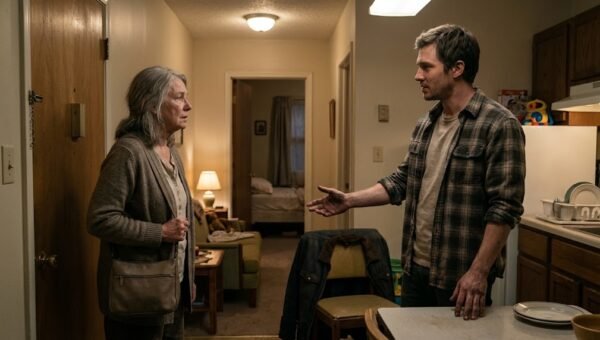
I thought I had everything locked down tight enough to keep me safe until the end. Then David came over on a Tuesday evening with his laptop open and a cup of coffee in his hand, looking like the responsible corporate manager he always fancied himself.
He sat down across from me, his sleeves rolled up, and pointed at the screen. He told me the interest rates were shifting and my current mortgage structure was draining extra money every month for no good reason. He said he had a contact at his bank, a commercial advisor named Greg, who could handle everything behind the scenes and drop my monthly payment by nearly three hundred dollars. All I had to do was sign a digital authorization form to let him act as my family representative so I would not have to drive downtown or deal with the endless phone queues. I trusted him.
He was my only son, he worked in finance, and I was tired of fighting paperwork on my own. I typed my initials where he told me to type them, watched him tap his mouse, and thought I had just made my retirement a little bit easier.
The trouble did not start with a bang. It started with a small letter I received about three weeks later from a title company in another county, thanking me for updating my home equity line of credit. I opened it while standing by the mail slot in the hallway, assuming it was some kind of cross-promotional junk mail or a clerical error from the refinance. I tossed it onto the side table and went about my day, canning green beans in the kitchen. But the phrase equity line of credit stayed in the back of my mind like a burr in a wool sock.
Arthur had taught me to pay cash for cars and keep a zero balance on credit cards, and we had paid off the mortgage five years before he got sick. Why would a refinance mention a line of credit that I never asked for?
Two days later, I called the bank number listed on the bottom of the statement. I waited on hold through three different automated menus before a woman with a sharp, tired voice came on the line. When I asked her to explain the new line of credit attached to my property, she asked for my account number and my Social Security digits. After a long pause where the only sound was the clack of her keyboard, she told me the account was not a standard refinance. She told me it was a $50,000 credit line drawn against the house six days after David brought his laptop to my kitchen table, and the primary beneficiary listed on the secondary disbursement account was David himself.
My chest tightened so hard I had to grip the edge of the counter to keep my balance. I told her there was a mistake, that I had only authorized a routine mortgage adjustment to lower my monthly payment. She sighed, a sound that told me she had heard this kind of story before, and informed me that my signature was attached to the digital authorization packet filed by my son. She offered to send me the complete packet by email, but I told her to mail paper copies to my box because my printer had run out of ink. I hung up the phone and walked into the living room, looking at the framed photograph of David at his college graduation where he looked so proud and clean-cut, and I realized I had no idea who he really was.
PART 2
The manila envelope from the bank arrived four days later, thick with certified copies and digital timestamps. I sat at the kitchen table with a yellow legal pad and a red pen, marking every page where my name had been copied or manipulated. David had not just set up a refinance. He had used my home as collateral to pull out cash, routing the funds through a secondary checking account that he opened using my name as the primary holder and his own email address for the notifications. The total amount drawn was $50,000, and the first monthly interest payment of $412 had already been automatically withdrawn from my primary savings account three days prior.
I did not call him right away. I knew if I called him while I was shaking, he would talk circles around me, use words like liquidity and restructuring, and make me feel like an ignorant old woman who did not understand modern banking. Instead, I drove down to the local branch of the bank in person. I brought my driver license, my original deed from when Arthur and I bought the house in 1984, and the printed packet David had generated. The manager on duty was a young man named Mr. Henderson who looked barely old enough to shave. He tried to tell me that because the digital signature matched my IP address during the session at my house, the bank considered the transaction fully authorized.
I looked him straight in the eye and told him that my son had been sitting at my table guiding my hands while the laptop was open, and that I never consented to any loan that put my home at risk. I asked him if his bank made a habit of opening secondary credit lines for elderly widows without a face-to-face meeting or a notarized witness. He shifted in his seat and suggested we look at the security logs. When he pulled up the IP details and the device identifiers, we found that the secondary account had been accessed twice more from an address across town, miles away from my house, late at night. David had not just tricked me once at my kitchen table. He had built a permanent pipe straight into my savings while I slept.
I spent the next forty-eight hours calling lawyers whose names I found in the local directory, but most of them wanted a retainer fee higher than the monthly grocery budget for half a year. Finally, an older attorney named Thomas Vance, whose office smelled of old paper and peppermint tea, agreed to look over my papers for a flat consultation fee. He adjusted his glasses, read through the bank packet twice, and told me the hard truth. He said I could either file a police report against my son for identity theft and fraud, or I could try to force David to sign a notarized promissory note and transfer the debt back into his own name before the bank initiated foreclosure proceedings on the missed payments. I sat in his office for an hour watching the ceiling fan turn, knowing that filing charges would tear the family apart forever, but letting him keep the money would mean losing the house Arthur built with his own hands.
PART 3
I called David on Friday afternoon and told him to meet me at the diner down the road from my house. I did not raise my voice or give him any warning about what I had found. When he walked in, he looked tired, wearing the same gray hoodie he wore when he came over with his laptop. He ordered a black coffee and asked me how my week was going. I pulled the manila envelope out of my large canvas bag, laid it flat on the formica tabletop between our coffee cups, and slid it across to him.
He looked down at the top page, where the bank logo and the loan authorization numbers were printed in bold black ink, and the color drained right out of his face. He tried to smile, a weak, crooked thing that didn’t reach his eyes, and mumbled something about how it was only temporary, how his business partner had left him in a bind with some payroll taxes, and how he intended to pay every cent back before I ever noticed a thing. He reached out to touch my hand across the table, but I pulled my arm back and rested it firmly in my lap.
I told him about my visit to the bank and my meeting with Mr. Vance. I told him he had forty-eight hours to go down to that bank with me, sign the paperwork to transfer the liability entirely to his own name, and clear my property of every single dollar he had stolen, or I would walk down to the police station with the certified packet and let the detectives handle the paperwork. He started to sweat, arguing that I was destroying his career and his reputation over a family misunderstanding, but he stopped talking when he saw the look in my eye. He knew I wasn’t bluffing. Arthur had raised me tougher than that, and David had finally pushed past the last boundary I had left.
The next morning, we met at the bank branch before it opened to the public, sitting at a small glass-walled desk with Mr. Henderson watching us in uncomfortable silence. David signed thirty-two different lines, transferring the $50,000 debt to a commercial loan under his own name with his own salary as collateral. When the final stamp hit the paper, Mr. Henderson handed me the amended deed showing my home was clear again. We walked out to the parking lot in total silence. David got into his car without looking at me, started the engine, and drove away without saying goodbye.
ENDING
I drove home alone, the morning sun glinting off the windshield of my old sedan. When I unlocked the front door, the house was quiet, smelling faintly of the lemon polish I had used the day before. I walked into the kitchen, set the manila envelope on the counter, and picked up the red pen I had used to mark the statements. I walked over to the desk in the hallway, opened the small drawer where I kept the stamp collection Arthur left behind, and slid the papers all the way to the back underneath a box of old photographs. Then I went to the stove, turned on the burner under the kettle, and waited for the water to whistle.