PART 1
My son stopped bringing my granddaughter over the second week of October, three days after I told him I would not lend him $30,000.
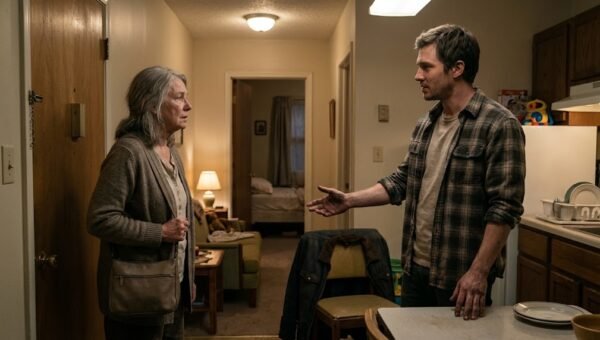
He didn’t yell when I said no at my kitchen table. He just let out a dry, disgusted little laugh, folded his hands over his truck keys, and looked at the braided rug under his boots. He said, “I thought family helped family, Mom. Guess that only goes one way.”
Then he stood up, walked out to his truck, and drove off without waiting for seven-year-old Lily to finish her glass of apple juice.
For two months, he ignored every single call. I left voicemails on Tuesdays and text messages on Fridays, keeping my tone cheerful and light because I knew what happens when grandmothers sound desperate. He left them on read. When Thanksgiving passed without a single word, I sat alone with a small turkey breast in a foil pan, telling myself he was just nursing his wounded pride. Todd had always been stubborn. When his father was alive, Todd would go three weeks without speaking if we questioned him about his car payments or his credit card bills. I convinced myself this was the same old pattern.
Then, on the second Tuesday of December, an envelope arrived in my mailbox.
It was a plain white business envelope, addressed in wobbly pencil to “Grandma Evelyn.” There was no return address.
Inside was a piece of lined construction paper, folded into quarters. Lily had drawn three figures in brown and purple crayon under a crooked roof. Across the bottom, written in the stiff, careful block letters her first-grade teacher was teaching her, was a single sentence:
“Grandma, Dad says you don’t want us anymore.”
The kitchen went dead quiet. My hand shook hard enough that the paper rattled against my coffee mug. I read those eight words four times. I picked up my phone and dialed Todd’s number right then, ready to have the ugliest fight of our lives. It went straight to voicemail after one ring. He had blocked my number.
I waited until I was alone in my living room with the clock ticking on the mantel. I didn’t call his wife, Megan, because Megan had stopped answering my texts back in November. Instead, I looked at the bottom of the envelope.
The postmark was stamped from our local postal branch, barely four miles from my house.
I picked up the landline and called Oakridge Elementary instead of my son.
I had been on Lily’s emergency contact card since kindergarten. When the school secretary transferred me through to Mrs. Gable, Lily’s second-grade teacher, I kept my voice steady. I told her I was just checking in on Lily’s winter schedule, trying to find out when the holiday concert started.
Mrs. Gable paused. The line stayed quiet for three long seconds.
“Mrs. Miller?” she asked softly.
“Yes, I’m here.”
Mrs. Gable lowered her voice, the background hum of children in the hallway cutting out as if she were cupping her hand around the receiver.
“I’m glad you called,” she said. “I was actually trying to decide whether to call you or the district office today. Lily has been coming to my desk every morning for the past two weeks asking for lunch money.
Her account is negative fifty-four dollars, and today she told me she didn’t have dinner last night because the refrigerator had a lock on it.”
PART 2
The pencil in my hand snapped against the notepad on my counter.
“A lock?” I asked. My voice sounded thin, like paper.
“She said there was tape or a lock across the handles so she couldn’t open it,” Mrs. Gable said, keeping her tone guarded and careful. “I gave her half of my sandwich today, Mrs. Miller. She ate it in four bites. When I asked her about her snack box, she told me her dad said they had to be careful with groceries until Grandma paid what she owed.”
My stomach dropped straight through the floor. The $30,000 hadn’t been for a new work truck or an expansion on his siding business like he claimed at my kitchen table. He was using a seven-year-old child as a hostage to squeeze it out of my savings.
“Is she in class right now?” I asked.
“She’s at recess,” Mrs. Gable replied. “Mrs. Miller, protocol requires me to notify the school counselor if an account stays delinquent and a child reports food insecurity at home. I haven’t filed the report yet because your family has always been so involved, but I cannot let tomorrow morning go by without taking official steps.”
“Don’t file it yet,” I said. “Give me two hours. I’ll take care of the account, and I’ll find out what is happening in that house.”
I didn’t wait. I grabbed my coat, my purse, and my checkbook, and I drove the six miles across town to the school.
Walking into the front office felt like stepping into an alternate reality. I paid the fifty-four dollars at the window, plus an extra two hundred to sit on Lily’s meal balance for the rest of the semester. The secretary gave me a sympathetic, tired look that told me she had seen this play out with plenty of other broken families.
Before I left the parking lot, I sat in my sedan with the heater blowing cold air against my knees. I looked at the check carbon. Todd had told me two months ago that his business account was temporarily frozen because of a dispute with a general contractor. He had looked me straight in the eye and said, “If I don’t get thirty thousand by November first, the crew walks and I lose the house.”
I had refused because my husband, Frank, had made me promise before he died of lung cancer that I would never touch the principal from his life insurance policy. “The house is paid off, Evelyn,” Frank had told me from his hospice bed. “That money has to keep you safe when you can’t work anymore. Todd will ask. You have to tell him no.”
I had obeyed Frank. And now my granddaughter was eating half of a teacher’s sandwich at ten in the morning.
I put the car in drive and headed toward Todd’s subdivision.
His house was a four-bedroom colonial with a two-car garage, sitting on a quarter-acre lot in one of the newer developments near the bypass. When I pulled into the asphalt driveway, Todd’s company truck wasn’t there, but Megan’s blue crossover was parked near the garage doors.
I didn’t knock politely. I walked up the three front steps and rang the bell three times, then pounded the wood with the flat of my palm.
The deadbolt turned. Megan opened the door three inches, the safety chain still latched. Her blonde hair was pulled into a messy knot, and she had an oversized gray fleece wrapped around her shoulders. She looked exhausted, her eyes shadowed with dark purple circles.
“Evelyn,” she said, her voice completely flat. “Todd told you not to come here.”
“Unlatch the door, Megan,” I said. “Right now. Or the school counselor calls Child Protective Services before three o’clock, and they won’t bother asking your permission to walk through that doorway.”
Megan’s hand froze on the edge of the frame. Her mouth opened, then closed. Slowly, she slipped the brass chain from the track and pushed the door open.
PART 3
The entryway smelled like sour milk and stale furnace air.
I didn’t take off my boots. I walked straight down the short hall into the kitchen.
The room was clean on the surface, but the details told the real story. On the center island sat a stack of unopened mail six inches high, most of it bearing bright yellow final notice stickers from the gas company and the regional water authority. And on the double-door stainless steel refrigerator, looped through the two curved handles, was an ordinary bicycle cable lock with a four-digit tumbler.
I turned around to face my daughter-in-law.
“What is that?” I pointed at the lock.
Megan didn’t cry. She just leaned back against the counter, crossed her arms over her chest, and let out a long, ragged breath. “He changed the code on it last Sunday. He said if we didn’t ration the food, we wouldn’t make it to January.”
“Where is the money, Megan?” I asked, keeping my voice low and dangerous. “He makes ninety thousand dollars a year on contract work alone. Where did thirty thousand dollars go?”
“There is no contract work,” Megan whispered. She looked toward the hallway, as if she expected Todd to materialize in the archway. “He lost the commercial license in August, Evelyn. He got caught using company funds for an online sports gambling app. DraftKings. FanDuel. Whatever else is on his phone. He lost forty thousand in four months, and then he took out three high-interest cash advances against the company van to chase it back.”
The words landed like lead weights.
“He told me it was a contractor dispute,” I said.
“He lied to you,” Megan said. Her voice cracked, the flat defense finally breaking down. “He lied to me, he lied to his crew, and he lied to his mother. He told me you had eighty thousand dollars sitting in an index fund doing nothing, and that you were hoarding it just to watch us struggle. When you said no, he told me we had to cut you off completely so you would feel guilty and break.”
“And Lily?” I stepped closer to her. “He told a seven-year-old girl that her grandmother threw her away?”
Megan looked down at her slippers. A slow red flush crept up her neck. “He said if Lily wrote you, you’d cave in forty-eight hours. He stood over her at the kitchen table and dictated the sentence to her, Evelyn. I tried to stop him. He told me if I touched the envelope, he’d pack his bags and leave us with the mortgage and the debt.”
“And you let him do it,” I said.
“I was scared!” she shouted, her voice echoing in the empty kitchen. “The mortgage is three months behind! The power was shut off for six hours last Thursday before he begged his brother-in-law for four hundred dollars! What was I supposed to do?”
“You call me,” I said. “You don’t starve a child to break an old woman’s bank account.”
Before Megan could answer, the front door rattled open.
Heavy work boots thudded against the laminate floor. Todd walked into the kitchen carrying a cardboard tray with two large iced coffees from the drive-through down the road. He had his sunglasses propped up on his baseball cap, looking like an ordinary man running morning errands.
He stopped dead when he saw me standing next to the island.
The color drained out of his cheeks, but within two seconds, his face tightened into a sneer. “What the hell are you doing in my house?” he demanded, slamming the drinks onto the counter. “I told you we were done talking until you decided to be a grandmother.”
“I was just at Lily’s school, Todd,” I said evenly.
His eyes flickered toward Megan. Megan looked away, staring firmly at the floor.
“I paid her lunch account,” I continued, not letting him speak. “And then I came over here and saw the bike lock on your refrigerator. The one you bought with the coffee money you still seem to have.”
Todd’s chest rose and fell rapidly. He took a step toward me, using his height the way he always did when he wanted to intimidate someone into backing down. “You don’t know anything about my finances. You’ve sat on Dad’s money for five years while inflation eats us alive. You could have written a check for thirty grand and never felt it. Instead, you’re spying on my kid.”
“Dad didn’t leave that money for sports betting,” I said.
Todd froze. His jaw clicked shut.
“Megan told me everything,” I said, pointing at the stack of collection notices. “The lost license. The cash advances. The forty thousand dollars you flushed into your phone while your daughter went to school hungry. You didn’t want thirty thousand to save a business, Todd. You wanted me to pay your bookies so you wouldn’t have to face what you did.”
“It’s a temporary slump,” he stammered, his bravado crumbling into an ugly, desperate whine. “I had a system. I was going to turn it around before Christmas. If you just covered the three loan payments, the house would be safe. You’re going to let them foreclose on your granddaughter’s home?”
“No,” I said. “I am not giving you thirty thousand dollars. Not today, not next week, not ever. If I give you that money, you will gamble it by Friday and come back asking for forty thousand in January.”
“Then get out,” Todd spat, his voice shaking with pure venom. “Get the hell out of my house. You’ll never see Lily again. I swear to God, you will never touch that kid.”
“If you don’t unlock that refrigerator right now,” I said, pulling my flip phone out of my coat pocket, “the school counselor is calling the state intake line in fifteen minutes. I will hand them the drawing you forced your daughter to write. I will hand them the records of her delinquent lunch balance. And I will tell the county investigator exactly what Megan just admitted to me.”
Todd stared at the phone in my hand. His breath came short and ragged.
“Unlock it,” I said.
He stood there for five seconds, his hands clenched into fists at his sides. Then, without looking at either of us, he reached into his pocket, pulled out a small slip of paper, and spun the dials on the tumbler. The cable clicked open. He ripped it off the handles and threw it into the sink.
ENDING
I didn’t take Lily that afternoon. The law doesn’t work like a television show; grandmothers cannot simply sweep in and take children because an adult son makes terrible choices.
Instead, I sat at Megan’s kitchen table while Todd slammed his truck door and sped away down the street. I stayed there until two o’clock. I helped Megan sort the mail into three piles: utilities, mortgage, and Todd’s personal loans.
I told Megan the terms plainly, without anger and without apologies.
I would not pay off Todd’s gambling debts. I would not give Todd access to a single dime. But I would pay the two months of mortgage arrears directly to the bank, and I would pay the electric and water bills directly to the utility companies, on one condition: Megan had to file for legal separation and petition the court for sole physical custody and child support. If Todd lived under that roof while running up secret debts, I would not spend one penny to keep the lights on.
Megan sat with her face in her hands for a long time. Then she nodded. “I can’t live like this anymore, Evelyn,” she whispered. “He took my wedding ring to a pawn shop three weeks ago.”
Two days later, Megan served him the separation papers when he came home to pack a duffel bag. He moved into a residential motel near the interstate, paid for by one of his few remaining friends.
The following Monday, I drove to Oakridge Elementary at three o’clock.
Lily came running out of the double glass doors, her purple winter coat zipped up to her chin, her heavy backpack bouncing against her shoulders. When she saw my silver sedan parked by the curb, she stopped in her tracks.
She walked slowly toward the car, her head tilted, clutching the straps of her bag.
I got out and opened the passenger door. “Come on, sweetie,” I said. “Grandma’s taking you for hot chocolate.”
She stood on the sidewalk for a second, looking up at me with large, serious brown eyes. “Dad said you were mad at us because of the money.”
I crouched down on the cold asphalt so I was looking right into her face. I reached out and tucked a loose strand of hair behind her ear.
“I was never mad at you, Lily,” I told her. “Not for one single second. Grown-ups sometimes make huge, terrible mistakes, and they try to blame other people because they’re ashamed. But I am your grandmother, and nobody gets to tell you I don’t want you.”
A small, quiet breath went out of her chest. She climbed into the front seat, set her backpack on the floorboards, and reached into her pocket. She pulled out a small, folded napkin from the cafeteria. Inside was an unopened package of peanut butter crackers from her afternoon snack.
“I saved this for you,” she said. “Just in case you were hungry.”
I took the crackers and put them in my coat pocket. “Thank you, baby,” I said. “Let’s go home.”
Todd hasn’t called me since December. Megan tells me he is working an hourly job for a roofing supplier two counties over, and the court ordered forty percent of his wages garnished for child support and state-mandated counseling. I don’t know if he will ever sit at my kitchen table again, and I don’t spend my nights wondering if he hates me.
Every Tuesday and Thursday afternoon, Lily does her homework at my counter while I chop vegetables for dinner. She keeps her crayon box in the bottom drawer next to the silverware, right where it belongs.