PART 1
For our twenty-eighth anniversary, I bought my wife, Carol, the good wool coat she had wanted for three years. It was hanging in the window of the boutique downtown in Casper, charcoal gray with heavy horn buttons, and it cost me three hundred and twenty dollars. I had saved the cash on the side out of my overtime checks from the propane plant.
When she handed me her gift across the kitchen table that night, it was wrapped in Sunday comic paper.
Inside was an old stoneware coffee mug. The glaze was crazed all over, the rim had two sharp little chips, and on the side was a faded decal of a brown trout that had half scrubbed off. A piece of masking tape on the bottom still had fifty cents written on it in black felt pen.
I had circled the Leopold rifle scope in the Cabela’s circular on the coffee table. I had left it open on the arm of the recliner for three weeks straight.
“Yard sale over on Poplar,” she told me, smiling with both hands wrapped around her tea. “I saw it on a folding table and thought of you.”
I laughed, because that was what you did when your wife of twenty-eight years gave you a chipped piece of junk after you handed her pure wool. But it burned my chest. It felt thoughtless. I put it on the counter, and the next morning after she left for her shift at the clinic, I shoved that ugly mug to the very back of the corner cabinet, behind the good ironstone plates we only used at Thanksgiving.
I told myself I would throw it away after a while so she wouldn’t notice.
Two weeks later, Carol woke up at five in the morning complaining of a cramp in her left calf. By seven, she was sitting on the edge of the bed trying to tie her work shoes when she took one ragged, gasping breath and collapsed sideways across the mattress. Massive pulmonary embolism, the ER doctor told me forty minutes later while I stood in the corridor with unlaced boots. Quick and cruel. Just like that, twenty-eight years ended on a rainy Tuesday morning before the sun even cleared the ridge.
The house went dead quiet. People brought casseroles and talked about God’s plan, and then after two weeks, everyone went back to their lives. I stayed in that house alone with thirty years of her presence. Her garden clogs sat by the back door. Her lavender hand cream stayed on the nightstand.
I couldn’t bear to touch any of it, and I especially couldn’t bear to look into that corner cabinet. Every time I reached for a glass, the shame of how mad I had been about that fifty-cent mug made my stomach sour. I hated that mug because it reminded me that the last feeling I had toward my wife before she died was petty disappointment.
Eleven months went by. It was late September, getting dark early, and the wind off the mountain was rattling the storm windows. I came in from stacking firewood and decided to fry a couple of eggs. I reached into the cupboard to pull down a dinner plate, but the sleeve of my heavy flannel caught the rim of the mug in the dark back corner.
It tipped, slid off the edge of the laminate shelf, and struck the cast-iron rim of the sink with a sharp crack.
It split into three large chunks and a scatter of gray dust.
I stood over the sink with my heart hammering against my ribs, furious at myself for breaking the last thing she ever handed me.
I reached down to gather the sharp pieces out of the stainless basin before they went down the drain.
That was when I noticed the bottom piece. The thick ceramic base had sheared straight across in a flat slab. Inside the hollow hollowed-out ring of the foot, completely invisible unless the mug broke open, something was wedged tight against the clay. It was a roll of stiff green paper, bound with a small yellow hairband Carol used to keep her bangs out of her eyes.
PART 2
My fingers were trembling so bad I dropped the piece twice before I managed to pry the roll loose.
It wasn’t paper money. It was a folded section of a three-part receipt from Mountain State Title and Escrow, dated four days before our anniversary, along with a small brass safe-deposit box key taped to a piece of yellow legal pad.
On the scrap of yellow paper, in Carol’s neat, slanted cursive, she had written:
“Box 412, First Interstate. For the hill. Don’t be mad about the mug, Jack. I needed something you wouldn’t take to work or leave in the truck. Happy 28th.”
I sat down at the kitchen table with the yellow paper between my palms, staring at the pieces of broken stoneware in the sink.
For the last twelve years of her life, Carol and I had one running argument that never completely died out: the forty acres on Beaver Rim. My grandfather bought that section of scrub juniper and rock back in 1948, and my father built a two-room hunting shack on it with salvaged railroad ties. When my dad got sick in 2011, my older brother, Wayne, handled the hospital bills by taking out a private deed of trust against the property through an outfit out of Cheyenne.
When Dad died, Wayne couldn’t pay it back. He told me the land was gone, foreclosed and sold off at auction to an out-of-state holding company. It broke something inside me. I stopped going up into the hills in deer season, and every time Wayne’s name came up, I shut down. Carol had always hated that silence between me and my brother. She hated that I felt cheated out of the only dirt my family ever owned.
The next morning at nine o’clock, I was waiting at the doors of the First Interstate Bank branch on Second Street. I had the brass key, my driver’s license, and Carol’s death certificate in my jacket pocket.
The woman who took me down to the vault was named Mrs. Arbuckle. She had worked there since Carol and I were in high school. She didn’t ask questions. She slid her master key into the upper lock, turned my small brass key in the lower one, and pulled out the long metal box.
Inside the box lay a single manila folder, thick and clean.
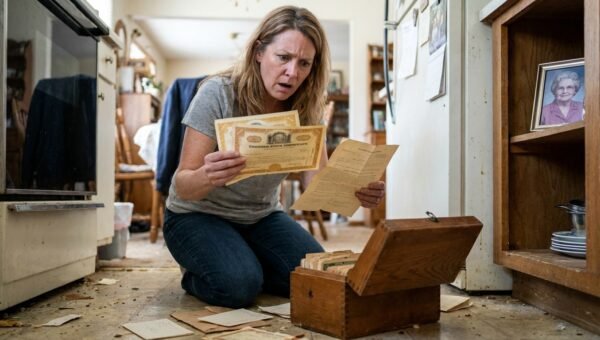
I opened it under the fluorescent bulb of the small viewing cubicle. On top was a cashier’s check stub for fourteen thousand dollars, drawn from an account I didn’t recognize. Underneath that was a recorded quitclaim deed from a lawyer in Cheyenne, transferring the title of the forty-acre Beaver Rim parcel out of the holding company’s name and back into mine.
Right beside the deed was a handwritten letter from Wayne. It was dated five weeks before Carol died.
PART 3
I read Wayne’s letter three times sitting in that gray metal cubicle while the air conditioner hummed overhead.
“Carol,” the letter started. “I don’t know what to say. You didn’t have to do this. I know Jack hasn’t looked at me straight in eight years, and I know I had no right to lose Dad’s ground in the first place. But if you’re serious about your mama’s old silver and the quilt money, I will sign whatever the lawyer draws up. I’m putting the paperwork in your name and Jack’s together. Tell him I’m sorry. I know I never said it.”
I leaned back against the fake wood paneling of the booth.
Carol’s mother had passed six years back and left her a walnut chest of sterling flatware and an antique quilt collection that had belonged to her grandmother. Carol always kept that chest under the guest bed. Two months before our anniversary, she told me she had loaned the chest to her cousin in Billings for an estate appraisal. She had lied to me. She sold her own family heirlooms, piece by piece, and gathered up every spare penny she had saved from forty years of clerical work to buy back my family’s mountain land from the debt collector.
Fourteen thousand dollars.
She had given me a fifty-cent chipped mug from a yard sale because she had spent every single dollar she possessed in the world to buy back my dignity. She had hidden the key in the only thing in the house she knew I would never give away, never pack into my lunchbox, and never break on purpose. She had planned to take me up to the ridge on Saturday, hand me the deed, and watch my face when I realized the family land was ours again.
She never got to Saturday. The clot took her on Tuesday.
And for eleven months, I had looked at that cupboard and remembered only the sting of a cheap gift.
I took the folder, walked out into the bright Wyoming wind, and got into my truck. My hands were shaking so hard I had trouble getting the ignition key into the slot. I didn’t drive home. I drove out toward Mills, past the refinery tanks, until I reached the single-wide trailer where Wayne lived behind the gravel yard.
His old blue pickup was parked by the propane tank. When I stepped up onto the wooden porch, the screen door was latched, but I could see him sitting at his kitchen table drinking instant coffee in an undershirt.
I knocked once. He looked up, squinting, and when he saw my face, his shoulders went tight. We hadn’t spoken more than ten words to each other since Carol’s funeral.
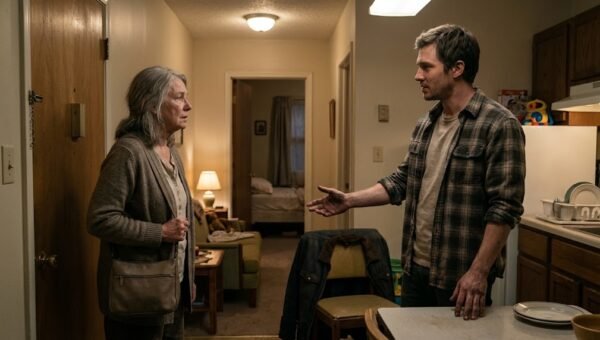
He pushed the door open, his eyes wary. “Jack. What’s wrong?”
I didn’t yell. I didn’t offer a speech. I just held out the manila envelope and the letter he had written her.
“I broke the mug,” I said. My voice cracked on the last word, and the wind caught the screen door, banging it against the jamb.
ENDING
Wayne looked down at the letter in his handwriting. His face didn’t twist up, but his chin started to twitch the way our dad’s used to when he was trying not to lose his temper or his nerve. He opened the screen, stepped out onto the porch in his socks, and sat down on the top step.
We sat there together on the rough wood for nearly an hour while the dust blew across the yard.
He told me how Carol had tracked down the Cheyenne attorney herself. She had called Wayne every Tuesday evening for four months, pushing him, gathering the old lien documents, finding out exactly what it would take to clear the cloud on the title. Wayne told me he had tried to refuse her money, but Carol had looked him in the eye across this very porch table and told him that Jack’s bitterness was eating a hole through their marriage, and she wasn’t going to let an old debt kill what was left of our family.
“She told me you were too stubborn to forgive me on your own,” Wayne said, his voice flat and quiet. “She said you needed the dirt back under your feet first.”
Two days later, on a clear, cold Sunday morning, Wayne and I drove my truck up the washboard road to Beaver Rim.
The old railroad-tie cabin was still standing, though the winter snows had pushed in the front porch roof and pack rats had nested in the rafters. The junipers had grown thick around the spring, and the barbed-wire gate was down in the sagebrush.
We spent the afternoon clearing out the rotten timber with a chainsaw and restringing the bottom two strands of wire along the road. Neither of us talked much about the past or the years we had wasted not speaking. We just worked until our forearms were scratched up from the brush and our backs were sore.
Before we left, I walked up to the flat rock outcrop behind the cabin where my dad used to sit with his binoculars before sundown.
I reached into my coat pocket and pulled out the heaviest shard from the broken mug, the one with the faded brown trout still visible through the cracked glaze. I wedged it deep into a crevice between the sandstone rocks where the wind couldn’t move it and the winter snow wouldn’t wash it down the hill.
I still reach for the cupboard every morning when I make the coffee. The shelf where that ugly mug sat for almost a year is empty now. But when I look at that empty corner behind the good plates, the sting is gone. All that is left is the plain truth of what Carol did for me, and the forty acres of Wyoming dirt that finally belongs to us again.