At 8:07 a.m., my phone buzzed against the pull-out couch, and I sat up so fast my graduation dress caught under my knee.
The bank text said, “URGENT: Large transfer request detected. If this was not you, contact us immediately.” I was still wearing the dress from the night before. There was frosting on one cuff, and one of my earrings was missing. I read the alert again, then called the private banker whose number I’d saved under his full name, just in case.
“Don’t approve anything,” Martin said when he picked up. “I’m looking at the request now.”
My parents’ living room was quiet except for the old air conditioner clicking on. I could hear my little sister, Tessa, moving around in the kitchen. I asked Martin what account the wire was going to. He paused before he answered.
“Crestline Holdings,” he said. “The request is for the full balance.”
That was the first time I understood why I’d moved the money the night before. It wasn’t a feeling I’d had. It was a choice I’d made, after weeks of small things I’d been trying to shrug off.
My grandparents left me $3,842,611.09. They’d built it over a long time and left it to me in a trust that kept my parents from controlling it. I was twenty-one now, and the inheritance became available to me when I graduated. My parents, Wade and Patty, had always treated it like money that would eventually belong to the family.
They didn’t say it that plainly at first. Mom asked whether I’d help pay off the house. Dad talked about fixing up a rental property. He said the money could give all of us “a real start.” Tessa was seventeen and still in high school, so I knew she was listening, even when she was looking at her phone.
The first clue I brushed aside came when Dad asked if I’d picked a bank yet.
“Grandpa already had a banker,” I said.
“That’s fine,” he said. “I just want to make sure you don’t get taken advantage of.”
I thought he was being a dad. I mean, he’d never been good with money, but I didn’t think that meant he was planning to take mine. He’d run up credit cards, borrowed against the house, and called each new idea “temporary.” He always made it sound like the bad numbers were just a rough patch.
Then Mom asked what I’d do with “our money” while we were loading folding chairs for the graduation party.
I corrected her. “It’s my inheritance.”
She gave me a look like I’d embarrassed her in front of the neighbors. “Nobody’s asking you to be selfish.”
I remember carrying those chairs into the garage and thinking I should’ve let it go. That’s how I was with them. I hated being called difficult more than I hated giving in.
The second clue came from Tessa. She asked if I still used the same PIN for my laptop and the bank app. I said no, because I’d changed the bank PIN months earlier. She laughed and said she’d only asked because Dad was trying to get into the printer settings on my old laptop.
I didn’t ask why. The laptop was still at my parents’ house, and I’d left it in the home office. I said I’d pick it up after graduation. Then I forgot.
I’d been working part-time at a grocery store while I finished school. I knew how to count a drawer and double-check a deposit slip. But I had no idea how to handle millions of dollars, and I didn’t want to fake it. So I called my grandparents’ estate attorney, Janice Bell, and asked her to explain what options I had.
She was plain with me. “Your parents can’t take the money just because they’re your parents,” she said. “But they can make a mess if they get access.”
I told her I didn’t think they’d try anything. She didn’t argue. She just asked me to call back if I changed my mind.
I called her back a week later.
By then, Dad had told two relatives he was “helping me look at an investment.” I hadn’t agreed to one. When I asked him what he meant, he said it was nothing set in stone, just a real estate deal with a friend who knew the Gulf Coast market.
“Your granddad would’ve wanted the money to help the family,” he said.
That night, I asked Janice to set up an irrevocable trust with an independent trustee. I’d be the beneficiary, but my parents wouldn’t be able to move money or make decisions for me. She went over the fees, the tax questions, and the parts I couldn’t undo. I read the papers twice, then asked questions until I understood them.
I didn’t tell my parents. I told myself it was because the paperwork wasn’t final. Truthfully, I didn’t want to see their faces when I said no.
At my graduation party, Dad gave a speech about how proud he was. Mom cried when I hugged her. Tessa took pictures and kept calling me “the rich graduate,” which made my cousins laugh. For a couple hours, it felt like a normal family party. I almost believed it.
Then Dad asked whether the bank transfer had gone through.
I was holding a paper plate with a slice of cake on it. “What transfer?”
He smiled too quickly. “The one we talked about. The real estate deal.”
“I never said I was doing that.”
His smile stayed there, but his voice changed. “Let’s not get into this now.”
So I didn’t. I took my plate to the kitchen. I can still remember the little wet ring the soda cup left on the counter, though I don’t know why that stuck with me.
Around midnight, while everyone was still talking in the backyard, I slipped into the home office and called Janice. The trust was ready. I signed the last papers on my phone, then approved the transfer with Martin. It took less than twenty minutes. The confirmation email came through while the party was still going on.
I didn’t feel brave. I felt like a person sneaking around her own house. I locked the laptop and left it on the desk.
That was the other clue I missed. The next morning, the bank’s alert showed the wire request had come from a device logged into the home office. Martin told me the bank had stopped it because it was a large request to a new recipient, and because the account was under extra review after the trust transfer.
“I need to lock down everything,” I said.
“I’m doing that now,” he replied. “No transfers without a call to you, and I’m removing the old device.”
He also told me the account name was Crestline Holdings, a limited liability company registered by my dad. I knew it was Dad’s company because he’d mentioned Crestline once, while talking about a property he wanted to buy. I didn’t know the account was tied to it.
Martin sent the timestamped log to Janice. I changed my passwords, turned off every shared login, and asked him to lock the old account. My fingers kept hitting the wrong keys. I had to slow down and start again.
Then the living room door opened.
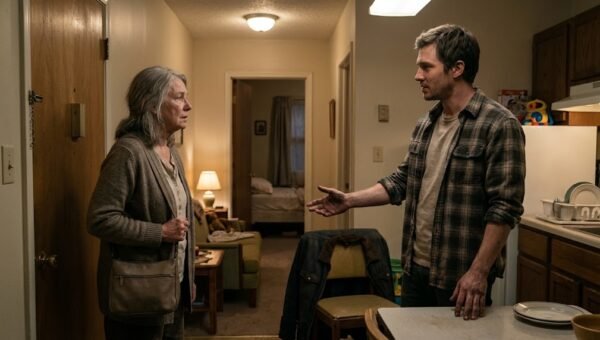
Dad came in first. Mom followed him, and Tessa stayed a few steps behind them. Dad had his work shirt on, tucked in like he was heading to a meeting. Mom carried a mug of coffee. She looked at my phone before she looked at me.
“Why won’t the transfer go through?” Dad asked.
I didn’t answer right away. My phone was still open to the alert. “What transfer?”
Mom set the mug down. “Wade, don’t start like that.”
Tessa’s eyes went to the laptop bag near the wall. I’d brought it back into the living room before bed. She looked away when I noticed.
Dad let out a breath. “It’s a family investment. We were going to put it back after the deal.”
“Put back $3.8 million?”
“It wasn’t going anywhere,” he said. “You don’t understand how these things work.”
I asked him how he knew the amount. He stared at me for a second, then said the amount was obvious from the estate paperwork. It wasn’t. The total had never been in anything he’d seen.
Mom sat beside me on the couch. “This is exactly why we wanted to help. You’re making a huge decision, and you don’t know what you’re doing.”
Tessa spoke from behind her. “Dad said the broker had already lined it up.”
Mom turned around. “Tessa, stop.”
That was enough to make me look at my sister. “What broker?”
She pressed her lips together. Dad stepped toward her, but she shook her head. I could see her trying to decide whether telling the truth would make things worse for her.
“Mr. Voss,” she said. “Dad said he’d get the money moved once you graduated.”
Dad’s face changed. Not much. Just enough.
I asked who Mr. Voss was. Dad said he was a real estate broker with an investment opportunity. I asked why the wire was going to a company Dad owned. He said Crestline was just holding the money until the deal closed.
“Martin says the bank stopped a request for the entire balance,” I said. “From the home office laptop.”
Dad rubbed both hands over his face. “We were trying to protect you from making a bad choice.”
I said, “You were trying to get me to sign under pressure.”
He looked at Mom, not me. “Voss said once she turned twenty-one, she could approve it.”
There it was. The thing they’d kept just out of reach. They hadn’t only been waiting for me to graduate. They’d talked to a broker, set up a destination account through Dad’s company, and assumed I’d be too young or too confused to stop them. The wire request wasn’t the start of a family investment. It was the first move in a plan they’d already made.
Mom’s voice got soft. “We thought this was best for all of us.”
I wanted to believe her. That’s the part I’m ashamed of. For a second, I really did want to believe they’d made a bad choice because they were scared about money and thought I’d forgive them later. But they’d used my old laptop. They’d waited until I graduated. They’d involved Tessa. That was a lot of steps for a misunderstanding.
“Show me the paperwork,” Dad said.
I had Janice’s signed trust documents on my phone. I opened them and read the parts that mattered. The inheritance was in the trust. The trustee controlled it. My parents had no authority over it, and no one could reverse the transfer by calling the bank and pretending to be me.
Dad read the screen, then pushed the phone back toward me.
“You went behind our backs,” he said.
“I did.”
Mom’s voice went sharp. “After everything we’ve done for you?”
I looked at her. My graduation dress was still creased from sleeping in it. There was frosting on the cuff. I’d been wearing it while they tried to move the money.
“I’m not giving you access,” I said. “There won’t be another conversation about it.”
Dad called me ungrateful. Mom said Janice had filled my head with nonsense. Tessa started crying, then said she hadn’t known the money was going to be taken. I believed she’d been pressured. I also knew she’d helped them get near my laptop. Both things could be true.
I told her I was sorry she’d been put in the middle. I didn’t say it was all right. It wasn’t.
Janice had the bank freeze the old credentials and sent the transaction log to the bank’s fraud team. The attempted wire was canceled. The trustee confirmed the inheritance was secured, and Janice made sure any future change would require independent review. I gave the bank the device information and the name Tessa had shared. They opened a fraud case and told me not to contact the broker myself.
I removed my parents from every account where they had any access. There weren’t many, but I checked each one twice. I changed my mailing address, arranged to have the last of my things sent to a friend’s apartment, and booked a room near campus for the week.
Dad said I was throwing away my family over money. I said I was leaving because they’d tried to take it.
There wasn’t much else to say. I packed my clothes, my laptop, and the small box of things my grandparents had left me. Mom didn’t come to the door. Tessa did. She hugged me without asking, and I hugged her back.
I moved into a small apartment later that summer and started work in an office near campus. The trust paid for school and basic expenses through the trustee, not a pile of spending money I could hand over when someone asked. I still have no contact with my parents. Tessa and I exchange a few messages, though we haven’t figured out how to talk about that morning.
I left the house in the same graduation dress. On the front step, I unzipped it enough to breathe, and the trust confirmation email was safe in my pocket.