Grant’s last ordinary complaint that night was about the valet parking his car too close to the hedge. He said it while we were standing near the front steps of the estate, and I remember thinking that even the cars had to be arranged so people could see his.
A little later, his mother took dinner away from my daughters.
For eleven years, the Holloways called my work a little job. They said it like a joke everyone was supposed to share.
I let them. I know how that sounds. I could’ve corrected them sooner, but I liked having one part of my life they didn’t know how to reach.
The party was at a big estate outside Potomac. Grant had just been promoted, and his company had invited clients, coworkers, and half the people who liked to be photographed beside a champagne glass. There were cameras by the front entrance. Grant knew how to find them.
He’d spent the drive telling me who was important and where I should stand when the speeches started. I wasn’t supposed to wander off. I wasn’t supposed to talk business with his coworkers because, according to him, I didn’t know enough about it. My two daughters, eight and ten, were mostly trying to stay near the food.
Constance Holloway was there in a pale blue dress, greeting people like she’d personally arranged the whole evening.
She’d always been good at making a small insult sound like helpful advice. When I mentioned a new property manager I’d hired, she asked if I was still “playing office at the kitchen table.” Grant laughed. I laughed too, though not because it was funny.
I had started managing small commercial buildings before my oldest was born. My first office was a desk in our breakfast nook, with a printer that jammed if I fed it more than ten pages. The work grew slowly. I found owners who needed someone to collect rent, handle repairs, and keep tenants from walking away. Later I started buying properties myself.
I used money from an inheritance my grandmother left me. I kept it separate, hired an accountant, and read every document before I signed it. I’m not saying I had some grand plan from day one. I was scared of wasting the money, so I learned.
Then I bought a small strip of shops. Then another building. Then a few houses. The little job became a property firm with staff and leases and more meetings than I ever wanted.
Grant knew I worked. He just didn’t ask what I did, and I stopped offering information to someone who made a face when I used the word acquisition. I wasn’t proud of that part. I wanted him to see me. I also wanted him to keep underestimating me. Both things were true.
The girls were seated at a table with me while the adults moved around the room. Someone had brought them dinner, and they were eating quietly. My youngest had sauce on her sleeve. My oldest was telling her not to wipe it with the napkin because it would make the stain worse. I was reaching for a roll when Constance came over.
She picked up my younger daughter’s plate first. Then she took the other one.
“They’ve had enough,” she said.
Both girls looked at me. They hadn’t finished. There was still food on the plates. My youngest looked embarrassed, like she’d done something wrong by being hungry in front of all those people.
I looked at Grant. He was close enough to hear. He glanced at the plates, then at me, and said, “Don’t start anything.”
That was the part that stayed with me. Not because it was new. Because it wasn’t. I had heard some version of it every time I was expected to swallow something and help everyone else keep their evening pleasant.
I could have argued with Constance. I could have embarrassed her in front of her friends. I didn’t. I put my napkin on the table, took one daughter’s hand, then the other’s, and walked toward the front door.
Behind us, I heard Grant laugh. Not loudly. Just enough. He thought I was making a point and would come back once I’d cooled off. That was what I’d done before, in smaller ways.
Outside, the girls were quiet. I asked if they were hungry, and both nodded. My oldest said she was sorry. I told her she had nothing to apologize for. I don’t remember the drive to the house clearly, except my youngest asking if we could stop for fries and me saying yes.
The house was ten minutes away. Grant didn’t know I owned it.
I’d bought it three years earlier through a company registered solely in my name. It was near the estate, but not close enough that anyone at the party would have thought to look for me there. I’d been fixing it up slowly and using it as my own place when I needed quiet. I hadn’t hidden it because I thought the house was shameful. I hid it because I didn’t trust Grant to leave it alone once he knew.
I fed the girls fries and toast. They were tired, and I didn’t want them to spend the night thinking they’d caused a fight. I told them we were staying there. My oldest asked if Dad was coming too. I said no, not tonight. She nodded and went to brush her teeth.
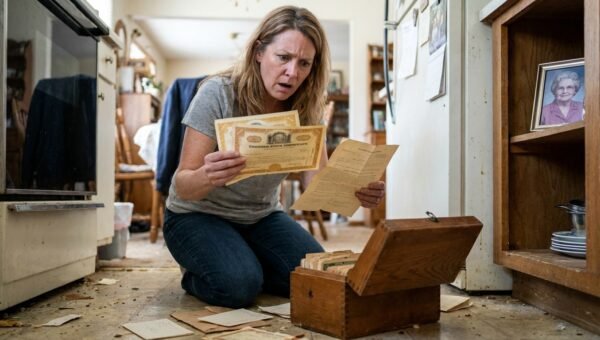
I got them settled, then sat at the kitchen island with my laptop and the folder I kept in a locked drawer. I had the original deed, bank statements, company records, and copies of the leases. I also had the papers my lawyer had prepared after I finally said I wanted to leave Grant.
The next morning, I made coffee and set everything out.
I’d been putting this off for months. Not because I thought Grant would change, exactly. I kept thinking I could wait until the girls were older, or until his promotion settled, or until there was a better time. There wasn’t going to be a better time. There was only the night Constance took dinner away from my children and Grant told me to be quiet about it.
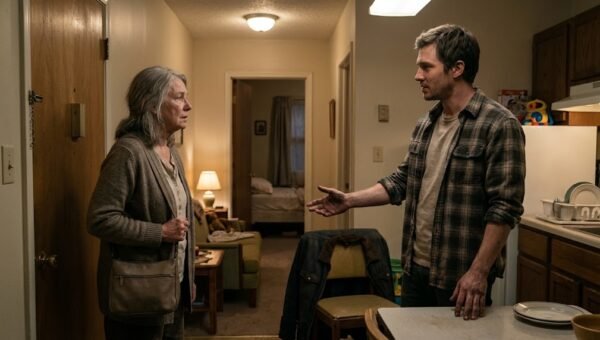
At 8:16, I heard a car pull into the driveway. Grant came to the door without calling first. He looked irritated, like I’d made him waste part of his morning. I opened it and stepped aside.
He walked in, saw the papers on the island, and asked what I was doing.
“Getting organized,” I said.
He saw the deed first. He picked it up and read my name. Then he checked the address, as if that might change it. His mouth opened, but for a second no words came out.
“You own this?” he said.
“Yes.”
He looked past me at the kitchen, then back at the paper. He asked how long I’d had it. I told him three years. He said I’d been lying to him. I said I’d been keeping my property separate, which was not the same thing as taking his money or using his credit.
He flipped through the statements. I watched his face change when he saw how many properties there were. The first deed was only one address. The records behind it showed the rest. Several commercial buildings. Rental houses. The company I’d built. The leases and accounts in my name.
He recognized one address. His office building.
Grant’s company had been operating out of that building for six years. My firm owned it. His company had a lease with my property company, and the lease had been renewed twice through my manager. Grant had never read the paperwork closely enough to notice whose name was on the ownership records. He’d assumed the building belonged to someone else and that I was too busy with my little job to know anything about it.
He looked at me and said, “You own the building my office is in?”
“I do.”
He sat down hard in the chair. I didn’t feel happy watching him. I felt tired, and a little ashamed that some part of me had wanted this exact look on his face.
Then he found the business summaries. My income, the value of the properties, the debt, which was low because I’d paid down each purchase carefully. His own life was built on loans and company borrowing. His promotion came with a raise, but his firm had taken on more debt than it could comfortably carry. The company’s rent mattered. The building mattered. The things he’d called his were often things he was still paying for.
“Why didn’t you tell me?” he asked.
“You never asked.”
He said he’d thought I was making a little money on the side. I told him I’d heard him call it that for years. He said he’d been trying to keep me from getting overwhelmed. Maybe some of him believed that. Grant liked being the person who knew how the world worked. He didn’t have to plan to hurt me for the result to hurt.
He reached for my hand. I pulled it back.
“Last night was a mistake,” he said. “Mom shouldn’t have done that.”
I agreed with that much. But he didn’t stop at an apology. He said I shouldn’t have walked out in front of all those people. He said his mother had been tired. He said the girls would have gotten more food. He said we could go back home and talk without making this bigger than it needed to be.
I asked him which home he meant.
He rubbed his forehead and said, “You know what I mean.”
I did. He meant the life where I made things easy for him. The parties, the family dinners, the little comments I pretended not to hear. He wanted the house and the daughters and the wife who could be moved along when she became inconvenient. He also wanted to know what I planned to do about his company’s lease.
I told him I wasn’t going to use the lease to punish him. My lawyer would review everything, and the company would get the same notice and choices any tenant got. I wasn’t going to hand him my assets, either. My inheritance and the property I’d built with it were mine. The divorce papers were already ready.
He read the first page. Then he said, “You’re really doing this?”
“I am.”
He started to say he could fix it. I told him I didn’t need him to fix last night. I needed him to understand I was done asking permission to protect my daughters.
He asked if Constance could talk to them. I said no. Not now. If the girls wanted contact later, we’d deal with that then. He told me I was cutting his mother out over one dinner. I said it wasn’t one dinner. It was eleven years of watching her treat my children like they needed to earn a place at the table, while he stood there and told me not to make trouble.
I didn’t raise my voice. I didn’t have to. The papers were between us, and he knew the answer wasn’t going to change.
Grant asked if he could stay while we talked. I said no. He asked if I was going to make him leave in front of the neighbors. I said I wasn’t making him do anything. I was asking him to go.
He stood there a moment longer, then put the deed down. His hand shook a little. He left the divorce papers on the island and walked out through the front door.
I filed for divorce that week. My lawyer handled the property records and the financial disclosures. Grant’s company kept its lease while the terms were reviewed, because I wasn’t trying to wreck a business just to make him feel what I’d felt. The divorce took time. There were arguments and forms and a few attempts to call the girls without asking me first. I kept the boundaries clear.
I didn’t go back to the party. I didn’t call Constance to explain myself. I’d spent a long time trying to make my choices sound reasonable to people who had already decided I was beneath them.
The girls had breakfast with me at the kitchen island the morning Grant left. I poured coffee into my chipped blue mug and made them toast. They were still sleepy, and my youngest had the same sauce mark on her sleeve from the night before. I washed it out later.
When Grant’s car backed down the driveway, my oldest watched from beside me. I didn’t tell her what to feel. I just kept one hand on her shoulder and let her watch until the car turned out of sight.
Then I brought the girls their coffee-free mugs of warm milk, and we sat together while the morning sun reached the lawn of the house I owned.