I had one hand on the back door when I saw the pruning crew coming up our orchard road in shirts with our name on them. Thomas was sitting near the kitchen window, still sore from bypass surgery, and he squinted at the logo on the clipboard one of them carried. “That’s my drawing,” he said. By then, Kendra had been gone less than a day.
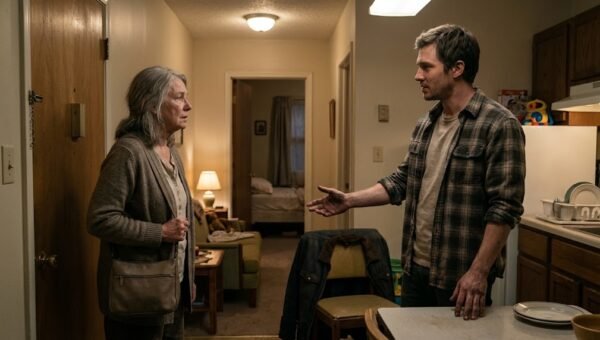
The night before, she’d come to the house with a clipboard and a list of repairs.
She said she could get some work handled while Thomas recovered. I was grateful at first. Then I saw the bank form tucked behind the list. It asked me to give her authority over the farm account. I told her I wasn’t signing anything I hadn’t had time to read. She packed her bag and left before dinner.
I didn’t call the crew off right away. I walked out to the row closest to the house, where the men were unloading their tools, and asked who’d hired them. The foreman, Jesse, took off his gloves. “Kendra booked us,” he said. “We’re here for the winter pruning.” I asked him to stop until I saw the work order. He did, without arguing.
The orchard had been ours for thirty years. Thomas and I had worked here together before we ever called it ours, and every tree came with a memory he could place better than I could.
Kendra knew every row, too. She’d grown up helping with harvest, but she’d said for years that she would never take the orchard over. I believed her. Maybe I wanted to believe her, because I didn’t want her to feel trapped here.
Jesse opened his binder on the hood of his truck. The invoice showed that the crew had been paid in full. Not from our farm account. Kendra’s name was on the agreement, and the payment had come from her personal card. I read it twice, then asked Jesse if the crew could wait until I checked with Thomas. “Of course,” he said. “We can stand by.”
That answer made me feel worse, not better. Kendra had arranged all of it before she came asking for account authority. I walked back to the house with the invoice folded in my hand. Thomas was still looking at the logo. The shears were drawn at an angle, with one handle slightly crooked.
I remembered him sketching that on the first harvest crate we painted, though I hadn’t thought about that crate in years.
“That’s not a new logo,” he said. “It’s mine.”
I was upset. I won’t pretend I was calm. I had been watching Thomas come home from the hospital with a pillow pressed to his chest, trying to climb the three steps to our kitchen without showing how much it hurt. The last thing I wanted was a business decision sprung on me while he was still healing. But I also couldn’t explain why our daughter had put her own money into pruning trees she’d spent years saying she didn’t want.
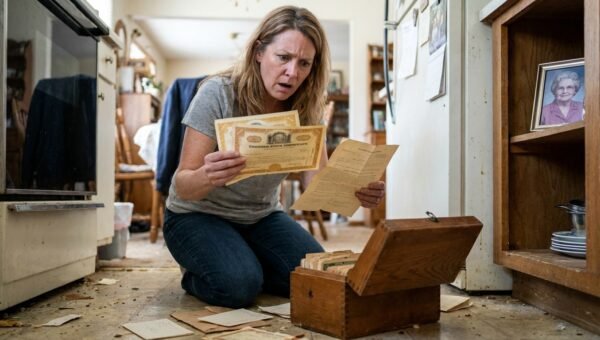
Thomas couldn’t go out to the office, so I got the keys and checked the files myself. Kendra’s old school project folder was stuffed behind a stack of harvest records. Inside it, I found state registration papers for an agricultural LLC using our orchard name and Thomas’s shears mark.
There was a grant application, too, with a note about a preservation deadline. I had no idea she’d filed any of it.
The papers made me angry all over again. She’d put our name on an official business before asking us. Then I found the tax notices. Two were overdue, and there was a lien notice for one of the older pieces of equipment. I knew we were tight on money. I’d been telling myself we could get through the season and catch up. I hadn’t known how close the farm was to losing ground.
Thomas read the notices slowly. He didn’t say much. He’d always been the one to keep the bills in order, but the last six months had been hard on him, and he’d let some things sit. I’d let them sit, too. We both had a habit of saying the orchard was fine because saying otherwise felt like inviting trouble.
“I should’ve told you,” I said.
He rubbed his thumb over the edge of the paper. “We both should’ve looked.”
I didn’t want to call Kendra and start a fight over the phone. I also didn’t want to sign anything just because I was scared. So I put the documents in a folder and drove into town to the county extension office. The woman there confirmed the grant was real and that Kendra had applied before the annual deadline. The application was conditionally approved, but the orchard needed to be registered as a business, and there were steps we had to finish before the grant could be released.
After that I went to our bank. I asked for the manager, whose name was Raul, and showed him the form Kendra had brought. He looked it over, then set it flat on his desk. “This isn’t a deed,” he said. “It doesn’t give her sole control of the farm account.” It was a dual-signature agreement for an escrow account to manage the matching grant funds.
I was embarrassed by how fast I’d decided what the form meant. I still thought Kendra should have explained it before asking me to sign. But she hadn’t tried to take the land or the money for herself. Raul confirmed that she’d never asked for sole withdrawal authority. The paperwork required both Thomas and me to approve the arrangement.
On the drive to Kendra’s apartment, I kept thinking about the way she used to stand by the sorting table, putting the bruised apples in a separate bin. When she was about eleven, she’d told me she wasn’t going to spend her life working in the orchard. I’d said, “That’s fine. You can do whatever you want.” I meant it. But maybe part of me had always hoped she’d change her mind.
Kendra had a degree in agricultural logistics and a job in the valley. I knew she was good at her work. I didn’t know she’d used those skills to build a plan for us. I didn’t know she’d found the tax notices during a holiday visit six months earlier, or that she’d been trying to help while we kept telling ourselves we were managing.
She opened the apartment door and looked at the folder in my hand. “If you came to tell me I can’t use the name, I know,” she said. “I’ll fix it.” She stepped back to let me in, but didn’t offer me a chair. I placed the crew invoice on her table.
“I came to ask why you paid them yourself.”
Kendra glanced down at the bill. “I had to hold the schedule,” she said. “If we missed the winter cut, the grant wouldn’t help the crop this year.” Her voice was steady, like she was giving a report at work. “I used my savings and a credit card. I thought I could explain once it was done.”
“That isn’t how you explain things to your mother.”
“I know.”
She looked as if she was ready for me to accuse her of taking over. I had planned to ask why she registered our mark without us. I still wanted to ask. But with the invoice between us, I couldn’t make myself pretend she’d done all this for some selfish reason.
“I’m grateful you got the crew here,” I said. “I’m not grateful you treated us like a company you had to buy.”
She pressed her lips together and turned toward the sink. For a few seconds, she didn’t say anything. Then she wiped at her face with the heel of her hand.
“I thought Dad might die,” she said. “I was sitting in the hospital and you kept telling me everything was fine. I knew about the taxes. I knew about the equipment. I didn’t know how to tell you without making you feel worse.”
I was quiet. I hadn’t wanted her to see me frightened, so I’d acted like I had every bill under control. She’d taken that as a reason to do it all herself. I could see how that happened, even if it didn’t make the way she’d handled it all right.
“I wasn’t trying to take your place,” Kendra said. “I was scared we’d lose the orchard, and I just kept doing the next thing.”
“I know,” I said. “But you can’t ask for our signature after you’ve already made every decision.”
“I know,” she said again.
I told her I wasn’t signing away ownership. She said she wasn’t asking for that. I told her I’d checked the form with Raul. Her shoulders dropped a little. Then I offered a real partnership, not a blank check. Kendra could handle marketing, logistics, and grant reporting. Thomas and I would keep the deed and the right to say no to changes in how we ran the farm. Any farm account expense over five hundred dollars would need two signatures.
She read the form again at my table. This time we went through it line by line. She asked questions. I asked some, too. There was no sudden hug or easy fix. We had both been proud, and both of us had used that pride to stay quiet when we should have talked.
The crew finished the winter pruning on schedule. Thomas watched from the path when his strength allowed, and Jesse showed him the cuts they’d made. The trees looked bare afterward, which is how they’re meant to look in winter. I kept the invoice in the office file. I don’t know why I didn’t throw it out. Maybe I wanted to remember what Kendra had risked, and what she’d failed to tell us.
We set up the grant escrow account with the bank. Thomas and I stayed on the deed, and the new farm account required two signatures for any payment over five hundred dollars. The matching funds helped with repairs and the next crop, though nothing about the farm became easy overnight. Kendra moved back to the valley and kept her job while taking on the orchard’s records and sales work.
A few months later, we met beneath the oldest row of Honeycrisps. Thomas had made a new wooden sign for the gate. He’d painted his original shears sketch on it, and Kendra had added the registered mark beside it. She held the last nail while Thomas steadied the board. I stood close enough to keep it from shifting.
When Thomas tapped the nail in and let go, the sign stayed straight. All three of us stood beneath those old trees, looking at our name on the gate.