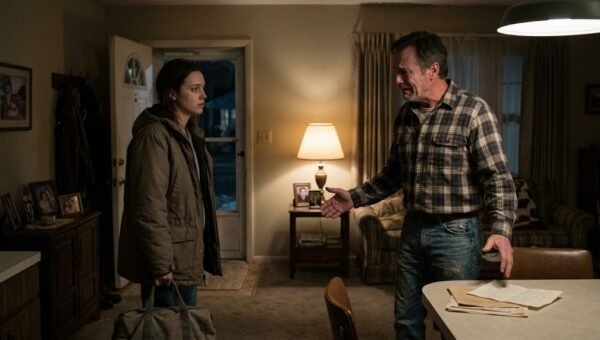
“Sign this, Jesse. It’ll make things easier.”
Dad held the paper out to me in the middle of my living room, with Tyler’s television behind him and my boxes stacked by the bed. I’d been home less than a minute. I read the title at the top, then the empty signature line. Nobody had asked me if Tyler could move in. They’d already decided I was the one who had to leave.
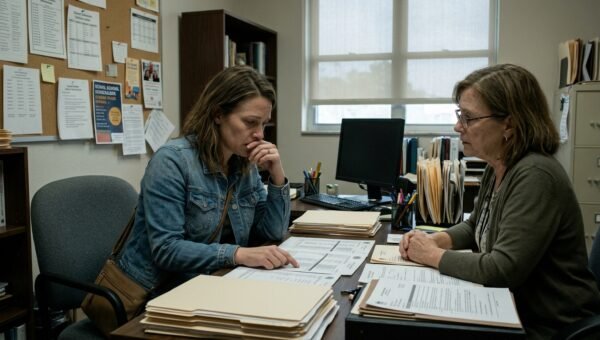
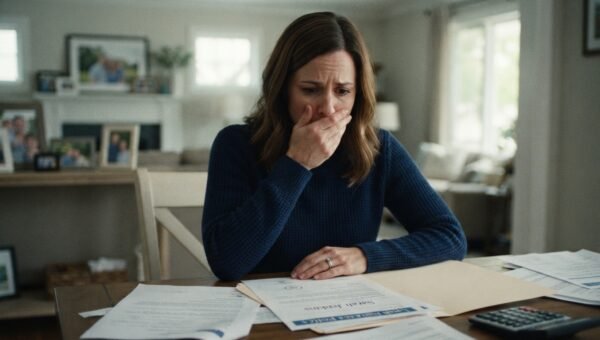
Mom’s text had come three days after I lost my job. “Your brother needs the apartment more than you do.” I remember because I was still sitting at the little kitchen table, trying to understand the severance paperwork from the company I’d worked at for eleven years. I didn’t answer right away. By the time I got home that afternoon, Tyler’s clothes were in my bedroom.
I’m Jesse Carter. I’m 41, and until that day my family thought I was a renter who’d gotten unlucky. The truth was sitting in my phone, in a county record, and in a folder at the management office. I’d kept it to myself for two years. I thought I could keep those things separate. I was wrong about that.
The job loss wasn’t a big scene. My manager called me into a conference room, read from a prepared page, and told me my position was being cut.
I carried my coffee mug and a cardboard box to my car. The mug had a chip shaped like a little crescent on the handle. I kept it anyway. I was more worried about insurance and the mortgage I didn’t have than about the job title.
There wasn’t a mortgage on my home. I owned the whole building.
Two years earlier, I’d used money from my aunt Marlene’s estate to buy an 18-unit apartment building in a railroad town in Nebraska. Marlene was my mother’s sister. We hadn’t seen much of each other when I was growing up, and she’d been dead six months before I found out she’d left me anything. I used a lawyer and set up an LLC. The deed was recorded under the company name, and the property manager handled the tenants. I lived in Unit 4B and paid myself nothing. To my family, I was just another guy with a lease.
I kept quiet because I knew how things went. Tyler had a new plan every year, and my parents always seemed to believe the next one would work if somebody helped him through the current mess. I’d paid his phone bill once, then a car repair, then a utility shutoff. I’m not proud of how long I let that happen. Saying no made me feel mean, so I kept paying and called it keeping the peace.
That afternoon, I walked in carrying a grocery sack with bread and eggs in it. I set it down by the kitchen counter and saw boxes near the elevator. I thought somebody in the building was moving out. Then I saw Tyler standing in my bedroom, pulling shirts from a duffel and hanging them in my closet.
His television sat against the living-room wall. Three boxes beside my bed had my things in them.
The old green quilt my aunt gave me was folded on top, like somebody had taken the time to decide what I could keep.
I don’t know why I noticed the quilt first. I did.
Mom stood near the kitchen, looking at her phone. Dad was by my couch, holding the paper. Tyler glanced over his shoulder and asked if I was going to make this difficult. He said it like the whole thing had already been settled.
I asked what was going on. Dad said Tyler had lost his place and needed somewhere to stay. Mom said I’d just lost my job, so it made sense for me to stay with a friend while I got back on my feet. I remember looking at the bread sack on the counter because I suddenly felt stupid for buying groceries for a place they’d apparently decided was no longer mine.
Dad put the document in my hand. It was called an occupancy termination agreement. The wording said I was voluntarily giving up Unit 4B and had no claim to return. It wasn’t something the building manager had sent. It was something Dad had made up, or had somebody make up for him. The name of my property company wasn’t even on it.
I read it twice. I asked him who prepared it.
He said it didn’t matter. The important thing, he said, was that I could make the transition easy for everybody by signing. Mom told me not to turn a family favor into a fight. Tyler had already unpacked enough that leaving would be a hassle, she said.
I’ve spent years being the person who smooths things over. That day I could feel the old habit trying to take hold. I could’ve started explaining, apologizing for being surprised, maybe even asking where they thought I should go. Instead I put the paper on the table.
Then I looked at Dad.
“Do you know who owns this building?”
He gave a short laugh. Mom finally looked up from her phone. Tyler stopped pulling shirts from the duffel, but only for a second. Dad said he knew I was upset, but the building owner wasn’t part of this conversation.
It was, actually.
I took out my phone and opened the county property record. I’d saved the link months earlier because I’d needed to check a parcel number for the manager. The public record showed the deed to Carter Rail Property LLC. That alone didn’t tell them much, so I opened the company’s ownership filing and the current statement from the management office.
My name was on both. I was the only member of the LLC and the person with authority over the building.
Dad took the phone from my hand and read the page. He asked if it was real. Mom said I couldn’t own eighteen apartments. She said that as if the number itself had offended her. I told her she could call the property manager. I wasn’t going to argue over a record anyone could verify.
I called Denise at the management office. She’d managed the building since I bought it and knew I lived in 4B. I put her on speaker. She confirmed that the property was owned by my LLC and that I was the sole member. She also confirmed nobody had approved Tyler’s move into my apartment.
The room got quiet, but not in the way people describe in stories. It was just four people waiting for somebody else to say the next thing.
Dad handed my phone back. He said he hadn’t known. I told him that was true. I’d made sure of it.
The strange part is, for years I’d been scared that keeping the purchase quiet would make me look like I was hiding money from them. Now I was standing beside a box of my own clothes while they looked at the county record and realized they’d treated my home as something they could hand to Tyler. It wasn’t even the money that got to me. It was how sure they’d been that I was the easiest person to move.
Tyler asked if I was seriously going to put him out. He said his other place was gone and he had nowhere lined up. I believe him. He’d spent his savings and got behind on rent. That didn’t mean he could take my bedroom, and I knew if I let him stay “for a few days,” a few days would turn into another season of excuses.
I told him he had an hour to get his things back into the hallway and leave the apartment. If he refused, I’d have the management office document the unauthorized entry and contact the police about trespassing. I wasn’t going to pretend the paper Dad brought was valid. I also wasn’t going to pretend Tyler had a right to stay because he was my brother.
Mom said I was being cruel. Dad said I could handle this privately. I told them they’d brought a document into my home asking me to give up my place, so private was already out of the picture.
They tried the old lines. Mom said family helps family. Dad said Tyler had made mistakes. I said I knew that. I’d helped him before. I’d been helping him for years, and I was done acting like his next mistake automatically became my problem.
That was the only time I used the word done. I said it twice, though. Done. Done.
I called building security and asked them to come up while Tyler packed. I also called the property manager and told her to make a note that neither of my parents had permission to enter Unit 4B or use a key. There wasn’t any drama with the guards. They were two regular guys in work shirts who stood by the doorway and waited while Tyler took his television and boxes out.
Tyler kept saying he couldn’t believe I was doing this. I almost answered that I couldn’t believe he’d done it, but I didn’t. I watched him unplug the television and carry it out with the cord dragging behind him. One of the boxes tipped over in the hall. His socks spilled out, and he stuffed them back in without looking at me.
Mom and Dad left with him. Mom said she hoped I’d be happy with what I’d done. I didn’t say anything. Dad looked like he wanted to say more, but he was already at the door and I wasn’t going to help him find a softer version of what he’d just tried.
Within an hour, Tyler’s car was pulling away from the curb. The guards stayed until the building manager confirmed the door lock was set back the way it should be. Then I stood in my living room looking at the boxes they’d packed for me. My green quilt was still on top.
The next morning, I had the locks checked and made sure the other residents weren’t affected. I didn’t make Tyler homeless forever. He had friends he could call, and he had the money he’d get from the deposit at his old place once the account was sorted out. He just didn’t get to move into my apartment because my parents decided he needed it more.
Mom didn’t apologize. Dad didn’t either. A few days later, he sent a text saying we should talk when we’d all calmed down. I didn’t answer. Maybe I should have. I don’t know. I only know that for once I didn’t rush to make their discomfort go away.
I still had a job to find. I still had the chipped coffee mug and a pile of forms to deal with. But I also had the building, the rent from the other units, and a home nobody could vote me out of. Losing my job had made my family think I was easy to push around. They were wrong.
That evening, I sat by the living-room window with one set of master keys in my hand and watched Tyler’s car pull away from the curb.