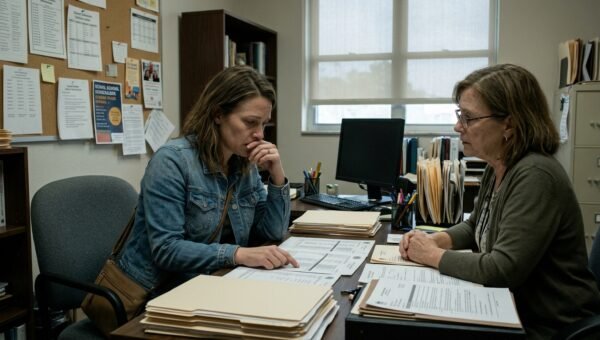
Ruth, what did Mark think I was going to do when he told me to sleep in the den? I still ask myself that, even now. The moving truck was on its way, and I was standing in our kitchen with a dish towel in my hand when he said his parents were moving in.
“They’ll need the bedroom,” he said. “You can use the den until they settle in.”
I asked where we would sleep. He shrugged like I was making a fuss over a guest room.
I remember the towel had a little snag near the corner. I kept running my thumb over it instead of putting it down.
I didn’t say yes. I didn’t say no, either. I asked whether adding residents would change our homeowners insurance. It was a practical question, and I needed one. The house had been mine before Mark and I married. My name was the only one on the deed. I’d spent years paying the mortgage, though Mark had covered some bills and acted like that made every decision joint.
The mortgage representative asked me to hold. Then she came back and told me our loan had already been modified. A transfer had been filed giving Harold, Mark’s father, half the house.
I asked her to repeat it.
She read me the date and the names on the papers. My signature was there, or something meant to look like it.
The notary stamp was from the next county over, somewhere I’d never lived. The representative said the stamp was still active, but the notary’s commission number had been flagged after disciplinary action involving identity fraud. She checked one more thing and told me Mark had been the notary’s last client.
That was the part I couldn’t hear around.
I wrote the representative’s name on the back of an old grocery receipt. My hand made the letters too big. I asked for the fraud department and the recording number. I asked for copies of everything. She said she couldn’t tell me who had submitted the papers, not on that call, but she could note that I disputed the filing. I told her I had never signed anything giving Harold part of my house.
“Please put that in the file,” I said.
I hung up and stood there with the receipt. Mark was upstairs making room in our bedroom.
I could hear drawers opening and shutting. That sound made me feel foolish in a way I still don’t have a good name for. He was moving my things while I was on the phone learning that he had already moved my name off the deed.
I could have gone upstairs and started a fight. I wanted to. I wanted to walk into the bedroom and make him say it out loud. Instead, I called the county recorder’s office and asked what I needed to see the filed deed. My voice sounded calm enough that the clerk gave me directions without asking if I was all right.
I did not pack for the den.
Three weeks earlier, the county had recorded a quitclaim deed. I saw it myself the next morning, in a small office where the printer made a high squeal every few seconds. The clerk handed me a certified copy.
The paper had a raised seal, and my name sat there in a shaky imitation of my handwriting.
I know my signature. I’ve signed it on school forms, tax papers, and more pharmacy receipts than I can count. This one had the wrong slant. The last letter looked like someone had traced it slowly and lifted the pen in the middle.
I asked the clerk how to dispute it. She gave me a form and told me to file an affidavit saying the conveyance was forged. She didn’t promise it would fix everything that day. I appreciated that. Nobody needed to pretend this was easy.
The copy showed that the transfer had been notarized in the next county. So I drove there and went to the state notary oversight office. A woman at the front desk looked at the commission number and pulled up the public record. She showed me the discipline notice. The notary had been investigated for unauthorized jurats and identity-related filings.
Then she found the billing receipt connected to the deed packet. Mark’s name was on it.
I read it twice. I asked if she was sure it belonged with those documents. She checked the file number and nodded. I didn’t cry. I felt mad, and then I felt embarrassed that my first thought was about the way I’d defended Mark to my sister when she said he was getting too comfortable making plans with my house.
I filed the affidavit that afternoon. I also made a report with the state office and asked for the matter to be referred to law enforcement. I called the title company and the mortgage fraud department. The title company opened a review. The mortgage company marked the modification as disputed and put the transfer on hold while it investigated.
I kept every receipt. The grocery receipt with the representative’s name. The county form. The copy of the notary’s discipline record. My hands were steadier by then, mostly because I had a list and I was doing the next thing on it.
Mark didn’t know I’d been to the county office. At home, he was acting like the plan had always been settled. He folded a blanket for his parents and set it on the bed. I watched him move the framed picture from my nightstand to the dresser.
“Dad’s helped us a lot,” he said.
I asked him what that had to do with the bedroom.
He said his father was retired and needed a place to land. He said the den was fine for me. He said it wasn’t permanent, though he had no date for when it would end. I didn’t tell him I had the deed copy in my car. I was still trying to understand whether he was careless enough to think I wouldn’t check, or sure enough of himself to think I couldn’t do anything.
I’m not proud of this, but I spent the next evening sorting his excuses in my head. Mark had been under pressure from his family for months. His small business had debts he didn’t tell me much about. When I asked, he’d say he was handling it. I used to take that as a sign he didn’t want to worry me. It was also convenient for me to believe it. I didn’t want to be the wife who checked his accounts or questioned every phone call.
That was on me. Not the forged signature. Not the deed. But I’d let silence pass for trust because it was easier than asking what was really going on.
The next morning, I called a lawyer. I brought the certified deed, the recorder’s affidavit, the notary discipline record, the receipt with Mark’s name, and the mortgage company’s fraud report. The lawyer told me not to confront him alone if I thought he might destroy records or make things worse. I said I didn’t think he’d hurt me. I also said I didn’t want another night of sleeping beside a man who had done this.
She helped me send Mark a written notice that I disputed the transfer and that Harold had no permission to enter or move into the house. She also explained how to start the divorce and what I could do to protect my home while the case moved ahead. I filed the divorce paperwork. It wasn’t a dramatic decision. I signed the pages and checked each box.
Two weeks after the mortgage company logged the modified agreement naming Harold as co-titleholder, Mark had received confirmation and invited his parents. He hadn’t told them the transfer was being investigated. Or maybe he had told them his version. I didn’t know, and by then I didn’t need to know before acting.
The moving truck arrived the next afternoon.
I had laid the documents out on the dining room table. Not in a neat little stack. I’d taken them out and put them in the order they happened: the deed, my affidavit, the notary record, the fraud report, then the title company’s notice that the transfer was disputed and the deed was being treated as void pending review.
Mark came into the dining room when he saw the papers.
“What is this?” he asked.
I put my finger on the deed. “You tell me.”
He looked at the signature, then at the window. His parents’ truck had turned into the driveway. Harold was already stepping down from the cab.
Mark said it had been a temporary arrangement. He said his father had paid off some of his business debts and expected something in return. I asked him if he’d promised Harold half my house.
He didn’t answer.
I asked again. He said his father had helped him when he was in trouble. He said he had planned to tell me. He said the notary was supposed to handle the paperwork properly.
I looked at the receipt with his name on it. “You hired him.”
Mark’s mouth tightened. He said he’d never meant to leave me with nothing. He said I was making it sound worse than it was.
I told him he’d forged my name on a deed and tried to change the mortgage without my consent. He looked down at the documents. I could hear the truck’s engine outside, still running.
His mother got out first. Harold followed. They stood by the driveway, looking toward the house.
Mark said, “I thought you’d understand once they got here.”
That was when I knew he’d counted on me feeling too ashamed to make a scene. He’d counted on the family standing there, the truck full of their things, the bedroom already cleared. He thought the sight of it would make me give in.
I slid the certified papers across the table to him. The top page was the forged deed. Under it was the state referral and the mortgage fraud report. He reached for the folder, but I kept my hand on it.
“Your father can’t move in,” I said. “Neither of you is coming inside.”
Harold came to the door. I opened it just far enough to tell him the deed was disputed and the transfer had been reported. I said the house was mine and they had no right to unload anything. He looked at Mark, not me. Mark stared at the papers.
Harold said his son had told him the house was already half his.
I said it wasn’t. I said the transfer was based on a forged signature, and the county and title company had the records. I told them to take the truck and leave.
Mark started to argue, then stopped. His parents had heard enough. He finally said, in front of them, that he’d used a notary who “could get things done” and had signed the papers because he thought I’d refuse. He said he’d been desperate to get his father’s financial help.
He knew I’d refuse. That was why he forged it.
Nobody unloaded a box. Harold got back in the truck. Mark’s mother climbed in after him. The truck backed out, and I watched until it reached the end of the drive.
I told Mark he had to pack his personal things and leave. My lawyer had already prepared the notice and explained my right to stay in my own home. Mark complained that he lived there too. I told him he could take what was his and arrange anything else through the lawyers.
He put his clothes in two bags. He didn’t ask me to reconsider. I didn’t offer.
After he left, I called a locksmith. I know changing the locks sounds like a small thing after all the paperwork, but I wanted to do one thing with my own hands and see the result before the day was over. The new key turned hard the first time. I had to pull it out and try again.
The county recorder accepted my affidavit. The title company’s review found the transfer invalid, and the mortgage company voided the fraudulent modification while the police investigation continued. The notary’s commission was revoked, and the case was referred to police. I didn’t get a clean, simple ending from any office. I got letters, phone calls, and forms. But Harold’s name came off my title, and Mark never got another key.
The divorce was filed. Mark’s business debts stayed his. I kept the house I’d bought before our marriage, with the mortgage in my name and the title clear of the fraudulent transfer. I didn’t win anything extra. I got back what had been mine.
That night, I sat on the edge of my bedroom bed. The framed picture was still on the dresser where Mark had moved it. I put it back on my nightstand. Then I turned the lock on the bedroom door, not because I was afraid of anyone coming in, but because I wanted to.
For once, the room was not temporary.