Why did I let Warren keep telling me I was bad with money, even after I saw the account with my own eyes?
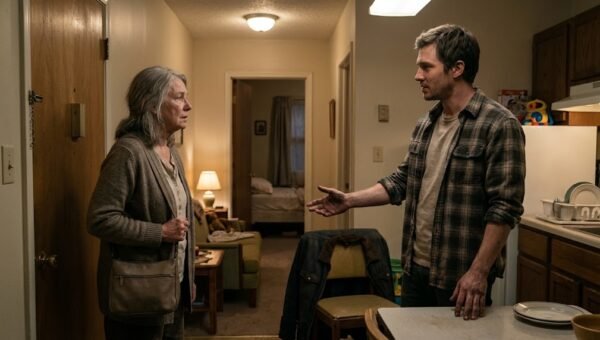
I was standing in the kitchen in my socks, rubbing my hands together because the furnace had quit sometime before dawn. Warren had just told me we had no savings. He said it in the same flat voice he used when telling me the oil delivery was late.
I didn’t argue. I went to the table and opened the bank website myself.
For most of our marriage, Warren handled the bills. He said it was easier because I got mixed up with dates and numbers. I believed him, partly because he was good at making it sound like a kindness. But that Tuesday, the house was cold, the repair estimate was $4,860, and I couldn’t make myself accept that we had nothing set aside.
I found the account before I found the answer.
Twenty-four years ago, I was in a hospital room holding a blanket that was too small for my arms. Our daughter June had lived for less than a day. Warren sat beside me and held my hand so tightly my fingers hurt. We barely spoke. I thought we were both too tired to say the things we needed to say.
I know now we were both scared of making the other one hurt more.
After June died, I went back to work before I was ready.
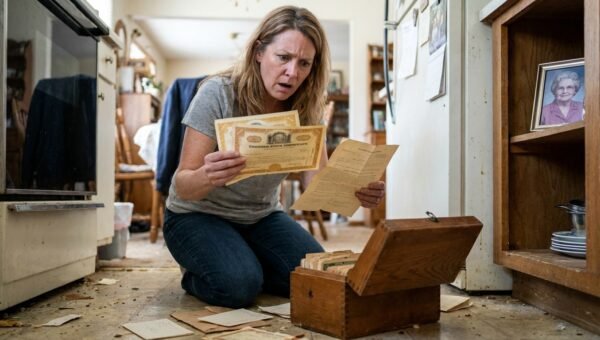
Warren took over the bills. He said I had enough to think about, and I let him. There was one little wooden box with June’s hospital bracelet in it, and neither of us opened it much. If Warren saw me near it, he’d ask if I wanted tea. I thought that was his way of taking care of me.
The furnace estimate sat on the table with a greasy thumbprint near the total. Warren said he could call around for a cheaper price, but he didn’t mention a bank or a credit card. Just that there wasn’t money.
I asked how much we had in checking. He told me the number. It was $412.
“That’s all?” I asked.
“That’s all that’s free,” he said.
I was still cold, and I was also embarrassed. I had asked him for the account password before, but usually I let him do it because he sighed when I couldn’t remember which number went where.
That morning I opened the laptop, found the password in the drawer where he kept appliance manuals, and logged in.
There it was. A transfer of $600 on each payday, going back four years. I counted them once, then went back and counted again. Ninety-six deposits. $57,600 before interest.
I sat at the table a long time. The furnace man had left a voicemail asking whether we wanted him to order the part. I couldn’t answer him yet.
The account itself showed up under a separate tab. Warren had named it something I couldn’t see from the first page. When I clicked, the title line was hidden behind a security box asking me to confirm the last four digits of his phone number.
I didn’t have them.
So I walked to his office.
In the years after June’s death, Warren never talked about her unless I started. I tried a few times.
I said I wondered what she’d been like, whether she’d had his nose or my hair. He would go quiet, then tell me I was making myself sad. I stopped asking because I thought he was trying to protect me.
It took a long time for me to understand he had decided what I was allowed to feel.
The office door was open. Warren was sitting at his computer, looking at the furnace estimate he’d brought in from the kitchen. I put my laptop down on his desk and pointed to the transfer list.
He looked at it, then at me.
“It’s complicated,” he said.
I had heard that phrase from him about the mortgage, the insurance, even why he kept the checkbook in his desk. Usually I let it close the conversation. This time I told him to make it simple.
He said he’d explain. Then he tried to close the page.
I put my hand on the mouse. “No. Turn the screen around.”
He did, slowly. The account title appeared across the top. My maiden name, Bell, followed by June’s name.
I read it twice.
“Why is her name on this account?”
Warren didn’t answer right away. He kept his hand on the edge of the desk, like he was trying to hold something in place. I wanted to hear him say that there was a good reason. Instead, he said it was supposed to be a place for the money we couldn’t bring ourselves to spend.
I asked why he hadn’t told me.
He said he thought I wouldn’t understand. Then he said he didn’t want to make me relive things.
I almost laughed, but there wasn’t anything funny in it. He’d been moving $600 every payday for four years, and I was standing there with a furnace estimate I couldn’t pay because he said we had no savings.
I asked him how long the account had been open. He said it started after June died, but the regular transfers began four years ago. That was when we paid off our car and had a little extra in the account, he said. He figured he could put some aside without changing our day-to-day life.
He had not put it aside. He had taken it from our shared money and hid it from me.
I asked if he had really believed I was bad with money. He said he knew I could handle bills, but I got upset when money was tight. He thought if I saw the account, I’d want to use it.
That answer made me angrier than the first one. He had used my grief to make me sound unreasonable. He’d made a decision about what I could know, then told himself it was for my own good.
I went back to the kitchen. I needed the paperwork, not another explanation.
Warren’s office had a locked file drawer. He kept old tax returns there, and I knew where he kept the key because I’d helped him sort the files once, years ago. He tried to say we could look later. I told him no, we were looking now.
The drawer stuck a little. Inside were bank forms, old medical papers, and a folded envelope with my maiden name on it. I don’t know why I remember the smell of the paper. Dry and dusty, like a box of old receipts.
The first account form was dated six weeks after June died. It had Warren’s handwriting and a note in the margin: “For June. Keep separate.” The title was listed as Yvonne Bell, for June.
There was a small opening deposit. The four years of $600 transfers came later, but the account had been there all along.
I found hospital paperwork beneath it. One page had the time of June’s birth written in blue ink. Another had the time she died. Warren had kept them folded together with the bank forms, like they belonged in the same file.
I asked him if he had opened the account because he couldn’t talk to me about her.
He rubbed his thumb along the desk edge. He said after we lost her, he felt he had failed both of us. He couldn’t fix what happened. He couldn’t bring her home. He thought if he saved money in her name, at least something good could come from the worst thing in our lives.
He said he couldn’t tell me because he didn’t want me to think he was trying to buy his way out of grief.
Then he said he didn’t know how to stop.
For years, he had treated the account like it was a small memorial that belonged to him alone. When the balance grew, he became more protective of it. When I asked about money, he gave me less information. When I questioned a bill, he reminded me I wasn’t good at keeping track. He told himself he was protecting something sacred. I had been helping him protect it by doubting myself.
I won’t say I never made mistakes with money. I once paid our property tax late because I put the envelope under a stack of grocery flyers and forgot it. Warren held on to that story for years. It was easier to believe his version than to admit I had let him take over because arguing wore me out.
But that afternoon I sat down with every statement we had. I made a list of accounts, balances, and automatic payments. My handwriting got messy. I wrote some numbers twice. I still finished the list.
The more I checked, the less I could trust what Warren had told me. He had not emptied our retirement accounts, and there wasn’t another hidden pile of money. But he had controlled every password and every paper bill for so long that I couldn’t tell what was a mistake and what was a choice.
I called the bank the next morning. My voice shook at first. I gave them my legal name and the account number, and they confirmed I was listed as the owner. Since I was the owner, they could update the name and move the funds into an account only I controlled. I asked them to put a hold on any new transfers while I reviewed the records.
Warren sat beside me at the kitchen table while I made the call. He didn’t interrupt. When I hung up, he said he was sorry.
I told him sorry wasn’t a plan.
He said he’d go to the bank with me and sign whatever was needed. He’d show me every account. He’d put all the bills where we could both see them. I asked if he would tell me the truth even when he thought I might get upset.
He said yes.
I told him if I found one more account or one more lie, I was leaving. I wasn’t saying it to scare him. I had already packed a small bag and set it by the back door, though I hadn’t decided whether I would take it.
He looked at it and asked if I wanted him to sleep somewhere else.
I said not yet. But I wasn’t going to live under the old rules while he decided whether he trusted me with our own life.
We went to the bank that afternoon. I brought my driver’s license and the account forms. Warren brought his. The woman at the desk explained each step, and I asked questions until I understood them. It took nearly an hour to move the balance and stop the automatic transfers.
The money went into an account under my current legal name. The first statement came a few days later.
We also opened a shared household account that both of us could see. Warren gave me the passwords. I changed them anyway. That part was mine to do.
The furnace got fixed. It was cheaper than the first estimate because Warren called another repair shop, but we still paid from the money he had hidden. I didn’t thank him for that. He didn’t ask me to.
We are still married. I can’t tell anybody we are fine. Warren has started talking to a counselor, and I agreed to go with him once. I don’t know what that means yet. I do know he can’t make a private shrine out of our daughter and call it protection.
Last week, the new furnace started humming in the basement. I sat at the kitchen table and opened my bank statement by myself. My current legal name was printed across the top, and for once I didn’t have to ask Warren what the number meant.