PART 1
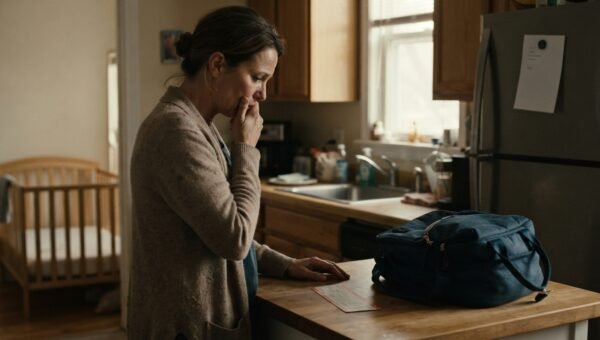
The envelope sat on the kitchen counter between the salt cellar and the stack of utility bills. It was thick, glossy paper with the cruise line’s gold logo embossed across the top flap. For thirty years, Donald had handled the travel arrangements, our taxes, the roof repairs, and the car insurance. That was the rhythm of our marriage. He managed the logistical machinery, and I kept the house running and the family steady.
This cruise was supposed to be our thirtieth wedding anniversary celebration. Seven nights through the Western Caribbean. We had talked about it since last winter, or at least I thought we had.
I used a butter knife to slit the top of the envelope. Inside were our boarding passes, luggage tags, and the printed itinerary for Cabin 814 on the upper promenade deck.
I scanned down the sheet to check our dining times.
Guest One was listed as Donald Ray Miller.
Guest Two was listed as Marlene Price.
My name is Sarah Miller. It was not anywhere on the document.
I stared at the black print until the letters began to swim. Marlene Price. I repeated the name under my breath three times, trying to place it among our acquaintances, his former colleagues from the regional water district, or the neighbors on our cul-de-sac. It was a complete blank.
When Donald walked in from the garage twenty minutes later, his work boots leaving dusty smudges on the linoleum, I held the paper out to him without saying a word.
He glanced at it, wiped his hands on his canvas trousers, and sighed.
The reaction was not shock or guilt. It was irritation, sharp and immediate.
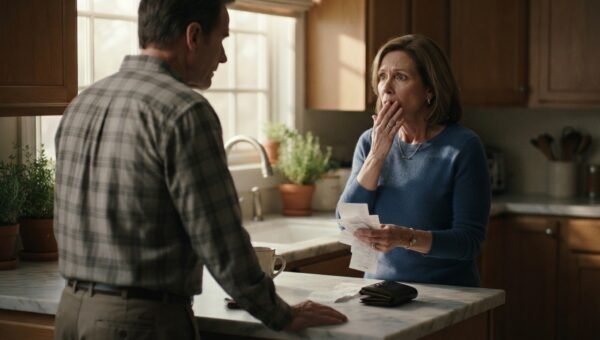
“It is a clerical blunder,” he said, tossing the packet onto the counter. “I used an independent agency over in Fort Myers because they had a package deal on balcony suites. The girl on the phone probably mixed up my reservation with someone else’s file.”
“Donald, it has your full legal name, your date of birth, and your frequent cruiser number,” I said. My voice was quiet, but my hands were shaking against my apron. “How does an agent mix up my name with Marlene Price?”
“I don’t know how incompetent people do their jobs, Sarah,” he snapped, his jaw tightening. “Call them yourself if you want to make a federal case out of a typo. Or cancel the whole damn thing if you don’t trust me. I am exhausted, my back aches, and I am not standing here being interrogated over some desk clerk’s mistake.”
He grabbed his mug, poured black coffee, and walked straight back out to his workshop in the yard.
That evening, while he was running the table saw, I took the confirmation sheet into the guest room, shut the door, and called the cruise line’s direct customer support line. I did not call the local agency number printed on the promotional flyer. I called the 1-800 number for the ship’s corporate office in Miami.
The representative who answered was polite and efficient. I gave her the reservation code from the top right corner of the sheet.
“Yes, Mrs. Miller,” the representative said after verifying the security pin, which Donald had set as our home zip code. “I see Cabin 814. Balcony stateroom, starboard side.”
“Could you tell me when this reservation was originally created?” I asked.
The keyboard clattered on the other end of the line. “The booking was opened on October fourteenth of last year.
Exactly eleven months ago. Paid in full via debit card in three installments.”
My stomach dropped. Eleven months ago, Donald had told me we could not afford to replace the central air conditioning unit because his pension adjustment had been delayed. We had spent July sleeping with box fans in our bedroom windows.
“And the names on the original file?” I asked, gripping the phone tightly against my ear.
“Donald Miller and Marlene Price,” she confirmed. “Those names have been on the file since the deposit was posted.”
“I see,” I managed to say. “My husband told me there was an administrative error. I am his wife. Can the second guest name be changed to mine?”
“The reservation was booked under our flexible premium tier,” the agent replied. “Name changes for the secondary guest are permitted up to forty-eight hours before departure with a seventy-five dollar processing fee. Would you like me to update Guest Two to Sarah Miller right now?”
“Yes,” I said. “Do it now. And send the updated confirmation only to my personal email address.”
I paid the fee with my own credit card.
When Donald came in for dinner, he did not mention the papers. He ate his pot roast in silence, watched the local news, and went to bed early. Two days later, on Friday morning, he walked into the kitchen with his overnight duffel bag packed.
“I called the agency,” he lied smoothly, looking everywhere except directly into my eyes. “They told me the passenger manifest was locked for security reasons and fixing the name would take three weeks of corporate clearance. Since they ruined our anniversary trip, I called off the whole thing. They issued a voucher for next spring.”
He looked at his watch. “I have to drive up to Tallahassee for an emergency inspection on the county pump station. I will be gone until next Wednesday. We will do something nice when I get back, Sarah. I am sorry about the cruise.”
He kissed my cheek. His skin smelled of witch hazel and cheap aftershave. Then he walked out to his truck and drove away.
He thought the cabin was canceled. He thought I was sitting at home in an empty house, nursing my disappointment.
Four hours later, I packed a single suitcase, called a car service, and headed south toward the Port of Miami. If Donald was not going to be on that ship, I was going to stand in Cabin 814 myself and find out why eleven months of our savings had been spent on a ghost.
PART 2
The terminal in Miami was a crush of luggage, rolling carts, and vacationers in bright floral shirts. Boarding with the updated pass in my own name was seamless. The security kiosk scanned my passport, took my photo, and printed my plastic keycard without a single hitch.
Cabin 814 was located near the aft elevators. When I inserted the card and pushed the heavy cabin door open, the room was cool, quiet, and spotless. The balcony curtains were drawn back, showing the gray churn of the ship pulling away from the dock.
On the vanity table sat a silver ice bucket chilling a bottle of Veuve Clicquot champagne. Beside it rested a small white envelope embossed with the ship’s crest.
I walked over, my heart thumping against my ribs like a trapped bird, and picked up the card. Inside, written in neat, flowing cursive that was not Donald’s crabbed handwriting, were three short sentences:
*To thirty years of waiting. The past is behind us now. All my love, Marlene.*
My knees went weak. I sat down hard on the edge of the bed. Donald and I had been married thirty years. Exactly thirty years. Who was Marlene, and what had she been waiting thirty years for?
I needed air. I needed to get out of that room before the walls closed in on me. The ship was already in international waters, the engines vibrating through the steel decking. It was past eight in the evening, and the main dining room on deck four was filling up with passengers dressed for the first formal dinner.
I did not change into an evening gown. I wore the navy slacks and beige cardigan I had traveled in. I took a small table for one tucked against the wooden divider near the dining room entrance, ordering hot tea just to have something warm to hold in my hands.
Around eight-forty, the maitre d’ led a couple past the velvet rope toward the center dining section.
I looked up casually, expecting strangers.
The man walking down the carpeted aisle was Donald.
He was not in Tallahassee. He was wearing his charcoal gray suit, the one I had pressed for him before our niece’s wedding two years ago. His hair was freshly cut, his posture upright and confident.
Holding his arm was a woman in an emerald silk dress. She had silver hair pinned up in an elegant twist, small diamond studs in her ears, and a delicate birthmark the shape of a cloverleaf right beneath her left collarbone.
My breath stopped in my throat. My vision narrowed down to a tiny, sharp tunnel.
The birthmark. The exact slant of her cheekbones. The way she tilted her head when she laughed.
She looked identical to my older sister, Clara.
Except Clara had died in a single-car rollover on Route 17 outside of Savannah twenty-six years ago. Clara was buried in our family plot in Oakridge Cemetery under two feet of red clay and granite. I had stood beside that open grave with my mother. I had identified Clara’s crushed silver watch at the county morgue.
Donald pulled out a chair for her at a window table thirty yards away from where I sat in the shadows. He leaned down, kissed her cheek with an easy, practiced intimacy, and smiled.
Then the woman looked up at him, touched his wrist, and said clearly enough to carry over the quiet classical music playing overhead:
“Thank you for this, Raymond.”
Not Donald. Raymond.
PART 3
I sat motionless behind the high wooden lattice for nearly an hour, watching them eat, drink, and lean across the white tablecloth like two people who had spent decades sharing a life. My mind could not bridge the gap between what my eyes were seeing and what reality allowed.
Clara was dead. I had closed her estate. My mother had died of a broken heart three years later because of Clara’s death.
And my husband of thirty years was Donald Miller, a municipal water inspector from Polk County, Florida. He had never gone by Raymond in his life. His driver’s license, our mortgage, our joint tax returns, and our marriage certificate all read Donald Ray Miller.
When they finished their wine and rose from the table, I waited until they reached the glass elevators before standing up. I kept twenty paces behind them, slipping between groups of laughing tourists.
They rode the elevator to the eighth floor. They turned down the long, carpeted corridor of starboard cabins.
They walked straight toward Cabin 814.
Donald took a keycard from his suit pocket and slid it into the lock. The small sensor light blinked red. He frowned, tried it a second time, and the light flashed red again.
“That’s strange,” Donald muttered. “It worked when I dropped the garment bag off before boarding.”
“Maybe it got demagnetized near your phone,” the woman replied. Her voice was lower than Clara’s had been as a young woman, raspier with age, but the cadence was unmistakably my sister’s.
I stepped out from the alcove near the ice machine.
“The keycard does not work because Guest Two checked in three hours ago,” I said.
Both of them spun around instantly.
Donald’s face went through three distinct shades of gray. His jaw dropped, his shoulders slumped, and for a terrifying second, I thought he was going to collapse right onto the carpet.
“Sarah?” he whispered. His voice cracked down the middle.
The woman beside him froze. Her eyes went wide, fixed on my face with an expression of sheer, unadulterated horror. Her hand flew to her throat, covering the cloverleaf birthmark.
“Sarah,” she breathed.
“You died,” I said to her. My voice was shockingly level, empty of tears, hollowed out by pure shock. “I bought your headstone, Clara. Mother cried until her hair fell out. We held a memorial service with forty people in the chapel.”
“Sarah, please, don’t do this here,” Donald said, stepping between us, raising his hands like a man trying to stop an oncoming train. “Let’s go inside. Please. For the love of God, don’t make a scene in the hall.”
“I am the registered primary guest in that room now,” I said, holding up my plastic card. “If you want to step through that door, you will tell me what this is. Right now.”
I unlocked the door and pushed it open. All three of us walked into Cabin 814. Donald immediately shut the door, clicking the deadbolt into place.
Clara stood near the balcony glass, her hands trembling violently against her silk clutch.
“Her name is Marlene now,” Donald said, his voice shaking. He sat on the foot of the bed, burying his face in his hands. “It has been Marlene for twenty-six years.”
“Start from the beginning,” I said, leaning my back against the locked door. “And if either of you lies to me, I am walking straight down to the ship’s security office and having the bridge contact the Coast Guard.”
Clara looked at Donald, then turned to me. A tear cut a track through her powdered cheek.
“Raymond didn’t lie to you about who he loved, Sarah,” Clara said softly. “He lied about who he was.”
ENDING
The truth came out in ragged, fractured pieces over the next two hours, stripped of the thirty years of domestic normalcy that had covered it.
Before Donald came to Florida in 1994, his legal name was Raymond Donald Miller. He had been an auditor for an agricultural credit union in southern Georgia, where Clara worked as an office manager. They had fallen in love. But Raymond had also discovered a massive embezzlement scheme run by the credit union’s board members, who were deeply entrenched in local politics and organized crime rings across the state line.
When Raymond agreed to cooperate with federal investigators, the threats started. Brake lines cut. Messages left on Clara’s doorstep.
“The marshals told us they couldn’t guarantee round-the-clock protection unless we entered the federal witness program formally,” Clara whispered, her fingers twisting her emerald ring. “But the indictment collapsed when the primary judge was bought off. The threats became real. Two men came to my apartment one night. I wasn’t there, but they left my dog dead on the kitchen floor.”
Raymond fled south to Florida, took his mother’s maiden name for his middle identifier, dropped Raymond entirely, and obtained legitimate documentation under Donald Ray Miller before the real digital age tightened identity records.
Clara had chosen a more drastic exit. She had staged her own disappearance during a violent storm on Route 17. An abandoned car, skid marks over the embankment into the river, a burned-out chassis. Her body was never actually recovered from the swollen current, but the county coroner had declared her deceased based on the wreckage, personal effects, and circumstantial evidence.
She took forty thousand dollars in cash, assumed the identity of a deceased infant named Marlene Price through an old birth certificate scam, and relocated to Oregon.
“Why did you marry me, Donald?” I asked, looking down at the man I had shared a bed with for three decades. “If you were hiding, why drag me into it? Why my family?”
Donald looked up, his eyes bloodshot and wet. “Because I thought Clara was really gone, Sarah. For four years, I heard nothing. I thought she had actually drowned after the car fire went wrong. I came to your town because I wanted to be near the only family she had left. I met you at the diner where you worked. You looked so much like her, but you were gentle. You weren’t reckless like she was. I fell in love with you. That was not a lie. I built a life with you.”
“Then what is this?” I pointed at the champagne, the card, the emerald dress. “What is this trip?”
“She found me,” Donald whispered. “Three years ago. An anonymous letter sent to my office in Bartow. She had seen my name on a state engineering registry.”
“I was sick, Sarah,” Clara said, stepping forward, reaching out a hand she immediately pulled back when I recoiled. “I had stage-three lymphoma. I spent two years in treatment alone in Portland. When I went into remission, I realized I had spent half my life living like a ghost for a crime that was forgotten twenty years ago. The men who threatened us are either dead or in federal prison. I contacted Raymond. I just wanted to see him one last time. We planned this cruise for a year. He told me he was going to tell you the truth when he got back. He swore he was going to tell you everything.”
“You let Mother die thinking her daughter was rotting in the woods,” I said to Clara. My chest ached with a deep, physical cold. “She died holding your portrait, Clara. She stopped eating. She wasted away to eighty pounds because she couldn’t bear living in a world where you were gone.”
Clara broke down, sobbing openly into her hands, sliding down against the balcony door until she was sitting on the floor.
Donald reached for my hand. “Sarah, please. We can go home. I will pack my bag right now. I will sleep on the deck chairs. We can fix this.”
I pulled my hand back from his reach.
“There is nothing to fix,” I said quietly. “You spent thirty years playing house with the sister of the woman you actually wanted. You paid for her room with the money we were supposed to use to fix our roof. You lied to my face this morning and told me you were going to Tallahassee.”
I walked to the vanity table, took my purse, and slung it over my shoulder.
“The room is in my name,” I told them. “You two have ten minutes to take your luggage and find another cabin on this ship. If you are still in here when I return from the purser’s desk, I will call the ship’s master and report two unregistered occupants in my stateroom.”
Donald stood up, his face twisted in desperation. “Sarah, where am I supposed to sleep? The ship is completely booked.”
“I don’t care,” I said. “Go down to the boiler room. Go sleep on the lifeboats. Raymond.”
I walked out of Cabin 814 and let the heavy door slam shut behind me.
I spent the remaining six days of the cruise alone. I took my meals on the private balcony, watching the blue Caribbean water roll past beneath the hull. I turned off my phone. I ignored the notes Donald slipped under my door every morning, begging for a five-minute conversation, promising explanations, promising counseling, promising to sign over the house.
When the ship docked back in Miami the following Sunday, I was the first passenger off the gangway with my single suitcase.
I did not drive back to Polk County. I took a commuter flight to Tampa and went straight to the office of an attorney specializing in marital property and fraud.
Within forty-eight hours, our joint accounts were frozen by court order, and Donald was served with divorce papers at his county office. Clara took a train back to the Pacific Northwest the day we docked. I have not spoken to her since that night in the cabin, and I never will. Some graves, once you dig them, can never be refilled.
Donald lives in a rented duplex outside Lakeland now. He calls once a month, leaving voicemails where he rambles about statute of limitations, about how he loved me in his own way, about how he was only trying to protect what was left of his past.
I don’t delete the voicemails. I save them on an external hard drive, filed under a folder labeled with his real name. But I never call back. Thirty years of my life belonged to a ghost story, but the rest of it belongs entirely to me.