Thirty-four years, and my father still thought he could walk into a room and tell me what to do.
“Where do I sign?” Robert asked, smiling beside my hospital bed.
My head was still sore from surgery, and the tape from my IV tugged when I shifted. Nurse Ruth Vance stepped between him and me before he could reach the folder on my table. My mother, Evelyn, stood behind him with her purse tucked under one arm.
They’d been gone nine days. Now they were back, and my father had brought a pen.
“There’s nothing for you to sign,” Ruth said.
“We’re her parents,” Robert said.
“That doesn’t give you authority here.”
He gave a short laugh. It was the laugh he used when he thought someone had made a mistake and he planned to correct it. Ruth pointed to the old manila folder beside my bed.
“You’ll have to ask the man who signed those papers.”
My father turned toward me. The smile went away.
I’d spent a long time trying to get that look from him. Not the angry one. Not the irritated one. Just a look that said he saw me, and maybe, if I was good enough, he might stay. I didn’t feel that way then. I felt tired. And I had a question of my own: why had they come back now?
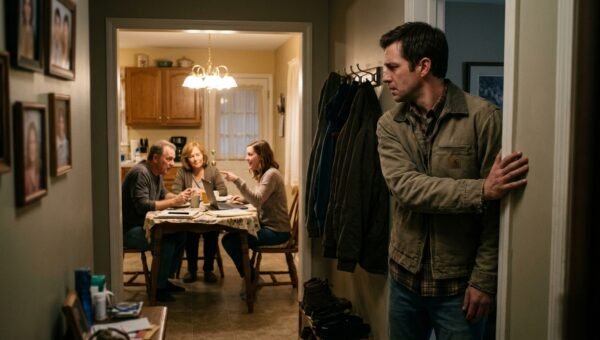
Nine days earlier, I’d been standing in my kitchen when the pain got bad enough that I had to grab the counter. My parents and my younger sister, Chloe, had stopped by to pick up luggage before their flight to Mexico. I was renting a small house, and they had a habit of treating my place like a storage room when it suited them.
I told Evelyn my stomach hurt. She was checking that Chloe had the right bag.
“Probably something you ate,” she said.
I made it to the hallway before my legs gave out. I remember the floor against my cheek. I remember Robert’s shoes near the door. I remember trying to say his name and getting something that sounded more like air.
“She fainted? She’ll live. Our flight with your sister leaves at six.”
That was what he said. Then my parents stepped around me and left.
I used to tell myself they were bad at emergencies, not bad at loving me. I’m not sure why I worked so hard to make that sound better. I’d gotten good at finding a reason for every time Chloe came first.
Thirty minutes later, my uncle Arthur came by to return a pair of garden tools. He’d lent them to me, though I’d kept them longer than I meant to. He found me on the floor and called 911. The tools were still by the back door when the ambulance crew came in.
I don’t remember the ride. I don’t remember being told my appendix had ruptured or that I was in septic shock. I learned those parts later, in short pieces, because I was in a medically induced coma for five days.
Arthur stayed at the hospital. He sat in the waiting room while the surgeons worked, then talked with the staff when they needed someone to make decisions.
Two years earlier, when I updated my work benefits, I had named him as my healthcare proxy and durable power of attorney. I’d put a copy in the small safe at home. Arthur had helped me witness and organize the paperwork.
My parents knew I’d asked him to be my emergency contact. They’d made jokes about it. Robert called him “the family handyman,” even though Arthur had retired from cabinetmaking years ago. Evelyn and Arthur had barely spoken since their mother died. I never pushed them to fix that. I just knew Arthur showed up when he said he would.
I woke up on day five with my mouth so dry my tongue felt stuck to the roof of it. Ruth was checking my monitor. Arthur sat in a chair with a paper cup of coffee gone cold between his hands.
“Your uncle’s been here,” Ruth said.
I tried to ask about my parents. My voice came out rough.
“No calls,” she said gently. “No visits.”
I looked at Arthur. He didn’t try to explain them away. He just set the coffee down and said, “You’re awake. That’s what matters right now.”
It wasn’t what I wanted to hear. I wanted him to say they’d called and couldn’t get through. I wanted some ordinary excuse. Instead, Ruth handed me water with a straw, and I drank too fast and started coughing.
The manila folder was already on the bedside table. Arthur had brought the original forms from my safe and signed the emergency paperwork needed while I couldn’t speak for myself. Once I was awake and clear-headed, Ruth explained what I was signing. I confirmed Arthur as my contact and decision-maker if I became unable to make my own choices again. I also signed a form limiting who could get information about my care.
“Do you want your parents to have access?” Ruth asked.
I stared at the little box on the page. For years, I would have said yes just to avoid the fight.
“No,” I said.
Ruth nodded. “I’ll make sure that’s clear.”
The next three days were slow and sore. I learned how to sit up without holding my breath. I ate a few spoonfuls of broth at a time. Arthur brought my glasses, my phone charger, and then my clean clothes from home. My family didn’t call. I checked anyway, more than once. I’m not proud of that.
On the ninth day, Robert and Evelyn came in like they were late for an appointment. My mother asked if I was ready to go. Robert looked at the folder, then at the nurse.
“We’ve got paperwork to handle,” he said. “Her work benefits. We need the discharge forms.”
That was the first thing he’d said that made the reason for the visit plain.
Ruth didn’t raise her voice. “You can’t access her records or sign for her.”
He leaned toward the bed. “Elena, just sign what they need. Chloe’s in a bad spot.”
My sister had been in Cabo with them. I knew that much. I didn’t know she’d wrecked an uninsured rental vehicle until he said it. The crash had left them facing damage costs and medical bills. They wanted my discharge clearance and my signature on paperwork tied to my employer’s trauma benefit and disability claim. The money was mine, if the claim was approved. They wanted me to help them get it moving, and they wanted my name on whatever else they needed.
“You came back for money?” I asked.
Evelyn’s mouth tightened. “Your sister needs help.”
“She made a mess,” Robert said. “We’re trying to handle it.”
I’d spent years helping them handle things. I’d paid Chloe’s late phone bill once, and Robert promised to pay me back. He didn’t. I’d covered a repair on my mother’s car because she said she had no one else to ask. I never asked for the money back, because I knew how the conversation would go. That doesn’t make me generous. It means I was afraid of what would happen if I said no.
Ruth opened the folder and took out the signed forms. “Elena has already stated who may receive her medical information. She’s competent to make her own choices. She does not consent to your access.”
Robert looked at me. “You’re going to let a nurse tell your own family what to do?”
“I’m telling her what I want,” I said.
He shook his head like I was making this difficult for no reason. “After everything we’ve sacrificed for you.”
I wanted to list every birthday Chloe got celebrated while mine got folded into grocery shopping. I wanted to bring up the times I drove them to appointments and sat in parking lots while Robert told me to be patient. I didn’t. I was tired of giving evidence to someone who had already made up his mind.
The door opened, and Arthur came in carrying a paper bag with my clothes and my house keys. His shirt smelled faintly of cedar when he leaned over to set the bag down. I don’t know why I noticed that. Maybe because it was familiar, from years of watching him sand boards in his garage while I sat nearby and talked.
Robert stared at him. “You signed these?”
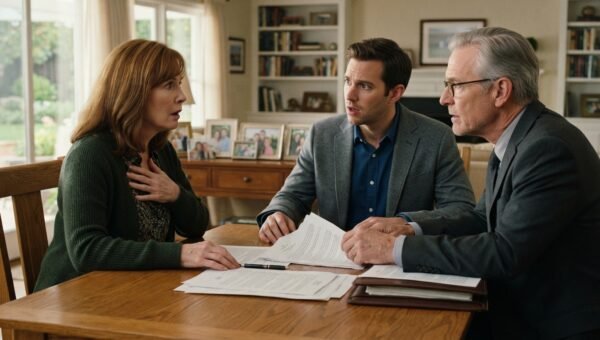
“I signed the emergency forms,” Arthur said. “Elena named me her proxy two years ago. She confirmed it when she woke up.”
“You had no right.”
“I had the paperwork,” Arthur said. “And she needed someone.”
That shut Robert up for a second. Arthur didn’t look proud. He looked tired.
Ruth placed the HIPAA restriction beside the proxy form. The dates were there. So was my signature from the day I woke up. Nothing about it was hidden or complicated. My father just wasn’t used to documents saying no to him.
“You left her on the floor,” Arthur said. “I found her half an hour later.”
Evelyn looked down. Robert didn’t.
“We thought she’d fainted,” he said.
“You heard what I said,” I replied. “You left anyway.”
He shifted closer to the bed, and Ruth lifted her hand to stop him. That was when I realized I didn’t want to hear an excuse. Not because I was too hurt to listen. Because I’d heard his excuses my whole life, and they always ended with me being asked to make something easier for him.
“Sign the papers for Chloe,” he said. “We’re family.”
“No. I’m not paying for her crash, and I’m not signing anything for you.”
His face changed then, not into sadness. Into annoyance. He’d expected me to be scared of losing his approval. He’d expected that old version of me, the one who kept trying to earn a softer voice from him.
I looked at the folder between us.
“You don’t get to use my name anymore.”
That was the line I’d been circling around for thirty-four years. I hadn’t planned it. It came out quiet, and I didn’t take it back.
Robert called me ungrateful. Evelyn said I was hurting Chloe when she was already upset. I asked Ruth to have them removed from the floor. She called security, and the two officers who came in gave my parents a chance to leave without making it worse.
Robert kept talking as he walked toward the door. “You’ll regret this.”
I didn’t answer. My mother followed him. Neither of them touched the folder.
Ruth updated the chart and confirmed my parents would not be given information about my care. I reviewed the contact forms again and made sure Arthur was listed. Before I left, I called my bank and asked what I needed to do to keep anyone from getting into my accounts. I changed the passwords I’d shared years ago. There weren’t many, but there were enough.
I also sent one message to Chloe. I told her I hoped she was safe, but I wasn’t paying the bills from her crash or signing a loan. Then I blocked her number. I blocked my parents too. It felt mean for about half a minute. Then it felt like locking a door I should have locked a long time ago.
Arthur drove me home in his weathered pickup. He didn’t ask if I was sure. He just waited while I settled into the passenger seat and pulled the belt across my sore middle.
The hospital sign got smaller in the side mirror. I rolled down the window and let the crisp afternoon air in.
I didn’t look back.