PART 1
My neighbor had been taking my mail for nearly two months. I caught him at 6:10 one morning slipping a padded envelope beneath his jacket.
For weeks, I had thought the postal service was just falling apart. Small things went missing first. My monthly utility bill never showed up in April. Then a birthday card from my sister in Ohio vanished, followed by two separate statements from my bank.
I had walked down to the end of our shared gravel lane twice to complain to the carrier, but he swore he dropped every single piece into the correct tin box by the road.
Our boxes sat side by side on an old cedar post. Mine was painted white with black reflective numbers; Arthur’s was unpainted aluminum, dented on the lid. Arthur had lived next door to Warren and me for twelve years. When Warren died of a sudden massive stroke four years ago, Arthur was the one who brought over two cords of seasoned oak, stacked it neatly against my back shed, and made sure my gravel drive was plowed whenever winter storms rolled down from the pass. He was a quiet, retired cabinetmaker who kept his lawn cut short and rarely spoke unless spoken to. I trusted him without a second thought.
That Tuesday morning, I woke up before dawn with a sharp cramp in my left calf.
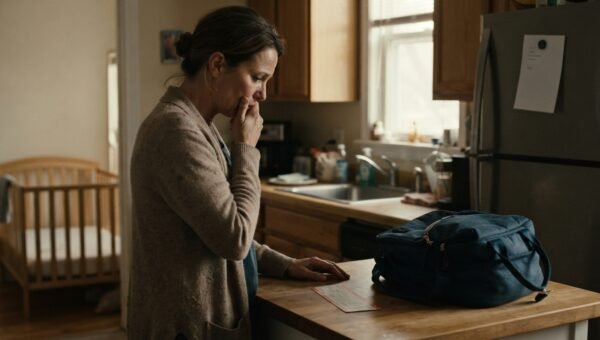
Unable to fall back asleep, I brewed a cup of black coffee and stood at my front kitchen window watching the gray light creep over the piñon trees. Through the kitchen blinds, I saw Arthur walking slowly down the shoulder of the road. It was barely ten past six. The mail truck never came before noon.
He stopped at the cedar post. He didn’t open his own box. He reached directly into mine, pulled out a thick, padded envelope, and slid it beneath his navy windbreaker.
My coffee cup hit the laminate counter so hard some spilled over my knuckles. I didn’t grab a sweater or put on real shoes. I slipped into my mud boots, marched out the front door, and caught him right as he reached his gravel turnoff.
“Arthur,” I called out.
He stopped dead in his tracks. His shoulders stiffened, but he didn’t turn around immediately.
When he finally faced me, his face was pale and drawn in the cold morning air.
“Morning, Clara,” he muttered, keeping his right arm pressed tight against his ribs. “You’re up early.”
“What’s under your jacket?” I asked. My voice shook with anger. “I just watched you take something out of my box.”
He cleared his throat and looked down at the gravel. “The carrier keeps confusing our addresses. Sometimes things get mixed in. I was just bringing it up to sort it out.”
“Then give it back,” I said.
He hesitated for two long seconds. His jaw worked, and for a moment I thought he might actually turn and run into his house. But he reached inside his windbreaker and handed over the package.
It was a standard padded mailer, yellowed around the edges, with modern postage taped over an old label. When Arthur saw the return address printed in the upper left corner, his hands began shaking so badly the paper crinkled.
It was a printed stamp: *Desert Rose Photography Studio, Santa Fe, New Mexico.* Below that was an address on Marcy Street.
My breath caught in my throat. Desert Rose had closed in the summer of 1993. Warren and I had moved up here to the foothills in 1988, and I remembered when that studio shuttered because the owner had been Warren’s second cousin.
I tore the padded envelope open right there in the road, ignoring Arthur’s outstretched hand.
Inside was a heavy, silver-framed five-by-seven photograph. It was a formal wedding portrait. Warren was standing tall and straight in a dark gray morning suit, looking young and broad-shouldered, just like he did when I first met him. But he wasn’t standing beside me.
He was standing beside a woman with dark hair swept up in an elaborate lace veil, holding a bouquet of yellow calla lilies. She was smiling up at him with total adoration, her hand resting flat against his lapel.
I turned the frame over. Glued to the black cardboard backing was a piece of yellowed lined paper. The handwriting was unmistakably Warren’s sharp, left-leaning slant. It gave my current rural address, and beneath it, written in heavy black ballpoint, were the words:
*DELIVER AFTER JUNE 14.*
Tomorrow was June 14.
“Clara, please,” Arthur whispered. His voice was cracked, almost pleading. He reached toward the photograph. “Burn it. Put it in your woodstove right now. Burn it before your children arrive for dinner.”
My daughter Sarah and my son David were driving up from Albuquerque tomorrow evening for Warren’s memorial dinner. We had held one every single year on June 14, the date Warren had proposed to me forty-two years ago.
A cold sickness rushed into my chest. I stared at my neighbor. “How do you know what this photograph shows, Arthur? How could you possibly know?”
Arthur didn’t answer with words. With trembling fingers, he reached into his front trouser pocket. He pulled out a heavy object and held it out on his flat, weathered palm.
It was the matching half of my husband’s gold wedding band.
PART 2
Warren’s ring was unmistakable. When we ordered our bands from a jeweler in Albuquerque forty years ago, Warren had requested a custom jeweler’s cut: a split-groove braid with three tiny recessed notches near the inside clasp to represent our faith and our future children. After Warren died, the mortuary returned his jewelry in a small white envelope. I had slipped his ring onto my thumb, but the band was so unusually narrow that I had assumed age and arthritis had forced him to have it altered over the years.
Now, sitting on Arthur’s palm, was the second half of that exact ring. It was a interlocking puzzle band. My husband’s ring had not been resized; it had been sawed cleanly in two, or cast as a pair designed to interlock into a single solid piece.
“Come inside, Clara,” Arthur said quietly, looking down the empty dirt road. “The wind is picking up. We shouldn’t be standing out here.”
“I am not going into your house,” I said, clutching the frame to my chest. “You explain this right now. You have been stealing my mail for two months. Why?”
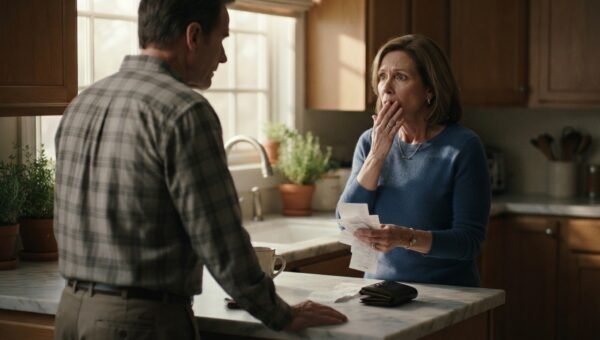
Arthur looked exhausted. He ran a rough hand over his stubbled jaw. “Because the lawyer in Denver sent a notification letter in April. When Warren bought this land next to mine thirty years ago, he paid for my silence, and he made me promise on my own daughter’s grave that I would keep this from ever touching your doorstep. The firm was instructed to release the estate archive twenty years after the divorce was finalized, or upon the date written on that parcel. I knew the envelope was coming. I’ve been checking your box every morning before daylight so you wouldn’t have to see it.”
“Divorce?” The word sounded completely alien. “Warren and I were married for thirty-six years. We were never divorced.”
“Not you,” Arthur said gently. “Her.”
He pointed a thick finger at the dark-haired woman in the silver frame.
“Her name was Evelyn Vance,” Arthur continued, his voice dropping low. “Warren married her in November of 1978 in Taos. They were together for five years. He was an engineer for the state highway department back then, traveling between Santa Fe and the northern counties.”
“That’s impossible,” I said, though my voice broke on the syllables. “Warren was working regional maintenance in Farmington in 1978. That’s where we met at the community church social in the spring of eighty-one. We got married in eighty-two.”
“He didn’t leave her until eighty-three, Clara,” Arthur said. “He lived a double life across ninety miles of desert for nearly two years. He had two apartments, two sets of bills, and two women who thought he was working sixty-hour shifts on remote bridge projects.”
My stomach heaved. I had to plant my boots wide in the dirt to keep from falling. I thought of Warren coming home on Friday nights in his dusty work truck, smelling of diesel fuel and mountain sage, tossing his leather gloves on the radiator and lifting me off the kitchen floor. He had always claimed his road surveys kept him out of town four days a week. I had packed his metal lunch pail myself, tucking handwritten notes between his roast beef sandwiches.
“Why do you have his ring?” I demanded, staring at the gold piece in his hand. “Why would he give this to you?”
“He didn’t give it to me,” Arthur said. “Evelyn did. Evelyn was my older sister.”
The gravel road seemed to tilt beneath me. The quiet, solitary neighbor who had shoveled my snow, patched my roof shingles after the spring hailstorm, and sat quietly on my porch drinking iced tea while my grandchildren played in the yard was my late husband’s former brother-in-law.
“You knew him,” I breathed. “All those years before you moved here. You knew who he was.”
“I hated him,” Arthur said with absolute, flat sincerity. “When he abandoned Evelyn in eighty-three, she didn’t just lose a husband. She lost her mind with grief. She had miscarried their child three months earlier, and while she was recovering in the clinic in Espanola, Warren cleared out his half of the closets, took eight thousand dollars from their joint credit union account, and vanished. It took us six months to track down where he went. By then, he had already bought a small house in Farmington with you.”
“He never mentioned an Evelyn,” I whispered. “Never once. His parents were dead. He had no siblings. He said his past was just empty work camps and loneliness until he met me.”
“He lied, Clara. He was a coward who couldn’t face the mess he made. When my sister finally got the divorce decree through the county court in eighty-four, the judge granted her alimony that Warren refused to pay. He settled out of court three years later by setting up a deferred annuity for her care. But Evelyn never fully recovered. She lived in an assisted care home in Santa Fe until she passed away in ninety-three.”
Arthur stepped closer, his posture softening. “When Warren found out she died, he came to my workshop in Albuquerque. He sat on my bench and wept like a child. He gave me half of the puzzle ring he had given her on their wedding day. He said he had kept his half, and that he lived in terror every day that you or your children would find out what kind of man he used to be. When I retired in 2012, Warren offered to sell me the five acres next to yours for half its market value if I agreed to watch over you if he died first, and to intercept anything that might surface from the old family trusts.”
“The old family trusts,” I repeated, my head spinning. “What was in the letters you took from my box in April and May?”
Arthur reached into his coat pocket again and pulled out two folded, unopened envelopes bearing the legal letterhead of a probate firm in Denver.
“These were notifications that the final reserve account from Evelyn’s estate was expiring,” Arthur said. “Along with a safe deposit box key that Warren had paid to maintain until June 14 of this year. Tomorrow. The safe deposit box is at the First National branch on the plaza in Santa Fe. That’s where the rest of the records are.”
PART 3
I took the letters and the half-ring from Arthur’s hands without saying another word. I turned around and walked back to my house, locking the front door behind me.
The house was completely silent except for the hum of the refrigerator. On the mantel above the stone fireplace sat a row of framed photographs: Warren holding our newborn daughter Sarah; Warren teaching our son David how to change the oil on his first truck; Warren standing beside me on our twenty-fifth anniversary trip to the Grand Canyon. In every picture, his gray eyes looked direct, honest, and kind.
I set the old wedding portrait on the kitchen table next to the half-ring. The gold piece on the table was identical in design to the one Warren had worn to his grave. I went to my bedroom jewelry box, took out the band the mortician had given me, and placed them side by side.
They fit together with a sharp, quiet click. The notches lined up perfectly, forming a solid, heavy band with a continuous braided pattern.
Forty years of my life had been built on a foundation of deliberate omissions. I hadn’t just been his wife; I had been his cover story, his fresh start, and his escape hatch from a woman he had broken and abandoned.
By nine o’clock, I was in my sedan driving south on Highway 285 toward Santa Fe. The two legal notices sat on the passenger seat beside the small brass key Arthur had surrendered.
The First National branch on the historic plaza was cool and quiet, smelling of old paper and polished marble. I presented the bank manager with Warren’s death certificate, our marriage license, my identification, and the legal letter that listed Clara Miller as the designated beneficiary upon the expiration of the lease term.
The manager led me into the narrow vault room and unlocked Box 414. He set the heavy tin box on a metal examination table, pulled the door shut, and left me alone.
Inside was a single manila folder and a smaller blue jeweler’s box.
I opened the folder first. It contained the certified copies of a marriage license from Taos County dated November 12, 1978, between Warren Thomas Miller and Evelyn Rose Vance. Beneath it was a decree of dissolution of marriage from Rio Arriba County dated August 4, 1984. The grounds listed were abandonment and irreconcilable differences. Attached to the decree was a financial settlement agreement: Warren had agreed to pay twenty-four thousand dollars over ten years to maintain Evelyn’s medical and residential care, along with an irrevocable trust funded by his highway department pension benefits.
Tucked into the back of the folder was a handwritten letter addressed to me, dated May 1993, the month Desert Rose Studio had closed and the month Evelyn had died.
*Clara,*
*If you are reading this, it means Arthur could not stop the clock, or he chose not to. I don’t blame him. I spent my whole life being afraid of the man I was before I met you. I was weak, selfish, and terrified of sickness and grief. When Evelyn fell ill and lost our baby, I couldn’t bear the sight of the house, so I ran away like a coward and hid behind my job. Then I met you in Farmington. You were strong, good, and full of life, and instead of telling you the truth, I built a wall around my past and pretended it never happened.*
*The money in this account was Evelyn’s share of the pension, kept in reserve in case she outlived her care trust. It belongs to her memory, or to whatever good you can do with it. My children must never know that their father was a bigamist for twenty months, or that he left a dying woman behind to save his own comfort. Please, Clara. Let them remember me as a father.*
Beneath the letter was a cashier’s check made out to the Estate of Warren T. Miller in the amount of sixty-eight thousand dollars, representing the final closed balance of the reserve trust.
I opened the blue jeweler’s box. Inside was a delicate gold chain holding a tiny silver baby rattle charm. On the back of the charm was engraved: *Baby Miller, Due July 1983.*
I sat in that cold vault for nearly an hour. The anger that had fueled my drive down the mountain slowly gave way to a profound, hollow exhaustion. Warren hadn’t just made a mistake in his youth; he had methodically maintained a double existence, married me while still legally bound to another woman, and then used our quiet neighbor as an unpaid guard dog to ensure his children would never look at his memory with anything other than reverence.
I drove home slowly. When I turned up the gravel lane, Arthur was standing by his mailbox, leaning heavily on a wooden cane. He looked like an old man who had spent forty years carrying a stone that wasn’t his to bear.
I pulled into his driveway and stepped out of the car.
“Did you find it?” he asked softly.
“I found everything,” I said. “The decree, the check, the letters, and the charm for the baby.”
Arthur closed his eyes and let out a long, ragged sigh. “What are you going to tell David and Sarah tomorrow?”
“They deserve to know who their father was,” I said, my voice hardening. “They revere him. David talks about him like he was a saint who never put a foot wrong. He needs to know the truth.”
Arthur looked at me, his eyes wet with tears. “My sister died thirty-one years ago, Clara. She spent the last ten years of her life not even knowing what day of the week it was. Warren paid every single medical bill she ever had. He never missed a payment to the facility, even when you two were living on beans and rice during the recession in the nineties. He was a coward for running, yes. But your kids… your kids loved him. Tearing down his ghost won’t bring Evelyn back, and it won’t fix what he did forty years ago. It will only break your children’s hearts on the one day they come together to remember him.”
He turned and pointed toward my house across the trees. “You have to decide whether you want the truth to be a weapon, or whether you want to finally put it in the ground.”
ENDING
The next afternoon, the gravel driveway crunched under the tires of Sarah’s station wagon. My grandchildren tumbled out first, their laughter echoing through the pines as they ran toward the front porch. David followed behind, carrying a heavy cooler of brisket and a pie his wife had baked.
I stood by the kitchen counter, dressed in the dark blue linen dress Warren had always liked.
The silver frame was no longer on the table. It was tucked away in a locked metal file box at the bottom of my bedroom wardrobe, along with the marriage certificate from Taos, the divorce decree, and the letters from the Denver firm.
Beside the file box sat the cashier’s check for sixty-eight thousand dollars. That morning, before my children arrived, I had called the administrator of the Northern New Mexico Women’s Shelter in Santa Fe. I had instructed the bank to endorse the funds as an anonymous donation in memory of Evelyn Vance, earmarked specifically for transitional housing and medical support for abandoned women. Warren had wanted to hide that money away; I made sure it finally served the woman he had neglected.
“Mom!” David called out, pushing through the screen door and wrapping his thick arms around me. He smelled of pine soap and road dust, so much like his father that my chest tightened until I could barely breathe. “Look at you. You look wonderful. We brought enough beef to feed the whole county.”
Sarah walked in behind him, setting a vase of fresh yellow flowers on the dining table. “How have you been holding up, Mom? We know June is always the hardest month for you.”
“I’m fine, sweetheart,” I said, kissing her cheek. “I really am.”
During dinner, David raised his glass of iced tea, just as he did every year. “To Dad,” he said, his voice thick with emotion. “The most honest, dependable man I ever knew. He taught me how to work, how to treat a family, and how to stand by the people you love.”
Sarah wiped a tear from her eye and clinked her glass against his. “To Dad.”
I held my glass steady, looked at my children’s clear, untroubled faces, and raised it to my lips. I didn’t drink to the saint they thought they had lost. I drank to the complicated, broken, frightened man I had actually shared a life with, and to the innocent woman who had paid the steepest price for his fear.
After the dinner dishes were washed and the children were outside catching fireflies in the grass, I walked out to the back porch.
Across the dark yard, a small yellow light glowed in Arthur’s workshop window. I stepped off the porch and walked across the grass until I reached his open doorway.
Arthur was sitting at his workbench, wiping down a hand plane with an oily rag. He looked up as my shadow fell across the concrete floor. He didn’t ask what I had said to my children. He just looked at my face, saw the quiet resolve there, and slowly nodded.
I reached into my pocket and took out the interlocking wedding band. I set it gently on the wooden edge of his workbench.
“Keep it,” I said quietly. “It belongs to your family, Arthur. Not mine.”
Arthur stared down at the braided gold ring for a long moment. He didn’t reach out to touch it, but his shoulders visibly dropped, shedding the weight of a secret he had guarded for more than three decades.
“Thank you, Clara,” he whispered.
“I’ll see you tomorrow morning, Arthur,” I said. “Bring your mail up whenever it comes.”
I turned and walked back across the dark lawn toward the warm lights of my home, leaving the past where it had always belonged, buried under forty years of silence and finally set to rest.