The pot roast recipe was the only one Dad ever asked me to make, and I hadn’t made it in eighteen months. The notebook was still at his house, where I’d left it after our last bad argument. I figured it was just one more thing neither of us had managed to say out loud.
Then Nurse Evelyn called and told me Dad had been asking for it.
Julian had told the hospice nurse Dad didn’t want visitors. I’d stayed away for a week because I believed him.
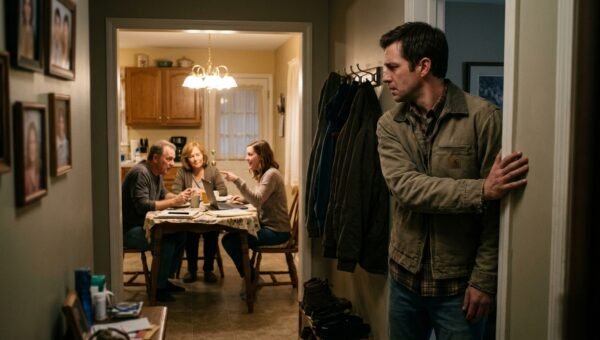
When I walked into Dad’s bedroom, Julian was sitting beside the bed with my old spiral notebook open on his knee. He pointed at a page circled in red.
“He wants you to explain this.”
I thought I knew what Julian meant. I was wrong about what Dad had circled, and I was wrong about why Julian had spent a week keeping me out.
The house was in the county seat, a short drive from my place in the Missouri Ozarks. I made the drive that afternoon with Evelyn’s words going around in my head: “He keeps asking for you. And for your notebook.” I was angry, but I kept trying to smooth it over in my mind. Maybe Dad had changed his mind. Maybe Julian had misunderstood.
Still, seven days is a long time when your father is in hospice.
I’d called Julian the week before. I remember standing by my kitchen sink, scraping a bit of dried dough off my thumb with my thumbnail while I waited for him to answer.
When he did, I asked if I could come sit with Dad.
“Dad said he doesn’t want visitors,” Julian told me.
“Did he say that about me?”
There was a pause. “He said no visitors. I’m not making this up.”
I didn’t want to fight on the phone. That’s the part I’ve been ashamed of. I’d already lost my temper with Dad once, and I told myself I wasn’t going to make his last days harder. So I said, “All right. Let me know if he changes his mind.”
Julian didn’t call. Evelyn did.
When I got there, the hospice bed was set up where Dad’s bed had always been. The little oxygen machine made a steady shushing sound. I could smell the lemon cleaner they used on the bedside table, over the old wood smell of the house. Dad looked smaller than I remembered from the last time I’d seen him.
Julian glanced up from the notebook. His thumb was pressed hard against the page.
“Why are you here?” he asked.
“Evelyn called me.”
“I told her Dad didn’t want company.”
“She said he’s been asking for me.”
Julian looked toward Dad, then back at the book. “He wants you to explain this.”
For half a second, I thought Dad had circled the recipe because I’d left after our fight. I thought maybe he wanted me to admit I’d been selfish. The red circle looked rough and quick, like someone had drawn it with a pen that was running out.
I reached for the notebook. Julian didn’t hand it over at first.
“Just read it,” he said.
I took it from him. The cover was soft at the corners, and there was a brown grease mark near the spiral from years of cooking with it open on the counter. Dad used to keep that notebook by the stove.
He’d turn pages with the side of his hand because his fingers were often wet.
The circled recipe was Sunday pot roast with carrots and dumplings. I knew the page. I’d cooked from it once, the night Dad and I argued.
That was eighteen months earlier. I’d brought the groceries and made the roast because Dad had started missing appointments and mixing up his pills. I offered to move in for a while, or at least come by every day and help with the bills and meals. He got sharp with me right away.
“I don’t need you managing me.”
“I’m not trying to manage you. I’m trying to help.”
“You’ve got your own life.”
“I know. I can still help.”
He pushed the plate away. I can still picture the dumplings, untouched and cooling, and the little crease between his eyebrows. I told him he was being impossible. He said I was making a fuss. I left before I’d even washed the pan.
I didn’t take my notebook with me.
That argument became the fence line between us. Not because we never spoke again. We did. We talked about the weather, about Julian’s errands, about what Dad needed from the store. But when I tried to bring up help, Dad shut me out, and after a while I stopped asking.
I saw the recipe page again. Beneath the red circle, there were words in the margin. Not cooking notes. Dates.
At first, I couldn’t make them out. Dad’s old handwriting had been firm and square. The new writing was thin and shaky, and some of the words leaned downhill. I moved the notebook closer to the window.
Julian shifted in his chair. “It’s just scribbling.”
I didn’t answer. There were numbers beside the dates. Check amounts. Grocery trips. Medication pickups. And next to one date, in Dad’s familiar handwriting, was a line that made me stop: “Julian asked her to help pay the card. I said no.”
The room seemed to go very still, though the oxygen machine kept shushing.
“What is this?” I asked.
Julian stood up. “He’s been sick. He writes things down, then forgets what they mean.”
Dad’s hand lay on top of the blanket. I wanted to take it, but I couldn’t stop reading.
There was a date from the night of our argument. The red circle had been added later, but Dad’s note was from that night. “Found new credit account in my name. Julian says he’ll fix it. Don’t involve her. She has enough.”
Under that, in the newer hand: “I picked a fight so she would go home. I thought I could keep her clear of this.”
I read the words again. Then once more.
He hadn’t thrown me out because he thought I was a burden. He’d done it because he was ashamed and afraid I’d get pulled into Julian’s money trouble. The argument I’d carried around as proof that Dad didn’t trust me had been something Dad made happen on purpose.
I wished I could say that made me feel better right away. It didn’t. I was hurt that he’d decided what I could handle. I was also hurt that I’d accepted his silence as an answer and stayed away.
Evelyn had stayed near the doorway. When I looked up, she came a little closer.
“He kept that notebook under his mattress,” she said softly. “He wouldn’t let Julian take it out of the room.”
Julian’s face tightened. “That’s not what happened.”
Evelyn didn’t argue. She just looked at the page in my hands.
The notes went on for months. Dad had written down money taken from his pension checks, missed payments, and the dates he found out about credit accounts opened in his name. Some lines had amounts. Some had only a short note: “Said it was temporary.” “He promised he’d put it back.” “I should have told her.”
At the bottom of one entry, Dad had written, “I want her here. I don’t know how to ask after what I did.”
I put my finger on the line so I wouldn’t lose my place.
Julian took two steps toward me. “He’s confused. You can’t use this like it’s proof.”
“Those dates match the bank notices,” I said. “I saw them in the mail last winter.”
“I was handling his bills.”
“You were using his money.”
“I was going to make it right.”
I looked down at the page again. There were more notes than I could take in. It wasn’t a clean account. It was Dad trying to keep track as his hands got weaker, one date at a time. I wanted to yell at Julian. I wanted to ask how he could sit beside Dad and keep telling me he didn’t want me there.
Instead, I kept reading.
Julian started to say something else, but a small sound came from the bed. Dad’s fingers were moving against the blanket.
I put the notebook down and took his hand. His skin felt warm, and his fingers closed around mine with more strength than I expected. His eyes opened. He looked at me first.
“Dad, I’m here,” I said.
His mouth moved, but I couldn’t hear the words. I bent closer. He gave my hand a firm squeeze.
Then he turned his face toward Julian.
He didn’t say anything. He didn’t have to. His eyes were clear, and the look in them wasn’t confusion. It was disappointment. After a moment, he turned back toward me.
Julian’s shoulders dropped a little. He looked at Dad, then at the notebook.
“He was trying to protect you,” Julian said. “I didn’t want you in the middle.”
I almost laughed, but there was nothing funny in it. “You kept me away from him.”
“I was trying to get things sorted.”
“You had a week to sort it.”
He rubbed his hand over his mouth. For a moment, I could see the scared younger brother I grew up with, the one who used to call me from the barn when a calf got loose. That didn’t make what he’d done smaller. It only made it harder to decide what to do with him.
I could have called the sheriff right then. I could have taken the notebook and turned the room into a fight Dad didn’t have strength for. I thought of the days he had left, and I knew I wasn’t going to spend them making him listen to us argue.
I closed the notebook.
“Leave the room,” I told Julian. “You’re not making decisions about Dad’s care by yourself anymore. The executor gets the notebook, and the accounts go to the attorney.”
His mouth opened. Then he looked at Dad again. Dad kept his eyes on me.
Julian picked up his jacket from the chair. He didn’t apologize. At the door, he stopped and said, “I didn’t mean for it to go this far.”
I had plenty I could have said. None of it would have fixed Dad’s breathing or given back the week I’d missed.
“Go home, Julian.”
He left the bedroom. A few minutes later, I heard the front door close.
Evelyn helped Dad settle back against his pillow. She checked the oxygen line and asked if I wanted water. I did, though I didn’t drink much. I sat down beside the bed with the notebook on the table.
“He wanted you here,” Evelyn said.
I nodded. I didn’t trust myself to say anything that wouldn’t come out wrong.
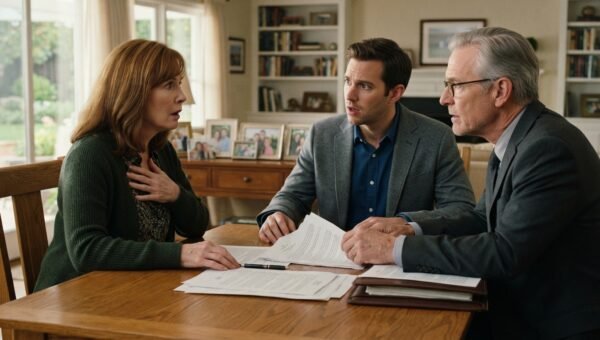
That evening, I called the family attorney and the executor. I told them what I’d found and where the notebook was. They arranged to review the account records and freeze what they could. Later, the notes helped them match the missing money and charges to Julian’s actions. The money came out of what he would have inherited from Dad’s modest estate. I didn’t ask for a bigger punishment. I just wanted the records out of Julian’s hands and the truth written down where nobody could hide it.
Julian and I spoke only through the attorney after that. Maybe that’s where we’ll stay. I don’t know yet. I do know Dad didn’t need me to pretend we were fine. He needed me beside him.
The next few days weren’t grand or dramatic. I helped Evelyn with small things. I brought Dad water. I rubbed lotion into his dry hands. Sometimes I talked about the garden or the neighbor’s dog. Sometimes I sat quiet and held on.
Once, I tried to tell him I was sorry I’d stayed away.
“I should’ve come,” I said.
He pressed his fingers against mine. That was all.
I told him I was sorry about the fight, too. I told him I loved him. I told him I believed him. I don’t know how much he could hear, but I said it anyway.
The notebook stayed on the nightstand. I didn’t open it again. There was no need to read the same words until they became a substitute for the things we’d said too late. Dad had left the truth where I could find it. He’d also left me his hand.
By the afternoon, the light through the window had moved across the blanket. I sat in the bedside chair with the spiral notebook closed beside a glass of water. Dad’s fingers were warm in both of my hands, and for a little while, neither of us had to leave.