PART 1
The words came out of my mouth before my brain could stop them.
“Your real family didn’t want you. That is why you ended up with me.”
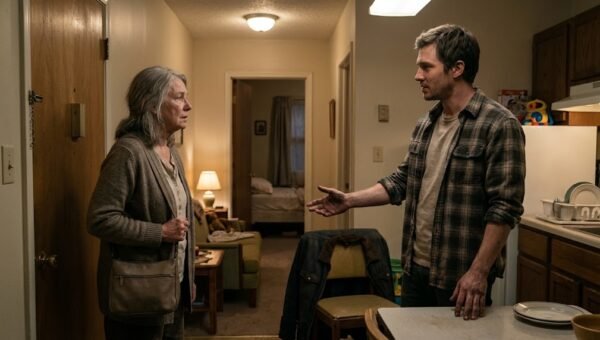
The room went dead silent. It was Maya’s fourteenth birthday. We were standing in the kitchen of our small split-level house in Cedar Rapids. There was a chocolate cake sitting on the counter with fourteen unlit candles, and on the floor between us lay a broken ceramic mug.
It had been an exhausting, suffocating week. My husband, David, had passed away from colon cancer eight months earlier, leaving behind twenty-two thousand dollars in unpaid medical debts and a house that needed a new roof. I was working fifty hours a week as an intake coordinator at an outpatient clinic, coming home every night with swollen ankles and a pounding headache. Maya had been withdrawing into herself, slamming bedroom doors, failing ninth-grade geometry, and refusing to speak during dinner.
That evening, when I asked her to help me set the table, she rolled her eyes and knocked David’s favorite coffee mug off the edge. It shattered across the linoleum. When I gasped, she screamed that I was trying to control her life, that I was not her real mother, and that she hated living with me.
The exhaustion, the grief, and the bitter loneliness snapped something inside my chest.
Instead of being the adult, instead of pulling her into a hug or taking a breath, I wanted to hurt her back. I wanted to level the playing field. So I looked her dead in the eye and delivered the cruelest sentence one human being could ever inflict on an adopted child.
Maya did not scream. She did not throw anything else.
The color drained completely out of her face until her lips looked almost grey. Her dark eyes, usually bright and expressive, turned completely flat. She looked down at the broken pieces of David’s mug, stepped over the shards in her socks, and walked up the stairs to her bedroom.
She never spoke another word to me. Not that night. Not the following morning. Not for the next five years.
If she needed school supplies, she left a sticky note on the microwave. If she needed lunch money, she wrote the dollar amount on the dry-erase board by the back door.
When she turned sixteen and got a part-time job busing tables at a diner out on Highway 30, she bought her own clothes, paid for her own flip phone, and walked to work in the rain rather than sit beside me in the front seat of my car.
I apologized hundreds of times. I slipped handwritten letters under her bedroom door begging for her forgiveness. I bought her favorite treats and left them outside her room. I even made an appointment with a family counselor, but when the afternoon arrived, Maya simply sat on the front porch steps and refused to get into the car.
Living with her was like sharing a home with a phantom. I watched her grow taller, graduate high school with honors, and pack two duffel bags on the morning of her nineteenth birthday. She did not say goodbye. She did not slam the door. She simply walked down the driveway while I was at work, leaving her house key on the center of the kitchen counter.
For three years, her side of the world was pitch black. No phone calls. No holiday cards. Her social media profiles were locked or deleted. I visited the local police station twice to file missing persons inquiries, but because she was an adult who had walked away willingly, the officers gently told me there was nothing they could do. I carried the guilt like a boulder pinned against my ribs. Every single night before turning off the bedside lamp, I looked at her school portrait on my nightstand and thought about that kitchen floor.
Then, on a rainy Tuesday afternoon in late October, a heavy cardboard box was sitting by my front storm door.
The box was wrapped tightly with brown packing tape. When I knelt down to look at the shipping label, my knees gave out, and I had to catch myself against the porch railing.
The return address was a post office box in Duluth, Minnesota.
The sender name printed in bold black ink was Maya Vance.
My hands shook so violently that the key scratched against the brass lock three times before I could get inside. I carried the parcel to the kitchen table, took a pair of kitchen shears, and cut through the thick layers of tape.
Inside, nestled among crumpled newspaper, was an old leather-bound document case, a heavy iron key with a numbered brass tag, and a thick, sealed manila envelope.
Taped to the front of the envelope was a folded piece of white notebook paper. I unfolded it with trembling fingers. Her handwriting was unmistakable, neat and sharp, written in dark blue ballpoint pen.
“Now you will finally understand why I was never supposed to be your daughter.”
PART 2
The document case inside the box was made of scuffed oxblood leather with brass corner protectors. I recognized it immediately. It belonged to David.
He had kept it locked inside the bottom drawer of his metal filing cabinet in our basement study for as long as we were married. David was a quiet, meticulous accountant who handled all our finances, our taxes, and our adoption paperwork. When we adopted Maya back in 2005 through a private arrangement in Illinois, David had managed every interaction with the legal agency. He told me the birth parents were college students from out of state who wanted total confidentiality and closed records. I had trusted him completely.
With trembling hands, I tore open the thick manila envelope.
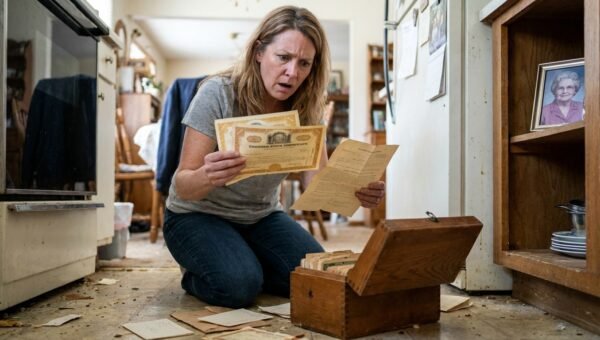
Inside were three documents: a certified birth certificate, an official adoption decree from Winnebago County, and twelve pages of typed legal correspondence dating back to September 2004.
I looked at the birth certificate first.
The child’s birth name was listed as Maya Lynn Vance.
The mother’s name was listed as Teresa Lynn Vance.
Teresa was David’s younger sister.
My breath caught in my throat so hard that a sharp pain shot through my chest. Teresa had died in an icy rollover car crash on Interstate 80 twenty years ago. We had attended her funeral in Moline. She was only twenty-three years old, an aspiring illustrator with a wild laugh and a complicated past. At the time of her death, David had told me Teresa had been living alone in Chicago, struggling to pay rent, and that her personal affairs were a total mess. He had spent two weeks in Illinois cleaning out her apartment.
He had never once mentioned that Teresa had given birth to a baby girl four weeks before that crash.
I spread the legal letters across the kitchen table. They were written on the formal letterhead of an attorney named Harold Miller in Rockford, Illinois.
The letters outlined the truth in cold, black-and-white legal type. Teresa had given birth in November 2004. The father was unknown. When Teresa was killed on December 14th, she had left a handwritten holographic will naming a woman named Evelyn Vance, her maternal aunt in Duluth, as the permanent guardian of her child. Teresa had also established a modest life insurance policy naming Aunt Evelyn as the trustee for baby Maya.
David had contested the will.
Using Teresa’s debts and his standing as a stable, married accountant, David had persuaded a county judge that he and his wife, an intake healthcare worker, provided a far more stable suburban home than an aging aunt running a small greenhouse nursery in northern Minnesota. David had used seven thousand dollars of our early savings to buy out Aunt Evelyn’s claim, promising the court that Maya would grow up surrounded by her true blood family.
Then, David came home to Iowa and told me an agency had matched us with an anonymous mother who wanted no contact.
David had lied to me for fifteen years.
He had hidden Maya’s true heritage. He had cut off Aunt Evelyn entirely. And when Maya was fourteen years old and screaming that I was not her real mother, she had not been throwing a generic teenage tantrum.
She had found this oxblood case in the basement three days before her birthday.
PART 3
The next morning, I took five days of emergency leave from the clinic. I loaded my small sedan, took the iron key, the legal documents, and the box, and drove six hours north through Wisconsin into Duluth.
The return address on the parcel led to a quiet, winding street lined with birch trees overlooking the grey waters of Lake Superior. At the end of the gravel drive stood a weathered cedar house with a large glass greenhouse attached to the southern side. A hand-painted wooden sign near the mailbox read: *North Shore Perennials.*
I parked by the wooden fence and sat with the steering wheel pressed against my ribs for ten minutes, trying to steady my breathing. My heart was pounding so hard my vision blurred.
I walked up the flagstone path. Through the humid glass panels of the greenhouse, I could see two figures moving between rows of potted ferns.
One was an older woman with silver hair pulled back into a messy bun, wearing green canvas gardening overalls.
The other was Maya.
She was twenty-two now. Her hair was cut into a practical shoulder-length bob, and she was carrying a wooden flat of seedling pots with steady, sure hands. She looked healthy. Her cheeks had color, and she was talking with the older woman, laughing at something being said. It was the first time I had heard her laugh in eight years.
When the greenhouse screen door squeaked open, both women turned.
Maya froze. The smile vanished from her face, replaced by that familiar, cautious guard she had worn throughout her teenage years. She set the flat of plants down onto a cedar workbench and wiped her dirt-stained palms against her work pants.
“Margaret,” Maya said quietly. She did not call me Mom. She had not called me Mom since that birthday.
The older woman stepped forward, wiping her glasses on the hem of her apron. “Are you David’s wife?” she asked, her voice low and direct.
“Yes,” I said, holding the oxblood case against my chest like a shield. “I’m Margaret.”
We sat in the sunroom of the main house. Aunt Evelyn poured three mugs of mint tea from an iron kettle. The heavy iron key Maya had mailed me sat in the center of the wooden table.
“I never knew,” I said, looking straight at Maya. Tears were spilling down my cheeks, hot and unstopped. “Maya, I swear on whatever soul I have left, I did not know Teresa was your mother. David told me you were an anonymous private adoption from an agency in Chicago. I never saw that leather case until your box arrived on Tuesday.”
Maya looked at the table. Her jaw was tight, but she was listening.
“When you were fourteen,” I continued, my voice cracking, “I said the most disgusting, unforgivable thing a mother could ever say to her child. I thought you were just an angry teenager acting out over a broken mug. I didn’t know you had found David’s papers. I didn’t know you were mourning your real mother while looking at a woman who had no idea who you actually were.”
Maya took a slow breath. Her hands were wrapped tightly around the warm tea mug.
“Three days before my fourteenth birthday,” Maya said, her voice shaking slightly, “I was looking for extra graph paper for school. I went into Dad’s old filing cabinet. The bottom lock was broken. I found the oxblood case.”
She looked up at me, her eyes wet. “I found my mother’s death certificate. I found pictures of her holding me in the hospital room. And then I found Dad’s letters to Aunt Evelyn, telling her that if she ever contacted our house in Iowa, he would file a harassment restraining order and make sure she never saw a photograph of me again.”
Aunt Evelyn reached across the table and placed her weathered, calloused hand over Maya’s knuckles.
“David was ashamed,” Evelyn said softly. “Teresa had a troubled youth, and David always treated her like a family embarrassment that needed to be managed. When Teresa died, David wanted to erase her mistakes by turning Maya into the perfect little suburban daughter for his own household. He treated me like a threat because I knew what my sister really went through.”
“When I broke that mug,” Maya whispered, looking directly into my eyes, “I was terrified. I thought you and Dad had planned the whole thing together. I thought you took me from my mother’s family, locked away her memory, and kept me like a charity project. And when you told me my real family didn’t want me, it felt like you were confirming everything I had just discovered in that basement.”
The room was silent except for the wind coming off the lake, rattling the glass panes of the sunroom.
“I stayed in that house until I was nineteen because I had no money and nowhere to go,” Maya said. “The day I left, I took a bus straight to Duluth. I found Aunt Evelyn’s greenhouse through an old telephone directory. I have been living in the apartment above the barn for three years, learning the nursery business and trying to piece together who Teresa actually was.”
ENDING
I did not ask Maya to move back to Iowa. I did not ask her to call me Mom. You cannot glue together a vase that has been crushed into dust, and you cannot undo five years of silence with an afternoon conversation.
Instead, I stayed in Duluth for three days at a small motel near the harbor.
Every morning, I drove out to the nursery. I helped Aunt Evelyn sweep the gravel pathways in the greenhouse. I helped Maya bag potting soil and load bags of river stone into customer pickup trucks. We did not talk about the past constantly. We talked about the weather, about the drainage systems for the winter crops, and about how difficult it was to keep cedar wood from rotting in the northern humidity.
On the third afternoon, before I packed my car to drive back to Cedar Rapids, Maya walked me out to my vehicle.
She handed me the iron key that had been inside the parcel.
“The key belongs to a safety deposit box at the credit union in Moline,” Maya said. “Aunt Evelyn told me yesterday that Teresa kept a collection of her sketchbooks and personal journals in there before she died. Dad had the key in his case, but he never emptied the box. I want you to go there with me next spring. I want us to see her work together.”
I took the key. It felt heavy and cold in my palm.
“I would like that very much, Maya,” I said.
She stepped forward and wrapped her arms around my neck. It was not a long embrace, and it was not the easy, effortless hug of a child clinging to her mother. It was cautious, fragile, and honest. But when she leaned back, she looked at me with clear eyes, and for the first time in eight years, the wall between us was gone.
When I returned home to Iowa, the house felt different. It was still quiet, and the medical bills still arrived in the mail, but the ghost was gone.
I took the framed photographs of David off the living room mantle and packed them away into a storage bin in the attic. I left the blue-and-white porcelain vase on the dining table empty, waiting for spring.
Every Sunday evening at six o’clock, my kitchen phone rings. We talk for twenty minutes about the frost conditions on Lake Superior and the clinical schedule at my clinic. We are not what we were, and we will never be what David tried to force us to become. But we are real now. And for the first time in my life, that is more than enough.