6:14 the morning after my 69th birthday, Nathan called to ask how I liked the chocolates.
I was in my kitchen, still in the old robe I’d worn to bed, with one hand on the coffee tin. His voice sounded light. Too light, maybe, but I figured he was making conversation.
“Oh, I gave them to Chloe and Leo,” I said. “They love sweets.”
Nothing for a second.
Then Nathan shouted, “You did what?”
He was breathing hard. I can still hear it. I set down the coffee tin.
“What’s wrong?” I asked.
“Did they eat any?”
That was when my son stopped sounding like my son.
I raised Nathan from the age of two. His biological parents died, and I became his mother in every way that mattered, then on paper too. I made birthday cakes, sat through school concerts, paid for braces, and let him come home when his first marriage fell apart. He was charming when he wanted to be. He could remember every person’s coffee order at a family gathering.
On my birthday, he’d hugged me and brought a beautiful box of chocolates. He said he’d found a place that made them by hand. He kept his hand on the lid while he told me how special they were.
“Don’t save them too long, Ma,” he’d said.
I remember that because it was odd. Nathan knew I saved everything. I’d eaten cake, though, and I was full, so I put the box in a paper bag to take to his house the next day. I thought the kids could help me finish it.
Now, at 6:14 in the morning, he was asking if they’d eaten any.
“I don’t know,” I said. “I’m coming over.”
“Don’t,” he said quickly. “I’ll handle it.”
That answer got me dressed.
I hung up and called Chloe’s mother. I won’t use her name here because she’s had enough of my family’s mess. She told me the children were fine, still in bed, and the box was in their pantry. I asked her not to let them touch it. I tried to sound calm. I wasn’t.
By the time I got there, she’d put the box on the counter. Chloe, nine, had opened it after dinner and eaten one piece. Leo, six, had taken a bite from another and left it on a napkin because he didn’t like the filling. Neither had eaten more.
I checked their faces like I expected to see something. There was nothing. They were sleepy and confused.
“Are we in trouble?” Chloe asked.
“No, honey,” I said. “You’re not in trouble.”
I took the box home. My hands were shaking enough that I had to hold the bottom with both palms. I didn’t tell the children why. I said I’d brought breakfast, and that was true. I left a bag of muffins on the counter.
Back in my kitchen, I shut the door and opened the box again. The foil lining had a small crease near one corner. It looked as if someone had peeled it back and pressed it down again. Not neatly. I rubbed my thumb over the edge and noticed a tiny rough spot in the foil.
I have spent most of my life noticing details. At the library, a book returned to the wrong shelf could be a simple mistake, or a clue that somebody had been in a hurry.
I hated that I was thinking that way about my own son.
I called Nathan. He didn’t answer. I called again. No answer.
I looked at the two chocolates the children had touched. I didn’t taste them. I didn’t even want to pick them up barehanded, so I folded a clean paper towel over one and put it in a small jar. Then I called a pharmacist I’d known for years and asked if he could point me to someone who could check food for a dangerous substance.
“What kind of substance?” he asked.
“I don’t know,” I said. “That’s why I’m asking.”
He gave me the number for a local analytical chemist who did independent testing. I drove over with the jar inside a paper bag. I told the chemist I was checking for an unknown contaminant because of an odd reaction in the family. That wasn’t the whole truth, but it was enough to get the sample tested without turning my son’s name into gossip before I knew what I had.
The wait was just over a day. I spent it calling Chloe’s mother twice and asking the children if they felt sick. They were fine. Nathan sent one text: “I need to talk to you.” Then another: “Where’s the box?”
I didn’t answer.
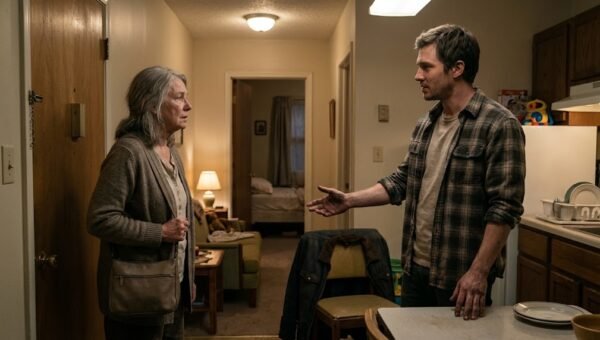
On the fourth day, I was sitting at my kitchen table when Nathan came through the front door without waiting for me to invite him in. He looked like he hadn’t slept.
“Where is it?” he said.
“Where’s what?”
“Mom, come on.”
I had put the box in a kitchen cabinet, behind the mixing bowls. I didn’t point. I wanted to see what he’d do.
He searched my face, then the counter, then the cabinet. His eyes caught on the open door.
“You had no right to give it to them,” he said.
“I thought it was a birthday present.”
“You shouldn’t have given them something I gave you.”
The answer was so small and so wrong that for a second I couldn’t respond.
“Why were you worried they’d eaten it?” I asked.
“I wasn’t.”
“You screamed.”
“I was surprised.”
“You asked if they ate any.”
He looked toward the cabinet again. I set my palm on the kitchen table and kept it there. I’m telling you, I had to make myself stay seated.
Nathan rubbed his forehead. “You’re making this sound like something it isn’t.”
“What is it, then?”
He didn’t answer. His eyes kept going to the cabinet. I had expected him to deny everything. I hadn’t expected him to come looking for the box before he asked if the children were sick.
The chemist called while we were sitting there. I put the call on speaker. I wish I could say I’d planned that. I hadn’t. I just couldn’t make myself walk away from Nathan to take it.
The chemist said the sample contained a dangerous chemical that didn’t belong in food. He couldn’t tell me who put it there. He could tell me it was consistent with a substance that could severely slow a person’s heart. He said the two pieces the children had touched needed to be handled as evidence, and that we should contact the authorities.
Nathan stood up.
I said, “Sit down.”
He didn’t.
“What did you put in them?” I asked.
“I didn’t want the kids to have them.”
“That isn’t what I asked.”
He stared at me. His mouth opened and closed once, and then he said, “I thought you’d eat them that night.”
I’d spent days hoping there was some other explanation. I’d told myself the chemist might find a cleaning product, something from the packaging, some mistake. I’d told myself Nathan’s panic was about his children because he loved them, not because he’d put them in danger.
But he’d just told me.
“Why?” I said.
He pressed both hands to his face. “I had debts.”
“How much?”
“I don’t know. Enough.”
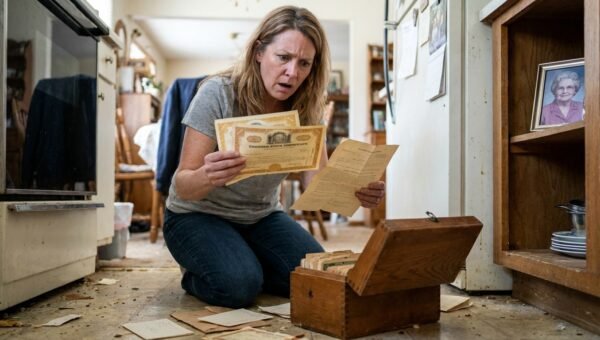
He’d borrowed from people I’d never met and missed payments on others. I knew he was in trouble. He’d asked me about a life insurance policy once, a small one I’d taken out years ago. I told him it had lapsed. I thought he was checking because he was worried about me.
He said he believed there was another policy. Or some money set aside. He’d counted on it, he said. He’d thought I had a hidden legacy from my late husband.
“I was going to fix everything,” he said.
“You were going to kill me.”
“I didn’t think it would look like that.”
He said it quietly. Like the details might make it less true.
My son had been two when I first held him. I remember his little fingers curled around the seam of my blouse. I remember him calling me Mom after months of calling me Margaret. I remembered those things at my kitchen table while he sat across from me, asking me to hear him out.
“I raised you,” I said.
“I know.”
“I loved you.”
“I know.”
“You put it in a box I was supposed to open on my birthday.”
He rubbed his palms on his pants. “I’m sorry.”
I slid the box across the table. He reached for it. I put my hand on the lid first.
“No.”
“I need to get rid of it.”
“Not happening.”
“Mom, please.”
I’d heard him say “please” before when he needed rent or a ride or one more chance. I’d always found a way to help. This time I kept my hand on the box.
“You won’t come near the children alone,” I said. “You won’t come near me.”
His voice got smaller. “You can’t do that.”
“I can, and I am.”
I told him I was calling the authorities. He begged me not to. He said he’d made one terrible choice because he was scared. He said the children hadn’t gotten hurt, so maybe we could keep this inside the family.
That was the part that made me look at him differently. He was still asking me to protect him.
“I’m not hiding this,” I said.
I called the police and handed over the box, the sample, and the messages asking where it was. I also called a lawyer. The next day, I changed my will and removed Nathan. I didn’t do it to punish him. I did it because I wasn’t leaving a way for him to come back to my money after what he’d tried to do.
The authorities opened a criminal case. Nathan was charged after the investigation. He lost the right to be alone with Chloe and Leo while the family court reviewed the case. I agreed to supervise the children when their mother needed help, but I didn’t make the children carry messages or ask them to choose sides.
Nathan called once from a number I didn’t know.
“I’m still your son,” he said.
I sat there with the phone in my hand. There are things a mother can forgive. I don’t know if this is one of them. I do know I can’t let him back into my home.
“I’m still your mother,” I said. “That doesn’t mean you get access to me.”
Then I ended the call.
I haven’t spoken to him since. I still love the little boy I raised. That’s the part people don’t understand when they ask if I’m relieved. I can miss that child and still know what the grown man did. Both things are true, and neither one changes what I have to do.
Chloe and Leo know they can come to my house. They know they’re safe here. They don’t know what was in the box, and I hope they never need to know.
Yesterday, I baked cookies. Chloe helped stir, and Leo kept sneaking chocolate chips off the counter. I used the white porcelain plate I bring out for company. We sat in the afternoon sun, and both children laughed with chocolate on their mouths.