The hospital soap smelled like wet pennies when the nurse put Willa’s sweatshirt in a clear bag. I was staring at a dark smear near the cuff, trying to decide if it was blood, when a doctor told me my daughter had been dumped at the ER after three men beat her nearly to death.
The call had come at midnight. I drove so fast I missed the turn by the courthouse, then circled back without remembering the first turn at all.
Willa was in a trauma room with a split lip, two cracked ribs, and bruises spreading up one side of her face. Her eyes opened for a second.
“Mom?”
“I’m here, honey.”
She tried to say something else. The nurse told her not to talk.
I’m June Bell. I’m fifty-four, and I own Bell Flowers on the square in a county seat in the Missouri Ozarks. I’ve been raising Willa by myself since she was four. I used to take her to the shop before school, where she’d sit at the counter and eat the broken cookies I kept in a coffee tin. That’s the sort of life I wanted for us. Small. Ordinary. Mine.
The ER doctor said the police had three names. Clay Voss, Peter Rusk, and Tyler Dane. All students at the college outside town. All from families people here knew. The police were asking questions, but the doctor chose his words carefully when he said the families had already called.
I understood what he meant a little after two.
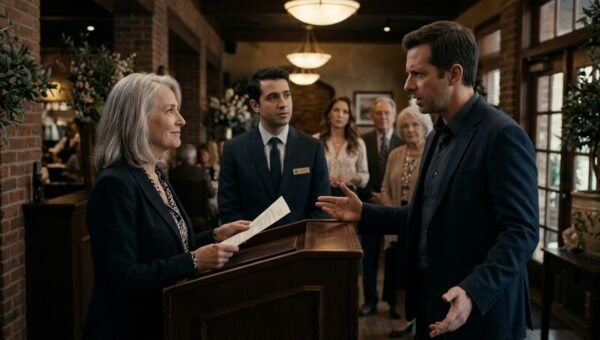
Two men and a woman came into the waiting area with a lawyer. The woman was Celia Voss, Clay’s mother. Her husband, Randall, had served on the county commission and knew half the people who worked in the courthouse. The other parents had sent their lawyer ahead, apparently. Celia carried a check in a paper envelope.
“You must be June,” she said.
I didn’t answer right away. I was looking at the check.
One million dollars. Written out properly. Signed. The lawyer set a thick NDA beside it and told me it would cover medical costs, counseling, and “the family’s wish to keep this private.”
“My daughter’s in there,” I said.
“We know,” Randall said. “This is an awful situation.”
The lawyer started explaining that nobody wanted the young people’s lives ruined over a “terrible misunderstanding.” I asked him if he’d seen the hospital report.
He said he hadn’t. I asked if he knew Willa had been left on the pavement outside the ER entrance. He looked down at his folder.
Celia leaned closer. “Take the money and let this go.”
I looked at her. I wanted to hit her. I’m not proud of that. I wanted her to feel one thing that night that she couldn’t pay someone else to manage. But Willa was behind a door with a nurse checking her breathing, and I knew I couldn’t afford to give the Voss family an excuse to call me unstable.
So I pushed the check back.
“No.”
The lawyer said, “You should think about this.”
“I have.”
I went back to Willa’s room before I left. She was sleeping. A nurse had tucked the blanket under her chin, and her hand was curled near her cheek like when she was little. I touched the edge of the bed.
Then I told the nurse I’d be back in a few minutes.
I drove to my shop.
At 2:15, I locked both front doors. I turned the sign to CLOSED, though it had already been closed for hours. I stood behind the counter, still wearing my coat, and tried to breathe normally. I didn’t. My hands were shaking badly enough that I dropped my keys twice. The check had been insulting, yes. But what stuck was the lawyer’s word “private.” They wanted this put away before Willa could even tell us what happened.
I hadn’t been a florist my whole life.
Eleven years earlier, I walked away from classified service with a sealed file and an agreement to keep my mouth shut. I’d been a tactical intelligence analyst and an asset handler in a unit that didn’t show up on a public org chart. People who worked there didn’t brag about it. We got trained to see how separate little facts fit together, and how power protected itself by making each fact look harmless on its own.
I left because I wanted Willa to have a mother who showed up for school concerts and remembered the name of her dentist. I wanted to be done. For eleven years, I was done.
Then three men hurt my kid, and their parents tried to buy her silence while she was still on a monitor.
There was an old service locker in the back room, behind a shelf of florist buckets. I hadn’t opened it since the day I packed up my last things. The key was taped under the counter, where I’d left it because I couldn’t bring myself to throw it away. I found it by touch.
The locker had a dent near the latch from when I’d slammed it years ago. Inside was a canvas pouch, a small encrypted drive, and a satellite communicator the size of a paperback. I held the communicator for a long time. It was heavier than I remembered.
I’m not going to pretend I was calm. I sat on an upside-down bucket and put my head in my hands. I thought about Willa at seven, asleep in the passenger seat after I’d worked a wedding delivery late. I thought about her first day of college, when she called me from the dorm because the shower wouldn’t get hot. I thought about the last time I’d heard her laugh, over a photo of a lopsided bouquet I’d made for a man who wanted “something romantic but not too red.”
Then I got up.
The drive held an emergency activation protocol. I knew what it was before I plugged it in. It wasn’t a magic button, and it didn’t give me the right to arrest anybody. It was a way to send verified material through old secure channels to people who knew what to do with it. I’d kept the key current because the protocol required a periodic check. I hadn’t used it. I hadn’t even wanted to think about it.
At 3:30, the satellite call connected.
“June?” said Colonel Harlan. He’d been my commanding officer. He sounded older, which I guess we both were.
“I need the emergency channel.”
“What happened?”
“My daughter’s in the hospital. Three men did it. Their families are trying to buy her silence.”
He didn’t ask me to repeat myself. “Send what you have.”
“I have names and the admission record. I need the rest checked.”
“Send it.”
That was all. No speech. No promises. We’d never needed those.
I sent the names, the report number, and the details of the check and NDA. I also sent the old case markers I remembered from the years I’d been tracking patterns in regional payoffs. I couldn’t tell him what the new records would show. I only knew I’d seen the shape before.
The next stretch felt longer than it was. I sat at my worktable beside a bucket of carnations I hadn’t put in the cooler. Every few minutes I checked my phone for news from the hospital. Nothing. I called once and was told Willa was stable. I asked if she’d woken. She hadn’t.
At 4:07, the secure device chimed.
The first packet showed the old records had been checked against current files. There were reports of two earlier assaults involving Clay and Peter, both marked as “resolved” after private payments. A campus security log had been edited. A local officer’s report had gone missing from the case system. The money trail ran through a company tied to one of the fathers, then into a civic group that had paid for legal work.
The findings weren’t just my old notes. The new records carried timestamps, source checks, and independent copies. I knew enough to see what mattered. I did not decide guilt by myself. I’d spent years making sure evidence could stand up without me in the room.
At 4:19, the former network node confirmed receipt and sent it through the proper federal oversight channels. At 4:36, a reply came back: urgent review opened. At 4:52, I got confirmation of a judge’s emergency order to preserve assets and records. I read that line twice. Then I called the hospital.
Willa was awake.
“I’m coming back,” I told her.
“Don’t leave them alone,” she whispered.
“I won’t.”
The first teams arrived at the Voss home shortly before sunrise. I didn’t see that myself. I heard it from Colonel Harlan, who called at 5:41 and told me the three students had been taken into custody. Warrants had been issued after the new evidence was matched to the assault investigation and the older cases. The judge denied release pending a hearing because of the risk of witness pressure and evidence tampering.
The families’ accounts were frozen under emergency court orders, pending review. That didn’t mean anyone had been found guilty of every offense in the files. It meant they could no longer move money around while investigators sorted out what was real. Their names were going into the same public record they’d spent years keeping clean.
I was back at the hospital when Randall and Celia came through the entrance again, at 6:12. Their lawyer was with them. He wasn’t carrying the NDA this time. Celia looked like she’d been crying. Randall kept checking his phone.
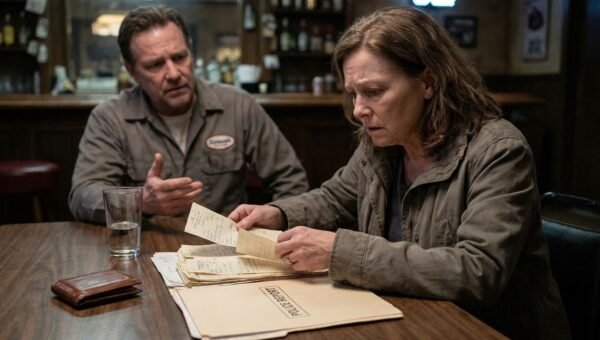
I’d brought a folder with me. It held the verified records I was allowed to share, along with the court notice and a copy of the hospital incident report. I didn’t need to tell them who had done the work. The channel records did that.
Randall stepped toward me. “We can still handle this privately.”
“No.”
“You’ve made a terrible mistake,” he said.
I opened the folder and put the order on the counter. “The accounts are frozen. The records are in federal hands. Your son is in custody.”
Celia looked at the pages. “You did this?”
“I started the review.”
The lawyer reached for the folder. I pulled it back.
“Don’t touch that,” I said.
He stopped.
For a few seconds, none of us spoke. Then Celia said, “You were a florist.”
“I still am.”
Randall’s phone buzzed again. He looked at the screen, and this time he didn’t pick up. Behind him, two federal investigators came through the entrance. One had a document envelope in hand. The other spoke to the lawyer and asked him to step aside.
Randall’s mouth opened, then shut. Celia began to cry again. Not loudly. Just enough that she had to wipe her face with the heel of her hand.
I didn’t feel like I’d won. I felt tired and angry and glad the evidence had made it out of the town where their names had been enough to stop people from asking questions. The black file didn’t make me untouchable. It meant I knew how to send the right facts to people who could act on them, and how to make sure nobody could quietly bury them again.
The parents who’d come to silence me had learned what I’d been before I opened a flower shop. Their money could no longer shut the case down. Their sons were in custody. The next part would take months, maybe longer, but it would happen in public, with lawyers and records and a judge.
I went back to Willa’s room.
She was awake, sore and hoarse, but she reached for my hand. I sat beside her and told her I wasn’t going anywhere. She squeezed my fingers once. That was enough talking for both of us.
There was a little glass cup on the bedside table, the kind hospitals use for water. I put one fresh white rose beside it as the morning sun came through the window.