5:12 a.m. was when I started praying at the front door, and for a while I thought the point was to keep everything bad from coming in.
I’m 59. I’ve lived in the same old South Carolina mill town most of my life, and I’ve gone to the same church long enough that people hand me a casserole dish without asking my name. I believe in prayer. I also know I can get stubborn and call it faith when I’m really just trying not to deal with something.
That winter, my daughter Maren, her husband Nolan, and their boy Cal were staying with Dale and me. Their lease had ended, Nolan’s hours had been cut, and a truck repair had gone on a credit card. We said they could stay until they got back on their feet. I meant it. Still, five adults and a kid in my house meant I noticed every cupboard door left open.
The first clue was the way Maren stopped sitting at the table.
I’d set out eggs before my morning shift at the church pantry. Maren would take a plate to the counter and eat standing up, checking her phone. Nolan had begun coming home later. Dale kept asking if anyone had heard about Nolan’s hours, and Maren would say, “Not now, Dad.”
I told myself everyone was tired. Then I noticed Cal had stopped asking to have friends over. I noticed the stack of mail under Nolan’s keys.
I noticed Maren flinch when the dryer buzzed, like one more sound was all she could take.
I noticed all of it and said nothing.
At 5:12 one Thursday, I stood by the front door with a little notebook in my hand. The notebook was one I’d gotten free at a church lunch. I’d written the same words on the first page a few days before: “Heavenly Father, in the mighty name of Jesus, expose and cancel every hidden plan against this home.”
I wrote about spoken and unspoken curses, and the worries that seemed to pass from one generation to the next. I asked God to cover the day ahead, my heart, and our household. I asked the Holy Spirit to rest over our home and angels to stand at every doorway.
Then I read it out loud.
I’m not embarrassed about that. I wanted to begin the day with something steadier than whatever the phone or the mail might bring.
The little rug by the door had a loose thread that caught on my slipper. I remember that because I kept rubbing the spot with my toe while I prayed.
I ended with, “In Jesus’ name, Amen.” I’d written at the bottom, “Share this with one person. Put Amen to disappoint Satan.”
I thought I understood what sharing it meant. I sent the prayer to my neighbor, Rita, before I left for the pantry.
The second clue came that afternoon, when I called Maren to ask if she could pick up Cal.
“I can’t,” Maren said. “I’ve got a call with the manager.”
I’d already agreed to take Cal to a dentist appointment. I had the appointment card in my coat pocket, and my own list of errands was getting ridiculous.
“Okay,” I said. “I’ll take him.”
Maren didn’t say thank you. I was bothered by that, and I’m being honest.
I spent the next ten minutes deciding the problem was that nobody appreciated me. Then I remembered I’d agreed to help before I knew about the call.
At the pantry, I kept the phone tucked in my apron. I was tired, and a woman wanted to know if we had more canned peaches. I nearly snapped that I wasn’t the grocery store. Instead, I found two cans in the back and handed them over.
That was not a grand act of holiness. It was one small choice not to make a tired day harder for somebody else.
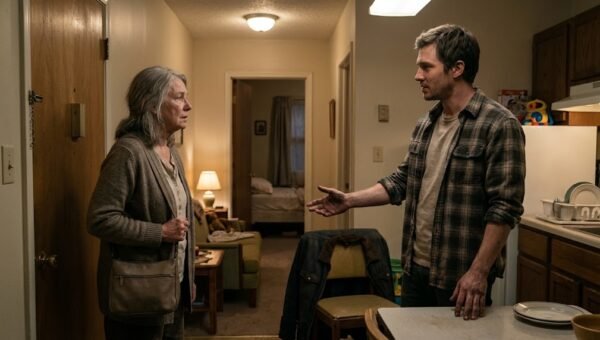
When I got home, the electric bill was on the kitchen table with the rest of the mail. Nolan had written “Friday” across the envelope. Maren stood at the sink rinsing a mug.
“Is there something I should know about the bill?” I asked.
Maren set down the mug. “Nolan’s handling it.”
“I wasn’t asking to embarrass anybody.”
“I know,” Maren said, though it didn’t sound like she knew.
I let the question go. I was proud of myself for that, which tells you how easily I turn basic manners into an achievement.
The third clue was the way Dale started lowering his voice around the house. He’d ask me something in the laundry room, then stop when Maren walked in. I thought Dale was trying to keep peace. Maybe he was. But the effect was that nobody talked plainly, and the quiet made every little thing feel bigger.
One Saturday, Nolan came in while I was sorting towels.
“Can I borrow the car Sunday?” he asked. “My truck’s still making that noise.”
“You can, if we talk about the gas.”
Nolan looked down at the towels. “Sure.”
I wanted to tell him I wasn’t made of money. I also wanted to say I could hear his truck from the porch and nobody needed to pretend a repair was going to fix itself. Instead, I said, “I’m not mad. I just need us to be clear.”
Nolan nodded. “I know.”
But he didn’t look at me, and I let the moment end there.
That evening, Cal asked if he could have a friend over. Maren said no before I could answer.
“Why not?” Cal asked.
“Because the house is crowded,” Maren said.
“It’s not that crowded,” I told her. I shouldn’t have contradicted her in front of Cal.
Maren looked at me. “Mom, please don’t.”
I went quiet, then felt mad at myself and mad at her, both at once. Cal took his game upstairs. Nolan sat at the table and turned the same envelope over and over in his hands.
Later, Dale told me, “This can’t keep going like this.”
“I know,” I said.
Neither of us said what “this” was. The bill, the hours, the cramped house, the way we were all taking turns being offended. I went to bed and prayed for protection again. I meant it. I just wanted the prayer to do the talking I was avoiding.
Rita called me the next week. I don’t know why I remember the exact day. It was Tuesday, I think, because I’d made chili for the pantry that morning.
“I’ve been having a rough time,” Rita said. “I don’t need a sermon. I just needed to hear a kind voice.”
I sat down on the step by my back door. “I can do that.”
I’d sent Rita the prayer, and I was glad I had. But I didn’t send another chain message or tell her to be grateful. I listened while Rita talked about her sister’s surgery and the bills piling up. When Rita finished, I said, “Would it help if I brought over dinner?”
Rita was quiet for a second. “That would help.”
I made enough soup for both houses and brought it over in one of my old plastic containers. Rita hugged me at the door. I thought about the prayer’s line asking me to share it with one person. I’d shared the words. I’d also shared the soup. Somehow the soup felt more like the answer.
The fourth clue was a note from school.
Cal’s teacher had sent home a short message asking if something was going on at home. Cal had been quiet in class and had asked whether he’d have to move again. I read the note twice at the kitchen counter.
When I asked Cal about it, Cal shrugged.
“I’m fine.”
I had used those exact words to end conversations when I was young. My mother used them too. In our family, “I’m fine” could mean anything from a headache to a whole life falling apart.
I put the note down. “You don’t have to fix anything here, Cal.”
Cal picked at the cuff of his sleeve. “Are Mom and Dad mad because of me?”
“No,” I said. “Not because of you.”
I wanted to promise the whole family would be fine, but I couldn’t know that. So I said, “The grown-ups are working things out. You can ask me again whenever you need.”
Cal nodded, but the worry didn’t leave his face. That was when I understood how much our careful silence had spilled over onto the kid.
I asked Dale if we could all sit down after dinner the next night. I didn’t want to ambush anybody, so I told Maren and Nolan why.
“I don’t want a fight,” I said. “I want us to talk about what’s actually happening.”
Maren folded her arms. “I’m tired of feeling like we’re in the way.”
That hurt because I’d tried hard not to make them feel that way. But trying hard isn’t the same as succeeding.
Nolan said, “I don’t want to owe you for every little thing.”
“I haven’t asked you to,” I said.
“No,” Nolan said. “But I know you’re covering more than you say.”
I had an answer ready. I almost used it. Then I saw the electric bill under his hand, and the envelope’s edge was soft from being folded and unfolded.
The fifth clue was the bill itself. Not the amount. The way Nolan kept touching it and putting it back down.
I pulled out a chair. “Let’s sit. Nobody has to explain everything in one breath.”
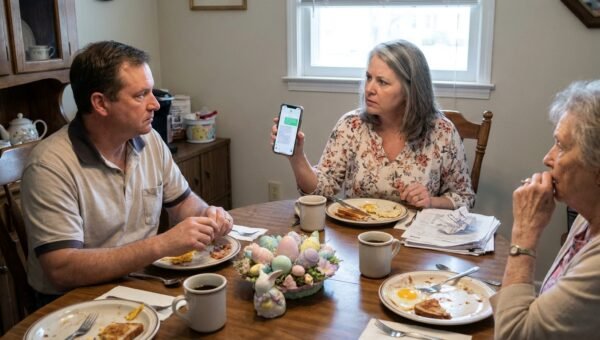
We ate first. The dinner was plain chicken and potatoes, and Cal kept asking for more ketchup. I don’t even know why I remember the ketchup bottle, except that it gave us something normal to pass between us while nobody knew how to start.
Finally, Maren said, “My hours got cut in November.”
Nolan looked at the table. “I knew the truck repair was bad. I didn’t know the card was this far behind.”
Maren’s voice got sharper. “You said you had it handled.”
“I thought I could.”
“You keep saying that.”
I felt myself getting ready to referee. I had done that for years, as if being the calm one meant deciding who was right. I pressed my hands flat on the table instead.
Maren looked at me. “You’re not saying anything.”
“I’m listening,” I said. “I’m trying not to decide for you.”
That seemed to surprise Maren. It surprised me too.
“I’m scared we’re going to lose the apartment,” Maren said. “And I’m scared Cal knows.”
Nobody spoke for a few seconds.
Then Nolan said, “I’m scared too. I’ve been acting like I’m not.”
I’d wanted a neat explanation. I wanted one person to say the right thing, then have everyone feel better. That didn’t happen. We sat with the fear and the bill and the fact that all of us had been guessing at what the others meant.
“I’m sorry I made you feel like guests who had to earn a place here,” I said. “I didn’t mean to. But I can hear that I did.”
Maren rubbed at one eye with the heel of her hand. “Sometimes you ask about money like you’re checking whether we’ve failed.”
I wanted to say, “That’s not fair.” It might even have been partly true. But I’d asked questions in a tone that made answers feel like a test.
“I can do better,” I said. “I also need us to talk about bills before things get urgent.”
Nolan nodded. “That’s fair.”
We made a plan. Maren would call the electric company the next morning and ask about a payment schedule. Nolan would bring home the amount he could put toward groceries each week, even if it wasn’t much. Dale and I would stop asking about money in passing, then getting upset when nobody wanted to answer. We’d talk on Sunday evenings instead.
It wasn’t a miracle. The bill didn’t vanish. Nolan’s hours didn’t come back. But we stopped making people guess what was wrong.
After dinner, Cal carried his plate to the sink. Maren stood with me to wash it.
“I’m sorry I snapped about the friend,” Maren said.
“I’m sorry I corrected you in front of Cal.”
Maren nodded. “We can try again.”
That was small. It was enough for that night.
A week later, Cal had a friend over. The house was still crowded, but I heard the boys laughing upstairs while I chopped onions. Nolan fixed the loose cabinet hinge. Dale quit asking whether Nolan had heard about work before breakfast. And I put the electric bill on the counter where we could all see it, instead of letting it sit in the stack like a warning nobody was allowed to mention.
I kept praying in the morning. I kept asking for God’s protection over our home, for peace in each room, for strength against the old worries we’d handed down without meaning to. Some days my prayer was careful. Some days it was just, “Help me not make this worse.”
The prayer card stayed by the front door. Its corners curled, and once Cal used it to mark his place in a library book. I told him not to, then laughed because I’d been treating that card like a fence.
I still believe God guards a home. I don’t think that means the people inside never get scared or say the wrong thing. I think it means I have to be willing to open my mouth, and sometimes keep it shut, and leave room for the truth when it finally comes out.
Rita came over for soup again before spring. Maren and Nolan were still sorting out work and money, but the conversations didn’t stop after one hard night. We made Sunday evenings our time to check in. Some weeks it was ten minutes. Some weeks it was longer.
At dusk, I stood by the front doorway and looked back into the house. Dale was in the kitchen with Cal, and Maren was laughing at something Nolan had said. The prayer card rested by my hand. I heard the laughter carry down the hall, and I left the door open.