My brothers got Mama’s farm in the will, and I got the butter churn I’d carried out of her kitchen.
That was how the reading went. Galen and Ray split the farm and the bank accounts. I got the old churn, the one Mama had kept beside her rocking chair for as long as I could remember. Galen laughed when Mr. Albright said my name. “Don’t spend it all in one place, sis.”
Ray laughed too, but softer. He usually did whatever Galen did.
I didn’t say much. I put the churn in my car and drove home. I’d spent six years feeding and bathing Mama, changing her sheets, keeping track of pills and doctor visits. My brothers sent cards. Christmas cards, mostly. Sometimes birthday cards. Galen would call if there was a question about the farm, then end the call before I could tell him how Mama was doing.
The property was worth maybe $300,000. I knew because Galen had talked about selling it for years, as if the place belonged to him already. I kept my mouth shut at the will reading because I was tired, and because I didn’t want to cry in front of him. I’m not proud of that. I let him have the last laugh.
Two weeks before that reading, I’d buried Mama. The last year had been hard.
She needed help getting out of bed and couldn’t always remember what day it was. But she still knew when Galen sent a card without signing it himself. “He’s busy,” she’d say, and tuck the card into the kitchen drawer with the takeout menus.
I don’t know why I remember that drawer. I remember the little rubber band around the cards, too. Maybe because I’d sort them while waiting for the kettle.
After the reading, I set the churn on my kitchen table. I didn’t look inside it right away. I was still angry, honestly, and I didn’t want to turn the thing into some symbol of how little I’d been given. So I left it there for a few days while I dealt with the funeral bills and the calls about the estate.
Then I went to clean it.
The dasher wouldn’t sit right. I turned it over and ran my fingers along the bottom.
There was a cedar board underneath, screwed in tight, making a second floor. I got a butter knife from the drawer and worked its blunt edge under the seam. I was careful, because the churn was Mama’s, and I didn’t want to break it.
The board came loose with a small crack.
Inside was a roll of bills thick as my wrist, a folded deed, and a letter in Mama’s shaky hand. The first line read, “For the one who actually showed up. The land they’re fighting over was already…”
I stopped there.
I sat down at the table. The churn smelled faintly sour, the way old wood does when it’s been kept near a warm kitchen. I unfolded the letter, then folded it back up before I got to the next line. I was afraid of what it might say. I was also afraid it might be nothing, some old paper Mama had forgotten about.
I did what she’d taught me to do when something mattered. I checked the facts before I ran my mouth. I put the cash and papers in a tin in my bedroom closet, then read the letter all the way through.
Mama wrote that she’d signed the homestead and the main acres over to me three years earlier, clear and free. Mr. Albright had prepared the deed and recorded it with the county. She’d kept the right to live there for the rest of her life, and the property became mine when she died.
The will Mr. Albright had read was older. It split the farm operation, the lease rights, and the accounts between Galen and Ray. Mama had left it in place because she knew they would focus on the will and fight over whatever it said. She didn’t want to give them a reason to drag me through court over the house and land.
Her letter said the brothers would be getting the “empty parts,” not the house she’d deeded to me. I remember that exact phrase because I read it twice. She wrote that she’d sold the back parcel and some equipment rights, and she’d kept the money where I would find it. The roll in the churn came to $42,000.
I counted it at the table. Twice. The bills smelled like the drawer where Mama kept her spare buttons. I didn’t know what to do with that much cash, so I put it back in the tin and called Mr. Albright the next morning.
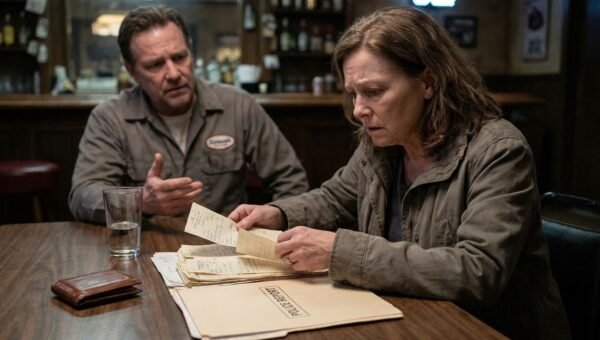
He had an office above the pharmacy in town. I took the deed, the letter, and every piece of paper from the churn. He read through them without rushing me. Then he turned his computer screen so I could see the county record and gave me the filing number.
“It’s recorded,” he said. “The transfer is valid.”
I asked him if Galen could undo it. He shook his head.
“He can be angry,” Mr. Albright said. “That doesn’t change the deed.”
I asked him to check the accounts, too. That was the part I dreaded, because it felt like snooping. But if Galen and Ray had the accounts, I needed to know what they were taking on. Mr. Albright showed me the estate figures. The operating account held thirty-two dollars. There was also a past-due machinery loan and an equipment lien attached to the farm business.
I sat there, looking at the number. Thirty-two dollars. Galen had spent years talking about the farm accounts like they were a prize.
“Mama knew?” I asked.
“She knew what she signed,” he said.
I didn’t call my brothers. I went home with the certified deed and Mama’s letter tucked in my bag. For a few days, I kept expecting Galen to show up. He’d always acted like the land was his to decide about, and he had a way of making a demand sound like something everybody had already agreed to.
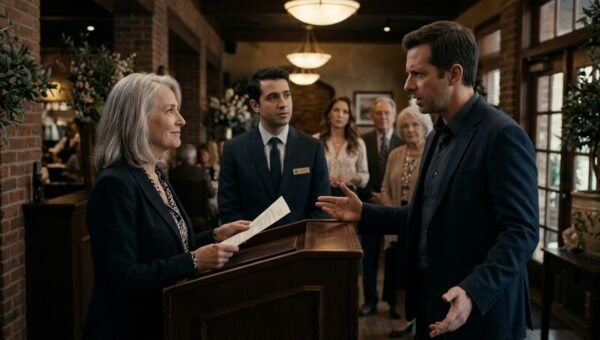
The phone call came on a Thursday. He said he and Ray were coming out to put up a For Sale sign. There was a realtor with them. Galen told me to pack my things because the house needed to be cleared before they could list it.
I said, “No.”
There was a pause. Then he laughed, the same way he had at the will reading.
“You don’t own the place,” he said.
I told him to come by if he needed to see the county papers. He said he’d be there in the morning. I spent the evening putting the deed and county certification in a folder. I almost called him back to argue. I didn’t. I knew I’d say something I couldn’t take back, and the paperwork didn’t need me to shout for it.
The next morning, I heard the truck on the lane. Galen got out first. Ray followed him. The realtor stayed near the car, holding a folder against her chest. Galen had a For Sale sign under his arm.
He came up the porch steps and looked at me like I was making a scene by being there.
“Move your car,” he said. “We’re starting with the yard.”
I handed him the deed and the county certification.
He glanced at the pages, then looked at me. “What is this?”
“The recording number’s right there,” I said. “Mr. Albright’s office can confirm it.”
Galen handed the papers to Ray, who read the first page with his mouth pinched shut. The realtor asked if the property had transferred before Mama died. I said yes, and showed her the filing date.
She looked at Galen. “I can’t list land you don’t own.”
Galen shoved the deed back toward me. “She wouldn’t do this.”
“She did,” I said.
He told me Mama had been confused. I told him Mr. Albright had witnessed the signing and the county had recorded it. Ray didn’t say anything. He just kept looking at the page.
Then I told them the bank accounts they’d split held thirty-two dollars, and that the business had a past-due machinery loan. Galen stared at me as if I’d made the number up.
“You’re lying,” he said.
“Call the bank.”
He said he’d sue. I pointed to Mr. Albright’s number on the certification.
“You can spend what little money you have left on a lawyer who’ll tell you the same thing.”
Galen’s mouth opened, but nothing came out. Ray gave the deed back. The realtor said she was withdrawing from the sale and walked to her car. Galen and Ray left without putting up the sign.
I watched their truck turn down the lane. I didn’t feel happy. Mostly I felt tired. I’d spent years hoping they’d show up and ask how Mama was, not how soon they could get what they thought was theirs. They never did.
I deposited the $42,000 and used it to cover the estate taxes and the upkeep on the house. The bank handled the cash without making a fuss. Galen and Ray had to sort out the equipment debt tied to the farm business. I didn’t offer to pay it. I didn’t call them afterward, and when they called me, I let it go to voicemail.
I put the churn back together as best I could. The cedar board didn’t fit quite as neatly after I pried it loose, but it held. Mama’s letter is folded in my pocket now, though I’ve read it enough times to know the last lines.
She said she loved me. She said she knew I’d stayed because I wanted to, not because I was waiting for a reward. She also said she wanted me to have the house without having to beg my brothers for it.
The churn sits clean by the sunny kitchen window. This morning I made coffee, took the letter out of my pocket, and sat down in a house that cannot be taken from me.