The bank alert buzzed against my palm while I was rinsing a coffee cup. I looked down and saw a $640 charge from the city parking division. It took me a second to place it. Then I remembered the Honda.
I’d sold it to my neighbor Dave in 2024. I’d signed the title over, watched him drive away, and told myself I was done with that car. The alert said the city parking permit had renewed anyway.
I stood there with dish soap on my wrist, staring at the screen like the number might change if I blinked.
I called the city. The clerk said the plate on my account was still active and a replacement permit had been mailed. The address on file was my brother Marcus’s house. I asked her to read me the plate number. It wasn’t Dave’s plate, and it wasn’t one I knew.
“The plate on file is still active and that a replacement permit has been mailed,” she said, reading from the note. The card had been mine since before I sold the Honda. I’d forgotten to remove it from the city portal, which was my mistake. But I hadn’t forgotten selling the car.
The clerk sent me a photo from the lot camera. I opened it at the kitchen counter. The Honda was parked in the city lot, and the plate on it belonged to my mother, Eleanor. Mom doesn’t drive. She hasn’t driven in years.
I didn’t call Marcus yet. I printed the photo and put it in a folder with the bank alert. That may sound fussy, but I’ve learned that if I call my brother while I’m mad, he can get me talking about my tone instead of what he did.
The next morning, I went to the parking office. A little metal bell on the service window made a thin, tired sound when I stepped up. I gave the clerk my account number and asked her to show me the mailing record.
She turned her monitor so I could see the address. Marcus’s house, again. The permit sticker had gone there. The plate listed on the file belonged to Eleanor. The clerk said the account had been renewed without interruption for two years, and each renewal had been charged to my saved card.
“I sold the Honda in 2024,” I said.
She clicked through the records. “The vehicle information stayed active.”
That was one small piece, but it didn’t answer how a car Dave owned was wearing Mom’s plate.
I took the camera photo home and sat with it longer than I needed to. I kept noticing the same thing: the Honda’s dented rear bumper, from when I backed into a low post at the library. I’d apologized to Marcus for months about that dent because he used to borrow the car.
I drove over to Dave’s house. He was in his driveway, setting a bag of salt by the garage. I asked if he still had the Honda. He looked at me like I’d asked whether he still had his own kitchen.
“Sure do,” he said. “Why?”
I showed him the parking photo. He leaned close, then took off his glasses and wiped them on his shirt. He said that wasn’t his plate. The car was still his, and he had the title to prove it. He went inside and came back with the papers.
The title looked normal. Dave had bought the Honda from me. There was no mystery in that part.
But when I asked whether Marcus had been involved after the sale, Dave rubbed his thumb over a crease in the paper.
Marcus had offered him a discounted downtown commuter permit, Dave said. He’d called it a weekday corporate pass. Dave parked downtown for work, and Marcus had told him there was an arrangement through family. Dave thought Marcus was doing him a favor. He’d let Marcus coordinate the weekday parking, but he hadn’t agreed to change the plate or put Mom’s name on anything.
“I thought it was a real pass,” Dave said.
I believed him. He wasn’t in on it. I could see that he felt embarrassed, and I felt bad for making him explain himself in his own driveway. Still, he had just told me my brother had made an arrangement using a car he no longer owned.
I asked Dave not to let Marcus take the Honda again until I knew what was going on. He agreed. Then he asked if he needed to call the police. I said I didn’t know yet, which was true. I went home with his copy of the title and the parking photo tucked under my arm.
Mom’s house was quiet when I got there. She had a cup of tea beside her chair and an old seed catalog open on her lap. I didn’t want to frighten her, so I started by asking whether any new bills had come in.
She said Marcus handled some of her mail. He helped with the online account and had her permission to make routine payments. She said it as if that settled things. That was hard to hear, because Marcus had been the one who offered to help after Dad died, and I’d been grateful. I still was, in a way. That didn’t mean I could pretend this looked fine.
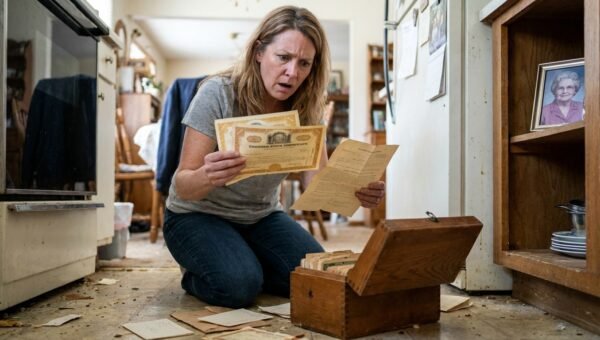
I asked to see her loan statements. Mom made a face and said the paperwork had gotten confusing. She brought me a thick stack from the desk drawer. I sorted it on her kitchen table while her kettle clicked off.
At first, the statements looked like the usual jumble of bills, balances, and notices. Then I saw a monthly insurance charge attached to her home-equity loan account. It was a force-placed policy, the kind a lender adds when required coverage lapses. The first charge was in mid-2025. The amount had crept up month by month, eating away at the money Mom thought was still sitting in the account.
I asked her if she knew about the policy. She shook her head. The account was tied to her home, not a car, and she hadn’t bought insurance for a vehicle. She doesn’t drive. I looked through the papers again and found a copy of the registration. Eleanor’s name was at the top. The listed vehicle was the Honda.
I hated that I had to ask my mother whether she had signed it. She looked hurt before she answered.
“I didn’t sign anything for a car,” she said.
Then I found a letter showing the basic auto policy had lapsed. The lender had placed its own coverage against the loan account after that. The policy wasn’t there to protect Mom’s driving. It was attached to the car registered in her name, even though she’d never driven it.
I asked Mom if Marcus had brought her any papers to sign. She said he’d once told her he needed her information for a vehicle registration. She thought it was paperwork to help with his insurance. She hadn’t been told he was putting the Honda in her name. She hadn’t been told the insurance had lapsed.
That was when I saw Chloe’s name in a separate mailing record among the pages. Chloe was twenty-nine and lived at Marcus’s address. The record listed her as the primary authorized operator. The city permit, the plate, Mom’s loan account, my card. Each paper had looked like one more family chore. Together, they were a plan.
I sat with Mom while we called the loan servicer. I asked them to explain every insurance charge and put a note on the account that no one could change it without speaking to her directly. The first person we reached couldn’t remove the policy, but she opened a review and gave us a case number. I wrote it on the back of the city printout.
Mom asked if Marcus was in trouble. I told her I didn’t know what would happen, but I knew we couldn’t leave her name on a car she didn’t own. She looked down at her tea. I wished I could tell her this was all a misunderstanding. I didn’t.
I went to Marcus’s house the next morning before he and Chloe left for work. I had the city photo, Dave’s title copy, the registration, the loan statements, and a city fraud referral form in a folder. I know I could have mailed a report and avoided seeing Marcus. But I wanted him to look at what he had done while Mom’s name was still on every page.
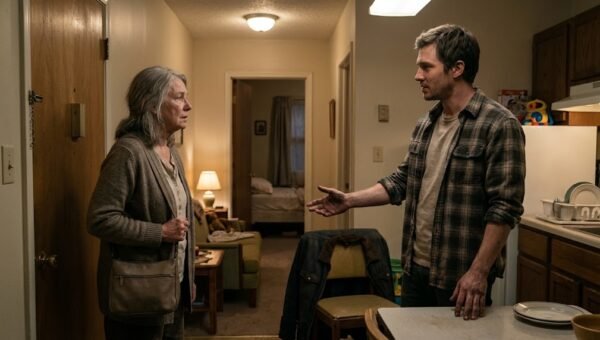
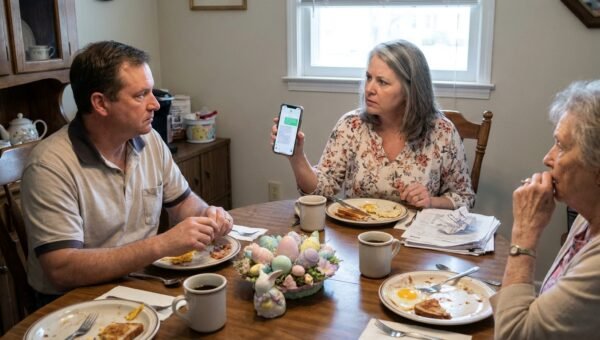
Marcus opened the door in his socks. Chloe was near the kitchen with her keys in her hand. I asked them to sit down. Marcus started to say he was late, so I set the papers on the table.
He looked first at the camera photo. Then at the registration. Chloe looked at the loan statements and stopped moving her keys.
I told him the city had charged my card $640 for a permit tied to a car I sold in 2024. I told him the city photo showed Mom’s plate on Dave’s Honda. I told him Dave had a clean title and had been misled about the commuter pass.
Marcus said he’d been trying to help Chloe get back on her feet. Her driving privileges were suspended, and her credit was bad. He said he’d planned to get everything sorted out once she had work and could pay for it herself.
I asked why the policy on Mom’s car had lapsed. He said it was only supposed to be temporary. I asked why the lender was taking insurance money from Mom’s home-equity account. He rubbed his forehead and said he hadn’t realized how much it added up to.
“You used Mom’s name,” I said.
He said he’d meant to fix it.
I slid the city referral form in front of him. “Then fix it today.”
He pushed the form back toward me. He said reporting him could get Chloe in trouble, too. I told him Chloe was already listed as the driver on a fraudulent registration. None of that changed what he’d taken from Mom or me.
I gave him an ultimatum. He could repay the $640, restore the money taken from Mom’s loan account, and sign a written acknowledgment that he’d done it. Or I would file with the city auditor and the elder financial exploitation bureau. I also told him I was revoking his authority over Mom’s finances, effective that day.
He looked at me and said I was making it bigger than it was. I said it had already taken money from two people who trusted him.
For a while, nobody moved. Chloe set the keys on the table. Marcus asked if I’d really report my own brother. I told him I’d rather not, but I wasn’t going to leave Mom exposed so he could keep his promise to someone else.
He signed the acknowledgment. He agreed to repay the $640 and the insurance charges into Mom’s account under a written repayment plan. We put the plan in writing and arranged automatic payments from his own account. If he missed them, I would file the report. He signed a separate revocation of his power of attorney and gave me the copies of Mom’s account access records.
I called the parking division from his kitchen. The clerk canceled the permit and started the refund. The city flagged the registration for review and gave me instructions to send the evidence to the DMV. I called the loan servicer, too. After reviewing the documents, they terminated the force-placed policy and opened a correction to Mom’s account.
The practical things took more calls than I expected. I froze Mom’s credit, replaced the account access codes, and moved her bill payments where Marcus couldn’t reach them. Dave kept the Honda. He wasn’t asked to pay for anything, and he stopped letting Marcus arrange his parking.
Marcus lost the right to manage Mom’s money. He didn’t lose his place in the family, not exactly, but I don’t hand him keys anymore. Mom still asks whether he’s eating enough. I tell her he can feed himself, and then I feel mean for saying it. Both things can be true.
A week later, I sat at Mom’s kitchen table in the morning light and filed the revocation forms in a clean steel lockbox. She watered the ferns on the windowsill, one little splash at a time. The registration page sat on top of the other papers, with Eleanor’s name in the box marked owner.