Ten weeks was how long I let my mother-in-law stay before I packed one bag and went to my sister’s. I thought I was leaving because of the mail. That was the last thing on a list I’d been making excuses for since the first week.
Wade said his mother, Marlene, needed our guest room for “a few weeks” after surgery. She’d had a knee replacement, and her apartment had stairs.
I knew that was a real problem. I changed the sheets, brought up a lamp from the basement, and moved my sewing basket out of the closet. I told myself it was temporary.
The house was mine before Wade and I got married. I bought it with money I inherited from my aunt and savings from years of working at the mill office. Wade knew that. We’d talked about it before the wedding, and he’d never asked me to change the deed. I honestly thought it was settled between us.
He never told Marlene. At least, not the truth.
The first clue was how she talked about the place. She’d say “our house” when she meant Wade’s, and I’d let it pass because correcting her felt petty. Wade would nod along. If I glanced at him, he’d give me a little look that meant not now. So I let “not now” become the usual answer.
Marlene was uncomfortable and sore, and I didn’t want to be the person who made her recovery harder. That was my excuse for most things, if I’m being honest.
In week two, I came home from work and found the mugs moved to the cupboard beside the sink. Marlene said she’d put them where they were “easier to reach.” She wasn’t wrong. My favorite mug, the one with a chip in the handle, was now on the bottom shelf.
“I thought you’d like it better there,” she said.
“Sure,” I said. I put it back where I’d kept it for years after she went upstairs.
Then she moved the plates. Then the cereal. I’d open a cupboard and have to stop and look around, like I’d walked into somebody else’s kitchen. Wade told me she was trying to help.
“She gets restless sitting around,” he said one night.
“I get restless in my own kitchen,” I said.
He rubbed the back of his neck. “Can we not make this a thing?”
I didn’t answer. I was tired, and I knew he’d go quiet until I felt bad for bringing it up.
That was how we got through a lot of arguments. Or avoided them. I’m not sure which.
By week four, Marlene was getting around with a cane and could manage the stairs slowly. I asked Wade if she had a plan for going back to her apartment. He said they’d talk about it after her next appointment. When the appointment came, he said the doctor wanted her to take it easy a little longer.
That part may have been true. But “a few weeks” was already turning into a season, and neither of them seemed to think they needed to ask me.
One Saturday, I came home with groceries and found my old quilt folded over the donation box by the back door. My aunt had made it. It wasn’t fancy, and it had a coffee stain from years ago, but I used it when I read on the couch.
Marlene said she’d set it aside because she thought I didn’t use it anymore.
“I do use it,” I said.
She looked surprised. “Well, it was in the hall closet.”
“That’s where I keep it.”
Wade came in carrying a bag from the car and heard the last part. He didn’t say anything. I took the quilt and put it back. That night he told me I could have been nicer about it.
I said, “It was my quilt.”
“I know,” he said. “She was trying to be useful.”
That was the part that made me feel mean. I didn’t want to be unkind to a woman who was healing. So I swallowed it, again. The quilt stayed on the couch. The feeling didn’t.
By week six, Marlene had started answering the phone when it rang in the kitchen. She’d say, “We’re doing fine,” before asking who was calling. I told Wade that bothered me.
“She’s just being friendly,” he said.
“She doesn’t have to answer my phone.”
He promised he’d talk to her. I don’t know if he did. Marlene still picked it up now and then, and Wade kept acting like the whole thing would settle itself if he waited long enough.
I also noticed the mail had started landing in a different place. I usually brought it in and sorted it at the kitchen table. Now it was sometimes stacked beside Marlene’s chair. She said she’d been helping keep it off the counter.
I should’ve asked then why she was sorting any of it. I didn’t. I told myself I was being fussy.
The title company had sent me a letter about a routine ownership record update. I knew something was coming because I’d called them a few weeks earlier to make sure the deed information was current. The envelope was addressed to me alone. I put the mail on the table when I came home, saw the return address, and went upstairs to change out of my work clothes.
When I came back down, the envelope was still there. I didn’t open it right away. It felt like the kind of boring paperwork I could deal with after dinner.
That same week, I found out Marlene had given away two of my casserole dishes. A neighbor had asked if I was sure I wanted to donate them. I wasn’t. Marlene said she’d thought they were extras because they were in the lower cabinet.
“I use those,” I said.
“You have plenty,” she said.
I looked at Wade. He was standing by the fridge, staring at a grocery list.
He said, “Mom, maybe check before giving things away.”
Maybe. Not don’t do that. Not that’s her stuff. Just maybe check.
Marlene said she was trying to help. I told her I knew, and I hated how quickly the words came out. I was tired of being the one who had to make everybody comfortable.
The tenth week was when I found the envelope open.
It was on the kitchen table with the rest of the mail. The flap had been torn across the top. I noticed my name on the front and then the ragged edge, and my hands stopped moving. It was the title-company letter. I had not opened it.
Marlene was in the next room watching television. I held up the envelope.
“Did you open this?”
She looked over. “I thought it was something for the house.”
“It’s addressed to me.”
“I was trying to see what it was. Wade’s name should be on house papers too.”
I looked at Wade. He was by the sink, rinsing a plate that was already clean.
He said, “It’s fine. She didn’t mean anything by it.”
I felt something settle in me, not in a big dramatic way. More like I’d finally put down a bag I’d been carrying without noticing how heavy it was.
I went upstairs and took one bag from the closet. I packed socks, a few work clothes, my medication, and the book I’d been trying to finish for a month. Wade followed me to the bedroom.
“Where are you going?” he asked.
“To Jo’s.”
“Don’t do this over an envelope.”
“I’m not.”
He started to say something, then stopped. I zipped the bag. He didn’t reach for it or ask me to stay. That was a choice too, even if he’d tell you it wasn’t.
Jo lives twenty minutes away. When I got there, she opened the door, looked at my bag, and moved aside.
“Guest room’s made up,” she said.
I sat at her kitchen table, and for the first time in weeks nobody moved anything while I wasn’t looking. Jo made me toast. It was a little too dark on one side, and I ate it anyway.
She didn’t tell me I was right. She asked if I wanted to go home.
“I don’t know,” I said.
“Then don’t decide tonight.”
I stayed three days. I called work. I slept past six. I kept thinking about the envelope, but not just because Marlene had opened it. She had opened it because she believed she had some right to it. Wade had let her believe that. And I had let both of them treat my silence like agreement.
On the third day, Wade called. I could hear the tightness in his voice before he even said hello.
“Can you come home?” he asked.
“What happened?”
“Mom opened the title letter.”
I sat down on Jo’s porch step. It had a loose board that clicked when I shifted my foot.
“Did she read whose name is on the title?”
He went quiet. Then he said, very low, “Yes.”
That one answer told me more than the last ten weeks had. I asked him why he’d let his mother think he owned half the house. He started explaining that she always wanted to know how things were paid for, and that she could get demanding when she thought someone had money.
“So you told her it was yours too?”
“I didn’t know how to correct her.”
“You knew how to let her say it.”
He didn’t argue. That was new.
“I thought it would keep things easier,” he said.
“For who?”
He couldn’t answer.
I told Jo I was going home. I didn’t ask her to come with me. I didn’t need someone to make me brave; I needed to stop waiting for Wade to do it.
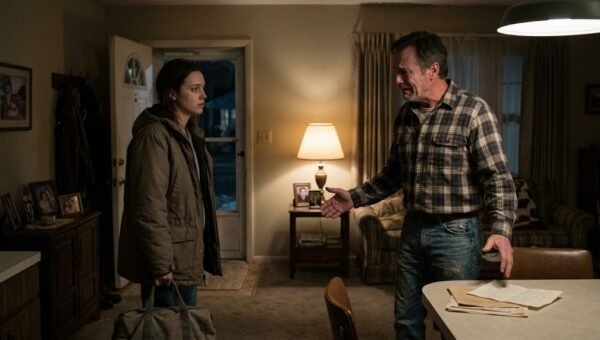
When I walked in, Marlene was sitting at the kitchen table. Wade stood by the counter with the open envelope in front of him. The paper inside had been smoothed flat. There was a crease through the middle from where someone had folded it back.
Marlene looked up. “You didn’t tell me the house was only in your name.”
I set my bag by the door. “I didn’t know I was supposed to.”
She looked at Wade. “You said you bought it together.”
Wade’s mouth moved, then stopped. He looked down at the paper.
I picked up the deed confirmation and read the line with my name on it. Just mine. The house had been bought with my inheritance and savings before we married. Wade had no legal ownership in it. We’d both known that from the start.
Marlene said, “But you live here.”
“I do,” I said. “And you’re staying in my guest room.”
“I thought this was Wade’s house too.”
“That’s what Wade told you.”
He finally looked up. “I should’ve told her.”
“Yes,” I said. “You should have.”
Marlene’s face tightened. I could see she was angry and embarrassed, and maybe scared about where she’d go next. She had leaned on Wade for years, and he’d made it easy for her to think he could offer what he couldn’t. I understood that much. It didn’t make the open mail or the giving away of my things all right.
“I need somewhere to recover,” she said.
“You’ve had ten weeks.”
“I can’t go back tonight.”
“I didn’t say tonight. You have forty-eight hours to pack and make a plan.”
Wade stepped between the table and the hall. “Can we slow down and talk about this?”
“I’ve been asking to talk about it for weeks.”
His eyes went to the deed in my hand. I hated that it took a piece of paper for him to hear me.
He said, “I’ll help Mom find a place.”
Marlene stood, using the table to steady herself. “You’re making me leave over a misunderstanding.”
“No,” I said. “I’m asking you to leave because you treated my home like it belonged to you, and Wade helped you believe it did.”
Neither of them answered.
Marlene packed slowly. Wade carried her bags down the stairs. She left the next afternoon with her cane and the last box from the guest room. She didn’t say goodbye to me. I didn’t chase her to the car.
Wade and I had a long talk after the door shut. Not the sort where one person says sorry and the other says it’s fine so they can eat dinner. He told me he’d said we bought the house together because his mother liked to think of him as the one who provided. He said he didn’t want her asking me for money or treating the house like something she could claim through him.
It was a reason. Not a good one.
I told him that keeping her happy by lying about our marriage had made me feel like a guest in my own home. He said he understood. I told him understanding wasn’t enough anymore. He’d have to tell his mother the truth whenever she asked, and he’d have to stop leaving me alone to enforce boundaries he’d helped her cross.
He said, “I’ll do that.”
I told him I’d believe it when he did. We’re still working through the marriage. I’m not pretending that one talk fixed years of him choosing the easiest answer. But he did call his mother and correct the story. I heard him say plainly that the house was mine and that she could not move back in.
I changed where our mail gets sorted. Anything addressed to me stays sealed until I open it. It sounds basic, because it is. I wish I hadn’t needed to say it out loud.
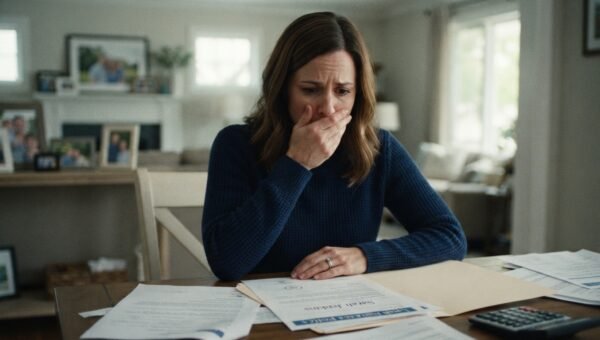
A week later, I sat alone at my kitchen table with a stack of mail in my hands. The guest room was empty again. The quilt was on the couch, and my chipped mug was back on the shelf where I kept it.
I looked out at the porch. My bag wasn’t packed by the door anymore.
The title paper was filed away. My mail was in my hands, unopened, with my name on the front.